Hello, this is Lucid Dental Clinic.
When looking into veneers, there is one term that tends to catch people’s attention first: “no-prep veneers.” Simply hearing that the teeth are not filed down can make this treatment seem like the most ideal option for preserving the teeth as they are.
Preserving as much of the natural tooth as possible is indeed a very important principle in dentistry. However, that does not mean that avoiding tooth reduction in every case will always lead to the best result.
For example, imagine having clothes custom-made. If you simply add another layer of fabric on the outside without considering the measurements that fit your body, the shoulders may look thicker and the overall silhouette may become unnatural.
The same principle applies to teeth. If restorations are simply added without considering the position and thickness of the existing teeth, they may initially look fine, but various discomforts can develop over time.
That is why the focus has recently shifted from how much tooth structure is removed to how precisely the treatment is designed according to what is actually needed.
Today, we will look at the differences between no-prep veneers, which many people are curious about, and Lucinate from Lucid Dental Clinic near Nonhyeon Station, as well as which treatment may be more suitable for your teeth.
What Are Veneers?
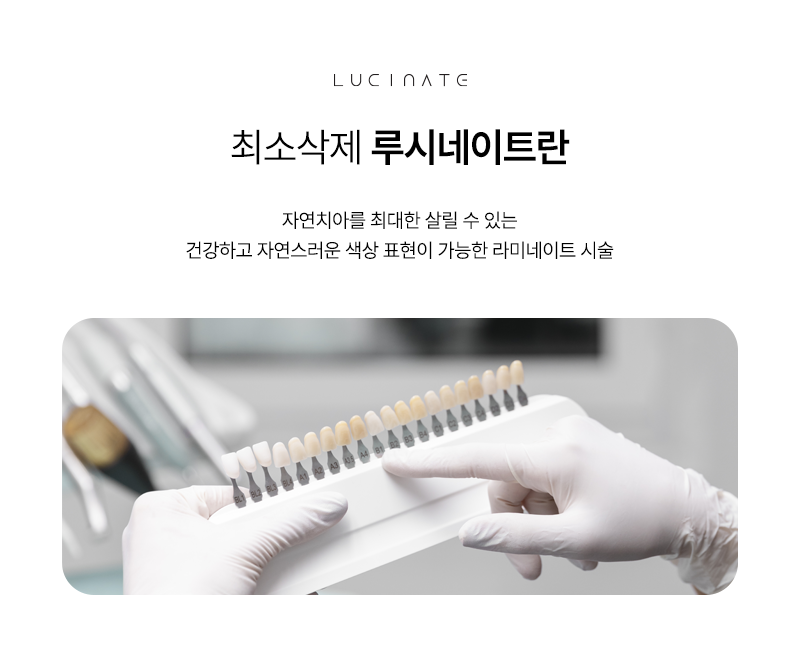
Veneers are an esthetic dental treatment in which thin ceramic restorations are attached to the front surfaces of the teeth to improve the color, shape, size, or proportions of the front teeth. They may be considered in various situations, such as when a tooth is chipped, there are gaps between the front teeth, the teeth appear small because of undersized teeth, or old resin has become discolored.
However, there is one point that many people misunderstand. Veneers are not simply a procedure for making the teeth whiter. Everyone has a different face shape, the amount of tooth that shows when smiling varies, and lip movement and the bite are also different. Therefore, it is difficult to expect a natural result if the same shape of restoration is applied to everyone, even when treating the same front teeth.
In other words, the quality of an esthetic treatment is often determined more by the planning process before treatment than by the restorations themselves.
What Is Lucinate?
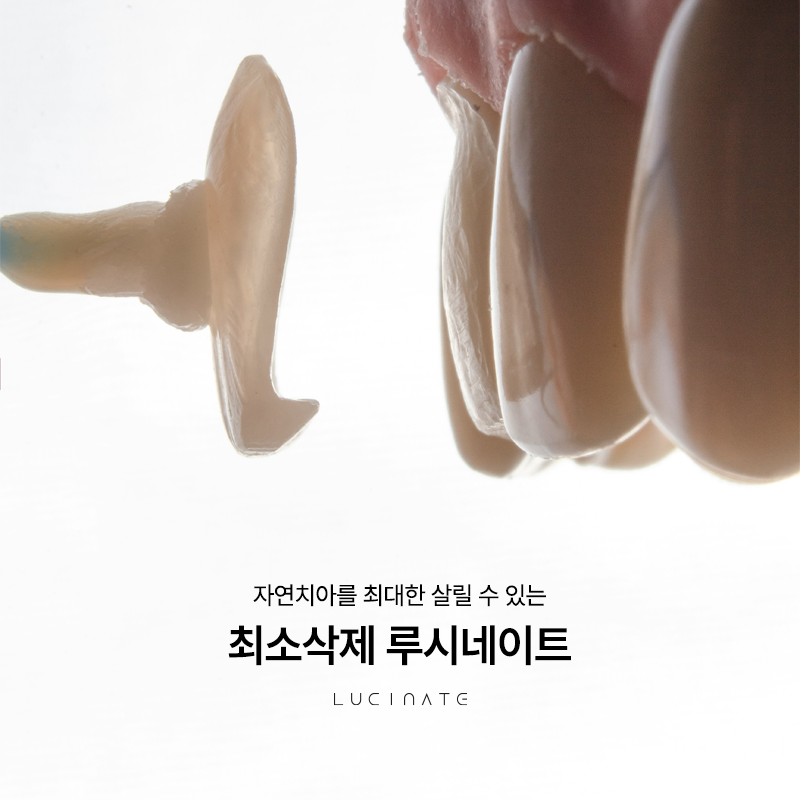
Lucinate from Lucid Dental Clinic does not simply mean “veneers involving less tooth reduction.” It is a customized treatment system that considers both function and esthetics while preserving as much of the natural tooth as possible.
Before treatment, the current alignment and thickness of the teeth and the bite are examined. The treatment plan is then developed by considering the patient’s desired appearance together with the balance of the face as a whole.
Some people may achieve a sufficient result with almost no tooth reduction, while for others, creating a very small amount of space may actually help produce a more natural result.
In other words, rather than automatically choosing “no reduction” or “reduction” from the outset, the key principle of Lucinate at the Nonhyeon Station dental clinic is to select the method that suits the current condition of the teeth.
How Much Do You Know About Veneers?
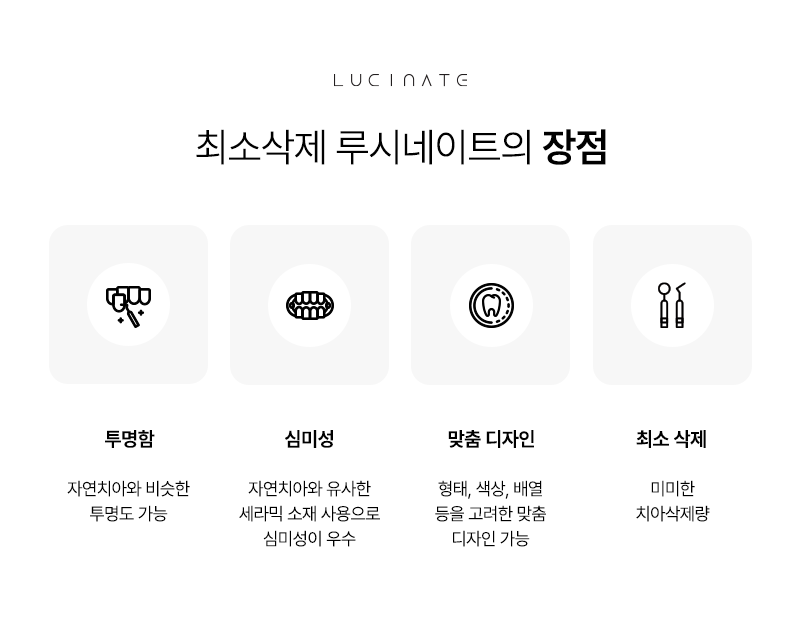
There is a wide range of information online, but some explanations are overly simple, such as saying that no tooth structure is removed, the treatment is completed in one day, or anyone can have it done. In an actual dental clinic near Nonhyeon Station, many more factors are examined.
For example, if the teeth protrude significantly but restorations are attached without creating any space, the lips may appear to project farther forward. Conversely, if the teeth are positioned inward or are small in size, a good result may be possible without tooth reduction.
As this shows, the treatment approach varies according to each person’s dental condition, even when the treatment is veneers. Therefore, rather than deciding based solely on the term “no-prep,” it is important to first determine which treatment is suitable for the current condition of your teeth.
No-Prep Veneers VS. Lucinate: What Is the Difference?
1. Extent of Tooth Reduction
No-prep veneers, as the name suggests, involve no tooth reduction or only very limited reduction. Lucinate, on the other hand, is not a treatment that removes a large amount of tooth structure; it involves minimally reshaping only the areas where it is necessary. The important point here is not the amount of reduction itself, but why reduction is needed. The goal is to create enough space for the restoration to sit securely and transition naturally into the tooth.
2. Tooth Thickness and Side Profile
Sometimes the teeth may look fine from the front but appear bulky from the side. This can happen when restorations are simply added directly over the existing teeth. In particular, if the teeth are naturally thick, even a small difference in thickness can affect the appearance when the mouth is closed. Because Lucinate is planned with these details in mind, a more natural contour can be expected from the side as well.
3. The Margin Where the Restoration Meets the Gums
One reason esthetic dental work may look noticeable is that the margin near the gums appears unnatural. If the margin stands out, light may reflect differently when smiling, or the point where the restoration begins may become visible. Lucinate is designed by considering even the area where the tooth and restoration meet, allowing them to connect more naturally.
4. Distribution of Force When Chewing
The front teeth are not only visible; they also cut and support food. If treatment is performed without sufficiently considering the bite, force may become concentrated in a particular area. Lucinate considers not only the shape of the teeth, but also chewing habits and balance, taking functional factors into account as well.
5. Maintenance and Future Care Planning
Esthetic treatment does not end when the procedure is complete; care over time is also important. If maintaining hygiene between the teeth and restorations is difficult, it may affect gum health. Situations may also arise in which restorations need to be replaced or checked. At Lucid Dental Clinic, regular post-treatment examinations are used to monitor the condition of the restorations and changes in the bite, while also considering long-term care.
6. Dental Conditions Suitable for Treatment
No-prep veneers can be a good option when the condition of the teeth is suitable. However, it is difficult to apply the same approach to every tooth. If the teeth are significantly protruded, there is a large difference in alignment, existing restorations are present, or the shape needs to be substantially improved, another treatment approach may be more appropriate. Lucinate prioritizes analyzing the patient’s dental condition first and then recommending the most suitable treatment method. Therefore, the starting point is not the question of whether no-prep treatment is possible, but rather which treatment will look the most natural and remain usable for a long time.
When Might Lucinate Be More Suitable?
The term “no-prep veneers” can make treatment that does not touch the teeth at all seem like the most ideal option. In actual esthetic dentistry, however, a more important standard is how reliably the desired result can be achieved, rather than whether tooth reduction is avoided.
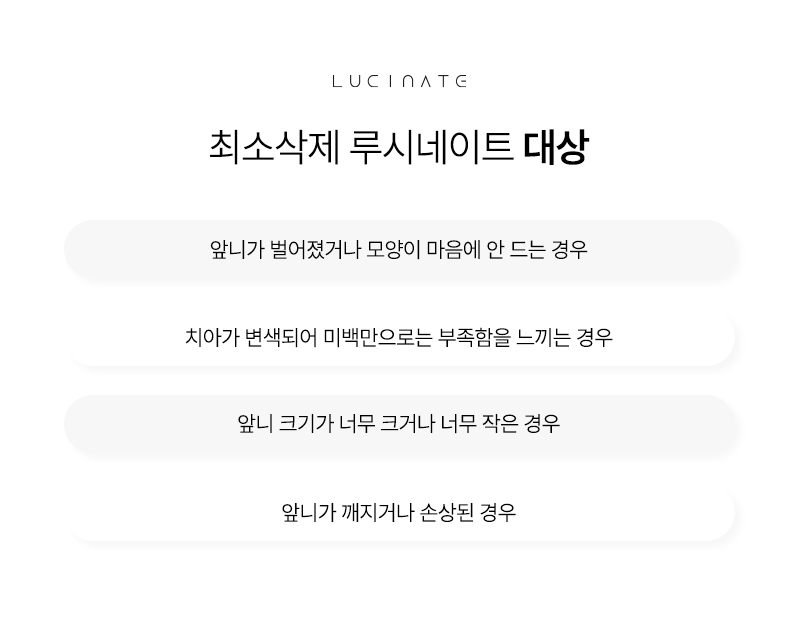
For example, when there is a small gap between the front teeth, there are cases in which sufficient improvement can be achieved with a no-prep approach alone. On the other hand, if the teeth protrude forward or both their shape and size need to be changed, simply adding restorations over the teeth may have limitations. In particular, when the teeth need to be made longer or wider, adding ceramic over the existing teeth can make them look thicker than expected.
Although the teeth may look fine when smiling, the lips may appear slightly rolled when the mouth is closed, or the side profile may give the impression that the teeth project forward.
To reduce these issues, creating space within the necessary range before fabricating the restorations can allow the teeth and restorations to transition more smoothly.
This is precisely why Lucinate uses a minimal-prep approach.
The reason is that the period of use is much longer than the treatment time itself. Veneers are used in daily life for far longer than the time spent receiving treatment. The front teeth continue to be used while eating, talking, smiling, and taking photographs. Therefore, although the initial appearance is important, it is also necessary to consider how comfortably they can be used over time.
For example, if the edges of the front teeth are made too long or too thick, pronunciation may feel awkward, and some people may experience an unfamiliar sensation when biting into food. If the margin where the restorations meet the gums is not cleanly finished, brushing may become difficult and maintenance may feel inconvenient. For this reason, Lucid Dental Clinic near Nonhyeon Station plans Lucinate by considering not only an attractive appearance, but also a balance that allows comfortable use in everyday life.
In Esthetic Dentistry, Teeth That Suit You Matter More Than Simply White Teeth
In the past, many people preferred brightly colored teeth. Recently, however, more people have been seeking shades and shapes that look like their natural teeth.
This is because teeth that are excessively large or simply very white can instead create the impression that they do not harmonize with the face.
At Lucid Dental Clinic, we do not look at each tooth in isolation. Instead, we focus on creating an overall appearance by considering the length of the teeth visible when smiling, left-right balance, harmony with the gum line, and other factors together.
These details may seem minor, but when they are well balanced, the result may look less noticeably treated.
Points to Check Before Deciding on Treatment
Because esthetic treatment is used for a long time once completed, it is advisable to carefully examine how the treatment is performed rather than making a choice based only on advertising copy.
The goal is not to force a method that does not suit your teeth, but to choose the approach that is most satisfying when both function and esthetics are considered.
When considering veneers, many people first focus on the term “no-prep.” However, satisfaction with esthetic treatment is determined not by a single phrase, but by the treatment process as a whole.
It is important to consider not only how much tooth structure is preserved, but also whether the smile looks natural, whether there is any discomfort in daily use, and whether the result can remain stable over a long period.
If you are looking for a dental clinic near Nonhyeon Station or are deciding between minimal-prep and no-prep treatment, compare the advantages and disadvantages of each carefully and choose the method that is suitable for you.
If you are looking for satisfactory veneers near Nonhyeon Station or a dental clinic near Nonhyeon Station and are deciding between minimal-prep and no-prep treatment, compare the advantages and disadvantages of each carefully and choose the method that is most suitable for you.
Q&A
Q. Won’t slightly reshaping the teeth shorten their lifespan?
A. Unnecessarily extensive tooth reduction should be avoided, but minimal reshaping within the necessary range may help the restoration sit securely. The treatment method is determined by considering the condition of the teeth and the extent of improvement needed as a whole.
Q. In what cases are no-prep veneers possible?
A. They may be suitable in some cases where the teeth are small, positioned inward, or do not require major changes in shape. However, this is not a treatment that can be applied in the same way to everyone.
Q. Can Lucinate be performed on only a few front teeth?
A. Yes. In many cases, only the teeth that need treatment are selected. Since the plan takes the color and proportions of the surrounding teeth into account, treating the entire set is not always necessary.
Q. Can the color change or become discolored after treatment?
A. Ceramic is generally known to be resistant to staining. However, regular checkups and proper oral care may help the restorations remain in good condition for a long time.