Hello, this is Lucid Dental.
What do you notice first whenever you look in the mirror? Many people think of their eyes or skin, but one of the factors that can influence a first impression is the color of your teeth.
Even when the teeth are well aligned, yellowed teeth can make the overall appearance look dull. Conversely, bright and clean teeth can make your smile look brighter and healthier.
People who frequently meet others for work or who have an important interview, wedding photo shoot, or profile photo session coming up often become more concerned about the color of their teeth. The treatments most commonly searched for in these situations are teeth whitening and Lucinate.
However, during consultations, many people ask whether they should have teeth whitening first or undergo Lucinate first.
Both treatments are cosmetic procedures that can make the teeth more attractive, but their purposes and indications are different, so the same sequence cannot be applied to everyone.
If you decide on treatment without sufficiently checking the condition of your teeth, you may feel less satisfied than expected.
Today, we will look at the differences between teeth whitening and Lucinate at a Shin Nonhyeon Station dental clinic, as well as which treatment may be appropriate in different situations.
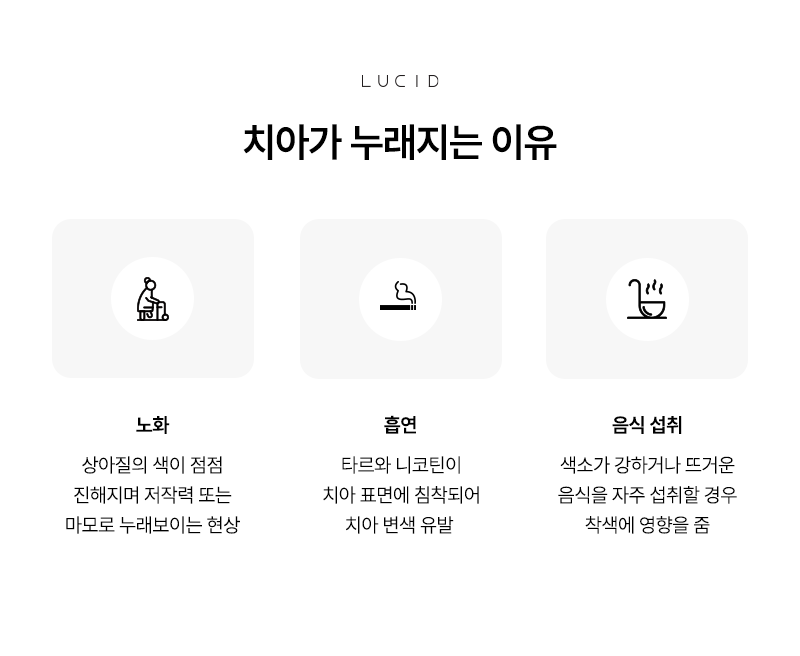
Why do teeth gradually become more yellow even when you brush diligently?
This is a question we often hear in the dental office. Tooth color is not determined solely by brushing habits. First, everyone is born with a different natural tooth color. The outermost layer of the tooth is a transparent layer called enamel. The thinner this layer is, the more the dentin underneath—which has a yellowish tint—may show through. In other words, some people may naturally have teeth that look slightly more yellow than those of others from the beginning.
As lifestyle habits accumulate over time, the color of the teeth can gradually change.
Common causes include frequently drinking strongly pigmented beverages such as coffee, tea, and wine. Dark-colored foods such as curry and kimchi stew may also cause small amounts of staining to build up when consumed repeatedly over a long period.
Smoking is another common cause of tooth discoloration. In addition, as enamel gradually wears down with age, the color of the underlying dentin may become more visible, making the teeth seem yellower than before.
Teeth that have undergone root canal treatment or have experienced trauma may also develop discoloration from within. Because this type of discoloration has a different cause from surface staining, ordinary whitening alone may not provide sufficient improvement.
In other words, although teeth may appear similarly yellow, the cause can differ from person to person, and the appropriate treatment may differ accordingly.
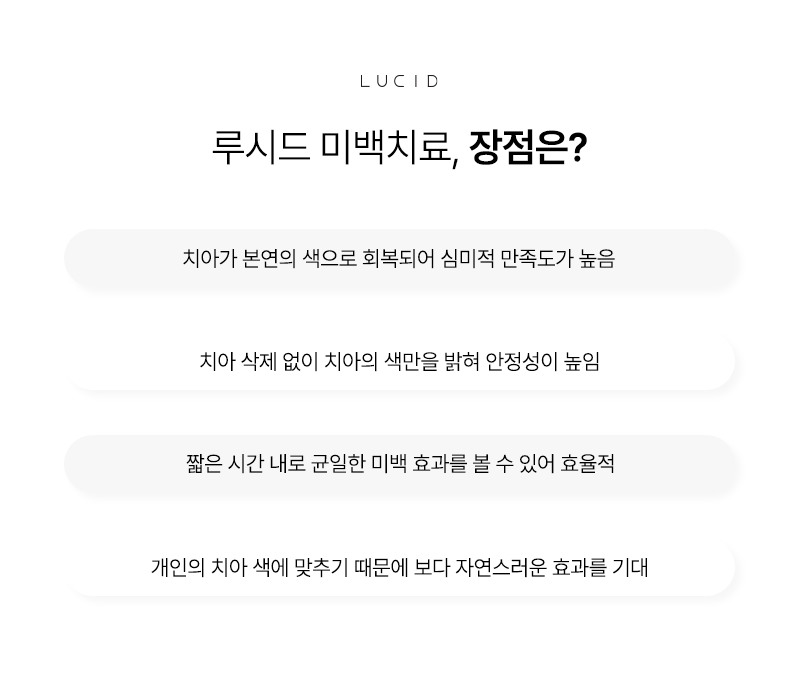
When can teeth whitening be helpful?
Teeth whitening is a cosmetic treatment that improves brightness by using a professional whitening agent to break down pigments inside the teeth, without removing tooth structure.
Its greatest advantage is that it can improve only the color while preserving the natural teeth. It is suitable for people who are generally satisfied with the shape of their teeth but are concerned about their color.
-
People who drink several cups of coffee a day
-
People who have developed tooth staining from smoking
-
People with an important event or photo shoot coming up
-
People who want to make their overall appearance look somewhat brighter
For these individuals, teeth whitening at a Shin Nonhyeon Station dental clinic may often provide a satisfying change on its own.
However, there is one point to keep in mind. Teeth whitening improves color; it does not change the shape of the teeth. For example, if the teeth are spaced apart, the front teeth differ in size, or the edges are chipped, simply making them whiter may not provide the desired level of cosmetic satisfaction.
In addition, when internal discoloration is severe—such as congenital discoloration or a tooth that has darkened after root canal treatment—the whitening effect may be limited.
In such cases, considering another cosmetic treatment in addition to simply brightening the teeth may lead to a more satisfying result.
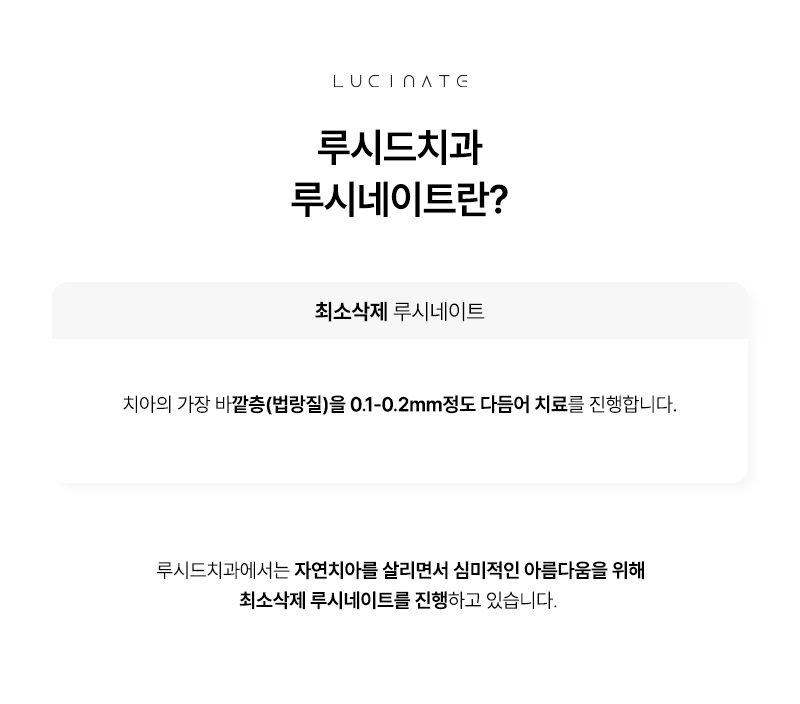
How is Lucinate different from teeth whitening?
Lucinate at a Shin Nonhyeon Station dental clinic is a cosmetic treatment in which thin ceramic pieces are precisely fabricated and bonded to the front surfaces of the teeth.
Many people think it is simply a treatment for making teeth whiter, but it can actually improve a much broader range of features.
In addition to tooth color, the treatment considers the length of the front teeth, the proportions of tooth size, spaces between teeth, slightly crooked front teeth, worn teeth, and the smile line to design the overall appearance.
In particular, people who want a natural-looking smile often place importance not only on creating very white teeth but also on tooth proportions and color that harmonize with the face.
At Lucid Dental, rather than simply recommending a bright shade, we select the color that best suits the individual after also considering skin tone, lip color, and harmony with the surrounding natural teeth.
This is because finding the brightness and translucency that suit you best is more important than assuming that the whitest teeth are always the most attractive.
So, which should come first: teeth whitening or Lucinate?
So, which should come first: teeth whitening or Lucinate?
Many people ask questions such as, “Should I have whitening first and then get Lucinate?” and “Can I still have teeth whitening after getting Lucinate?”
To answer directly, there is no fixed sequence. What matters is not which treatment is performed first, but creating a treatment plan that matches the condition of your teeth and your desired cosmetic direction.
For example, if there is no major concern with the shape or alignment of the teeth and the primary concern is staining caused by lifestyle habits, teeth whitening alone may be enough to create a brighter appearance. On the other hand, if you want to improve not only tooth color but also the size or shape of the front teeth and spaces between them, Lucinate may be a more suitable option.
At Lucid Dental, we use a 3D digital analysis system to comprehensively examine tooth shape and proportions, the smile line, and harmony with the surrounding teeth before determining the treatment approach. Because the goal is not simply to create white teeth but to achieve an aesthetic result that blends naturally with the face, a more satisfying outcome may be expected.
Ultimately, teeth whitening and Lucinate are not treatments in which one is inherently better than the other; they are options in the process of finding the method best suited to you.
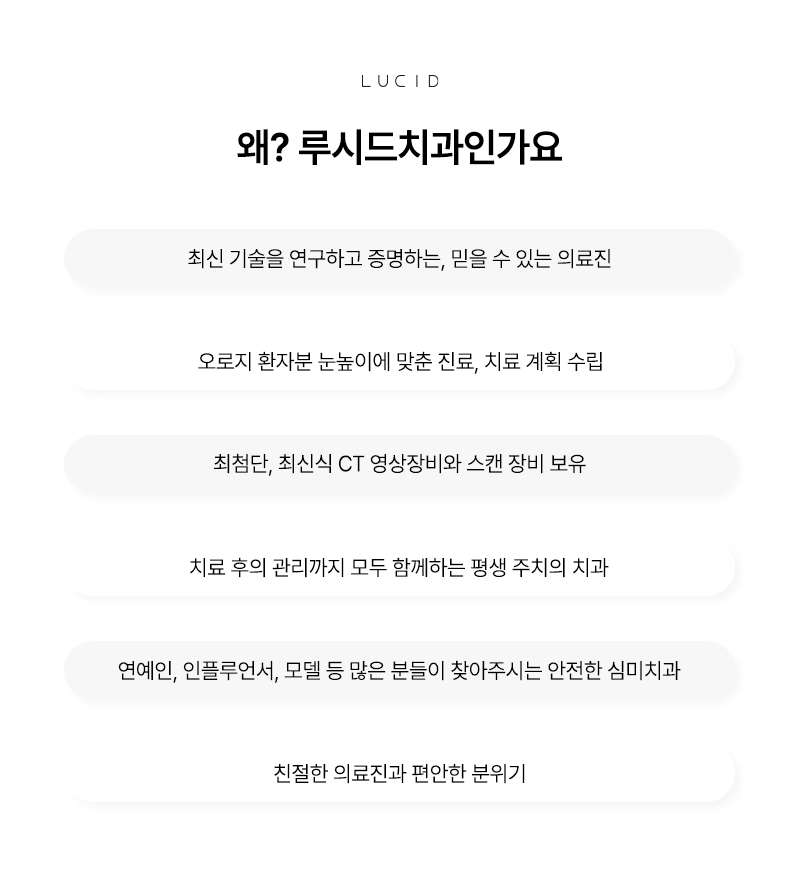
What criteria does Lucid Dental use to develop a treatment plan?
Cosmetic treatment is not simply a process of making the teeth white.
To achieve results that remain satisfying over time, it is necessary to consider the patient’s facial shape, smile line, lip movement, tooth size and alignment, and bite as a whole. During the consultation stage, Lucid Dental comprehensively analyzes tooth color and shape, the bite, the gum line, and the smile line before developing a cosmetic treatment plan suited to the patient.
If you feel less confident when smiling because of your tooth color, it is preferable to first identify the cause of the discoloration through a professional consultation rather than repeatedly using whitening products.
For some people, teeth whitening alone may be enough to resolve their concerns. For others, improving both color and shape through Lucinate may lead to a more satisfying result.
What matters is not choosing a popular treatment but finding the treatment sequence that suits you.
Not sure whether teeth whitening alone is enough or whether Lucinate is needed?
You do not have to try to resolve these concerns on your own. In actual consultations, it is not uncommon to find that a treatment approach different from the one initially considered is more appropriate.
For example, some people visit while considering Lucinate because their teeth look very yellow, but an examination reveals that lifestyle-related staining is the main cause, and they achieve a satisfying change with whitening alone.
Conversely, some people visit thinking only about whitening and choose Lucinate after it is determined that improving the shape and proportions of the teeth as well can create a more natural change in their overall appearance.
As this shows, the important thing is not to decide on a treatment in advance, but to check which treatment best suits your teeth.
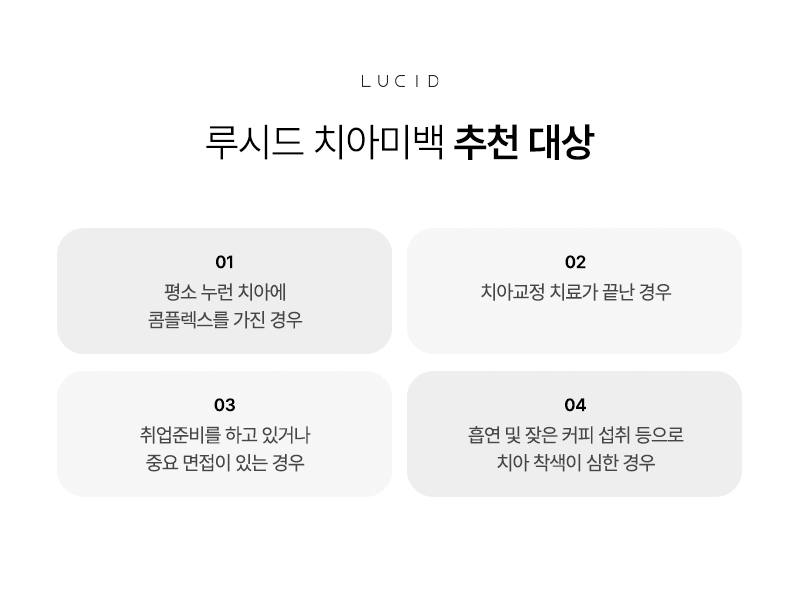
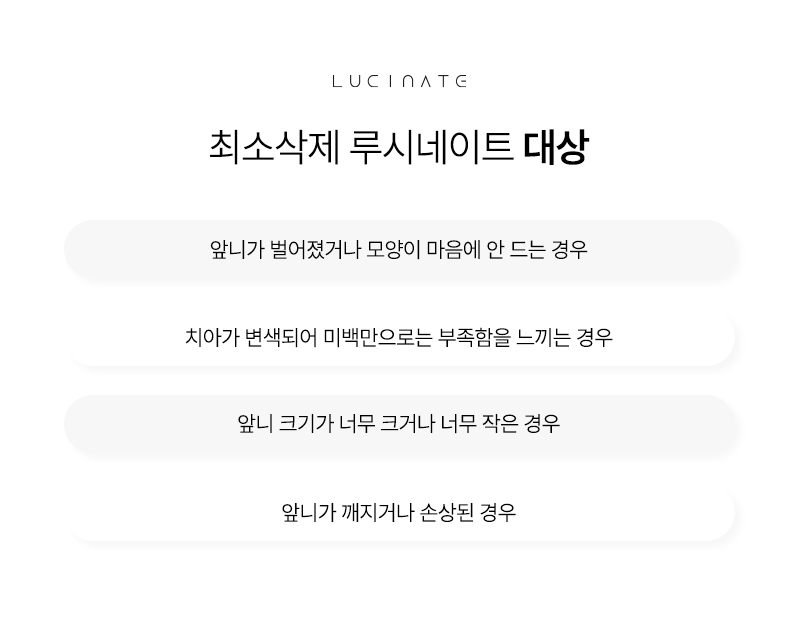
We recommend a consultation if you:
-
Cover your mouth when smiling because your teeth look yellow
-
Are unsure which treatment, teeth whitening or Lucinate, is appropriate
-
Have had the experience of whitening without achieving the desired brightness
-
Want to improve not only the color of your front teeth but also their shape and proportions
-
Want natural, understated cosmetic treatment
Not everyone whose teeth look yellow needs the same treatment.
Some people can achieve the change they want with teeth whitening alone, while others may experience a more satisfying result by improving both the color and shape through Lucinate.
What matters is not copying someone else’s treatment method but choosing the cosmetic treatment that suits you best.
The Shin Nonhyeon Station dental clinic develops treatment plans by carefully considering each patient’s tooth color and shape, as well as their harmony with the face.
If you are wondering which treatment is appropriate—teeth whitening or Lucinate—rather than deciding on your own, we recommend finding the approach suited to your current concerns through a thorough consultation.
A small change in the teeth can change a smile, and a change in the smile can also increase confidence in everyday life.
Q. If I have teeth whitening, can I avoid getting Lucinate?
A. If you are satisfied with the shape and alignment of your teeth and your main concern is lifestyle-related staining, teeth whitening alone may be sufficient. However, if you also want to improve the shape, size, or spaces between your teeth, Lucinate may be more appropriate in some cases.
Q. If I get Lucinate, will the color remain unchanged over time?
A. Ceramic is a material that is relatively resistant to staining caused by coffee and tea. However, proper oral care and regular checkups can help maintain its appearance for longer.