Hello. This is Lucid Dental.
Wisdom teeth are located at the very back of the mouth, and their growth direction and shape can vary from person to person.
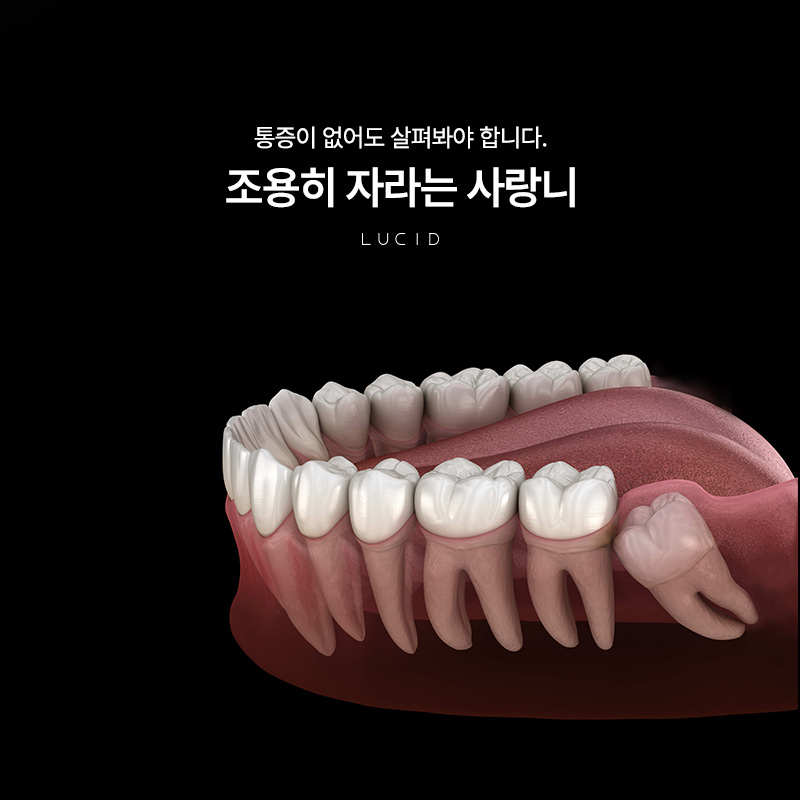
If there is enough space in the jaw, they may erupt normally. However, when there is not enough space or the tooth grows at an angle, part or all of it may remain buried in the gums or jawbone. This is commonly referred to as an impacted wisdom tooth.
The presence of an impacted wisdom tooth does not necessarily cause severe pain from the beginning. In fact, some people live without any particular discomfort and only discover it incidentally during a dental examination or radiographic imaging.
For this reason, some people wonder whether extraction is really necessary if they are not currently experiencing pain.
However, wisdom teeth are located at the very back of the mouth, making them difficult to clean. Depending on the direction of impaction and their relationship with neighboring teeth, various problems may develop over time.
Today, for those considering impacted wisdom tooth extraction in Gangnam, we will discuss the problems that may occur when an impacted wisdom tooth is left untreated and the situations in which extraction may be considered.
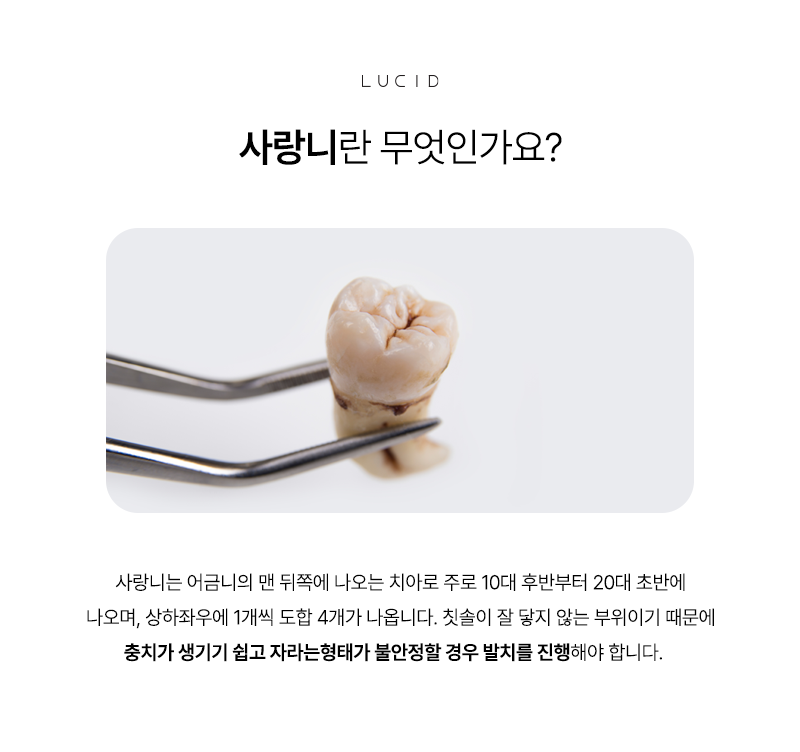
What Is an Impacted Wisdom Tooth?
Wisdom teeth are the third molars located at the very back of the upper and lower rows of teeth.
They generally begin to erupt around adulthood, but they do not develop in the same way for everyone. In some cases, wisdom teeth do not form at all. They may erupt normally, emerge only partially, or remain completely buried in the jawbone.
When a wisdom tooth cannot fully emerge into its normal position and remains partially or completely buried in the gums or jawbone, it is called an impacted wisdom tooth.
In particular, if a wisdom tooth is tilted toward the molar in front of it or positioned nearly horizontally, the condition of the surrounding teeth and gums should also be examined.
Because it is difficult to determine the tooth’s roots or the depth of impaction based only on what is visible, imaging such as radiographs is needed to check its position and shape.
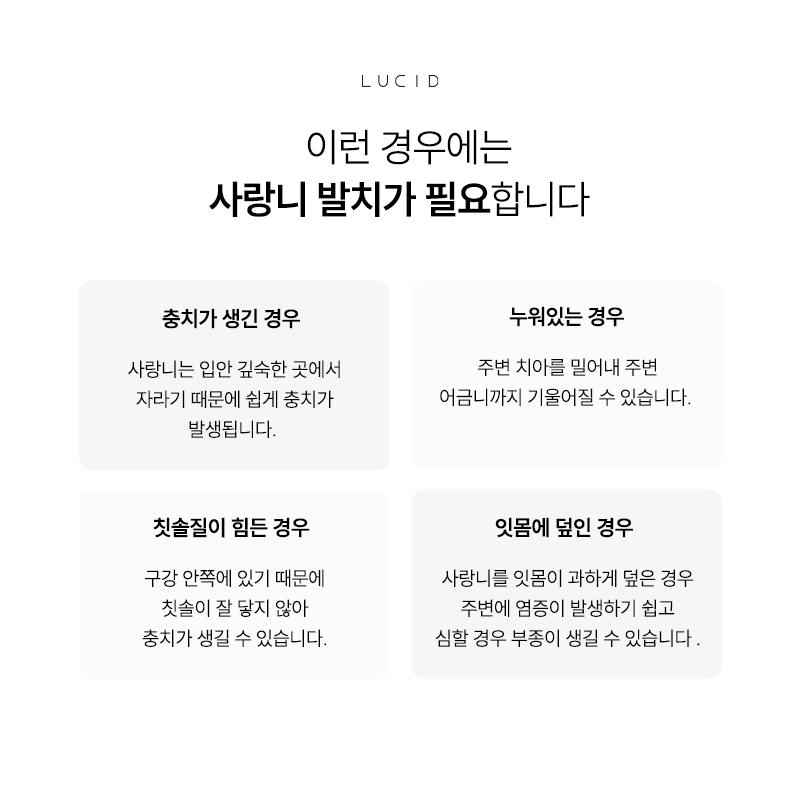
Could You Have an Impacted Wisdom Tooth? Try This Simple Check
It is difficult to accurately determine on your own whether you have an impacted wisdom tooth.
However, if the following changes occur repeatedly, you may want to consider a dental examination to check the condition around your wisdom tooth.
-
The gum at the very back repeatedly swells or feels uncomfortable.
-
You feel pain around the wisdom tooth when chewing.
-
Food frequently becomes trapped around the rearmost tooth.
-
The gum around the wisdom tooth sometimes bleeds when you brush your teeth.
-
Only part of the wisdom tooth has emerged from the gum.
-
The gum at the back feels tight or uncomfortable when you open your mouth wide.
-
It is difficult to clean between the wisdom tooth and the molar in front of it.
-
You have previously been told during a dental examination that your wisdom tooth is growing at an angle.
These items are not diagnostic criteria for an impacted wisdom tooth; they are only reference points that may indicate that a dental examination should be considered. Even with the same symptoms, the cause may differ. Conversely, a wisdom tooth may be impacted within the jawbone even when there are no noticeable symptoms.
Therefore, the exact condition should be confirmed through an oral examination and any necessary radiographic tests.
Why an Impacted Wisdom Tooth Should Be Checked Even If It Does Not Hurt
It is easy to assume that there is no problem if an impacted wisdom tooth does not hurt. However, the presence or absence of pain does not always correspond to the condition around the wisdom tooth.
When only part of a wisdom tooth has emerged from the gum, a small gap may form between the tooth and gum. Because of its location at the very back of the mouth, it can be difficult for a toothbrush to reach adequately, making it easy for food debris and plaque to remain and potentially causing inflammation in the surrounding gums.
Even a completely impacted wisdom tooth that is not visible may be positioned close to neighboring teeth or surrounding tissues, depending on its location and direction.
Therefore, rather than checking only whether there is currently pain, it is important to also examine the shape and position of the wisdom tooth.
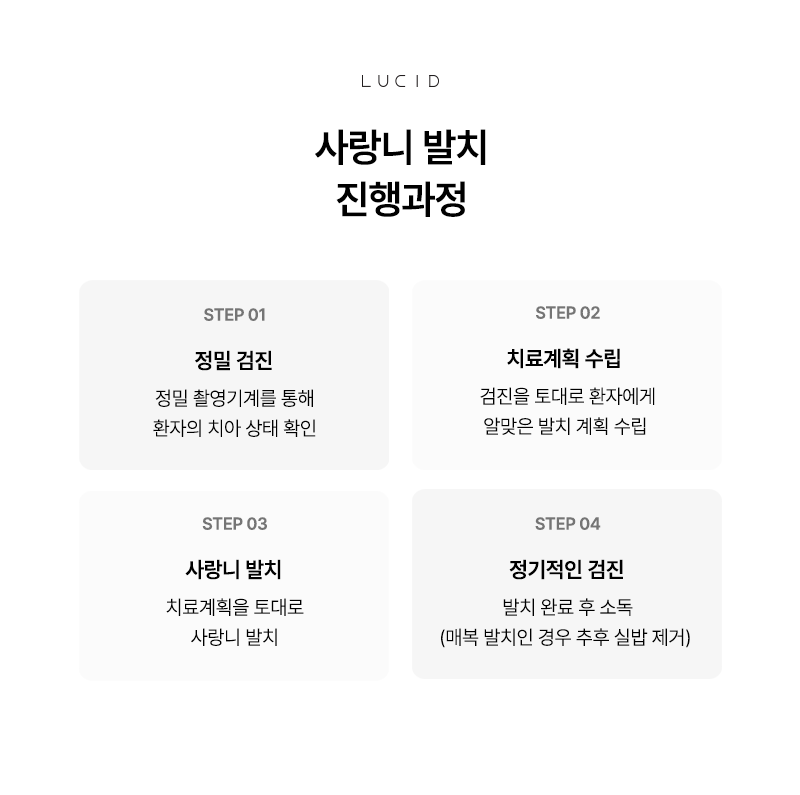
What Problems Can Occur If an Impacted Wisdom Tooth Is Left Untreated?
- Inflammation may develop in the gums around the wisdom tooth.
A partially impacted wisdom tooth may be partly covered by gum tissue. Food debris and bacteria can easily become trapped in this space, while cleaning it with a toothbrush alone may be difficult. As a result, inflammation around the wisdom tooth, known as pericoronitis, may develop, causing gum swelling or pain. It may begin as mild discomfort, but depending on the severity of the inflammation, pain when chewing or difficulty opening the mouth may occur. Even if the symptoms temporarily subside, similar problems may recur if the position of the wisdom tooth and its surrounding conditions remain unchanged, so the condition should be checked.
- The molar directly in front of it may also develop a cavity.
One of the important areas to examine when evaluating an impacted wisdom tooth is the second molar directly in front of it. If the wisdom tooth is tilted forward, food debris and plaque can easily accumulate between the two teeth. In addition, because this area is located deep inside the mouth, it is difficult to clean thoroughly with a toothbrush or dental floss. If this condition continues for a long time, cavities may develop not only in the wisdom tooth but also in the molar in front of it. Since even a normally functioning molar may be affected, when deciding whether to undergo impacted wisdom tooth extraction in Gangnam, it is important to examine not only the wisdom tooth itself but also the condition of the neighboring teeth.
- The surrounding gums and periodontal tissues may be affected.
If food debris and bacteria remain continuously between the wisdom tooth and the molar in front of it, the surrounding gums may also be affected. In particular, when a wisdom tooth is tilted and closely contacts the tooth in front of it, a space that is difficult to clean may form. Therefore, during an examination, it is advisable to check not only whether the wisdom tooth has a cavity but also the gums and periodontal tissues around the molar in front of it.
- Lesions such as cysts may sometimes be found.
Although this is not common, lesions such as cysts may be found around a wisdom tooth impacted within the jawbone. Such changes may cause no noticeable pain in the early stages, making them difficult to detect on your own. Therefore, rather than assuming there is no problem simply because the wisdom tooth is not visible, it is advisable to have regular examinations that also assess the condition inside the jawbone.
Does an Impacted Wisdom Tooth Need to Be Extracted Immediately After It Is Discovered?
Not every impacted wisdom tooth needs to be extracted at the same time. The need for extraction is determined after considering each individual’s condition, including the wisdom tooth’s position and direction, depth of impaction, relationship with neighboring teeth, and whether inflammation is present.
If the wisdom tooth is not significantly affecting the surrounding tissues and can be managed and monitored, regular examinations may be recommended. On the other hand, extraction may be considered depending on the condition when inflammation recurs, there is a possibility of affecting neighboring teeth, or a cavity or other problem is identified.
Ultimately, the important point is not to decide whether extraction is necessary solely based on the fact that a wisdom tooth is present or impacted.
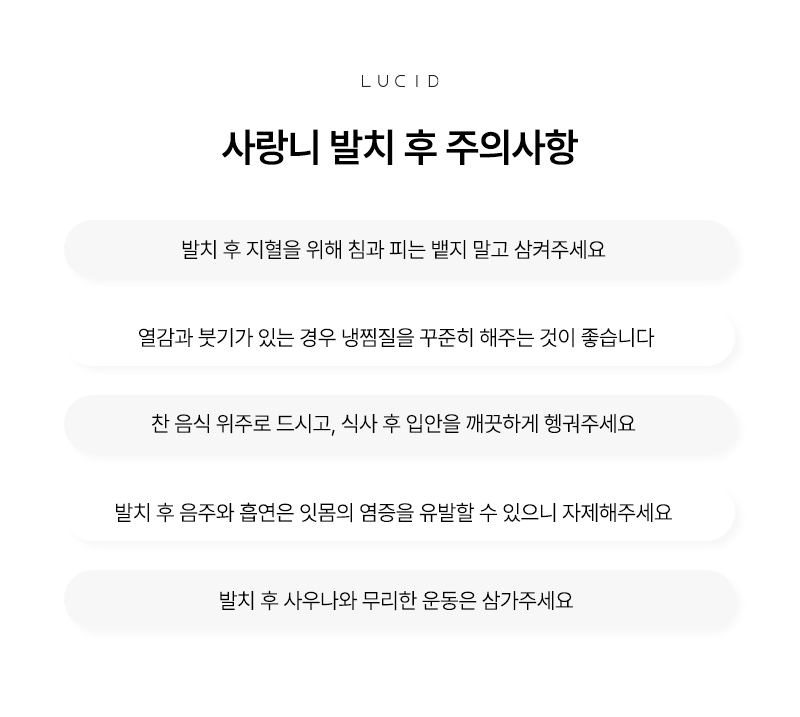
Checking the Position Is Important Before Impacted Wisdom Tooth Extraction in Gangnam.
Unlike wisdom teeth that have erupted normally outside the gums, impacted wisdom teeth may be located inside the jawbone. For this reason, it is important to check the surrounding structures before extraction.
In particular, a nerve canal through which a nerve passes is located in the lower jaw, so the positional relationship between the wisdom tooth’s roots and the nerve canal should be examined.
First, radiographic imaging is used to check the wisdom tooth’s overall direction and position. When necessary, 3D CT and other methods may be used to further assess the depth of impaction, the shape of the roots, and their relationship with surrounding structures.
Based on these examination results, a treatment plan is established while taking the individual’s oral condition into account.
If You Have Been Postponing Extraction Because of a Busy Schedule
Some people continue to postpone visiting the dentist because of work or school schedules, even when they know their wisdom tooth is causing discomfort. Considering everything from the examination needed to determine whether extraction is necessary to follow-up after treatment, finding time for dental care itself may feel burdensome.
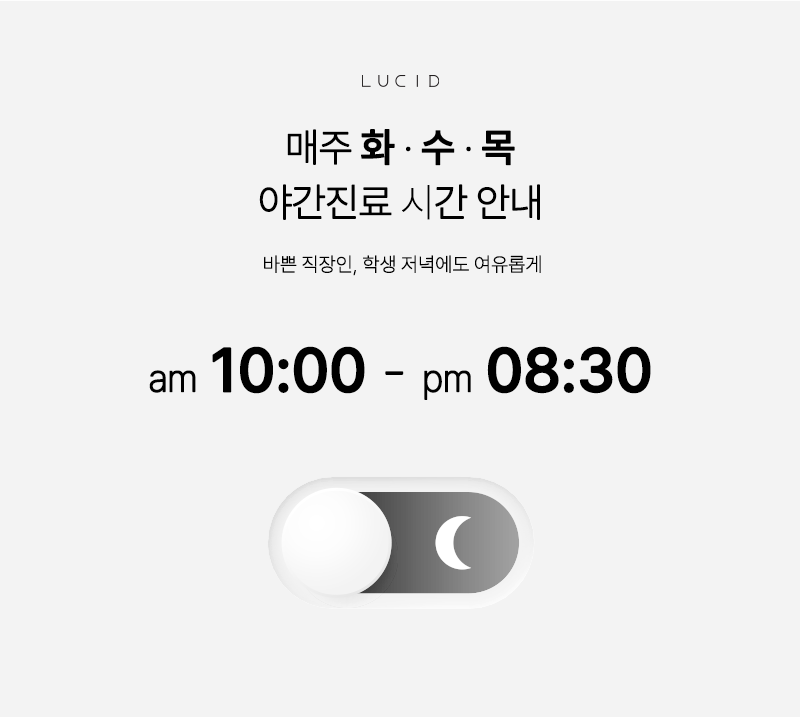
Lucid Dental currently has seven dental specialists from different departments working together, and offers evening appointments on Tuesdays, Wednesdays, and Thursdays. Office workers or students who have difficulty visiting during weekday daytime hours can check the evening appointment schedule and make a treatment plan.
However, appointment schedules may vary depending on the medical staff and reservations, so it is advisable to confirm the schedule before visiting.
Consider Your Wisdom Tooth Based on Its Current Condition, Rather Than Waiting for Pain
An impacted wisdom tooth may cause no particular symptoms in everyday life, only making its presence known when the gums suddenly swell or pain develops.
Conversely, an impacted wisdom tooth may be discovered while checking for a cavity or gum problem in the molar directly in front of it, even though the wisdom tooth itself has never been painful. Therefore, if you know that you have a wisdom tooth, it is important to check its position and direction, as well as the condition of the surrounding teeth and tissues, rather than deciding whether extraction is necessary based only on whether it currently hurts.
If you are considering impacted wisdom tooth extraction in Gangnam, it is advisable to first examine the current position and shape of the wisdom tooth and then decide whether extraction is necessary and when it should be performed.
At Lucid Dental, we check the position of the wisdom tooth and surrounding structures based on the oral condition and radiographic examination results, and provide guidance on the necessary treatment approach according to each individual’s condition.
If the area around your wisdom tooth repeatedly swells, food frequently becomes trapped, you feel discomfort when cleaning the very back of your mouth, or you have previously been told that you have an impacted wisdom tooth, please have your current condition checked through a dental examination rather than leaving it untreated.