Hello. This is Lucid Dental.
When considering implant treatment after losing a tooth, people usually first look into what materials are used, how long the treatment will take, and how the placement process is carried out. However, implant treatment does not end with the completion of the procedure; ongoing care is also important.
Just like natural teeth, implants are used every day to chew food and are exposed to various forces, so the way they are managed after treatment also requires careful attention. In particular, some people become less diligent about care because implants themselves do not develop cavities. However, the surrounding gums and alveolar bone are still present, and the health of these tissues can affect the stable use of implants.
Therefore, if you are looking into Gangnam implants, it is advisable to consider not only the placement process but also everything from a detailed diagnosis before treatment to regular care afterward.

What Are Dental Implants?
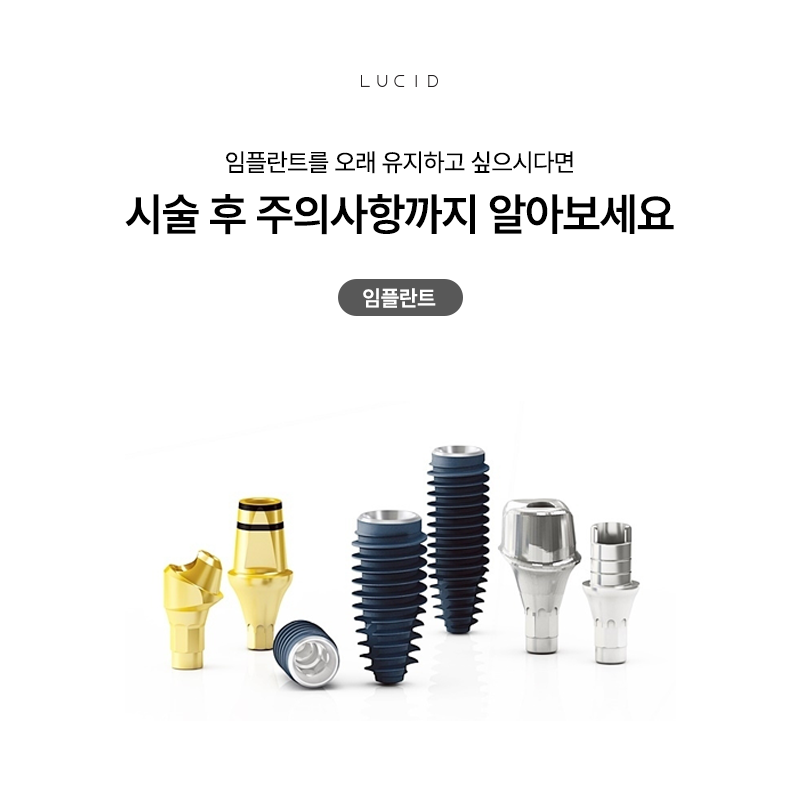
Implants are a treatment option that may be considered to restore the function of an empty space when a natural tooth has been lost due to cavities, periodontal disease, trauma, or other causes.
In general, an artificial tooth root is placed in the jawbone at the site of the missing tooth, and an abutment and tooth-shaped prosthesis are connected on top of it. Simply put, the artificial tooth root serves the role of the natural tooth root, while the upper prosthesis replaces the visible part of the tooth.
However, not everyone receives treatment in the same way simply because a tooth is missing. A treatment plan should be established after assessing the location and number of missing teeth, the width and height of the jawbone, the condition of the surrounding teeth, the bite relationship, and overall health.
In particular, if a tooth has been missing for a long time, the condition of the jawbone may have changed, so checking the current oral condition should come first.

Why Is Care Important After Implant Treatment?
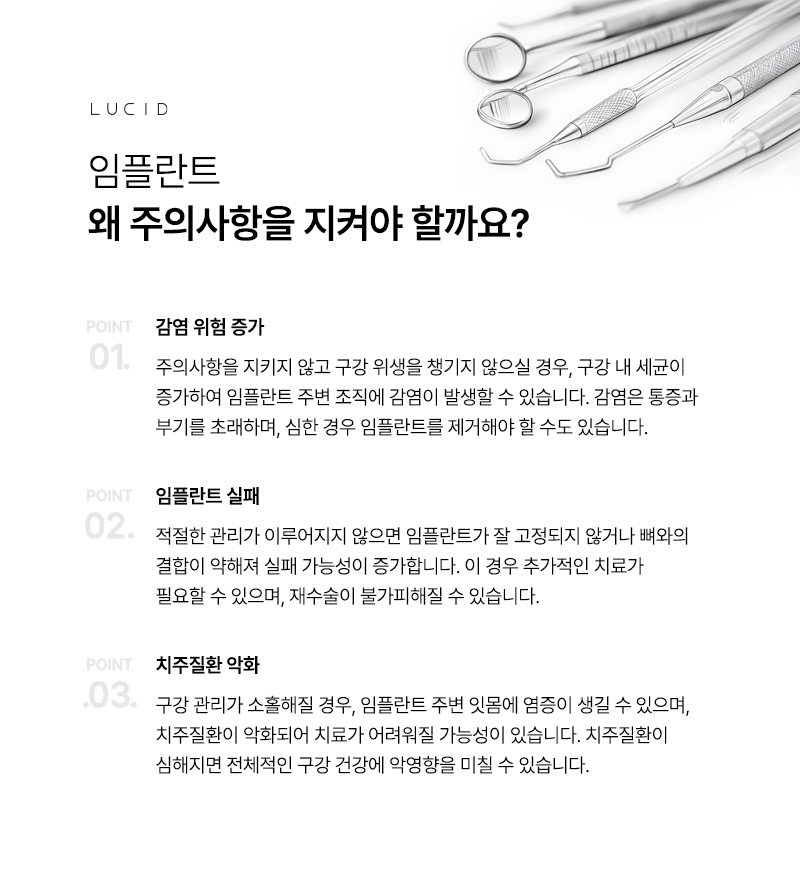
Artificial tooth roots and prostheses do not develop cavities in the same way as natural teeth. That does not mean brushing and dental checkups are unnecessary.
Food particles and plaque can remain between the implant and the gums, which may cause inflammation in the surrounding gums. At first, this may begin with bleeding while brushing or swollen gums. If the inflammation progresses, it may also affect the tissues supporting the implant.
There are also structural differences between natural teeth and implants. The roots of natural teeth are surrounded by periodontal ligaments, which cushion forces transmitted from outside and convey sensations. Implants do not have periodontal ligaments.
As a result, there are cases in which excessive force on a particular area is not noticed immediately. This is why it is necessary to periodically examine the surrounding gums, prosthesis, and bite, even if there is no noticeable pain or discomfort.
Clean Carefully Around the Implant
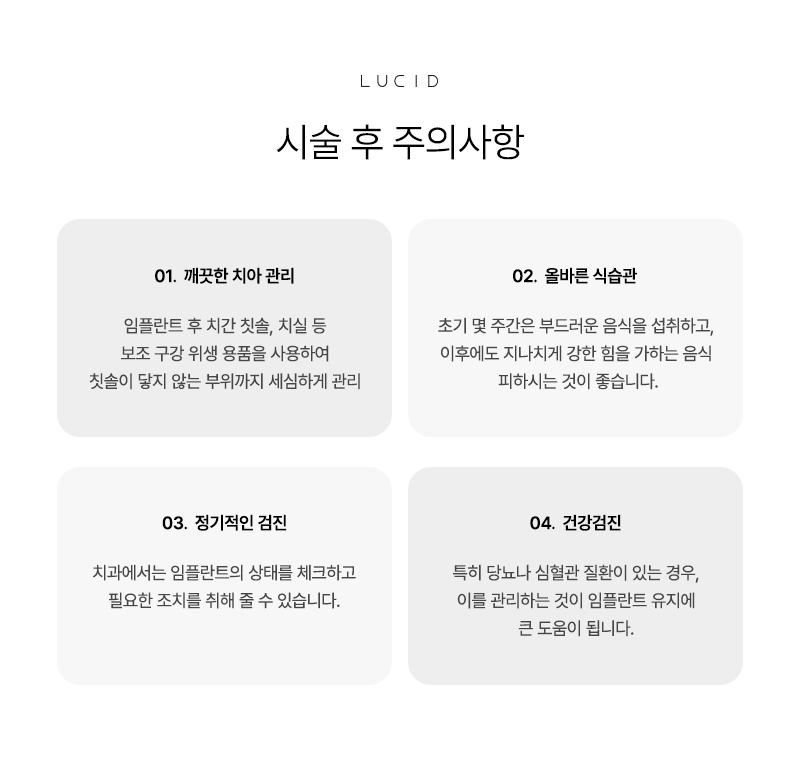
The most basic care method after treatment is proper toothbrushing. Rather than brushing only the outer surface of the prosthesis, it is important to clean carefully up to the boundary where the implant and gums meet.
Food particles or plaque that are difficult to remove with a regular toothbrush alone may remain between the teeth. Using aids such as dental floss or an interdental brush together can help maintain oral hygiene in these areas.
However, the spacing between teeth and the shape of prostheses vary from person to person, so avoid automatically using a large interdental brush or forcing it in with excessive pressure. It is advisable to receive guidance on the appropriate product size and method of use for your oral condition.
Avoid Repeatedly Chewing Hard or Tough Foods
Even after implant treatment has been completed, it is advisable to avoid repeatedly applying excessive force. Actions such as biting down on ice, chewing very hard candy, or repeatedly chewing tough foods only on one side can place stress on the prosthesis and surrounding structures.
Also, if you always chew on one side while eating, force may become concentrated in a particular area. If possible, develop a habit of using both sides in a balanced manner, and avoid using your teeth to open bottle caps or tear open packages.
Check for Teeth Grinding and Clenching Habits
Some people grind their teeth while sleeping or habitually clench their teeth when concentrating. The problem is that many people are unaware they are doing this.
If your jaw feels stiff every morning or you repeatedly experience discomfort around your teeth, it is advisable to examine your usual bite and whether you grind your teeth. Continuous transmission of strong forces can place stress on the prosthesis, so the bite should also be checked during regular examinations.
Also Pay Attention to Smoking Habits
With implants, the condition of not only the artificial tooth root but also the supporting gums and alveolar bone is important. Smoking can negatively affect the oral environment and gum health, so you may be advised to stop smoking before and after implant treatment. Rather than returning to your previous smoking habits because treatment has ended, it is advisable to maintain smoking cessation with your long-term oral health in mind.
Regular Checkups Are Necessary Even Without Discomfort
When using an implant, it is easy to think that you do not need to return to the dentist if you have no particular pain. However, some areas are difficult to assess through home care alone.
Regular checkups can be used to assess the condition of the surrounding gums, whether the prosthesis is moving, and the balance of chewing forces. Oral hygiene care can also be provided when necessary. The checkup interval is not the same for everyone.
It may vary depending on the current condition of your gums, the number and location of implants, oral hygiene, and lifestyle habits. It is advisable to consult with your dental care provider to determine a care schedule suited to you.
Have These Changes Checked
If you notice changes that feel different from before while using an implant, it is advisable not to leave them unattended. If bleeding repeatedly occurs in a particular area while brushing, the gums become swollen, or food gets stuck more often than before, the surrounding condition should be checked.
The same applies if the prosthesis feels as though it moves when chewing or if your bite feels different from before. Even if the pain is not severe, it is advisable to have the cause checked at a dental clinic if changes that differ from usual persist.
How Does Lucid Dental Evaluate Patients Before Implant Treatment?
When considering Gangnam implants, it is important to look beyond the simple process of placing an artificial tooth root and consider how the current oral condition is thoroughly assessed and a treatment plan is established accordingly. Before implant treatment, Lucid Dental examines the oral condition, performs the necessary diagnostic procedures, and evaluates the planned placement site and the condition of the surrounding tissues.
In particular, we check the condition of the jawbone at the planned implant site and the positions of the surrounding teeth, then plan the treatment approach while considering each patient’s unique oral structure. When necessary, 3D CT and other tools may be used to assess the shape of the alveolar bone and surrounding structures, which can be difficult to evaluate through two-dimensional examinations alone.
Depending on the oral condition, a navigation implant approach using digital data may also be considered. Navigation implants involve planning the placement location and direction based on information obtained during the examination and reflecting that plan in the actual treatment process.
However, this approach is not applied identically to every patient. Whether it is appropriate should be determined after assessing individual factors such as the amount and shape of the jawbone.
At Lucid Dental, we consider not only the placement process but also care after the prosthesis has been completed. Because implants are continuously exposed to force while chewing, it is necessary to check the bite and surrounding gums even after the prosthesis is connected and to provide care instructions suited to the current condition.
Care After Treatment Is Also Important
Implants are a treatment option that can help restore the function of lost teeth, but placing an implant once does not mean it can be used without any further care. It is necessary to brush properly and consistently, use dental floss or an interdental brush appropriately, and pay attention to habits such as repeatedly chewing excessively hard foods or grinding your teeth.
Most importantly, do not visit the dentist only when a problem occurs; have your current condition checked regularly. If you are looking into Gangnam implants, rather than comparing only treatment methods or materials, it is advisable to check how the process continues from diagnosis and placement through prosthetic treatment and ongoing care.
If you have lost a tooth and are considering an implant, or if the gums or prosthesis in an area that has already been treated feel different from before, please have your oral condition accurately assessed first.
At Lucid Dental, we plan the treatment approach after assessing each person’s teeth, gums, and alveolar bone, which differ from patient to patient. We also consider regular follow-up examinations important after treatment is completed to monitor the condition of the implant and surrounding tissues.
Please remember that how you care for an implant after treatment is just as important for long-term use as the treatment process itself.
Gangnam Implant Care: Frequently Asked Questions Q&A
Q. Can I have scaling after receiving an implant?
A. Yes. Even after implant treatment, regular checkups and scaling may be necessary to manage the oral hygiene of the surrounding teeth and gums. Implants themselves do not develop cavities like natural teeth, but plaque and tartar can accumulate around them. If these deposits remain for a long time, they may affect gum health, so it is advisable to receive the care needed according to your current oral condition. However, the implant location, prosthesis shape, and condition of the surrounding gums vary from person to person. It is therefore advisable to receive guidance on the appropriate care method and interval through regular checkups.
Q. Can implants be used for life?
A. It is difficult to state the period for which implants can be used identically for everyone. The condition of an implant can be affected by various factors, including its placement location, the health of the surrounding gums and alveolar bone, oral hygiene, the bite, and lifestyle habits. Therefore, rather than setting a specific usage period, it is important to continue checking the current condition through consistent brushing, oral hygiene care, and regular checkups.
Q. Is using only a regular toothbrush enough after implant treatment?
A. Thorough brushing with a regular toothbrush is a basic care method. However, spaces may form between an implant and the surrounding teeth that toothbrush bristles cannot adequately reach. Where necessary, oral care products such as dental floss or an interdental brush may also be used. Above all, the spacing between teeth and the shape of implant prostheses vary from person to person. Rather than using these products forcefully, it is advisable to identify the aids and methods of use suited to your oral condition.