Hello, this is Lucid Dental Clinic.
Even when teeth become sensitive or start throbbing, some people wait a few days rather than visiting a dentist right away.
This is because the pain may appear briefly only when eating, rather than continuing all day, or a tooth may hurt one day and feel fine the next. Some people also postpone treatment because it is difficult to take time away from work or school, or because they feel apprehensive about root canal treatment itself.
However, it is difficult to determine the extent of tooth damage based simply on how painful the tooth feels. In particular, if decay has deepened and affected the pulp located at the center of the tooth, the tooth may not naturally return to its previous condition simply with the passage of time.
Even if the problem begins as mild sensitivity, the scope of treatment required may vary depending on how far it has progressed. If symptoms recur, it is advisable to identify the cause. If you are looking into root canal treatment at a Nonhyeon-dong dental clinic, it is first necessary to understand exactly what root canal treatment involves. Today, we will look one by one at why root canal treatment may be needed, the changes that can occur when the appropriate timing is missed, the actual treatment process, and care afterward.
What Is Root Canal Treatment?
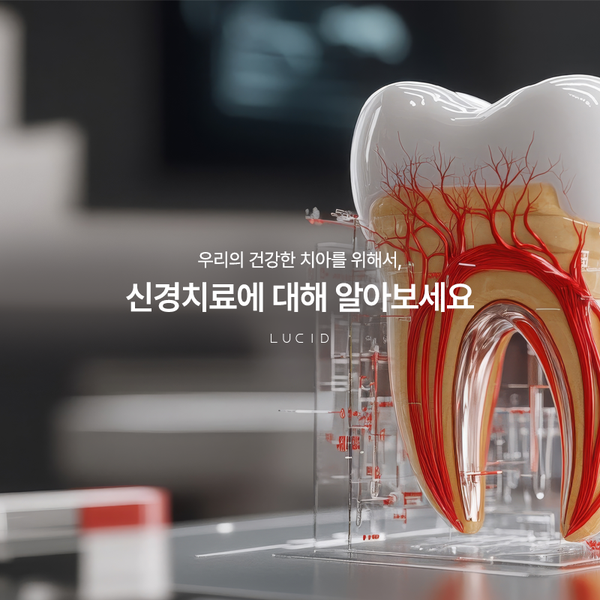
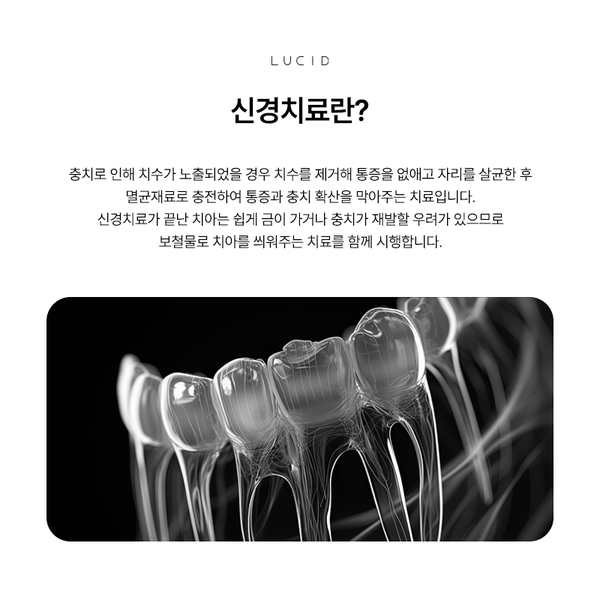
Although it is commonly called nerve treatment, its precise name is root canal treatment. A tooth is not made up only of the hard part visible from the outside. Enamel is found on the outermost layer, dentin lies beneath it, and the center contains a tissue called the pulp, which includes nerves and blood vessels. Inside the tooth root, there are also root canals—narrow passages containing pulp tissue, including nerves and blood vessels.
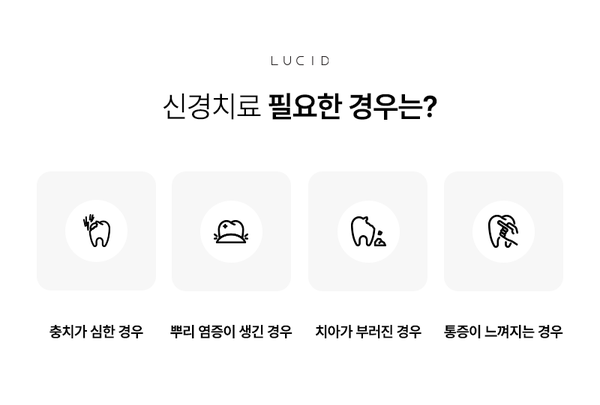
If decay remains relatively shallow, the damaged area may be removed and the tooth restored using materials such as composite resin or an inlay. On the other hand, if decay has deepened and bacteria have penetrated the pulp, or if trauma or a crack has damaged the nerve tissue to the point that recovery is difficult, simply removing the decayed area and restoring the tooth may not be sufficient.
Root canal treatment involves removing inflamed or necrotic pulp, cleaning and disinfecting the inside of the root canal, and then filling and sealing it with an appropriate material.
In other words, root canal treatment is not simply a procedure to remove a painful nerve. It can be understood as one of the treatment processes used to preserve a problematic tooth as much as possible without extracting it.
Not Every Tooth With Decay Requires Root Canal Treatment
The discovery of tooth decay does not necessarily mean that root canal treatment will be required. The appropriate treatment may vary depending on how deeply the decay has progressed and which tooth tissues it is affecting.
If the decay is limited to the enamel or part of the dentin, removing the decayed portion and restoring it with a suitable material may be considered. However, if the lesion has progressed close to the pulp or inflammation has already developed in the internal tissues, ordinary restorative treatment alone may not be sufficient.
In addition to decay, a severely broken tooth, external trauma, or a deep crack can also affect the pulp, so it may be necessary to determine whether root canal treatment is needed. Thus, even when the decay or tooth damage appears similar, the treatment approach may differ depending on how far the damage has extended.
Therefore, when determining whether root canal treatment is needed at a Nonhyeon-dong dental clinic, it is necessary to comprehensively examine not only the presence of decay but also the depth of the lesion, the pulp’s response, and the condition of the root and surrounding tissues.
Why Do People Delay Root Canal Treatment?
There are various reasons why people may not be able to begin treatment immediately even after being told that root canal treatment may be necessary. One common reason is that the pain changes over time.
Toothache does not always continue at a constant intensity; it may repeatedly become worse and then subside. If a tooth hurt badly a few days ago but causes little discomfort today, it is easy to think that the problem has resolved. In addition, root canal treatment may require several visits depending on the condition of the tooth, which can feel burdensome, or people may delay their visit because they are concerned about the treatment process itself..
However, when deciding whether treatment is needed, it is important to consider what stage the tooth is currently in rather than focusing only on the level of discomfort felt at that moment. If necessary treatment is postponed for too long and the decay or infection progresses, the scope of treatment may differ from what it would have been at the time of the initial diagnosis.
Therefore, rather than making an arbitrary judgment simply because the symptoms have subsided, it is advisable to check the current condition of the tooth and then determine the appropriate timing for treatment.
What Problems Can Occur If Root Canal Treatment Is Delayed?
- Inflammation of the pulp may deepen
When the pulp has been affected by bacteria, the inflammation may progress over time. A tooth that was initially sensitive only to cold or sweet foods may later become sensitive to hot foods as well. It may also begin to throb or cause a pulsating pain even without stimulation. In particular, the discomfort may become more noticeable when lying down, sometimes disrupting sleep. These changes may occur as inflammation of the pulp tissue progresses, so recurring toothache should not be dismissed as a temporary symptom.
- A tooth that was severely painful may become quiet instead
This is one point worth knowing about root canal treatment. A tooth that has been severely painful for some time may suddenly feel normal.
When the pain decreases, it is easy to think that the problem has been resolved. However, this change can also occur when damage to the pulp becomes severe, causing the nerve to become necrotic and reducing its ability to sense stimulation.
Therefore, if severe toothache suddenly disappears without any treatment, it is advisable to have the condition inside the tooth examined rather than assuming that it has simply recovered.
- Problems may extend to the area around the tip of the tooth root
Even after pulp tissue becomes necrotic, bacteria and infected tissue may remain inside the root canal. If this condition continues for a long time, bacteria may move toward the tooth root and cause inflammation in the tissues around the root tip. At this stage, a different type of discomfort may appear. For example, only one particular tooth may hurt when chewing, the tooth may feel as though it is raised compared with normal, or pressing on the area may cause discomfort.
It is difficult to determine from the outside alone whether a lesion has formed around the root, so imaging such as radiographs may be used when necessary.
- Pus may form in the gums, or the gums may swell
When an infection spreads to the surrounding tissues, visible changes such as gum swelling or pus formation may occur. In some cases, a small pimple-like bump may repeatedly appear and disappear on the gum near the affected tooth. Although it may look like a simple gum problem, it may also indicate that a passage has formed through which pus from around the tooth root is draining. Therefore, if such changes are observed around a tooth that has been uncomfortable, it is necessary to examine not only the gums but also the causative tooth and the condition of its root.
- The treatment process may become more complex
The fact that root canal treatment is needed may mean that significant changes have already occurred in the tissues inside the tooth. If treatment continues to be postponed in this situation, the infection may spread, or the remaining tooth structure may be further reduced by decay. The less tooth structure remains, the more factors must be considered when deciding on a restoration. If the problem has also extended to the area around the root, the treatment process may take longer than it would have initially. Therefore, when deciding when to undergo root canal treatment, it is advisable to consider not only the current level of pain but also how the tooth can be preserved in the future.
- In some cases, preserving the natural tooth may become difficult
Root canal treatment is considered as a way to preserve a tooth with damaged pulp as much as possible. However, not every tooth can be maintained with root canal treatment alone.
If too much of the tooth structure has been lost because of decay, the root has suffered a deep fracture, or the surrounding tissues supporting the tooth are in poor condition, the possibility of preserving the tooth must be assessed separately. Therefore, to use natural teeth for as long as possible, it is important not to delay treatment unnecessarily, but to check the remaining tooth structure and the condition of the root and receive appropriate care at the necessary time.
Why Even Tolerable Pain Requires an Examination
“It hurts, but it is not unbearable.” This is something that is often heard in the dental office.
However, the intensity of pain varies from person to person, and the extent of progression inside a tooth is not always proportional to the level of pain.
Toothache is also not caused only by tooth decay. Various causes, such as tiny cracks in the tooth, gum disease, problems with an existing restoration, or pressure from the bite, can produce similar symptoms.
Therefore, rather than deciding on a treatment method based simply on how much the tooth hurts, it is necessary to consider when the symptoms began, under what circumstances the discomfort occurs, and whether the pain remains after the stimulus has disappeared.
When necessary, the cause may be differentiated through processes such as radiographs and pulp response tests. Even when considering root canal treatment at a Nonhyeon-dong dental clinic, it is important to first go through this diagnostic process to confirm whether the tooth is actually in a condition that requires root canal treatment.
What Is the Root Canal Treatment Process?
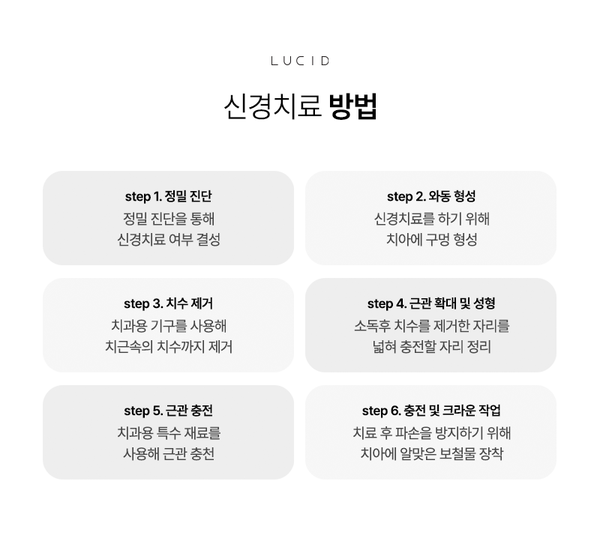
Root canal treatment involves working on the extremely narrow canals inside a tooth. First, the extent of decay, the shape of the roots, and the condition around the tooth root are examined through an oral examination and radiographs.
If the examination indicates that root canal treatment is needed, an opening is created to access the inside of the tooth, and damaged or necrotic pulp tissue is removed. Next, the length and shape of the canals inside the tooth root are identified while the inside is cleaned and prepared.
The number and shape of root canals vary from tooth to tooth. They may be extremely narrow or curved, or they may branch into several channels. Therefore, the infected tissue and debris remaining inside the canals must be removed while taking each tooth’s internal structure into account, and the canals must be prepared into a condition suitable for treatment.
After cleaning and disinfection, once the treatment area has been properly prepared, the root canals are filled with a material and sealed. The number of visits and the treatment period may vary from person to person depending on the type of tooth, the extent of infection, and the structure of the root canals.
Why Is a Crown Recommended After Root Canal Treatment?
The completion of root canal treatment does not mean that every step involving the tooth is finished. A tooth that required root canal treatment may already have lost a certain amount of tooth structure due to deep decay, an existing restoration, or a fracture.
If the access procedure required to treat the inside of the tooth is added to this, the remaining tooth structure may be limited. Molars, in particular, repeatedly receive relatively strong forces during meals, so if there is not enough tooth structure remaining, the possibility of cracks or fractures must be considered.
For this reason, after root canal treatment at a Nonhyeon-dong dental clinic, the option of protecting the tooth by covering it with a crown may be considered as needed after examining the tooth’s location, the extent of damage, the amount of remaining tooth structure, and the bite.
However, the same type of restoration is not applied to every tooth that has undergone root canal treatment. The restoration method may vary depending on whether the tooth is a front tooth or a molar and how much tooth structure remains, so it is important to create a plan suited to the individual condition even after treatment is completed.
It Is Best Not to Leave Long Gaps Once Treatment Has Begun
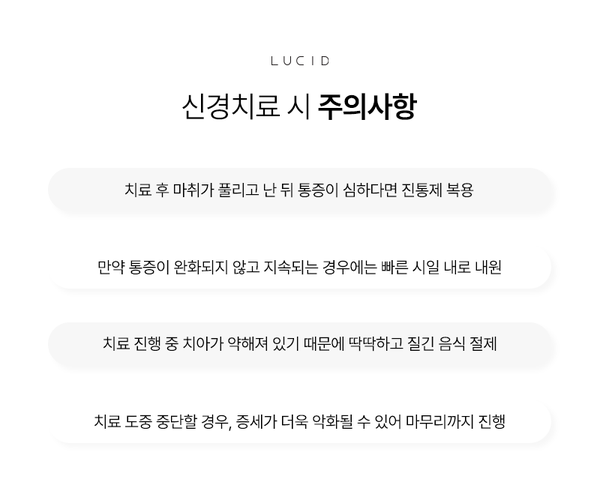
Root canal treatment may be completed in a single visit, but several visits may be needed depending on the condition of the tooth. Caution is needed when postponing the next appointment for a long time simply because the pain has decreased significantly during treatment.
When treatment inside the root canal is not yet fully complete, the tooth may be sealed with a temporary material. If the temporary restoration wears down or partially comes out over time, the inside may become contaminated again through the gap.
Also, if the interval between treatments becomes excessively long, there may be situations in which the condition of the treatment performed during the previous step must be checked again. Therefore, once root canal treatment has begun, rather than stopping arbitrarily because the pain has decreased, it is advisable to complete the necessary steps according to the recommended schedule and proceed to the final restoration afterward.
Care Is Still Needed After Root Canal Treatment
Removing the pulp tissue does not mean that the tooth will never develop any further problems. A tooth that has undergone root canal treatment still has gums and alveolar bone around it, and plaque and tartar can accumulate just as they can around other teeth.
In particular, if the boundary where the restoration meets the natural tooth is not adequately maintained, new decay may develop. It is advisable to brush thoroughly and use oral-care products such as dental floss or an interdental brush so that food debris and plaque do not remain for long between the teeth or around the restoration.
Even if there is no particular discomfort, it is necessary to check through regular dental examinations whether there have been any changes in the treated tooth or surrounding tissues. If you repeatedly chew hard foods on one side, clench your teeth, or grind your teeth, continuous force may be transferred to the tooth and restoration, so it is also helpful to review these habits.
Diagnosis and Treatment for Long-Term Use of Natural Teeth
The causes of tooth pain are more varied than you may think. Deep decay may require root canal treatment, but similar discomfort can also result from cracks in the tooth, problems with existing restorations or prostheses, gum disease, and other causes.
Therefore, rather than proceeding with root canal treatment unconditionally simply because a tooth hurts, it is necessary to distinguish the cause of the symptoms and assess how much of the tooth can be preserved.
At Lucid Dental Clinic, we plan the treatment approach after identifying the affected area and the extent of progression through necessary examinations, including oral examinations and radiographs. If the decay remains relatively shallow, appropriate restorative treatment is performed while taking the remaining tooth structure into account. If the pulp is determined to be affected, the need for root canal treatment is assessed.
After root canal treatment, we also determine the necessary restoration method by considering the amount of remaining tooth structure, the tooth’s location, and chewing forces, and provide guidance on subsequent care.
In this way, when choosing a Nonhyeon-dong dental clinic, it is important to check whether the clinic establishes a treatment plan suited to the stage of the condition after examining not only the pain currently felt but also the inside of the tooth and the surrounding tissues.
Root Canal Treatment: Rather Than Delaying Unconditionally, Consider the Necessary Timing
There are cases in which a problem has progressed more deeply inside the tooth than the small changes visible from the outside suggest.
Even if the problem initially caused only brief sensitivity when eating cold or sweet foods, the pattern of discomfort may change over time depending on the cause. In particular, if the pulp has already been affected, simply reducing the symptoms temporarily with pain medication or waiting without taking action is unlikely to resolve the underlying problem.
That said, not every case of toothache requires root canal treatment. What matters is examining which tissues are currently affected and determining the necessary treatment method and timing based on the findings.
The purpose of treating a tooth is not merely to reduce immediate pain. It is also to preserve the original tooth as much as possible and allow it to continue functioning afterward.
If you are considering root canal treatment at a Nonhyeon-dong dental clinic, or if sensitivity, throbbing, or discomfort when chewing has recently been recurring in a particular tooth, please consider having the cause examined rather than waiting until the symptoms become more severe.
Rather than simply enduring tooth discomfort, identifying the cause should come first. Not missing the necessary treatment timing and continuing with follow-up care can help maintain your valuable natural teeth for a long time.