Burial Method vs. Incision Method

Burial method, incision method, double eyelid surgery
For people considering double eyelid surgery,
this is usually the first thing they want to know.
“Is the burial method more natural?”
“Does the incision method leave scars?”
Both methods are widely used basic procedures,
but each has different pros and cons, and different eye conditions they are suited for.
Today, I’ll organize the differences between the burial method and the incision method, along with the key points you should know when choosing, based on the criteria I often explain in consultations.
-
Double eyelid surgery: the two methods
start with different basic structures
-
In Mokdong, the choice varies depending on age, occupation, and eye condition
-
The results of the two methods are determined more by the eye’s
structure than by the surgical method
-
Questions often heard in the clinic Q&A
-
In summary
-
Double eyelid surgery: the two methods start with different basic structures
Burial Method vs. Incision Method

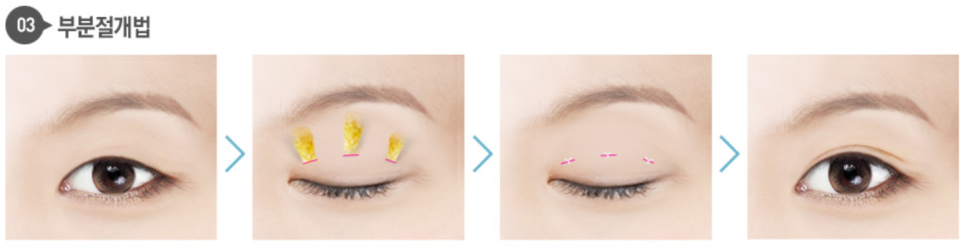
Burial method, incision method, double eyelid surgery
- Burial method (non-incision method)
This method creates a double eyelid by using sutures to connect the muscles that open the eyes and the skin from the inside.
Because there is almost no skin incision, there is less concern about scarring and recovery is faster.
Suitable for these eyes
• When the skin is thin and there is little fat
• Eyes in which the line holds well once it is formed
• When you want a natural subtle double eyelid or a medium-width line
• When you want to minimize swelling, bruising, and recovery time
• When it is your first surgery
Features
• Fast recovery and easy return to daily life
• The line can be adjusted
However, if there is a lot of fat or severe sagging, the retention may be weak
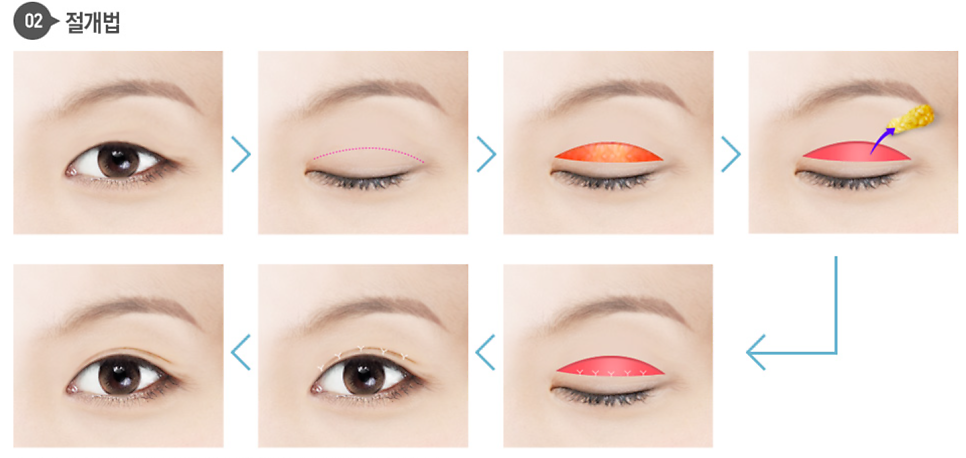
- Incision method
This method makes an incision along a certain length of the eyelid skin,
organizes loose skin, muscle, and fat, and directly fixes the line.
Suitable for these eyes
• When the skin is thick or there is a lot of fat
• When eyelid sagging is present
• When structural correction is needed, such as for asymmetry or revision surgery
• When stable line retention is important
Features
• The line remains stable
• The shape and width of the line can be adjusted
• The recovery period is longer and there is initial swelling
• Scars are mostly hidden naturally within the eyelid crease line
- In Mokdong, the choice varies depending on age, occupation, and eye condition
Burial Method vs. Incision Method

Burial method, incision method, double eyelid surgery
In Mokdong, there are many first-surgery consultations for people in their 20s and 30s,
but recently, surgeries that also correct sagging in people in their 40s and older have increased.
• Students and office workers / Prefer fast recovery surgeries → higher use of the burial method
• Eyes with thick skin and a lot of fat / Revision surgery → higher use of the incision method
In other words, age, skin condition, and lifestyle patterns
all affect the choice of method.
- The results of the two methods are determined more by the eye’s structure than by the surgical method
Burial Method vs. Incision Method

Burial method, incision method, double eyelid surgery
The result of double eyelid surgery is influenced more by the basic condition of the eyes
than by the surgical method itself.
| Category | Burial Method | Incision Method |
|---|
| Incision | X | O |
| Recovery period | Short (3–7 days) | Long (2–3 weeks or more) |
| Retention | Strong for thin skin | Strong for thick skin |
| Scarring | 거의 없음 | Naturally hidden inside the crease line |
| Correctability | Limited | Can be adjusted in various ways |
| Revision surgery | Relatively easy | Once incised, the structure is fixed |
Neither method is wrong;
the key is whether it matches the condition of the eyes.
- Questions often heard in the clinic Q&A
Burial Method vs. Incision Method


Burial method, incision method, double eyelid surgery
Q1. Is it true that the burial method can easily come undone?
If the skin is thick or there is a lot of fat, it may come undone.
Conversely, in eyes with thin skin, it can last more than 5 years.
In other words, it depends on the condition of the eyes.
Q2. Does the incision method leave scars?
An incision is made, but because it is mostly hidden within the eyelid crease line, it does not stand out much after recovery.
Q3. Can you change from the burial method to the incision method later?
Yes.
It is done by removing the burial line and reorganizing the structure.
However, revision surgery is recommended after a certain recovery period (usually 3 to 6 months or more).
Q4. Which method looks more natural?
“Naturalness” is determined not by the method,
but by the line height, skin thickness, and how much of the eyeball is exposed.
Even an incision on a thin eye can look natural,
while a burial method on a thick eye can look awkward.
- In summary
Burial Method vs. Incision Method

Previous image
Next image
Burial method, incision method, double eyelid surgery
‘Mokdong Burial Method vs. Incision Method’ is
not about which one is better.
What matters is whether the condition of your eyes and the result you want match each other.
• If the skin is thin and there is little fat → burial method
• If the skin is thick, there is sagging, or it is revision surgery → incision method
• If the eyelid-opening strength is weak → consider combining with ptosis correction
Double eyelid surgery is not a procedure that simply creates a line;
it is a surgery that organizes the eye structure and naturally adjusts its function.
Understanding “what kind of eyes” you have before the method itself—that is the most reliable standard for making a choice.
▼More stories about eye surgery▼