Mokdong Lifting, When Does Skin Sagging Reach the Limit of Care Management?
Mokdong Lifting
Table of Contents
-
Medical definition of Mokdong lifting
-
Why do people in Mokdong first start thinking about ‘lifting’?
-
The cause of skin sagging is not only ‘loss of elasticity’
-
The stage where care management is possible,
and the stage where judgment is needed are different
-
Q&A: The most frequently asked questions when searching for Mokdong lifting
-
Medical definition of Mokdong lifting
Mokdong lifting does not simply mean pulling the skin from the outside.
Medically, it broadly refers to an approach that aims to realign the skin, fat, and fascia (SMAS) structures that have moved downward due to aging back to their original balanced position.
Therefore, the key to lifting is not ‘strength,’ but accurately distinguishing which layer the sagging begins in.
- Why do people in Mokdong first start thinking about ‘lifting’?
Mokdong is a residential area with a high density of daily life,
and it is easy for long hours indoors, irregular sleep, and repeated work and childcare environments to overlap.
In such an environment, even without major weight changes, there are often cases where facial contours appear blurred first.
• The jawline looks duller than before in photos
• Shadows form below the cheekbones
• At the point when the face seems to look longer downward
At that time, many people ask for the first time, “Do I need lifting?”
- The cause of skin sagging is not only ‘loss of elasticity’
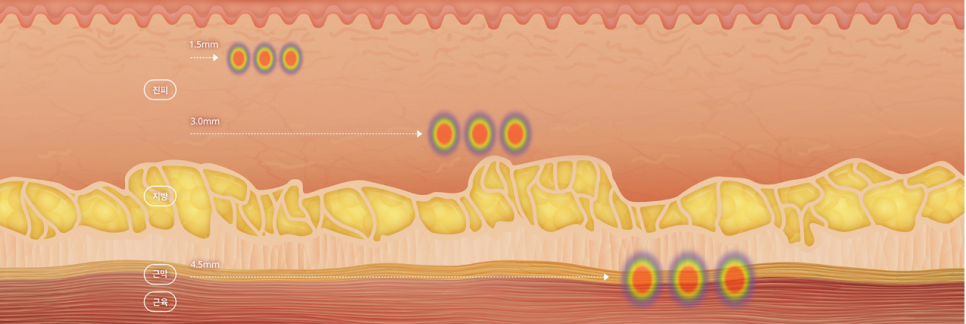
Image for explanation
The skin is not a single structure, but is composed of layers such as the following.
-
Epidermis and dermis: skin texture, fine wrinkles, elasticity
-
Subcutaneous fat layer: volume, soft contours
-
Fascia layer (SMAS): the structure that supports the jawline and cheek line
In the early stage, a decrease in collagen in the dermis first causes a feeling of reduced elasticity,
but over time, fat moves downward,
and in the next stage, the support of the fascia layer weakens and structural sagging begins.
From this stage on, it is often difficult to reverse changes in facial contours with simple cosmetics or massage.
- The stage where care management is possible, and the stage where judgment is needed are different
Mokdong lifting
If the following applies, a care-management-centered approach may be relatively meaningful.
• The skin texture feels rough and elasticity seems reduced
• The contours are maintained, but the overall appearance looks dull
• There is not much difference in appearance between when smiling and when expressionless
On the other hand, when the following changes begin to appear, it may be time for structural assessment.
• The area below the cheekbones looks hollow and shadows appear
• The jawline boundary collapses and weight seems to settle downward
• The face looks bigger without any change in body weight
• In photos, the face looks longer than before
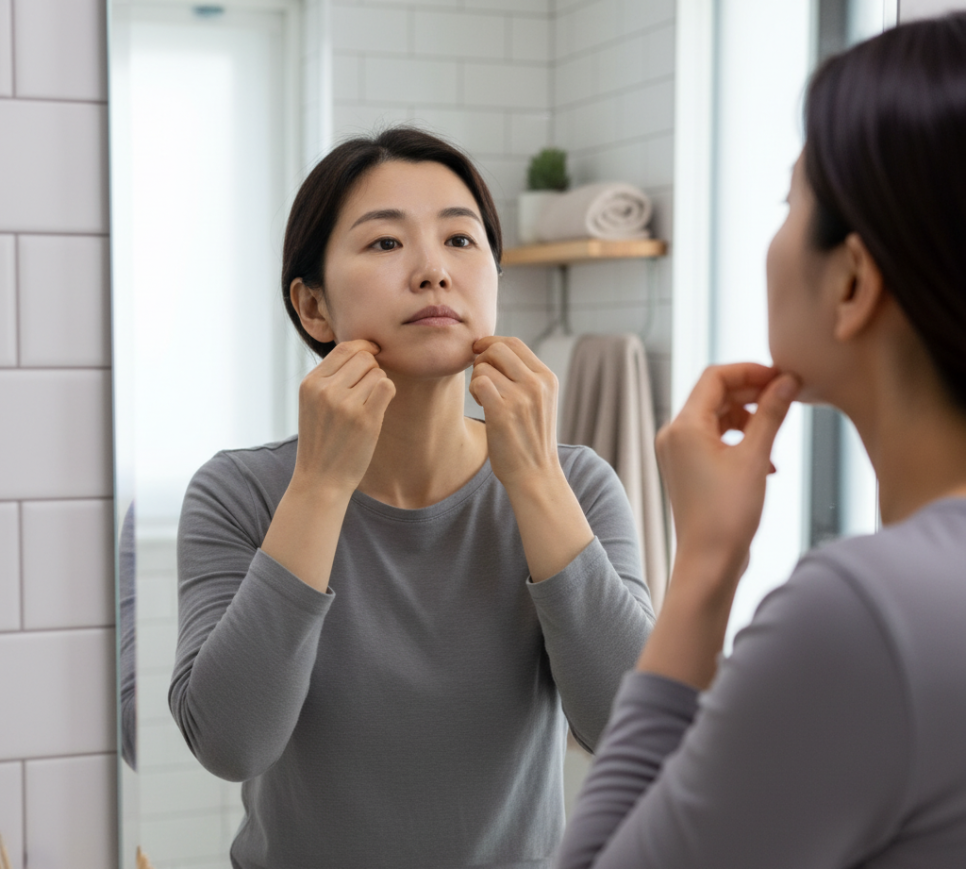
This difference is difficult to clearly distinguish with a mirror or selfies alone,
and it becomes apparent only when actual facial movement and the condition of each layer are checked together.
- Q&A: The most frequently asked questions when searching for Mokdong lifting
Q. Can I get a lifting effect from massage or care at home?
A. It may help in the early stage of elasticity loss,
but if fat movement or sagging of the fascia layer has begun,
there are limits to creating changes in facial contours.
Q. Is lifting only for older people?
A. More important than age is the layer and direction in which aging has begun.
Even in the 30s, structural sagging may come first,
and conversely, some people remain in the care-management stage even after their 40s.
Q. Why do results differ from person to person even though it is the same ‘lifting’?
A. Because the layer where sagging begins—skin, fat, or fascia—differs.
Even when the same approach is applied, the response can vary.
[Key Summary]
The 기준 for lifting does not start with the procedure name,
but with accurately
distinguishing the ‘layer’ where aging begins.
*This content is provided as general medical information about lifting,
and diagnosis and approach may vary depending on the individual’s condition.
An accurate assessment should be made through consultation at a medical institution.