Mok-dong facelift, lifting with
Signs that are no longer bearable
Mok-dong facelift
Mok-dong facelift
�
Most people who search for a facelift in Mok-dong
do not start out having already decided, “I need surgery.”
�
• They have tried lifting procedures like Ulthera and Thermage several times
�
• They have also experienced thread lifting once or twice
�
• But each time, they were left with the feeling that it only helped for a while
�
At some point,
they arrive at the question, “Do I need a different approach now?”
�
That is where facelift surgery begins to be mentioned.
�
Today, let’s calmly organize the signs that show when a facelift is no longer an “excessive choice,” but a “logical choice.”
�
- A facelift is not a “stronger lift,” but
a different way of solving the problem
�
- These are the signs that it is difficult to
keep going with lifting alone
�
- Why do lasers and thread lifting feel less effective at this stage?
�
- Typical facial changes that lead to a facelift being mentioned
�
- A facelift is not the next step for every lifting procedure
�
- Q&A: The most common questions when considering a Mok-dong facelift
�
- A facelift is not a “stronger lift,” but a different way of solving the problem
Mok-dong facelift
�
A facelift is often misunderstood as
“the strongest lift” or “the last resort.”
�
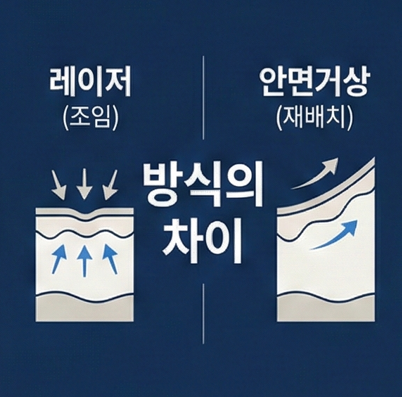
But in reality, its mechanism is completely different from lasers or thread lifting.
�
• Non-surgical lifting → stimulates or supports loosened structures
�
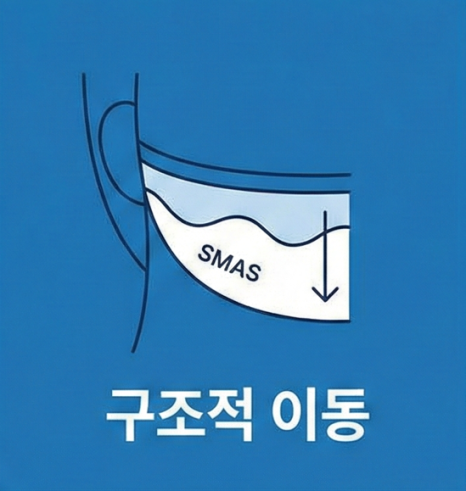
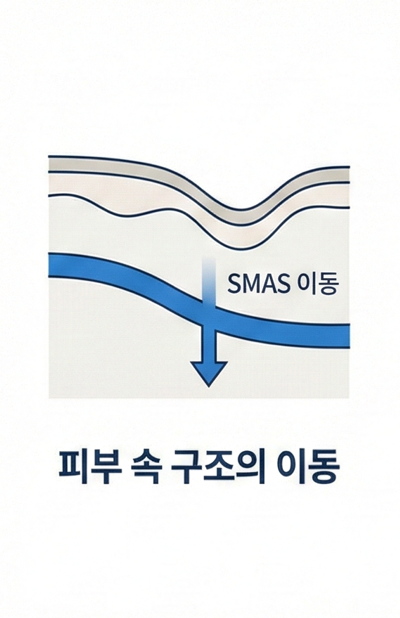
• Facelift → directly repositions structures that have already moved downward back to their original position
�
So for a facelift, the issue is not the strength of the effect, but the timing of when it is applied.
�
- These are the signs that it is difficult to keep going with lifting alone
Previous image
Next image

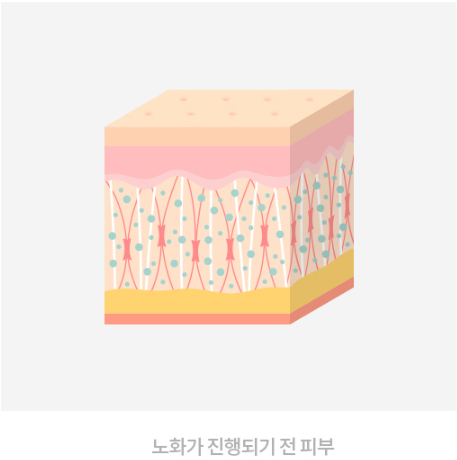
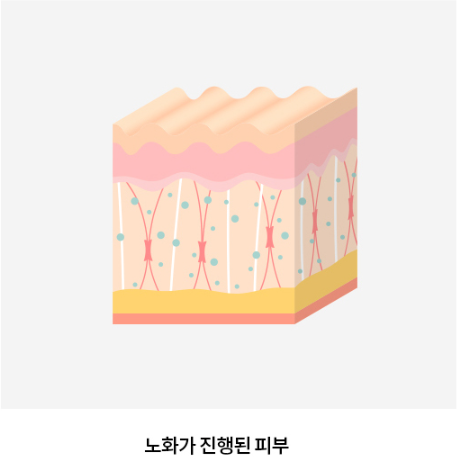
AI-generated image used to aid understanding
�
If the following signs begin to overlap one by one,
it is highly likely that non-surgical lifting has reached its limits.
�
• It seems fine right after lifting, but quickly returns to how it was before
�
• The skin feels firmer, but the facial position stays the same
�
• The area under the cheekbones, nasolabial folds, and marionette lines all deepen at once
�
• The boundary between the jawline and the neck becomes blurry
�
• The face looks like it is gathering downward even when not smiling
�
At this stage, the core issue is often not “elasticity”
but “position.”
�
- Why do lasers and thread lifting feel less effective at this stage?
Mok-dong facelift
�
Both lasers and thread lifting work by supplementing support or providing stimulation.
�
However,
when the structure has already moved downward,
even if you stimulate it, the position that needs to move has already changed,
so the perceived change may be limited.
�
At this point,
the question becomes not “What else should I do?” but
“Should I change the approach itself?”
�
- Typical facial changes that lead to a facelift being mentioned
Mok-dong facelift
�
When a facelift is discussed,
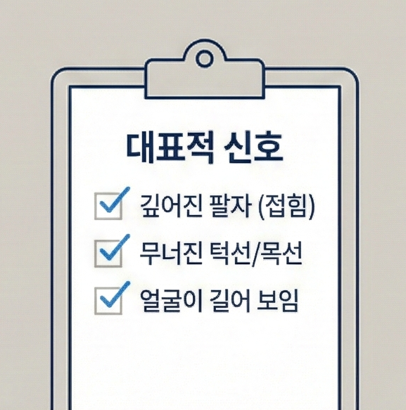
the following changes usually appear together.
�
• The cheeks sag downward, making the face look longer
�
• The nasolabial folds look less like “lines” and more like “creases”
�
• Lifting no longer makes the contour line look sharp
�
• The face and neck seem to connect as one
�
These changes are often related less to the skin surface
and more to the movement of the skin, fat, and SMAS structure as a whole.
�
- A facelift is not the next step for every lifting procedure
Mok-dong facelift
�
The important point is that just because lifting is not working well
does not mean everyone needs a facelift.
�
• If the main issue is still elasticity
→ a non-surgical approach may still be sufficient
�
• If the contour changes are not large
→ management and lasers can often still be satisfying
�
So a facelift is
not “the next step for every lifting procedure,”
but rather “an option explained when specific signs appear.”
�
- Q&A: The most common questions when considering a Mok-dong facelift

AI-generated image used to aid understanding
�
Q. Isn’t a facelift too much?
�
A. Whether it is too much or not is determined
not by “whether surgery is done,”
but by the stage of facial change.
�
Q. Can’t I just do more laser treatments?
�
A. If structural movement is significant,
it may be more reasonable to change the approach itself
rather than add more stimulation.
�
Q. I’m worried my impression will change too much after a facelift.
�
A. Changes in appearance depend more on
where and how it is repositioned
than on how much it is pulled.
Previous image
Next image
Key summary
A Mok-dong facelift is not a surgery chosen when lifting has failed,
but a “different way of solving the problem” that is explained
when it becomes difficult to restore the structure any further with lifting alone.
�
▼What to check first if you feel skin sagging▼
This content is material provided to offer general medical information about facelift surgery,
and the appropriate approach may vary depending on an individual’s facial structure and stage of aging.
An accurate judgment must be made through consultation at a medical institution.