Mokdong Ulthera pain,
There is a reason everyone worries about it like this
Mokdong Ulthera pain

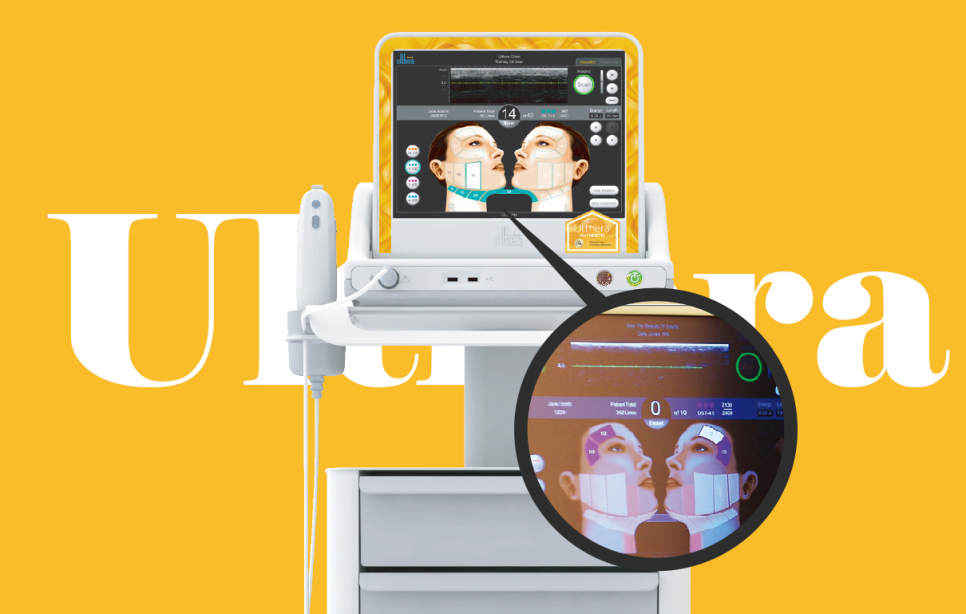
Mokdong Ulthera pain
Most people searching for Ulthera in Mokdong
think about pain before they think about results.
"I heard it hurts a lot. Can I endure it?"
"I also heard some people gave up halfway through one session..."
"Do I really have to go that far?"
So even though they know lifting is needed,
they end up putting off the decision,
and searching again with the keyword "Mokdong Ulthera pain."
Today,
we'll calmly organize why Ulthera pain is talked about so much, and whether it feels the same for everyone.
-
Why does Ulthera pain feel different for each person?
-
There are areas where the pain feels stronger
-
Cases where Mokdong Ulthera pain feels more intense
-
Should you give up on Ulthera because of pain?
-
Q&A: Questions related to Mokdong Ulthera pain
-
Why does Ulthera pain feel different for each person?
Mokdong Ulthera pain
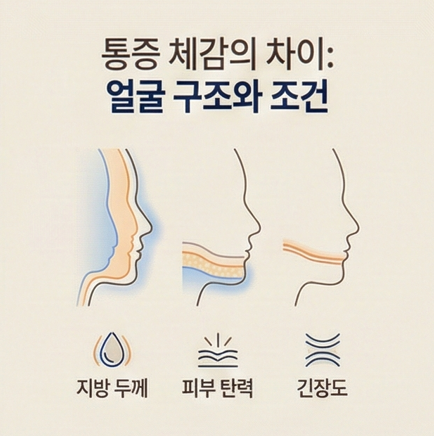
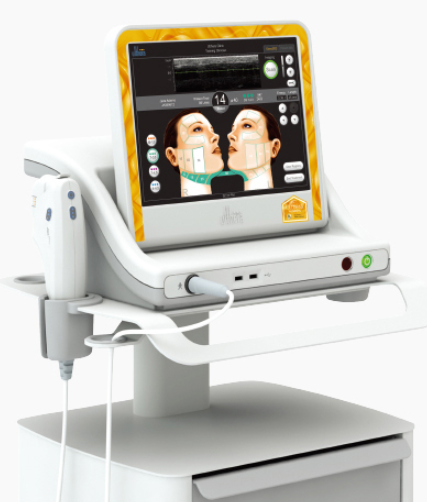
Ulthera is a method that delivers ultrasound energy into the deeper layers of the skin.
In this process, how pain is felt is
not simply a matter of "tolerance"
but varies greatly depending on facial structure and conditions.
The factors that affect pain are as follows.
• Thickness of facial fat
• Skin thickness and elasticity
• The area being stimulated (especially the lower face and jawline)
• Number of shots and depth of delivery
• Level of tension during the procedure
So even with the same Ulthera,
one person may say, "It was better than I expected,"
while another may feel, "It was hard."
- There are areas where the pain feels stronger
Mokdong Ulthera pain
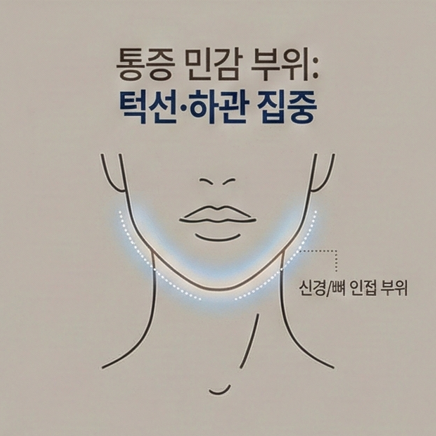
In actual procedures, the areas where pain is mentioned more often are relatively consistent.
• Jawline and lower face
• The boundary under the chin
• The line connecting the lower face toward the ears
These areas are relatively close to bones and nerves,
so the stimulation can feel more distinct.
By contrast, the center of the cheeks and the upper face
tend to feel less painful.
- Cases where Mokdong Ulthera pain feels more intense
Mokdong Ulthera pain
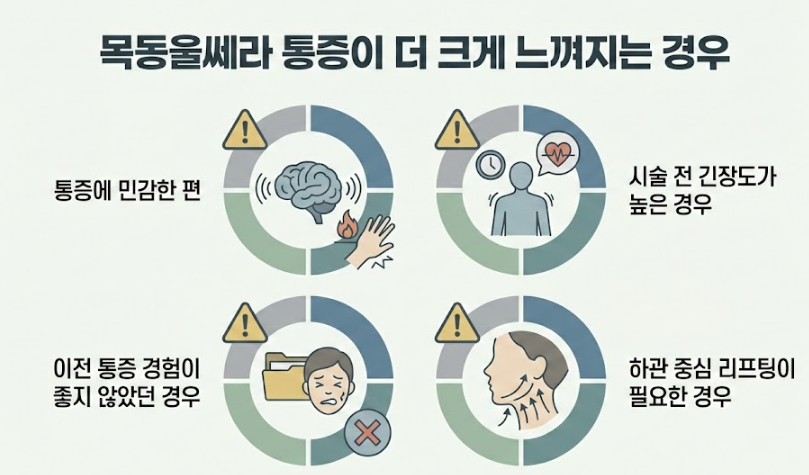
In the following cases,
the burden of pain may feel greater.
• You are sensitive to pain
• You are highly tense before the procedure
• You have had a bad experience with pain before
• You need a lift focused on the lower face
In such cases,
rather than the pain itself,
the "anxiety about pain" often makes it feel stronger.
- Should you give up on Ulthera because of pain?
Mokdong Ulthera pain
Many people ask,
"If it hurts, is it a procedure I shouldn't do?"
but pain is not a condition for effectiveness.
For Ulthera, more important than how painful it feels is
• where it is applied
• at what depth
• over what range
These factors determine the results.
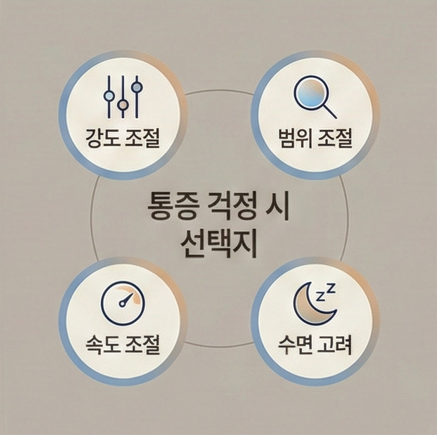
So if you are worried about pain,
the available options are explained together,
such as
• adjusting the intensity
• adjusting the area
• adjusting the pace of progress
• considering a sleep-based method
- Q&A: Questions related to Mokdong Ulthera pain

Previous image
Next image
Mokdong Ulthera pain
Q. Is Ulthera always a very painful procedure?
A. No.
The perceived pain varies greatly depending on individual conditions and the treatment area.
Q. If the pain is lower, does that mean the results are also weaker?
A. No.
Pain and results are not proportional.
Q. Can the procedure be stopped midway because of pain?
A. It can be adjusted depending on the situation.
That is why explaining pain before the procedure is important.
Key points
Mokdong Ulthera pain
is not something that happens because the procedure is dangerous,
but part of the process that feels different depending on facial structure, range, and tension.
If you are worried about pain,
the first thing to look at is not "whether you can endure it,"
but under what conditions the pain becomes greater.
▼Ulthera, what's the difference between 300 shots and 600 shots?▼
This content is material intended to provide general medical information about Ulthera procedures,
and the perceived experience may vary depending on individual pain sensitivity and facial structure.
An accurate judgment should be made through a consultation at a medical institution.