양천구 안면거상술,
Why It Still Feels Disappointing Even After Long-Term Lifting Treatments
양천구 안면거상술
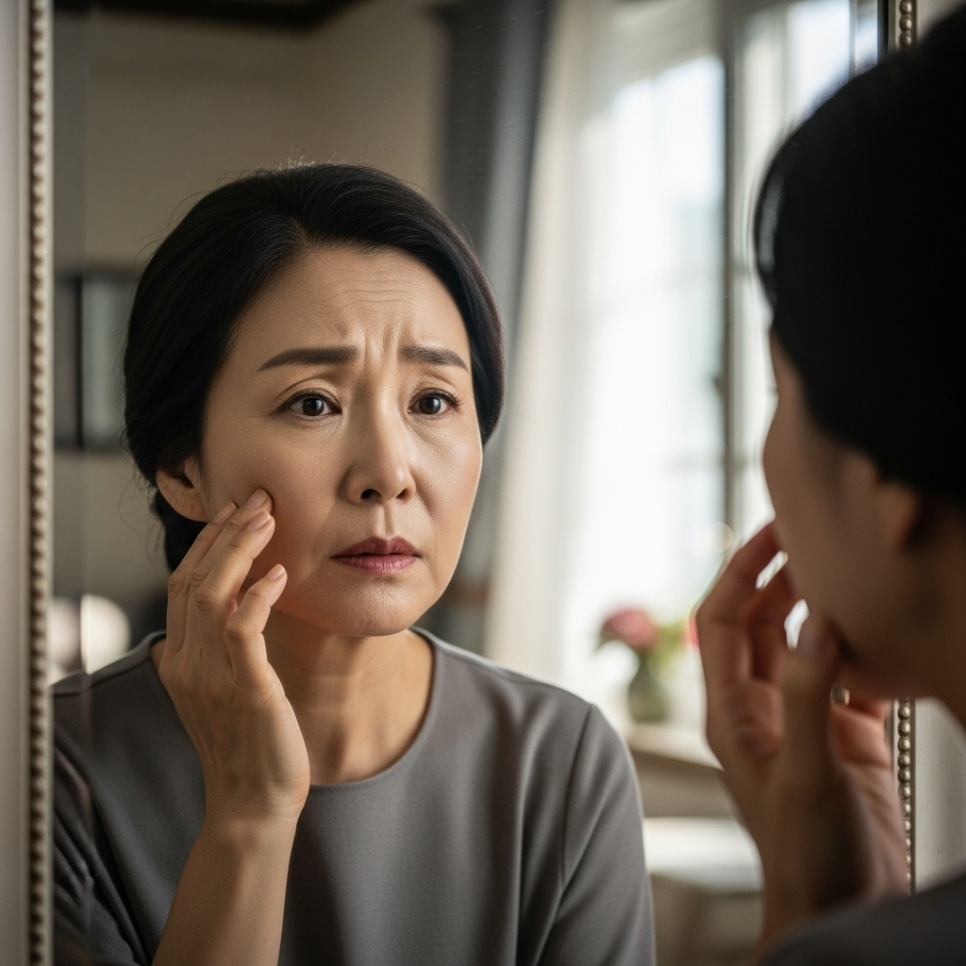
양천구 안면거상술
This image is an AI-generated staged cut created to help with understanding.
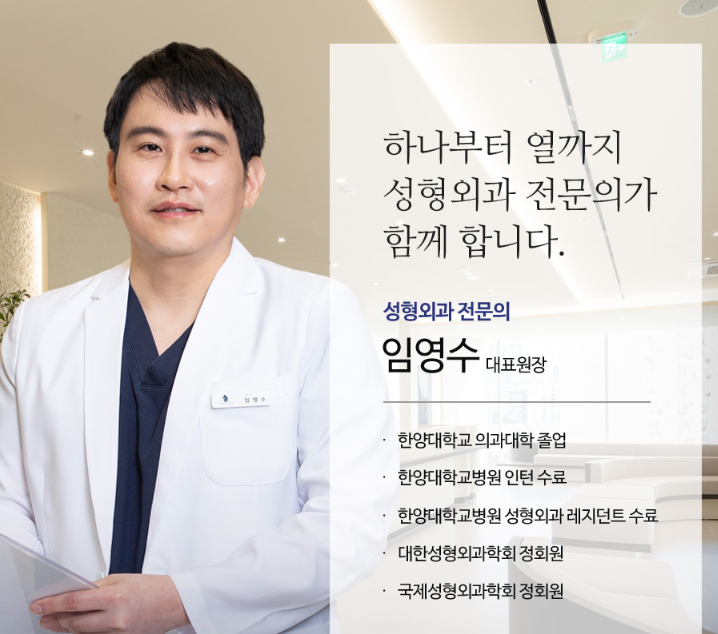
Hello. I’m Im Young-soo, a board-certified plastic surgeon at Troy Plastic Surgery in Mok-dong, Yangcheon-gu, where I focus on middle-aged plastic surgery and facial aging.
When consulting about facelift surgery, I often hear people say the following with a particularly deep sigh.
“Doctor, I’ve tried laser treatments and thread lifts several times... but now it feels like everything goes back down again so quickly.”
“In the past, even just getting a procedure made my face feel tighter, but these days it feels like nothing really gets organized.”
If you have had experiences like this, it does not mean the treatments you received before were wrong.
Rather, it may be a sign that your face has moved beyond the stage where it responds to procedures and has entered a stage where structural correction is needed.
-
Facelift surgery is not simply a surgery that pulls only the ‘skin’
-
Why does dissatisfaction remain even after repeated procedures?
-
The criteria I prioritize during consultations
-
The difference between procedures and surgery lies not in ‘strength’ but in ‘layers’
-
Q&A: Questions about facelift surgery
-
Closing remarks
-
Facelift surgery is not simply a surgery that pulls only the ‘skin’
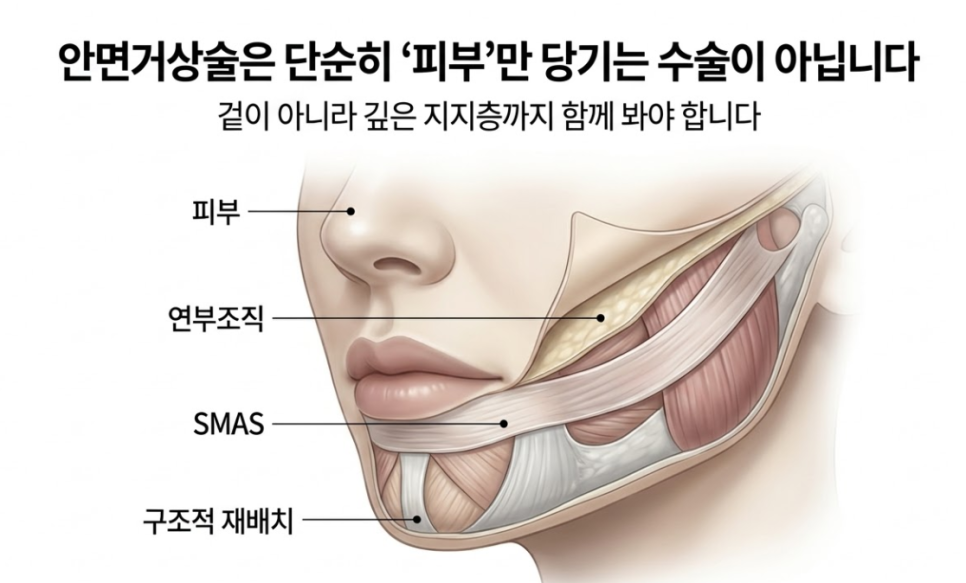
Yangcheon-gu facelift surgery
This is an AI-generated image for explanatory purposes.
People often think of facelift surgery as simply tightening the outer skin and cutting away the excess.
However, the essence of aging is not limited to the skin surface.
Sagging after middle age occurs as the soft tissue beneath the skin and the deep supporting layers descend together in the direction of gravity.
Facelift surgery is a procedure that directly addresses the fascial support layer called the SMAS, which lies deeper than the skin.
In the end, facelift surgery is less about making the outside look tight and more like a ‘repositioning’ surgery that returns the sunken internal structure of the face to its original place.
- Why does dissatisfaction remain even after repeated procedures?
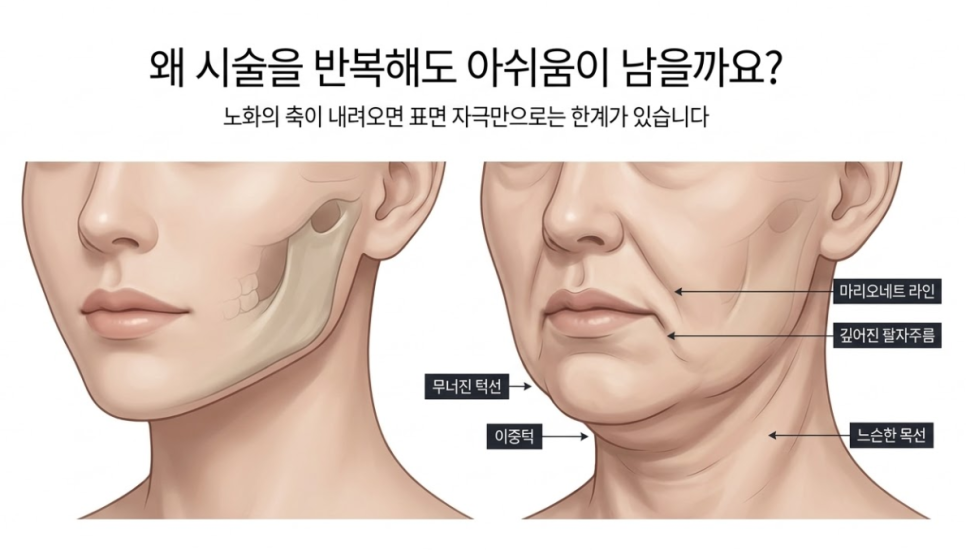
Yangcheon-gu facelift surgery
This is an AI-generated image for explanatory purposes.
Lifting procedures (laser, threads, etc.) are certainly effective options for early loss of elasticity or improving fine wrinkles.
But as time passes and the axis of aging shifts downward, the nature of the concerns changes.
• A collapsed jawline and a more pronounced double chin
• Sagging cheeks that create deep marionette lines around the mouth
• Deep nasolabial folds that appear as if they are folding inward, and a loosened neck line
At this stage, there are clear limits to what can be achieved through surface-level skin tightening alone.
No matter how much the outer layer is stimulated, the deep supporting layers inside have already lost their strength.
That is why people feel that “it gets better, but something is still missing” or that “the results do not last as long as they used to” after procedures.
- The criteria I prioritize during consultations

Yangcheon-gu facelift surgery
This is an AI-generated image for explanatory purposes.
When consulting for facelift surgery, I do not look at age alone.
I carefully examine the following four points on the patient’s face.
-
Location of sagging: Is the lower face (jawline, around the mouth) more noticeably collapsed than the midface?
-
Amount of excess skin: Has the loss of elasticity progressed beyond that, to the point where actual excess skin has begun to fold?
-
Descent of soft tissue: How far have the cheeks and deep cheek tissues descended from their original position?
-
Limits of procedure response: Are the results of the lifting procedures received recently vague, or has satisfaction dropped sharply?
When these four signs are clear, a structural approach through facelift surgery becomes a much more direct solution than simple device-based procedures.
- The difference between procedures and surgery lies not in ‘strength’ but in ‘layers’
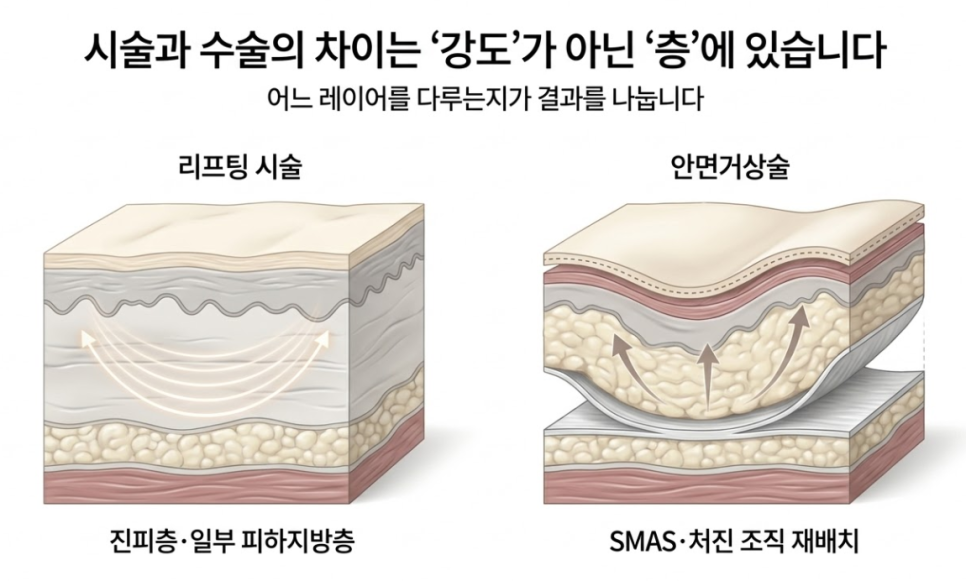
Yangcheon-gu facelift surgery
This is an AI-generated image for explanatory purposes.
Many people think only that “procedures are weak, and surgery is strong.”
But from a medical perspective, the difference between the two methods lies in which layer they address.
• Lifting procedures: induce elasticity responses in the dermis and some subcutaneous fat layers.
• Facelift surgery: repositions the fascial layer (SMAS), which is deeper than the skin, along with the entire sagging tissue and removes excess skin.
Therefore, the two methods are not in competition; they are complementary options that should be chosen according to the stage of aging in your face.
Surgery is not always the answer, but for a face where structural changes have begun, surgery can be the most realistic answer.
- Q&A: Questions about facelift surgery
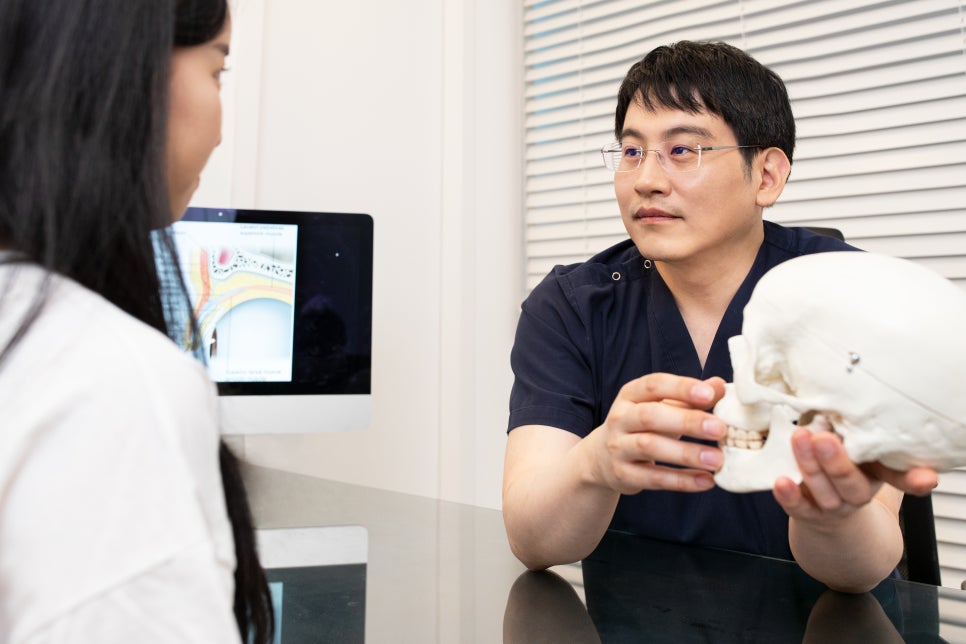
Yangcheon-gu facelift surgery
This is an AI-generated image for explanatory purposes.
Q. At what age is it best to have a facelift?
A. Rather than a specific age, the ‘pattern of facial change’ is more important.
When you look in the mirror and the jawline has collapsed so the face looks wider, and the boundary between the neck and face becomes blurry, that is the right time for consultation.
Q. Would a mini facelift be enough?
A. If the sagging is limited to a specific area, a mini facelift may be advantageous in terms of scarring and recovery burden.
But if the entire face and neck line have collapsed, it is better to pursue a fundamental improvement through a full facelift.
Doctor’s note
Facelift surgery is not something you reluctantly do at the end because you are exhausted after repeating procedures.
It is a scientific solution chosen by those who have reached the point where the face’s structural pillars need to be restored, not just the skin surface.
- Closing remarks
Yangcheon-gu facelift surgery
If you are considering facelift surgery in Yangcheon-gu, it is important to first understand which layer of your face is collapsing.
If you have undergone lifting procedures for a long time but still feel dissatisfied, it may be because your face has now entered a stage where you need to look beyond the skin and consider structure.
I recommend starting with a consultation where we honestly assess which stage of aging the patient is currently in and how much change can realistically be achieved through surgery.
▼Brow lift VS upper blepharoplasty▼
▼Understanding middle-aged eye surgery▼
This article was written based on general medical information, and whether surgery is actually performed, as well as the surgical method used, may vary depending on the individual’s facial structure,
degree of aging, and skin condition. Facelift surgery carries risks such as nerve injury, bleeding, and scarring, so
you must have sufficient consultation with a skilled board-certified plastic surgeon.