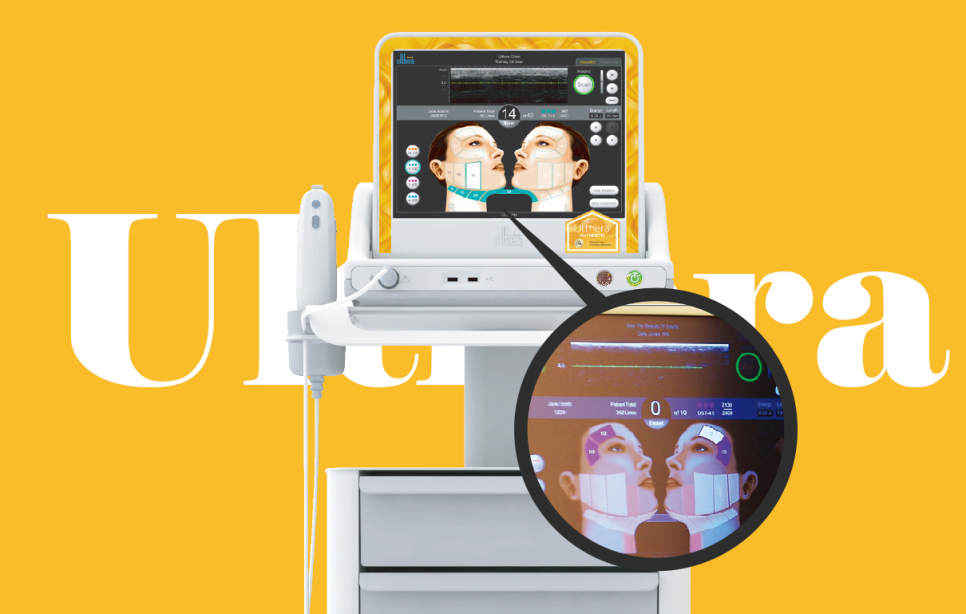
Ultherapy Thermage
"I’m not sure whether I should get Ultherapy or Thermage."
This is one of the questions I hear most often in the clinic.
They may seem like the same type of lifting procedure, but in fact, their mechanisms and areas of improvement are different.
Today, I’d like to talk about the differences between Ultherapy and Thermage.
-
Ultherapy and Thermage: the fundamental differences
-
Immediate effect vs. gradual change
-
Criteria for choosing a procedure
-
Differences in the recovery process after treatment
-
Frequently asked questions
-
In closing
-
Ultherapy and Thermage: the fundamental differences
Ultherapy Thermage
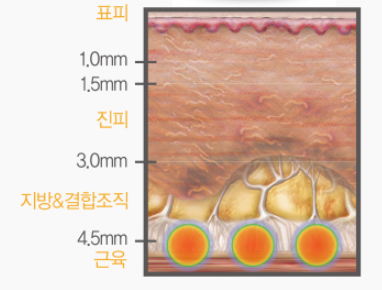
Skin image for reference
Difference in depth of action
Ultherapy uses ultrasound energy to penetrate down to the SMAS layer. By directly stimulating the fascia layer that supports the skin, it creates a structural lifting effect.
Thermage uses radiofrequency energy and mainly targets the dermis. Its main goal is to improve the skin’s own elasticity through collagen regeneration.
In the clinic, we take different approaches for patients whose faces look generally sagged and those whose skin texture looks rough.
- Immediate effect vs. gradual change
Ultherapy Thermage
This image was generated by AI for illustrative purposes.
With Ultherapy, you can feel an immediate tightening effect right after the procedure.
This is because of immediate contraction caused by protein denaturation in the SMAS layer.
With Thermage, skin texture and elasticity improve gradually as collagen regenerates over 2 to 4 months.
"Rather than expecting an immediate change, it is better to expect a natural rejuvenating effect."
- Criteria for choosing a procedure
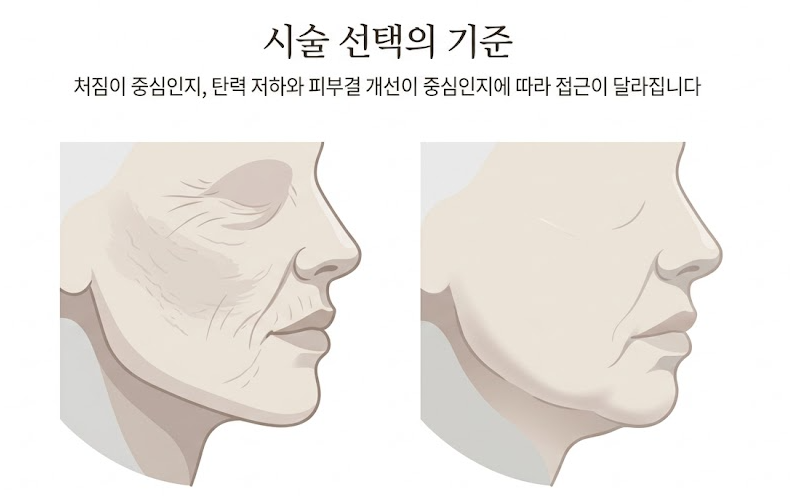
Ultherapy Thermage
AI-generated image for illustrative purposes.
Choosing according to the degree of sagging
Moderate to severe sagging: Ultherapy is more suitable. In cases where the cheeks have dropped or the jawline has become less defined,
it is necessary to lift from the fascia layer to create a meaningful change.
Early aging, reduced elasticity: Thermage is effective.
When the skin texture becomes rough and fine lines increase, overall skin improvement through collagen regeneration is possible.
Age-related considerations
In the late 30s to early 40s, many people opt for preventive care with Thermage,
while from the mid to late 40s, Ultherapy is often considered for more active improvement.
"However, rather than focusing on age, we need to look comprehensively at an individual’s skin thickness, amount of fat, and degree of muscle development."
- Differences in the recovery process after treatment
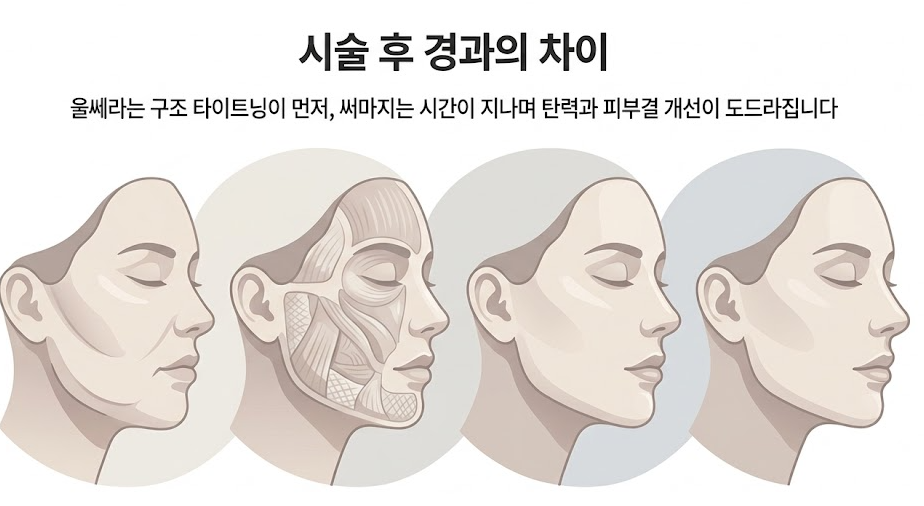
Ultherapy Thermage
AI-generated image for illustrative purposes.
Ultherapy recovery process
• Immediately after treatment: instant tightening
• 2–3 months: gradual improvement through collagen regeneration
• After 6 months: maximum effect reached
Thermage FLX improvement stages
• Immediately after treatment: denaturation of collagen fibers
• After 2 months: wrinkle improvement begins
• After 4 months: skin texture improves
• After 6 months: strong elasticity improvement
"With Thermage, it is better to approach it as steady improvement in skin health rather than expecting rapid changes."
- Frequently asked questions
Ultherapy Thermage
Q. Can Ultherapy and Thermage be done together?
A. Yes, they can. However, the interval between treatments and the energy intensity need to be adjusted.
The decision is made through consultation depending on the individual condition.
Q. Do both procedures cause severe pain?
A. Ultherapy mainly causes deep pain from stimulation of the SMAS layer, while Thermage mainly produces a sensation of heat.
Both try to minimize pain with vibration and cooling systems.
Q. How long do the effects last?
A. Although it varies by individual, the effects of Ultherapy typically last 12 to 18 months, and Thermage effects last about 12 months.
The duration may differ depending on lifestyle habits and aftercare.
Doctor’s note
Ultherapy and Thermage are not competitors; they complement each other.
It is important to accurately analyze an individual’s facial condition and choose the most suitable method.
- In closing
Ultherapy Thermage
Ultherapy is strong for improving structural sagging, while Thermage is strong for improving skin texture and elasticity.
Rather than age or trends, the choice should be based on your individual skin condition and treatment goals.
I hope you receive the procedure that is right for you through an accurate diagnosis.
▼If you are considering▼
▼not laser lifting but▼
▼thread lifting▼