Ulthera 300 shots, 600 shots... the number of shots,
are they really important?
Ulthera
Ulthera
�a0
"How many Ulthera shots do I need for good results?" This is one of the most common questions we hear in the consultation room.
�a0
Many people insist on a high number of shots because they think more shots will mean better results.
�a0
However, with Ulthera, more is not always better.
�a0
A treatment that simply increases the number of shots without considering facial bone structure and skin thickness can actually cause side effects such as cheek hollowing or burns.
�a0
Today, let’s take a closer look at why 'design' and 'depth' matter more than the number of shots, and how the right number of shots for you is determined.
�a0
- What to check before the number of Ulthera shots
�a0
- The principle behind determining the number of Ulthera shots
�a0
- Precise targeting is more important than the number of shots
�a0
- The process of determining a personalized number of shots
�a0
- Treatment points that improve Ulthera results
�a0
- Precautions during Ulthera treatment
�a0
-
Essential checklist for Ulthera consultations
-
What to check before the number of Ulthera shots
Ulthera
�a0
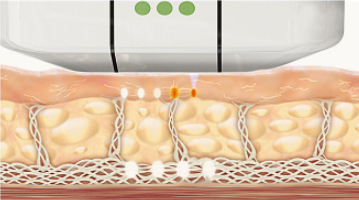
During an Ulthera consultation, rather than focusing on numbers like 300 or 600 shots, the first thing to check is 'which area is being treated and at what depth is the energy being delivered?'
�a0
That’s because the treatment plan changes completely depending on whether sagging is caused by reduced elasticity in the skin surface or by weakening of the deeper SMAS (fascia) layer.
�a0
Even with the same 600 shots, there is a big difference in results between distributing them shallowly across the entire face and targeting them intensively to the areas of concern.
�a0
- The principle behind determining the number of Ulthera shots
Ulthera
�a0
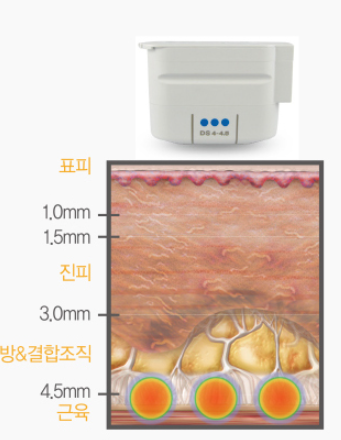
Ulthera uses transducers with three depths—1.5 mm, 3.0 mm, and 4.5 mm—to provide customized treatment for each skin layer.
�a0
• 1.5 mm tip: improves fine wrinkles and elasticity in the superficial skin layer
�a0
• 3.0 mm tip: induces collagen regeneration in the dermis
�a0
• 4.5 mm tip: contracts the SMAS layer, which is the core of lifting
�a0
Because everyone’s skin thickness and degree of sagging are different, the skin layers must be checked through real-time ultrasound imaging before the number of shots for each tip is strategically allocated.
�a0
- Precise targeting is more important than the number of shots
Ulthera
�a0
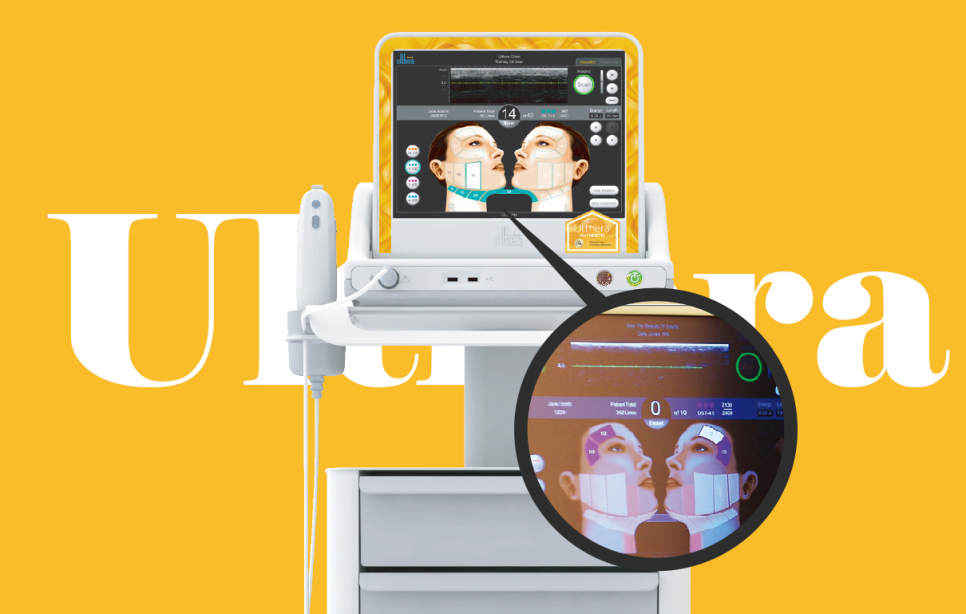
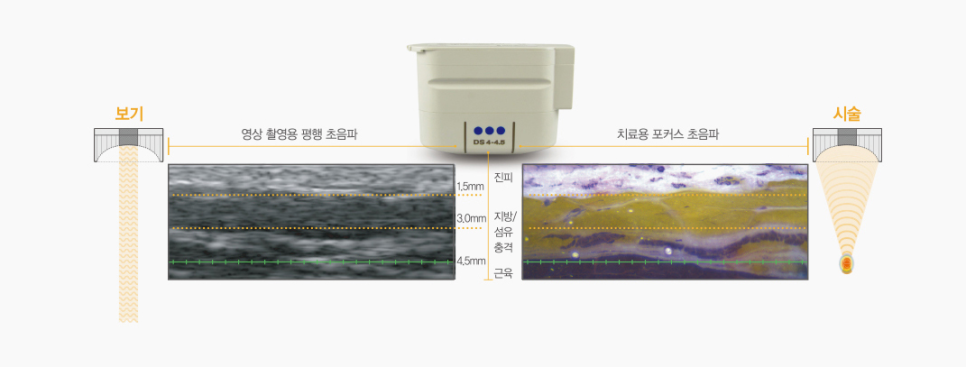
The core technology of Ulthera is a real-time ultrasound imaging system called DeepSee.
�a0
Because the practitioner performs the treatment while directly viewing the internal structure of the patient’s skin, the energy can be controlled so that it does not reach the bone or excessively stimulate the fat layer.
�a0
Rather than simply filling a shot count, energy must be delivered to the correct layer to prevent side effects such as cheek hollowing and maximize lifting results.
- The process of determining a personalized number of shots

Ulthera
�a0
To achieve the ideal result, the treatment is planned in the clinic through the following steps.
�a0
- Assess facial structure: use ultrasound to check skin thickness and fat distribution by area
�a0
- Set the target: choose the areas you most want to improve, such as cheek sagging, a double chin, or crow’s feet
�a0
- Allocate shots: optimally distribute the number of shots for the 1.5/3.0/4.5 mm tips according to the target area
�a0
For example, if lower-face sagging is the concern, the proportion of 4.5 mm tip treatments is increased. If the goal is overall skin texture improvement, the plan focuses mainly on the 1.5 mm and 3.0 mm tips.
- Treatment points that improve Ulthera results

Ulthera
�a0
Even if the device is excellent, the results ultimately depend on the practitioner’s precise handling.
�a0
Only when experienced medical staff who fully understand the anatomical structure of the treatment area perform the procedure can the appropriate energy intensity and shot placement be applied according to the degree of reduced skin elasticity.
- Precautions during Ulthera treatment

Ulthera
Ulthera is a globally proven and safe device, but it is essential to use 'genuine tips.'
�a0
If reused or counterfeit tips are used, the energy output may become uneven, increasing the risk of burns or nerve damage.
�a0
Before and after treatment, the genuine product certificate should be checked to ensure safety.
�a0
Also, it is good to understand that Ulthera’s effects appear gradually over 2 to 3 months as collagen is produced, rather than immediately after the procedure, so it is best to observe the progress patiently.
- Essential checklist for Ulthera consultations

Ulthera
For a satisfying Ulthera treatment, be sure to check the following four things during your consultation.
�a0
• Is the procedure performed accurately while viewing real-time ultrasound (DeepSee)?
�a0
• Can you verify before and after treatment whether genuine tips were used?
�a0
• Is the procedure performed directly by a specialist with extensive anatomical knowledge of the area?
�a0
• Is there a post-treatment care program in place to help soothe the skin after the procedure?
�a0
A treatment is not better simply because it has more shots. Thinking about what the 'right shots' are for you is the start of successful lifting.
�a0
▼ Should you choose thread lifting vs. laser? How to choose the right lifting treatment for you ▼
�a0