If your under-eyes look sunken or your dark circles appear more pronounced, people often tell you that you look tired.
The two options most commonly compared in these cases are under-eye fat repositioning and under-eye filler.
Both methods can help refine the under-eye contour, but they address different underlying causes.
Today, we will focus on the differences between under-eye fat repositioning and under-eye filler and summarize when each option may be considered.
- The cause of your under-eye concern should be assessed first

When the under-eyes look dark, dark circles are often the first thing that comes to mind.
However, the causes are more varied than you might expect.
Shadows can form when under-eye fat protrudes forward, while the area may look deeply hollowed when the under-eyes are sunken.
In addition, when the skin is thin, blood vessels or pigmentation may show through and make the area look dark.
Therefore, when comparing under-eye fat repositioning and under-eye filler, it is important to first determine whether fat protrusion, hollowness, or skin tone is the primary cause.
- Under-eye fat repositioning is considered when there is fat protrusion

Under-eye fat repositioning is a surgical procedure that refines the under-eye contour by adjusting the position of under-eye fat that has protruded forward.
When under-eye fat protrudes, it can create shadows beneath it and make the area look like dark circles.
In this situation, adding filler based only on the hollow-looking area may make the under-eyes appear more prominent or heavy.
Therefore, when fat protrusion is the cause, repositioning the fat may be considered rather than simply adding volume.
- Under-eye filler is considered when hollowness is the main concern
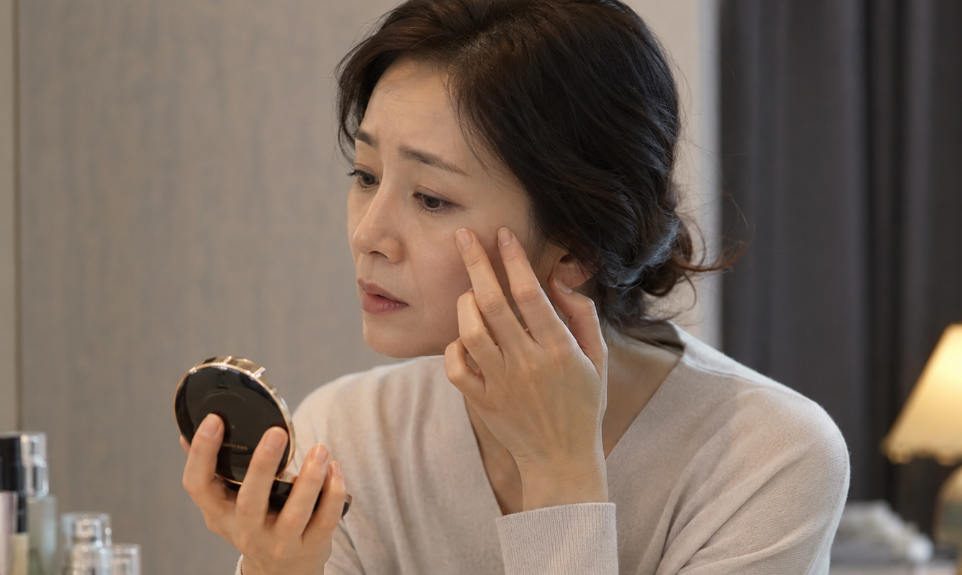
Under-eye filler is a method of adding volume to hollow areas to soften the under-eye transition.
It may be considered when under-eye fat protrusion is not significant and the area between the under-eyes and the front of the cheekbones looks sunken.
Its advantages include less of a surgical burden and the ability to see changes relatively quickly.
However, if the skin is thin or fat protrusion is present, the filler may show through, look uneven, or create a puffy appearance, so careful consideration is necessary.
- Under-eye fat repositioning vs. under-eye filler comparison
| Category | Under-eye fat repositioning | Under-eye filler |
|---|
| Approach | Repositioning protruding fat | Adding volume to hollow areas |
| Suitable for | Under-eye fat protrusion and shadows | Under-eye hollowness and the cheekbone transition |
| Main purpose | Refining the under-eye contour structurally | Softening hollowness and transitions |
| Advantage | Focuses on improving a bulging under-eye area | Relatively simple volume enhancement |
| Points to consider | Requires a recovery period | Caution regarding show-through and unevenness |
- Which option is better?

Neither under-eye fat repositioning nor under-eye filler is always better than the other.
The important thing is to identify what is causing the under-eyes to look dark.
If fat protrusion is the cause, under-eye fat repositioning may be more suitable.
If hollowness is the main concern, under-eye filler may be considered.
If the under-eye skin is thin or there are complex, overlapping causes of dark circles, one method alone may not be sufficient.
In summary

Under-eye fat repositioning focuses on improving under-eye fat protrusion and shadows.
Under-eye filler focuses on adding volume to hollow areas and softening the under-eye transition.
However, because the under-eye area has thin skin and a complex structure, it is difficult to choose an option based simply on the name of the procedure.
It is important to assess the amount of under-eye fat, the degree of hollowness, and skin thickness together, then plan an appropriate approach.
Distinguishing which method is needed based on a thorough assessment can help you aim for a more natural-looking under-eye contour.
▼Do you have other concerns?▼
▼View them now▼