
Eyebrow tattoos may look natural at first, but over time, the color can turn bluish or reddish.
You may also consider removal if the lines have blurred and make your eyebrows look messy, or if the previous design no longer suits your face.
However, when looking into eyebrow tattoo removal, it is difficult to determine the right option by checking only whether it will “erase well.”
This is because the depth and color of the pigment, the condition of your skin, and the possibility of scarring all need to be considered together.
Today, for those considering eyebrow tattoo removal, we will summarize the criteria to check, including concerns about discoloration, blurring, and scarring.
- Why don’t eyebrow tattoos disappear easily?
Eyebrow tattoos often do not disappear completely over time because pigment remains inside the skin.
Even if they appear faded on the surface, residual pigment may remain within the skin.
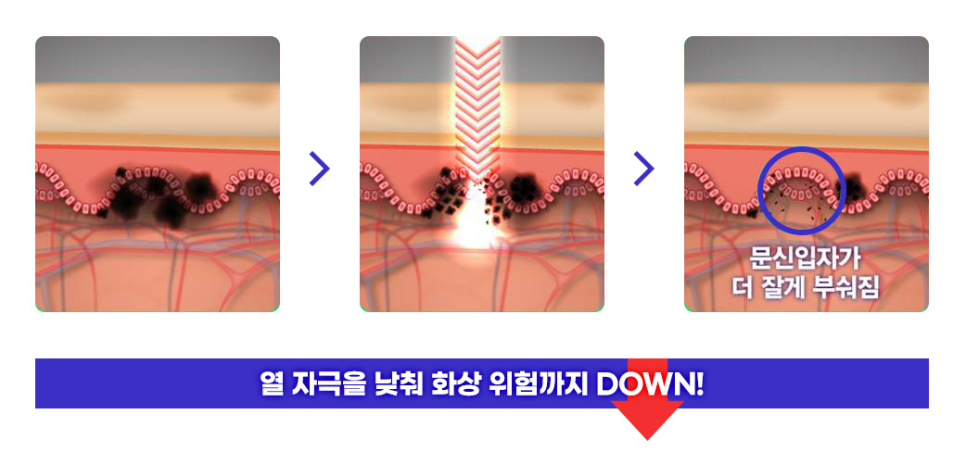
Eyebrow tattoo removal works by using a laser to break the pigment particles into smaller pieces and then helping the body gradually eliminate them through its metabolic processes.
For this reason, treatment is often performed over several sessions while observing the skin’s response, rather than using a strong treatment intensity to remove everything at once.
Excessive intensity may reduce the pigment, but it can also increase the possibility of hyperpigmentation or scarring, so caution is needed.

- What is the difference between a Pico laser and a StarWalker laser?
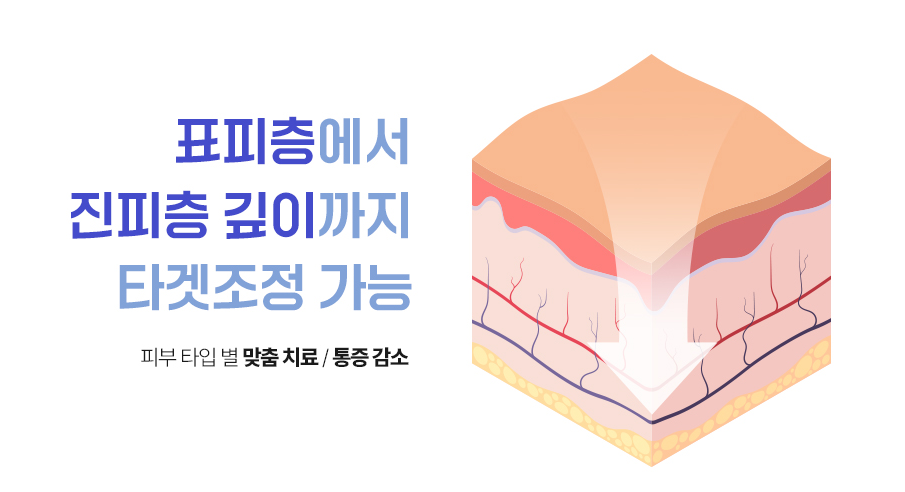
The choice of laser for eyebrow tattoo removal may vary depending on the color and depth of the pigment.
| Category | Pico laser | StarWalker laser |
|---|
| Characteristics | Breaks pigment into very small particles using short pulses | Addresses different colors using multiple wavelengths |
| Considerations | Residual pigment, shallow pigment, and discolored tattoos | Dark tattoos, older tattoos, and cases involving multiple mixed colors |
| Advantages | Helps reduce the burden on the surrounding skin | Enables a color-specific approach for black, blue, red, and other tones |
| Key criterion | How finely the pigment can be broken down | Whether a wavelength suited to the color and depth is selected |
It is difficult to say that either the Pico laser or the StarWalker laser is always better.
What matters is identifying the color and depth of the remaining pigment and then adjusting the wavelength and energy accordingly.
A plan suited to the condition of the pigment is more important than the name of the equipment.
- Can discolored eyebrow tattoos also be removed?
Laser removal may also be considered when an eyebrow tattoo appears blue or remains reddish.
However, the response time may vary depending on the color.
Black and blue tones may respond relatively well,
while red and brown tones may take longer depending on the pigment components.
Older tattoos may have blurred colors or contain multiple mixed colors, so rather than aiming for complete removal from the outset,
it is advisable to realistically determine how much the tattoo can be lightened.
If you are planning a new semi-permanent procedure, you may also consider reducing the existing pigment first and then redesigning the eyebrows.

- Eyebrow tattoo removal scars: What should you be careful about?
The eyebrow area requires a delicate approach because the skin is thin and eyebrow hair is also present.
If the laser intensity is too high or repeated treatments are performed before the skin has recovered, redness, scabs, hyperpigmentation, or scarring may occur.
You should also avoid repeatedly undergoing high-intensity treatments simply because you want to remove the tattoo quickly.
If you are concerned about scarring from eyebrow tattoo removal, it is advisable to check whether the provider adjusts the intensity and intervals while monitoring both the pigment’s response and the skin’s recovery.
- Aftercare is also important
After eyebrow tattoo removal, it is important not to forcibly remove scabs and to let them fall off naturally.
Exposure of the treated area to ultraviolet rays may increase the possibility of hyperpigmentation, so you should also pay attention to sun protection.
For several days, it is advisable to avoid activities that increase heat and irritation, such as saunas, swimming, and excessive alcohol consumption.
Moisturizing and supporting skin regeneration may help with skin recovery.
In summary
For eyebrow tattoo removal, a plan to lighten the tattoo safely is more important than removing it quickly.
The laser needed and the treatment intervals may vary depending on the type of discolored pigment, the extent of blurring, skin thickness, and the condition of the eyebrow hair.
The removal process may also vary depending on the color of the remaining pigment and the depth at which it is located.
Rather than expecting rapid changes and pushing for them, adjusting the intensity and intervals while checking the skin’s response with a medical professional may help reduce the burden of scarring.
▼Have other concerns?▼
▼View them now▼