When looking into cosmetic eye surgery, the question that comes to mind most often is, “Will my eyes look more defined with double eyelid surgery alone?”
However, when you look in the mirror, your eyes may not necessarily seem small. They may look sleepy, feel closed in at the inner corners, or make your overall impression seem heavy because of the shape of the outer corners.
In these cases, rather than simply raising the double eyelid crease, it is important to assess both the strength used to open the eyes and the proportions of the eyes.
Especially for first-time eye surgery in your 20s, it is important to find an eye shape that naturally suits your face rather than pursuing an excessive change.
Today, we will review the features of eyes that may need more than double eyelid surgery alone, as well as the situations in which ptosis correction and eye-widening procedures may each be considered.
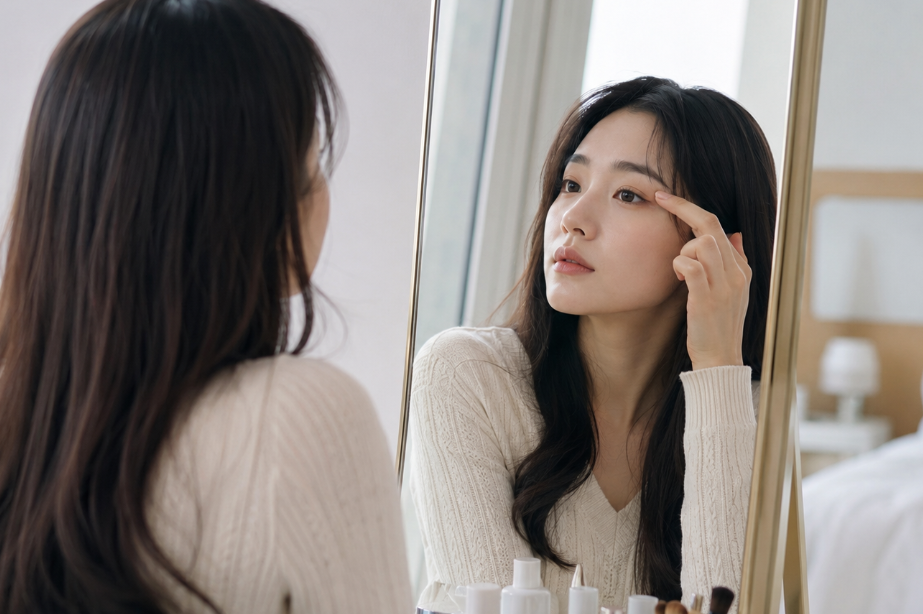
- Double eyelid surgery creates an eyelid crease
Double eyelid surgery creates a crease in the eyelid to help make the eyes look more defined.
The method—non-incisional, partial-incision, or full-incision—may vary depending on the thickness of the eyelids, skin laxity, and amount of fat.
However, because double eyelid surgery is fundamentally a procedure that creates a crease, the change may be limited if the strength used to open the eyes is itself weak.
If a crease forms but the pupils are still not fully visible or the eyes still look sleepy, ptosis correction may also be worth considering.

- Ptosis correction is considered when assessing the strength used to open the eyes
Ptosis correction may be considered when the strength that lifts the eyelids is weak, preventing enough of the pupils from being visible.
It may also be relevant if you use a lot of force in your forehead when opening your eyes or are often told that you look sleepy.
With eyes like these, creating only a double eyelid crease may still leave the eyes looking insufficiently defined.
Ptosis correction focuses on improving pupil exposure to create a clearer impression.
However, it is not necessarily needed if the strength used to open the eyes is sufficient.
If performed excessively, it can make the eyes appear uncomfortably wide open, so the current function and balance of the eyes should be assessed first.

- Eye-widening procedures are considered when assessing constricted eye proportions
Eye-widening procedures may be considered when the inner corners, horizontal length, or direction of the outer corners make the eyes appear closed in.
Medial canthoplasty is considered when the epicanthal folds are prominent or the distance between the eyes appears wide.
Lateral canthoplasty is compared when you want to improve the horizontal width of the eyes, while lower eyelid widening is compared when you want to soften the direction of the outer corners.
Rather than simply making the eyes larger, eye-widening procedures are closer to methods of easing areas that look blocked and adjusting the proportions of the eyes.
Therefore, instead of widening the eyes as much as possible, it is important to consider the distance between the eyes, the amount of visible white, and the position of the outer corners together.

- Ptosis correction and eye-widening procedures have different purposes
Ptosis correction is a procedure related to the strength used to open the eyes.
Eye-widening procedures, on the other hand, address the constricted appearance of the eyes’ shape, direction, and horizontal length.
For example, if the pupils are not sufficiently visible and the eyes look sleepy, ptosis correction may be the more important consideration.
Conversely, if the inner corners look blocked or the outer corners appear constricted, eye-widening procedures may be compared.
These are not procedures that replace one another; the area requiring attention varies depending on the condition of the eyes.

- Natural combinations are important for eye surgery in your 20s
For eye surgery in your 20s, it is important to create an eye shape that suits your face rather than focusing on making a major change.
Setting the double eyelid crease high or adding several procedures at once does not always lead to a better result.
To reduce an unnatural appearance, the thickness of the eyelids, the strength used to open the eyes, the distance between the eyes, and the direction of the outer corners should all be considered together.
Because double eyelid surgery, ptosis correction, and eye-widening procedures each have different purposes, it is best to plan selectively for the methods that are needed.

In summary
Double eyelid surgery creates a double eyelid crease, while ptosis correction is considered when the strength used to open the eyes needs to be improved.
Eye-widening procedures focus on adjusting constricted-looking proportions, such as those of the inner or outer corners of the eyes.
If you are considering eye surgery in your 20s, it is important not to look only at double eyelid surgery, but first to identify why your eyes do not appear defined.
After considering the function and proportions of the eyes together, you should choose the necessary method to achieve an eye shape that looks natural.
▼Have another concern?▼
▼See it now▼