When sagging skin starts to become a concern, the treatments most commonly compared are Ultherapy and Thermage.
Both are known as representative lifting treatments, but they differ in the depth at which they work and the type of energy they use.
“Is Ultherapy stronger?”
“Is Thermage better for skin elasticity?”
“Can I receive just one of them?”
These questions arise because both treatments are associated with improved elasticity and lifting, but the specific skin concerns they address are somewhat different.
Today, we will focus on the differences between Ultherapy and Thermage and summarize their principles and the concerns each may be suitable for.

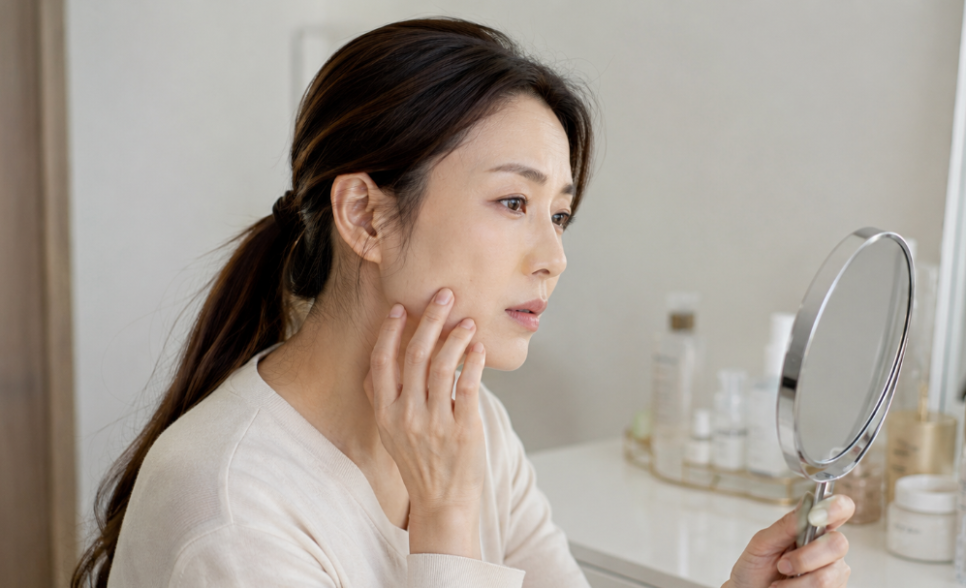
- Ultherapy focuses on deeper sagging
Ultherapy is a lifting treatment that delivers ultrasound energy to the deeper layers of the skin, including the fascia layer (SMAS layer).
It delivers thermal energy to areas deeper than the skin’s surface, taking an approach aimed at lifting sagging tissue.
It may be considered when the jawline has become less defined, the cheeks have begun to sag, or the overall facial contour appears to have lost definition.
In other words, Ultherapy lifting focuses on structural sagging and improving the facial contour rather than on skin texture.
- Thermage focuses on elasticity and skin texture
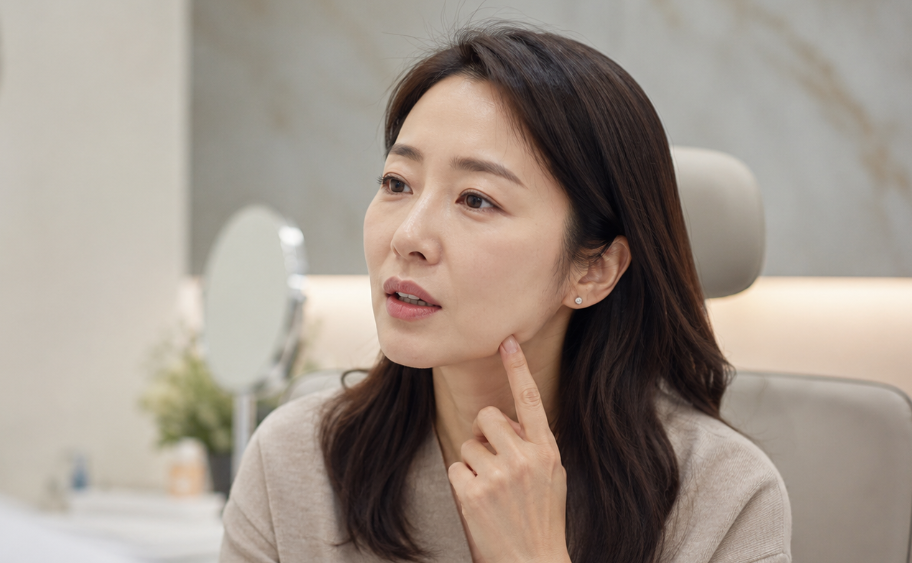
Thermage uses radiofrequency energy to deliver heat to the dermal and subcutaneous fat layers of the skin.
Through thermal stimulation, it induces a collagen response while also addressing skin elasticity, fine lines, and skin texture.
While Ultherapy focuses on sagging and the facial contour, Thermage is compared when the skin feels loose and thinner, or when fine lines, enlarged pores, and reduced elasticity are concerns.
It may be particularly worth considering when the skin feels dry and lacking in resilience, or when the entire face feels slack and without firmness.
Thermage lifting is closer to tightening and firming the skin than to creating a strongly pulled-up sensation.

- Ultherapy and Thermage target different layers
Both Ultherapy and Thermage are lifting treatments that use thermal energy to promote changes in skin elasticity.
However, they differ in the type of energy used and the depth they reach.
Ultherapy uses high-intensity focused ultrasound to deliver thermal energy at selected depths, such as 1.5 mm, 3.0 mm, and 4.5 mm.
It can target areas ranging from the superficial dermal layer to depths close to the fascia layer, so it is mainly compared for lifting the jawline, sagging cheeks, and overall facial contour.
Thermage, on the other hand, uses radiofrequency energy to deliver heat broadly to the dermal and subcutaneous fat layers.
Because it works by tightening the skin and inducing a collagen response, it may be considered when fine lines, skin texture, and reduced elasticity are concerns.
In summary, Ultherapy focuses on sagging in the deeper layers, while Thermage focuses on changes in skin elasticity and texture.
- Which is more suitable for each concern?
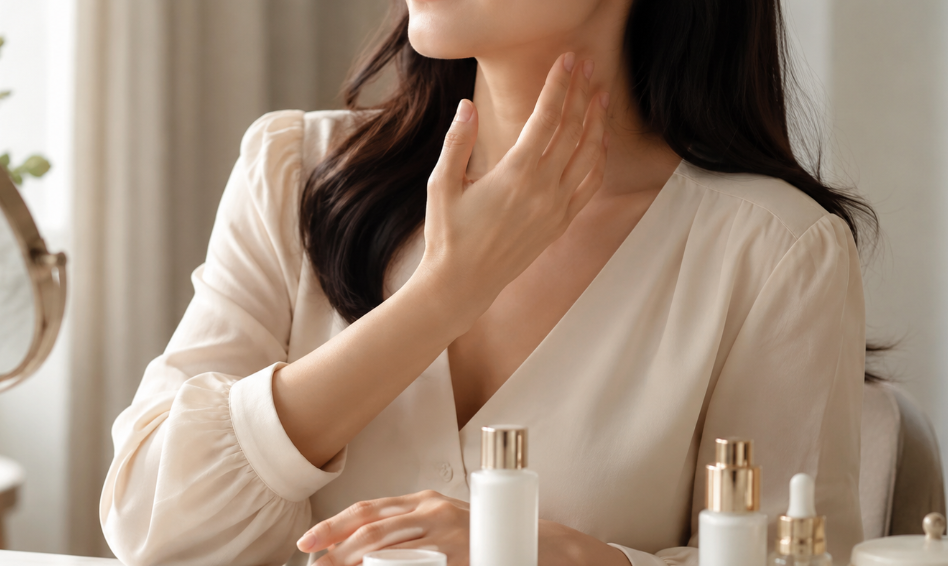
If the jawline has become less defined and the cheeks feel as though they have shifted downward, Ultherapy may be considered first.
Ultherapy lifting may also be considered when the facial contour appears less defined or when a double chin and sagging along the jawline are concerns.
Conversely, if the skin has become thinner, fine lines have increased, or the overall skin feels noticeably slack due to reduced elasticity, Thermage may be considered.
If skin texture, pores, fine lines, and reduced elasticity are all concerns, Thermage lifting may feel more suitable.
When sagging and reduced elasticity occur together, some people also consider receiving both treatments.
- Can Ultherapy and Thermage be received together?
Because Ultherapy and Thermage work on different layers and have different purposes, they may be considered together depending on the condition of the skin.
One approach is to address deeper sagging and the facial contour with Ultherapy, then complement skin elasticity and texture with Thermage.
However, combining them is not necessary for everyone.
The treatment intensity and order may vary depending on skin thickness, the amount of fat, the degree of sagging, and sensitivity to pain.
Rather than automatically receiving more treatments, it is important to design the approach according to the layers that need attention.

Q&A
Q. How long is the recovery period after a laser lifting treatment?
Both Ultherapy and Thermage are non-incisional lifting treatments, so people can generally return to their daily routines relatively quickly.
However, temporary redness, warmth, swelling, or soreness may occur after treatment and may last for a few days depending on the individual.
Q. Can I exercise immediately after Ultherapy or Thermage?
Light daily activities are possible, but on the day of treatment, it is best to avoid activities that increase warmth, such as using a sauna, drinking alcohol, or engaging in strenuous exercise.
If the skin is sensitive, it may help to reduce irritation for 2–3 days and pay attention to moisturizing and sun protection.
In summary
Ultherapy is a lifting treatment focused on improving deeper sagging and the facial contour.
Thermage is a lifting treatment that addresses skin elasticity, fine lines, and skin texture together.
Because the two treatments differ in their principles and treatment depths, it is difficult to simply say that one is better than the other.
If you are considering Ultherapy and Thermage, it is important to first determine whether your primary concern is sagging or reduced elasticity.
Examining skin thickness, the amount of fat, and changes in the facial contour together, then deciding on the necessary lifting approach, can help achieve a more natural-looking result.
▼Have other concerns?▼
▼See more now▼