
Areas such as the underarms, elbows, and knees can become a source of concern when they look noticeably darker than the surrounding skin.
Even after washing thoroughly, a dull appearance may remain, or the skin may look darker after hair removal.
It is easy to assume that this is simply dirt buildup, but in reality, it may be hyperpigmentation caused by friction or irritation.
Today, for those considering body pigmentation toning, we will review why pigmentation develops and what to check for each area.
- Why does body pigmentation develop?

Body pigmentation often develops as repeated irritation to the skin increases melanin production.
The underarms are easily affected by hair removal, sweat, and friction.
The elbows and knees are areas that bend and experience pressure frequently, so they may look darker as the skin becomes thicker.
Pigmentation in the groin or buttocks may be associated with friction from clothing, pressure, or post-inflammatory hyperpigmentation.
In other words, darkness that does not disappear even after washing may be the result of a skin response rather than a cleanliness issue.
- How does body pigmentation toning work?

Body pigmentation toning is a treatment focused on gradually lightening the pigment in affected areas.
It uses laser energy to induce a response in melanin pigment and helps the skin tone become more even over time.
However, it is not a procedure that changes the skin color noticeably in a single session.
The number of sessions required and the response may vary depending on the depth and extent of the pigmentation, skin thickness, and the cause of irritation.
Therefore, body pigmentation toning is closer to the concept of gradually managing pigment caused by repeated irritation than pursuing rapid whitening.
- The causes of pigmentation differ by area

Underarm pigmentation may be affected by hair-removal irritation, sweat, deodorant use, and friction from clothing.
Elbow and knee pigmentation often looks darker as the skin becomes thicker and drier.
Because the groin is a sensitive area, pigmentation there should be assessed together with friction, pressure, and post-inflammatory hyperpigmentation.
Even when the pigmentation affects the body, it is difficult to approach every area in the same way because skin thickness and the causes of irritation differ from one area to another.
- What to check before body pigmentation toning

Before beginning body pigmentation toning, it is important to identify the cause of the pigmentation rather than looking only at how dark it appears.
The treatment approach may differ depending on whether the issue is irritation from repeated hair removal, thickened skin, or post-inflammatory hyperpigmentation.
In particular, for sensitive areas such as the underarms and groin, it is important to adjust the energy level and treatment interval while observing the skin’s response.
This is why a medical professional needs to assess the condition of the affected skin and create a gradual plan within a reasonable range.
- Post-treatment care also affects the outcome
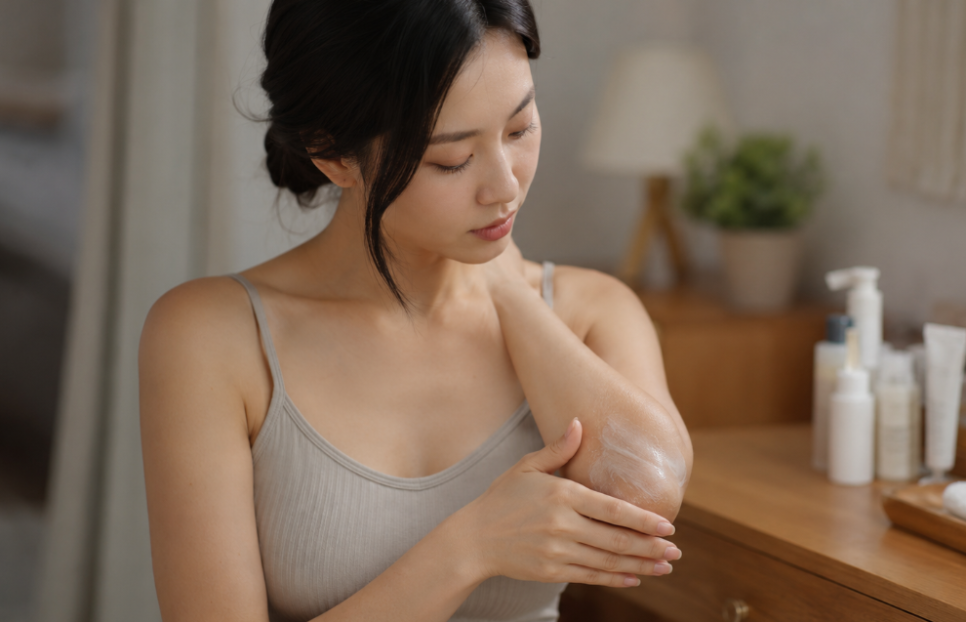
After body pigmentation toning, the skin may become sensitive, so it is best to reduce strong friction.
Avoid rubbing the treated area forcefully or using scrubs frequently.
For the underarms, adjusting the hair-removal schedule can help, while consistent moisturizing is helpful for the elbows and knees.
If the area is exposed to ultraviolet rays, protection is also necessary to prevent the pigmentation from becoming darker again.
Rather than considering the treatment alone to be the end of the process, managing everyday habits to reduce irritation can also help reduce recurring pigmentation.
In summary
Body pigmentation toning is a method of gradually managing hyperpigmentation in areas that look dark, such as the underarms, elbows, knees, and groin.
However, pigmentation is not simply an issue of skin color; friction, hair removal, inflammation, and changes in skin thickness may all contribute to it.
Therefore, it is important to first assess the condition of the skin and the cause of pigmentation in each area, then adjust the laser intensity and treatment intervals accordingly.
If you are considering body pigmentation toning, rather than expecting rapid whitening, it is better to approach it by gradually evening the skin tone while monitoring the skin’s response under the guidance of a medical professional.
▼Have another concern?▼
▼See it now▼