When wrinkles around the eyes start to become a concern, people often compare Eye Thermage and Eye Shurink together.
“Is Eye Thermage more suitable for the eye area?”
“Is Eye Shurink better for sagging?”
“They are both lifting treatments, so what is the difference?”
Both treatments can be used for concerns about elasticity and wrinkles around the eyes, but they differ in the energy they use and the depth of stimulation.
Today, we will compare Eye Thermage and Eye Shurink and summarize the factors to consider when approaching the eye area.
- The eye area should be considered differently from general facial lifting
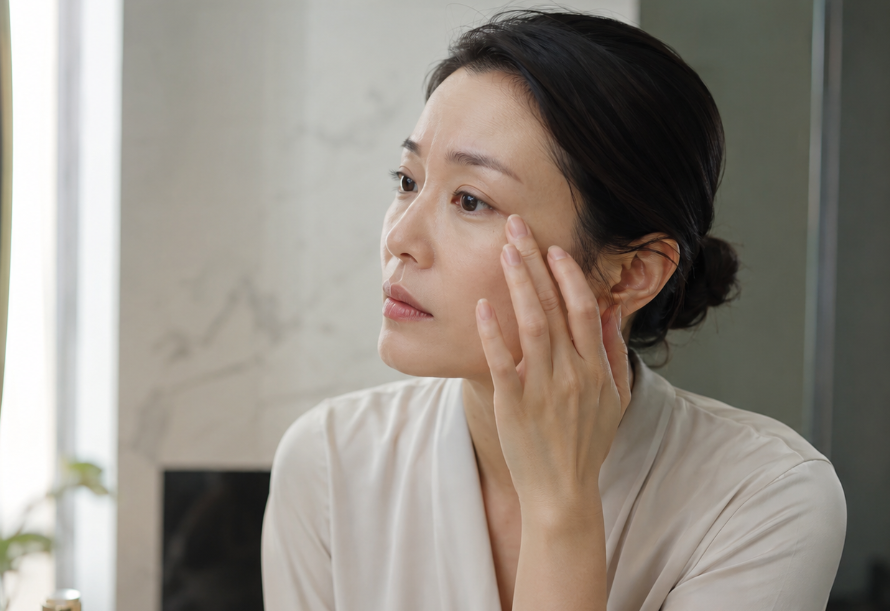
The skin around the eyes is one of the thinnest and most sensitive areas of the face.
Because it contains fewer sebaceous glands, it can become dry easily, and the frequent movement involved in opening and closing the eyes can make fine lines stand out more quickly.
In addition, the under-eye area is affected by skin thickness, fat volume, and reduced elasticity together, so it is difficult to apply strong lifting treatment based solely on the appearance of wrinkles.
For lifting around the eyes, precise adjustment of treatment intensity to match the skin thickness and degree of sagging is more important than strong stimulation.
- Eye Thermage focuses on fine lines and skin texture
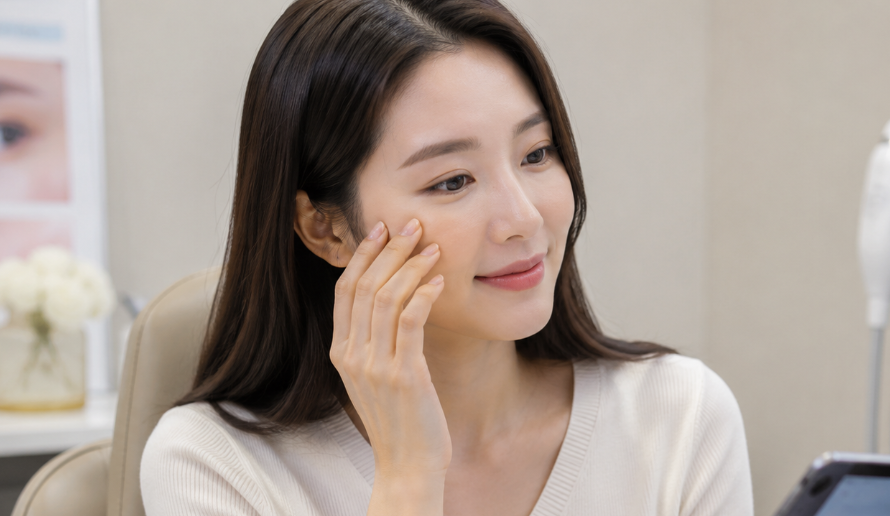
Eye Thermage uses radiofrequency energy to deliver thermal stimulation to the dermal layer of the skin around the eyes.
It may be considered when fine lines around the eyes, reduced skin texture, and decreased elasticity appear together.
Because radiofrequency energy broadly warms the skin to induce a collagen response, it may be considered for fine, delicate lines around the eyes or when the skin feels loose and lacking in firmness.
However, because the skin around the eyes is thin, it is important to use a dedicated tip and adjust the energy level appropriately.
- Eye Shurink focuses on sagging and tightening

Eye Shurink uses focused ultrasound energy to provide thermal stimulation at a specific depth within the skin.
While Eye Thermage focuses on skin texture and fine lines, Eye Shurink is considered when reduced elasticity and sagging around the eyes are both concerns.
For example, ultrasound lifting may be considered when the under-eye area feels loose or when the area around the eyes sags downward and makes the face look tired.
However, if there is little fat around the eyes or the skin is very thin, excessive intensity may be burdensome, so a cautious approach is necessary.
- What is the difference between Eye Thermage and Eye Shurink?

Eye Thermage is a treatment that uses radiofrequency energy to address elasticity in the superficial skin and dermal layers around the eyes.
Eye Shurink uses focused ultrasound to consider tightening and improvement of sagging in somewhat deeper layers.
If fine lines and skin texture around the eyes are the main concerns, Eye Thermage may be compared, while Eye Shurink may be considered when reduced elasticity and sagging are more noticeable.
However, the actual choice should not depend simply on the name of the device. It should vary according to the thickness of the skin around the eyes, fat volume, wrinkle depth, and direction of sagging.
- Can the two treatments be received together?
Because Eye Thermage and Eye Shurink have different purposes, combining them may be considered depending on the condition of the skin.
When fine lines and sagging occur together, one approach is to plan radiofrequency and ultrasound lifting separately.
However, the eye area is sensitive to stimulation, so receiving both treatments together is not always the best option.
If the skin is prone to swelling, dryness, or a feeling of heat, it is advisable to leave an interval between treatments and check the skin’s response.
Q&A
Q. Can I return to my daily activities immediately after eye-area lifting?
In most cases, it is possible to return to daily activities relatively quickly.
However, temporary redness, a feeling of heat, or dryness may occur, so it is advisable to pay attention to moisturization and sun protection after treatment.
Q. When do the effects appear?
Both Eye Thermage and Shurink may provide some immediate tightening, while collagen regeneration appears over the course of 2–3 months.
In summary
For lifting around the eyes, it is more important to consider how precisely thin skin can be treated than simply how strongly it is pulled.
Even with the same Eye Thermage or Eye Shurink treatment, the intensity and treatment area should vary according to the thickness of the skin around the eyes and the cause of the wrinkles.
The two treatments are not a matter of one being better or worse than the other; it is more helpful to understand them as differing in their energy methods and depth of stimulation.
If you are considering lifting around the eyes, it is advisable to check whether a dedicated eye-area tip is used, whether the intensity is adjusted to the skin thickness, and whether the provider has experience treating different areas.
▼Have another concern?▼
▼See it now▼