When wrinkles around the eyes start to bother you, it is common to compare under-eye filler and Botox.
“Does filler make sense if my under-eyes look sunken?”
“Is Botox better for the wrinkles that appear when I smile?”
“Can I get Botox for under-eye wrinkles as well?”
Both under-eye filler and Botox may be used to address concerns around the eyes, but they work in different ways.
Therefore, when considering ways to improve wrinkles around the eyes, it is important to first determine whether they are caused by hollowness, facial expressions, or reduced skin elasticity.
Today, we will focus on the differences between under-eye filler and Botox and summarize which concerns each may be suitable for.
- The Causes of Wrinkles Around the Eyes Should Be Distinguished First

Wrinkles around the eyes do not develop for just one reason.
Wrinkles that appear beside the outer corners of the eyes when you smile are strongly associated with the movement of the facial expression muscles.
On the other hand, when the under-eyes look sunken or shadowed, a combination of insufficient volume, under-eye fat, and thin skin may contribute to the appearance.
There are also cases in which the skin itself becomes thin and dry, making fine lines appear more widely spread.
Because the causes vary, it is difficult to resolve wrinkles around the eyes with filler or Botox alone in every case.
- If the Under-Eyes Look Sunken, Consider Filler First

Under-eye filler may be considered to soften a sunken appearance or lines that look shadowed, such as those associated with dark circles.
When the area beneath the under-eye fat is hollow or the tear trough appears deep, the treatment adds volume to help the contour look smoother.
One advantage of under-eye filler is that it directly addresses hollow areas, so changes may be noticed relatively quickly.
However, the under-eye area has thin skin, and blood vessels can show through easily.
If too much is injected, the area may look uneven or develop a noticeable bluish tint, so controlling the amount and depth of injection is important.
- Botox May Be Suitable for Wrinkles That Appear When You Smile
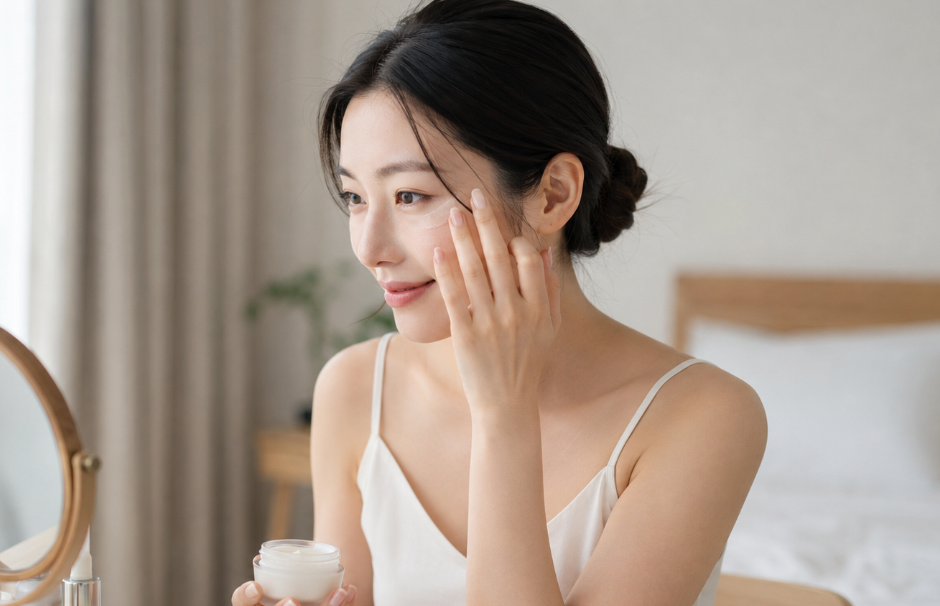
Botox is commonly used to soften expression lines around the eyes.
In particular, when deep wrinkles form beside the outer corners of the eyes while smiling, it helps make them less noticeable by regulating movement of the muscles around the eyes.
Botox around the eyes is not a treatment that adds volume like filler.
Instead, it is intended to gently reduce wrinkles caused by repeated facial movements.
However, if too much is administered, facial expressions may look unnatural when smiling or the eye area may appear stiff, so preserving natural movement is important.
- Filler and Botox Should Both Be Considered Carefully for Fine Under-Eye Lines

In many cases, it is difficult to determine whether filler or Botox is appropriate for fine under-eye lines based on one option alone.
If the fine lines are caused by thin, dry skin, adding filler may not make the wrinkles themselves disappear.
Conversely, applying too much Botox under the eyes may make facial expressions look unnatural or cause the under-eye area to appear unnatural.
In such cases, skin elasticity, dryness, and the depth of the fine lines should all be assessed together.
If fine under-eye lines are the primary concern, treatments such as skin boosters, lifting treatments, or skin texture care may sometimes be more suitable than filler or Botox, so a thorough consultation with a medical professional is necessary.
- An Easy Way to Distinguish Between Under-Eye Filler and Botox

If the under-eyes look sunken and shadowed, you may compare under-eye filler as an initial option.
If deep wrinkles form at the outer corners of the eyes when you smile, Botox may be considered.
If the under-eye skin is thin and fine lines are scattered across the area, care for skin elasticity may also be needed.
In other words, filler is a treatment that adds volume, while Botox is a treatment that regulates movement.
Improving wrinkles around the eyes is not about which of the two is better; it depends on what is causing your particular wrinkles.
In Summary
Wrinkles around the eyes are an area where even small differences can greatly change the overall impression.
From the perspective of a plastic surgery specialist, it is important to first distinguish between under-eye hollowness, expression lines around the eyes, and reduced skin elasticity.
If you are considering improving wrinkles around the eyes, rather than deciding first which treatment to receive, it is better to consult a medical professional to determine what is causing your wrinkles.
▼Have another concern?▼
▼See it now▼