Hello, I’m Dr. Young-soo Lim, chief director of Troy Plastic Surgery.
In summer, we often wear short-sleeved or sleeveless clothes, making underarm, arm, and leg hair—areas we usually do not pay much attention to—stand out more.

Shaving every time is inconvenient because the hair quickly grows back, and skin irritation or a rough, bumpy texture can also be bothersome.
So even after looking into laser hair removal, concerns often arise just before making an appointment.
“Isn’t underarm hair removal supposed to be very painful?”
“Won’t sensitive areas such as the upper lip sting even more?”
If you experienced significant pain or heat during hair removal in the past, you may be even more hesitant to try it again.
Today, we’ll look at why the pain of laser hair removal differs from person to person and what to check before treatment to reduce the burden of discomfort.
- Why does laser hair removal feel prickly?

Laser hair removal delivers energy to the melanin pigment in the hair, generating heat in the hair follicle. As a result, you may feel momentary prickling or warmth.
However, not everyone experiences the same level of discomfort.
The degree of pain can be affected by hair thickness and density, skin tone, the treatment area, and the equipment and energy settings used.
For example, areas with dense, coarse, dark hair may feel relatively warmer, while areas with thin or sensitive skin may also be more vulnerable to irritation.
Therefore, when receiving laser hair removal, it is important not only to consider whether it will hurt, but also to check whether the treatment settings can be adjusted to suit your skin and hair.
- What should you check to reduce discomfort?
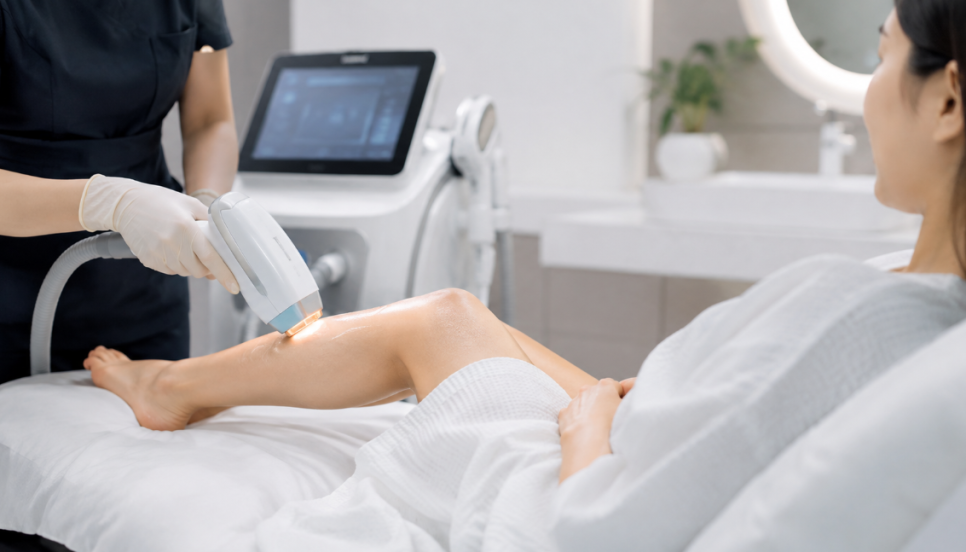
Simply lowering the laser intensity as much as possible does not necessarily result in effective hair removal.
The settings need to be adjusted appropriately so that the skin is protected while the necessary energy is delivered to the hair follicles.
In particular, it is a good idea to check the following three points together.
-
Energy settings suited to your skin tone and hair thickness
-
A cooling system that reduces skin heat during treatment
-
A treatment method that takes the sensitivity of each area into account
It may also help reduce skin irritation to check before treatment whether your skin reddens easily and whether you have recently had significant sun exposure.
- What are the characteristics of CLARITY II hair removal?
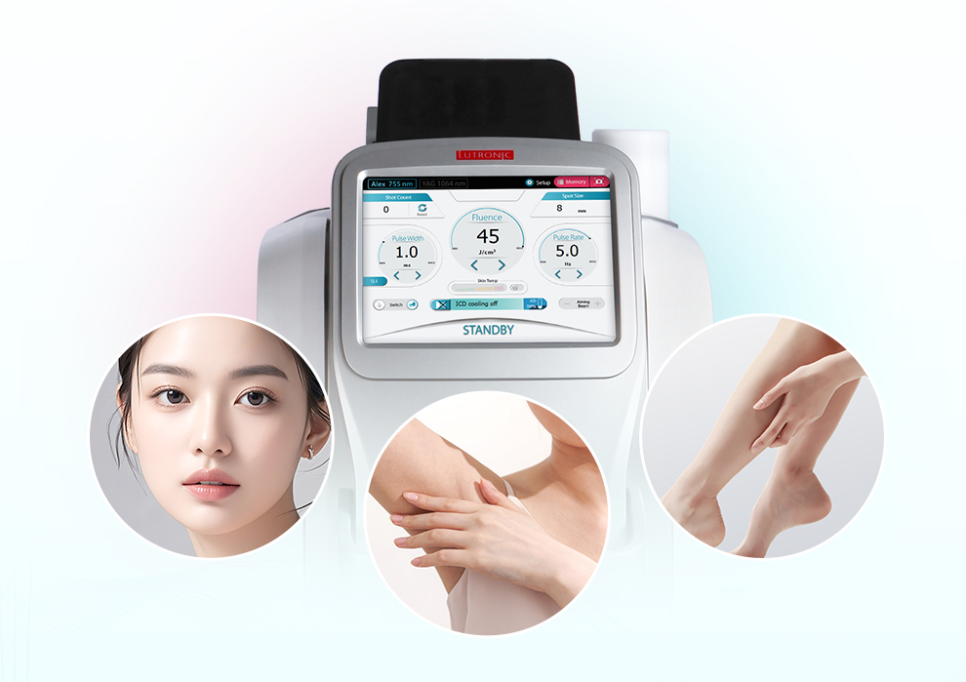
CLARITY II is a laser device that can use two wavelengths: 755 nm Alexandrite and 1064 nm Nd.
In simple terms, this means that instead of using one method for all skin and hair types, an appropriate wavelength can be selected according to skin tone and hair characteristics.
It also includes features designed to reduce the sensation of heat during hair removal.
-
A cooling system that protects the skin’s surface
-
Two laser wavelengths that can be selected according to the condition of the skin and hair
-
A fast treatment system that can treat relatively large areas efficiently
However, even when using equipment with multiple features, such as CLARITY II, applying the same settings to everyone is not advisable.
Ultimately, what matters is how the device’s features are used in accordance with the condition of the skin and hair.
- Do underarms, arms, legs, and the upper lip differ in pain level?
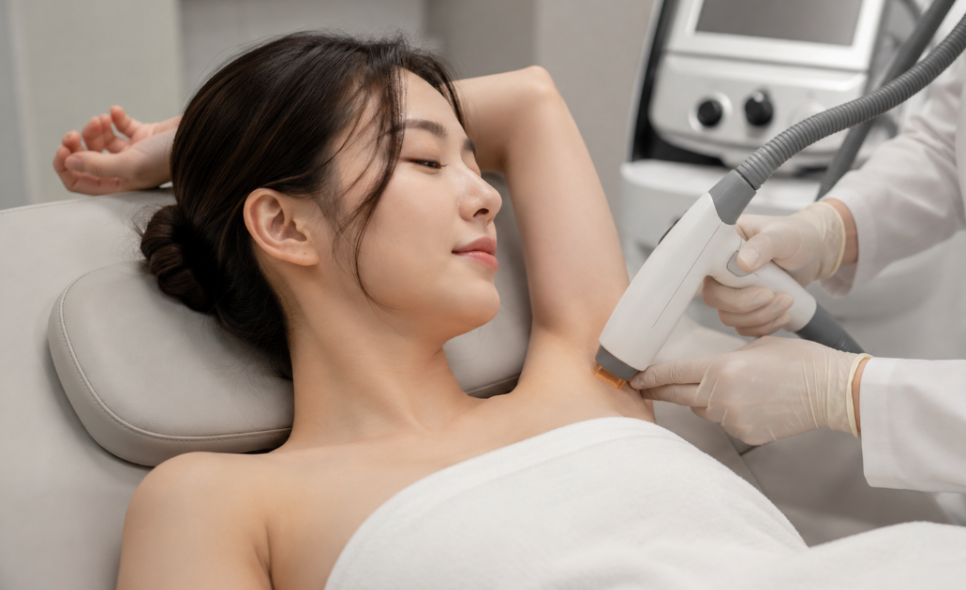
Because hair thickness and skin thickness vary depending on the treatment area, the irritation you feel may also differ.
Areas with dense, coarse, dark hair may feel relatively more prickly or warm.
Because these areas are large, it is important to apply the laser evenly across a consistent range.
Since the skin tends to be sensitive and these areas are close to the face, more precise energy adjustment is needed.
Even on the same person, hair conditions may differ from one area to another. It is therefore better to consider the characteristics of each area rather than applying identical settings to the entire body.
- Calming the skin after laser hair removal is also important
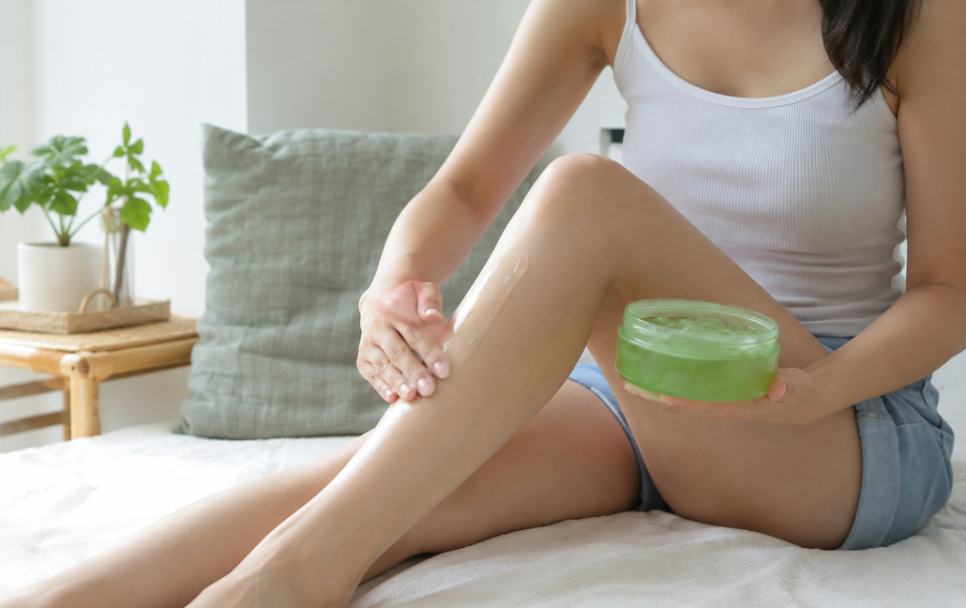
Immediately after hair removal, the area around the follicles may become red or appear slightly swollen, and you may experience a burning sensation.
These are usually temporary reactions, but it is a good idea to minimize irritation while the skin settles.
-
Apply a light cold compress if you feel heat
-
Pay attention to sun protection when going outdoors
-
Avoid hot baths and saunas on the day of treatment
-
Do not rub or otherwise irritate the skin strongly
Conversely, if severe pain or redness persists, or if unusual changes such as blisters appear, it is better to have a medical professional check your condition rather than managing it on your own.
In summary
When researching laser hair removal, it is easy to overlook what truly matters if you only compare equipment names or pain reviews.
This is because the settings required may vary depending on skin tone, hair thickness and density, and the treatment area, even when the same device is used.
Whether a medical professional with sufficient knowledge of lasers personally examines the condition of your skin and hair and creates a treatment plan can also be one factor to consider when deciding on hair removal.
Rather than simply enduring pain, the important thing is to accurately deliver the necessary energy within the range your skin can tolerate.
That is an important starting point for comfortable and safe laser hair removal.
▼Have other concerns?▼
▼See them now▼