Hello. I am Lim Young-soo, Medical Director of Troy Plastic Surgery.
Sometimes, the nasolabial folds descending beside the corners of the mouth look more pronounced than before when you take a photo.
They may look fine normally but crease deeply when you smile, or make you look tired and older even when you are not feeling particularly unwell.
This is why I often hear questions like these during consultations for nasolabial folds:
“Won’t filler make me look too puffy?”
“I’ve heard Juvelook looks more natural. Which would be better?”
If you are deciding between nasolabial fold filler and Juvelook, understanding how the two procedures improve nasolabial folds differently can make your choice much easier.
- If the nasolabial folds are deeply indented, should filler come first?
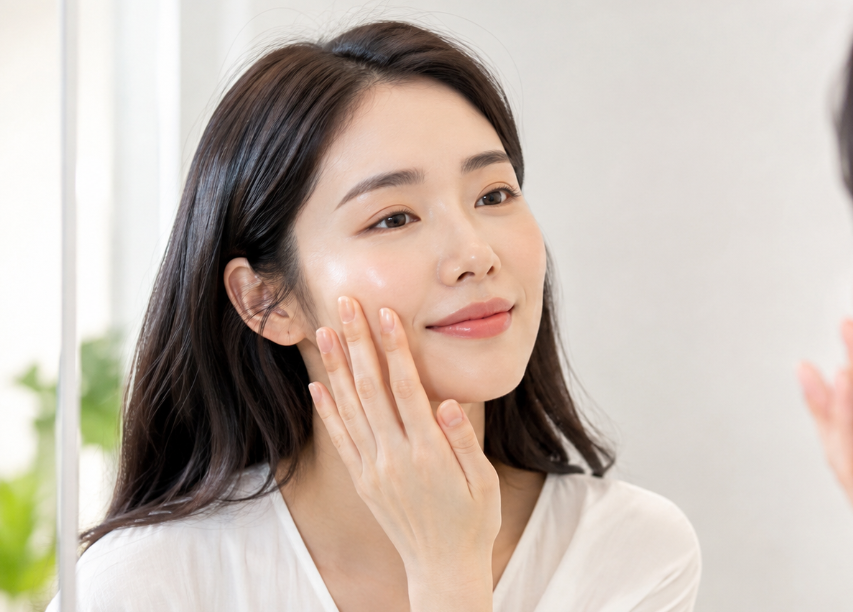
Nasolabial fold filler is a procedure that adds volume to hollow areas and softens deeply etched lines.
The benefits of filler are especially clear when the nasolabial area is deeply indented like a groove and appears shadowed.
-
When you want to see a relatively quick change after the procedure
-
When deeply hollowed nasolabial lines are your main concern
-
When you want to directly add volume to the areas that need it
However, the nasolabial area does not become more natural simply by adding more volume.
It is important to assess the movement around the mouth and the volume of the mid-cheeks together, then add only the precise amount needed in the hollow areas.
- If filler feels burdensome, would Juvelook look more natural?

Unlike filler, Juvelook does not directly fill the grooves of nasolabial folds.
It involves injecting PDLLA and hyaluronic acid to stimulate collagen production, creating gradual changes in which the skin becomes firmer over time.
It may therefore be better suited to concerns such as these:
-
When you feel uncomfortable with the immediate volume created by filler
-
When the skin around the nasolabial folds is thin and has lost firmness
-
When you are also concerned about skin texture or elasticity around the nasolabial folds
In other words, filler fills deeply hollowed spaces, while Juvelook can be understood as helping support the firmness of the skin around the nasolabial folds.
- Nasolabial fold filler vs. Juvelook: Which is right for my face?

I am often asked, “Which of the two looks more natural?” However, I look at the current shape of the nasolabial folds before considering the name of the procedure.
If the nasolabial lines themselves are deeply hollowed, filler may be suitable. If the skin has become thinner and fine lines and reduced elasticity are also visible, Juvelook may be more appropriate.
The criteria are not difficult to summarize.
Quickly addressing deep hollows → Nasolabial fold filler
Gradually creating firmer-looking skin → Juvelook
Deep hollows together with reduced elasticity → Apply filler and Juvelook to the areas where each is needed
Age is not the important factor.
Rather than choosing filler because you are in your 30s or a skin booster because you are in your 40s, it is important to determine whether the nasolabial folds have deepened mainly because of insufficient volume or because of reduced skin elasticity.
- There is a reason treating only the nasolabial folds can look unnatural

The fact that the nasolabial folds have deepened does not mean it is sufficient to look only at the nasolabial lines.
You should also assess whether the upper part of the nasolabial folds has become heavier as the mid-cheek volume has descended, whether the area around the mouth has become hollow, and whether the skin itself has become thinner.
This is particularly important if you are considering filler.
If a large amount is injected along the nasolabial lines alone, the wrinkles may become less noticeable, but the center of the face may look heavy and unnatural.
Therefore, with nasolabial fold procedures, it is important to determine not only where to add volume but also how far to go to maintain a natural appearance.
Q&A
Q. Can I receive nasolabial fold filler and Juvelook together?
Yes. The two procedures are sometimes used together.
The necessary volume can be created with filler in deeply hollowed areas, while the elasticity and texture of the surrounding skin can be addressed with Juvelook.
Because the two procedures serve different purposes, the key is to determine the areas and order of treatment based on the condition of your face.
Q. How long does nasolabial fold filler last?
It varies depending on the product, injection volume, movement around the mouth, and other factors, but it generally lasts about 6 months to 1 year.
Rather than injecting a large amount from the beginning to try to extend the duration, it is better to inject only as much as needed, based on achieving a natural shape.
Q. How many Juvelook treatments do I need?
Juvelook is not a procedure that completes volume in a single session. Since it stimulates a collagen response, it is performed several times at set intervals.
Typically, the number of treatments and intervals are planned based on the condition of the skin, and whether additional treatment is needed is decided according to the changes afterward.
In closing
Choosing between nasolabial fold filler and Juvelook is simpler than you might think.
First determine whether you need to fill deeply hollowed areas or support the elasticity of the skin itself.
Since the face can look heavy if the nasolabial area is overfilled even slightly, please consider whether the medical professional can provide a customized plan designed to create a natural, youthful appearance.
▼Have another concern?▼
▼View it now▼