
As we age, the skin’s elasticity naturally decreases. In particular, once you reach your 30s and 40s, a noticeable decline in elasticity begins in earnest, and this is influenced by various factors. The most common cause is the decrease in collagen and elastin within the skin. These two components play a role in supporting the skin, but as we get older, their natural production decreases, causing the skin to lose elasticity.
In addition, as moisture in the skin decreases, the skin becomes dry, which can also accelerate wrinkle formation and sagging. Especially if facial sagging in your 30s is a concern, insufficient skin moisture can lead to a faster loss of elasticity. On top of that, external factors such as UV exposure, smoking, and stress also play a role in accelerating skin aging.

Image for advertising model purposes
Lifestyle habits also have an important effect. Poor eating habits, lack of sleep, and insufficient exercise all act as factors that harm skin health. Especially if you are concerned about facial sagging in your 40s, it is necessary to review your daily habits. To maintain facial elasticity, it is important to take in enough nutrients for skin health and keep a regular routine, so if your lifestyle is irregular, that too can be a cause of facial sagging.
Changes in daily life caused by loss of elasticity
When facial elasticity declines, various changes appear in the skin, which can cause inconvenience in daily life. The most common experience is makeup lifting or not adhering well. As the skin loses elasticity and becomes rough, cosmetics do not spread evenly, causing makeup to break down easily, which naturally becomes something you have to worry about when going about your daily life outside.
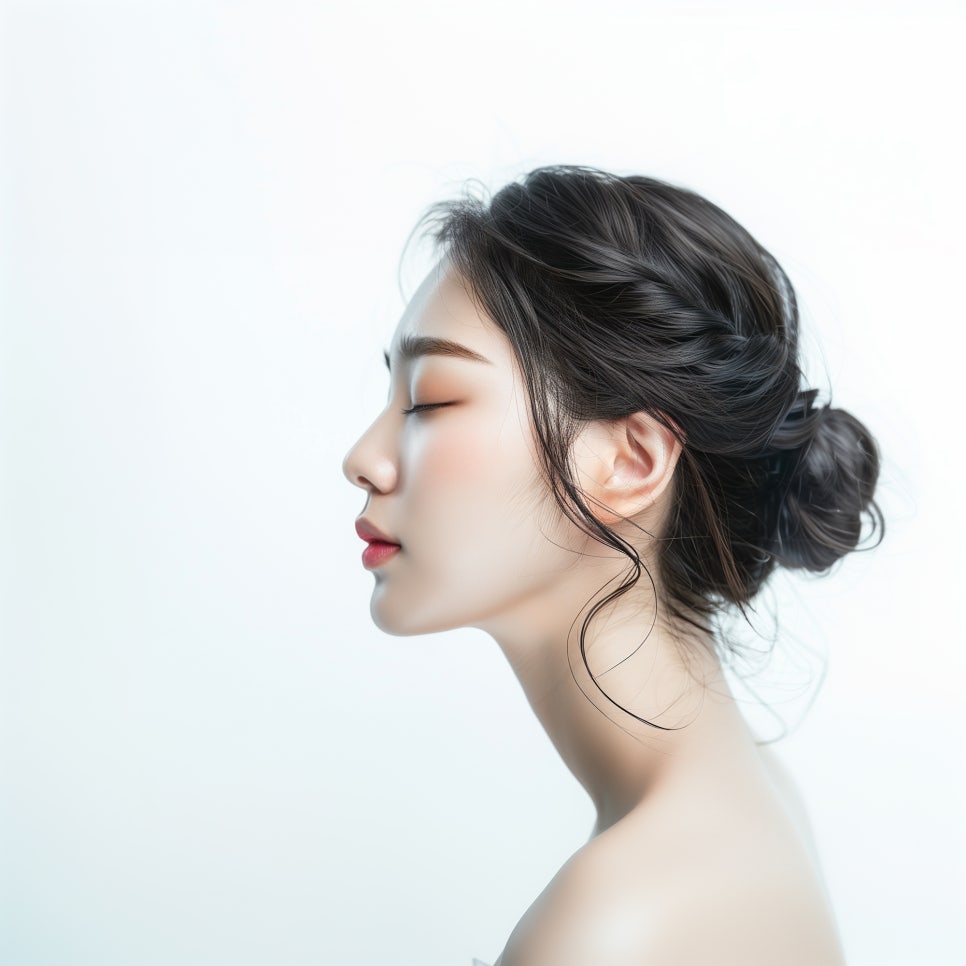
Image for advertising model purposes
Wrinkles and skin sagging also become noticeably more prominent. In particular, when facial sagging begins in your 30s, the skin as a whole loses firmness, and the boundary between the cheeks and jawline becomes blurred, often changing the shape of the face. This alters the overall impression and can make you look older. If facial sagging worsens in your 40s, nasolabial folds and under-eye wrinkles become more pronounced, and as skin elasticity decreases, the entire face may look droopy.
Another common change is that as facial elasticity decreases, the face can look tired or lacking in vitality overall. When the skin lacks elasticity, blood circulation may not be smooth, causing the skin tone to look dull. As a result, it becomes difficult to maintain a healthy skin glow, and dryness and a rough texture may also occur.

Image for advertising model purposes
Symptoms and changes caused by loss of elasticity
A decrease in facial elasticity does not simply mean the skin sags; it can also trigger various symptoms and changes. First, as the skin loses volume, the face becomes less three-dimensional. In particular, when the area below the cheekbones hollows out or the jawline collapses, the facial contour may become less defined. In addition, as the skin becomes thinner, fine wrinkles can increase. One of the causes of facial sagging is reduced elasticity in the dermal layer, which leads to the formation of fine wrinkles on the skin’s surface. The eye area and around the mouth are especially prone to expression changes, so once elasticity starts to decline, wrinkles can increase more quickly.

When skin elasticity decreases, the facial line breaks down, which can make the face appear larger overall. This leads to a jawline that appears less defined, making the face look wider, or to sagging cheeks that change the overall contour. When facial sagging becomes more pronounced in your 40s, these changes become even more noticeable, and it may become difficult to maintain a youthful-looking face.
How should you care for facial elasticity?
To maintain facial elasticity and prevent sagging, professional care may be needed along with lifestyle improvements. Recently, various procedures that can improve skin elasticity have gained a lot of attention. 대표적으로 올리지오 리프팅 and 슈링크 리프팅 are procedures that use radiofrequency and ultrasound energy to stimulate the skin and help promote collagen production. These procedures are relatively simple to receive and can be expected to improve elasticity.

In addition, procedures such as Rejuran Healer, which helps skin regeneration, and Juvelook, which supplements skin volume, can also be ways to manage elasticity. Using these procedures appropriately can help restore skin elasticity and help improve the causes of facial sagging.
If facial sagging has started in your 30s or you are worried about facial sagging in your 40s, it is important to review your lifestyle habits and combine that with appropriate skin care. To prevent loss of elasticity and maintain healthy skin, consistent care and considering suitable procedures can be a good approach, so please keep this in mind.
This article was written to provide information in compliance with Article 56, Paragraph 1 of the Medical Service Act. All procedures and surgeries may leave side effects and aftereffects depending on the individual, so please make a decision after sufficient consultation with medical professionals.