Skin pigmentation disorders can include melasma, freckles, and blemishes. Even if you try to cover them with makeup, the skin condition itself does not go away, so some people may be considering treatment or may be worried about how to care for spots or freckle laser scabs after treatment. Today, let’s talk about the types of laser treatments for pigmentation disorders and how to care for them.
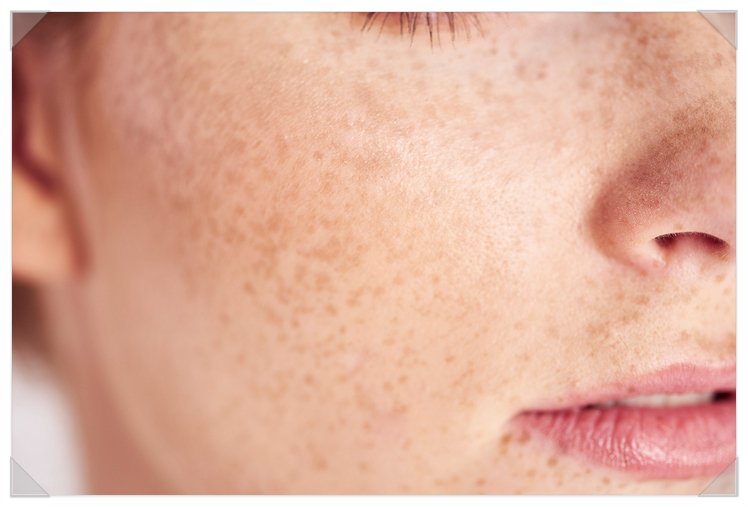
Medical advertising model image
Pigmentation occurs when melanin is overproduced in the skin, causing certain areas to darken or become uneven in color.
Pigmentation disorders can be classified as melasma, freckles, blemishes, and more depending on their causes and characteristics.
🔍Melasma
A pigmentation disorder that appears symmetrically on the cheekbones, forehead, and around the mouth in brown or gray-brown tones. It is characterized by unclear borders and a broad spread.
🔍Freckles
A pigmentation disorder in which small brown spots appear more concentrated around the cheeks and nose, and tend to become darker with sun exposure.
🔍Blemishes
Unlike melasma or freckles, this is a pigmentation disorder that can also be affected by external irritation. Pigmentation can occur due to acne scars or wounds, so the size and color can vary.

Medical advertising AI model image
Here’s how pigmentation can be managed.
The treatment options available for pigmentation disorders can vary depending on the type of condition and the individual’s skin condition, but Dual Toning, A-Tone, and laser toning can help reduce pigmentation.
Dual Toning is a treatment that combines laser toning and A-TONING. It brings together A-TONING, which selectively delivers light of a specific wavelength deep into the skin while using shorter energy pulses, and laser toning, which uses lasers to break down melanin into smaller particles. As a non-invasive procedure, Dual Toning reduces damage to the skin surface and can help alleviate pigmentation while promoting dermal regeneration, allowing you to expect improvements in both skin tone and elasticity.
It may be especially helpful for improving multiple skin concerns at the same time or for those worried about stubborn melasma.
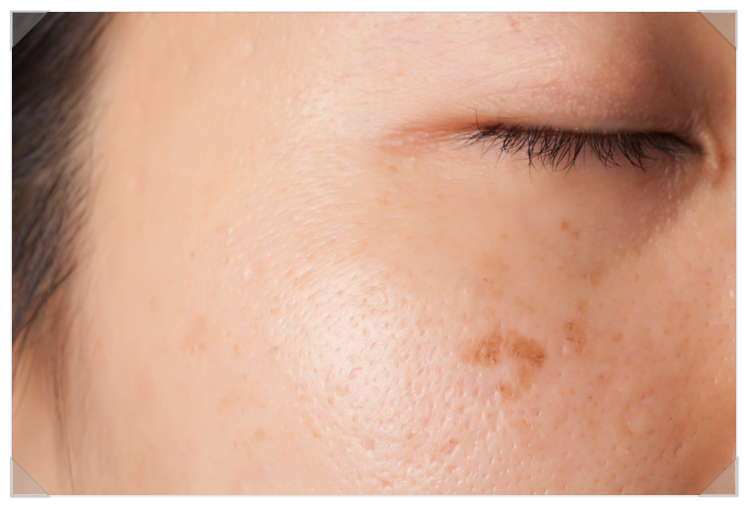
Medical advertising model image
A-Tone is a treatment method that delivers light of a specific wavelength deep into the skin while providing a cooling effect, reducing surface damage and pain. It can be performed by people concerned about pigmentation, melasma, or pustular acne.
Laser toning is a treatment that helps break down melanin using lasers. It uses low energy, so it does not stimulate pigment cells on the skin surface, reducing the risk of triggering other pigmentation issues or heat damage.

Medical advertising AI model image
If proper care is not provided after laser treatment for pigmentation, scabs may form after melasma or freckle laser treatment. If you forcefully peel them off, the skin may worsen, so paying attention to post-laser care can be better for skin recovery after the procedure.
After the laser, the melanin in the skin reacts, and the pigmentation may gradually turn brown and rise to the skin surface in the form of scabs within a few days. These skin scabs are the result of the skin pushing out pigment, and because they are part of the process of shedding pigment from the inside to the outside, it is better not to pick them off by hand.
If you forcibly remove the scabs after melasma or freckle laser treatment, pigmentation and red marks may become worse. Applying sunscreen and moisturizer to protect the skin after the procedure can also help skin recovery.
This article was written for informational purposes in compliance with Article 56, Paragraph 1 of the Medical Services Act. All procedures and surgeries may leave side effects and aftereffects depending on the individual, so please make your decision after sufficient consultation with medical professionals.