
In summer, the UV index is relatively high, and strong sunlight, heat, and humidity can increase sebum and sweat production.
The longer you spend outdoors, the more your skin can be damaged by UV exposure and accelerated aging. In addition, when the skin’s oil-water balance is disrupted, various pigmentation disorders can appear.
Why do melasma and spots/pigmentation disorders occur?
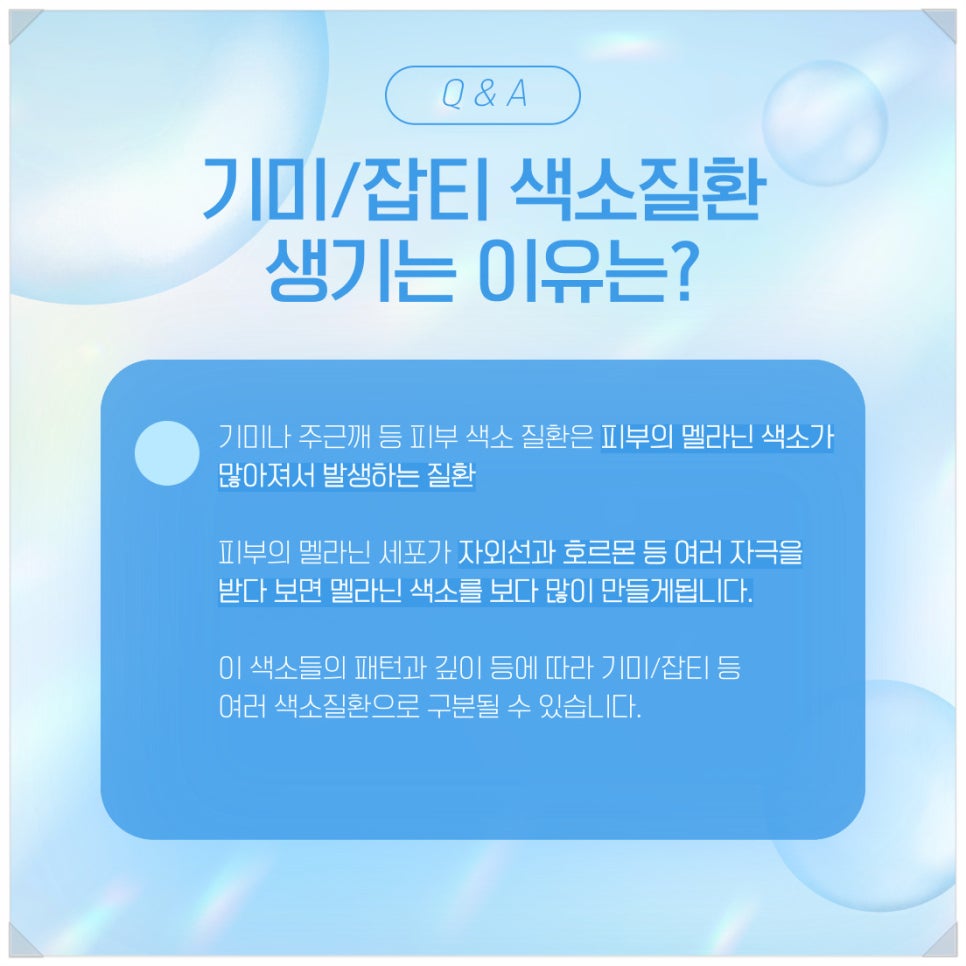
Skin pigmentation disorders such as melasma and freckles occur when the skin produces more melanin pigment. When melanocytes in the skin are exposed to various stimuli such as ultraviolet rays and hormones, they produce more melanin, and depending on the pattern and depth of this pigment, they can be classified into various pigmentation disorders such as melasma and spots.
Pigmentation disorders that appear on the skin are relatively unlikely to disappear naturally. Over time, depending on UV exposure and individual skin condition, they may worsen or require repeated treatment.
If you are concerned about pigmentation disorders such as melasma and spots, you may want to consider A-TONE and laser toning.
Treatment using a specific wavelength
A-TONE (A-tone) treatment
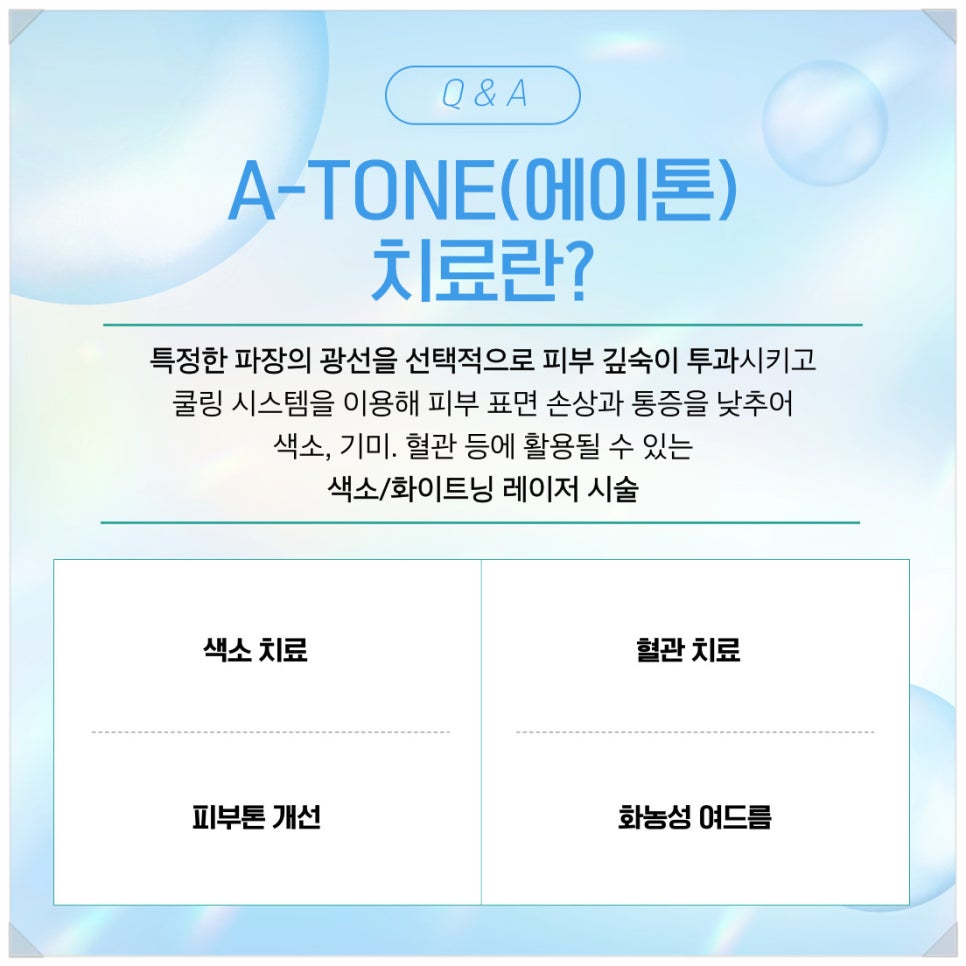
A-TONE (A-tone) selectively transmits light at a specific wavelength deeper into the skin, and by using a cooling system,
it reduces damage to the skin surface and pain, and is a pigment/whitening laser procedure that can be used for pigmentation, melasma, blood vessels, and more.
It may also help treat pigmentation disorders deep within the skin that were difficult to address with conventional IPL treatment.
| What effects can be expected from A-TONE (A-tone) treatment? |
|---|
| Pigment treatment |
Through A-TONE (A-tone) treatment, various pigmentation disorders such as spots and freckles can be removed more effectively. In addition to treating pigmentation disorders, if you are concerned about facial redness, dilated blood vessels, or want to brighten your skin tone, A-TONE (A-tone) treatment may be worth considering.
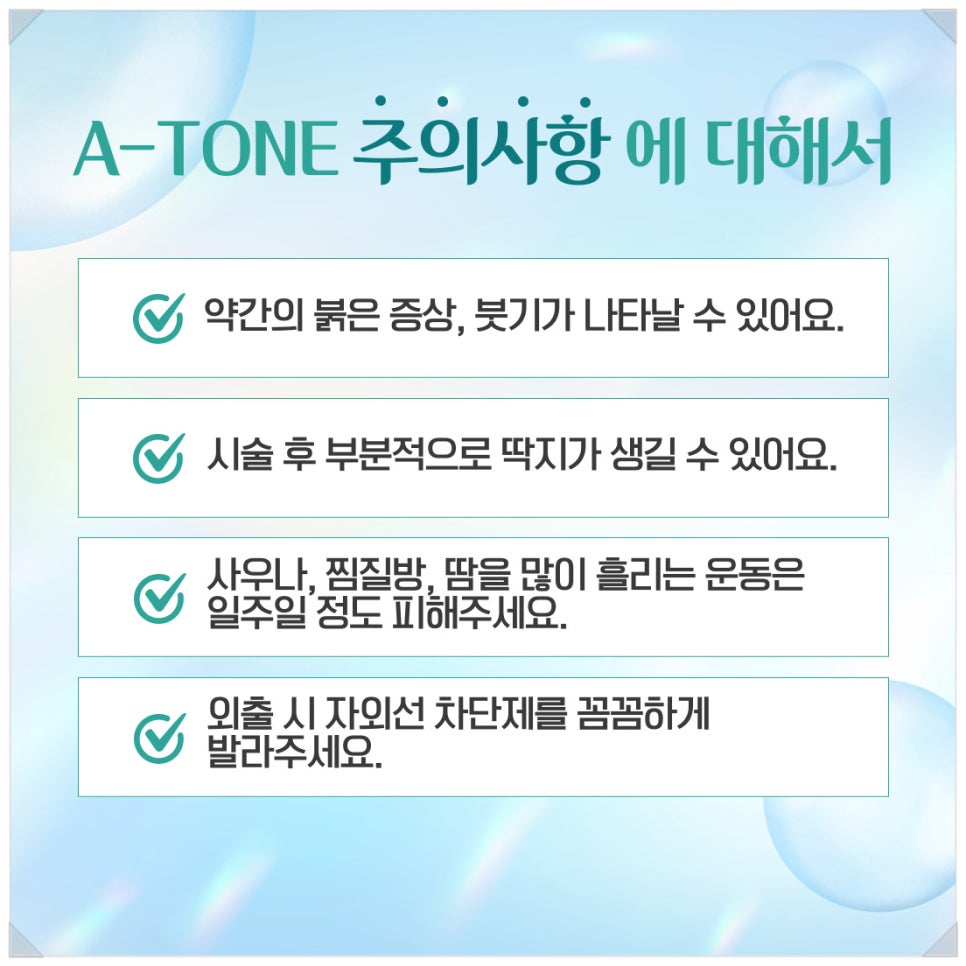
Precautions after A-TONE (A-tone) treatment ⚠️
-
Slight redness, swelling, and pain may last from one day to up to three days depending on your skin type.
-
Crusting may form in some areas after the procedure, but you should avoid picking it off on purpose.
-
Saunas, jjimjilbang, and exercise that causes heavy sweating can irritate the skin, so avoiding them for about a week may be helpful for recovery.
-
Strong sunlight exposure after the procedure may not be good, so it is best to apply sunscreen carefully when going outside.
Melasma treatment may require repeated low-intensity treatment
Among skin pigmentation disorders, melasma can become darker due to incorrect treatment. That is why repeated low-intensity treatment may be important in melasma treatment.
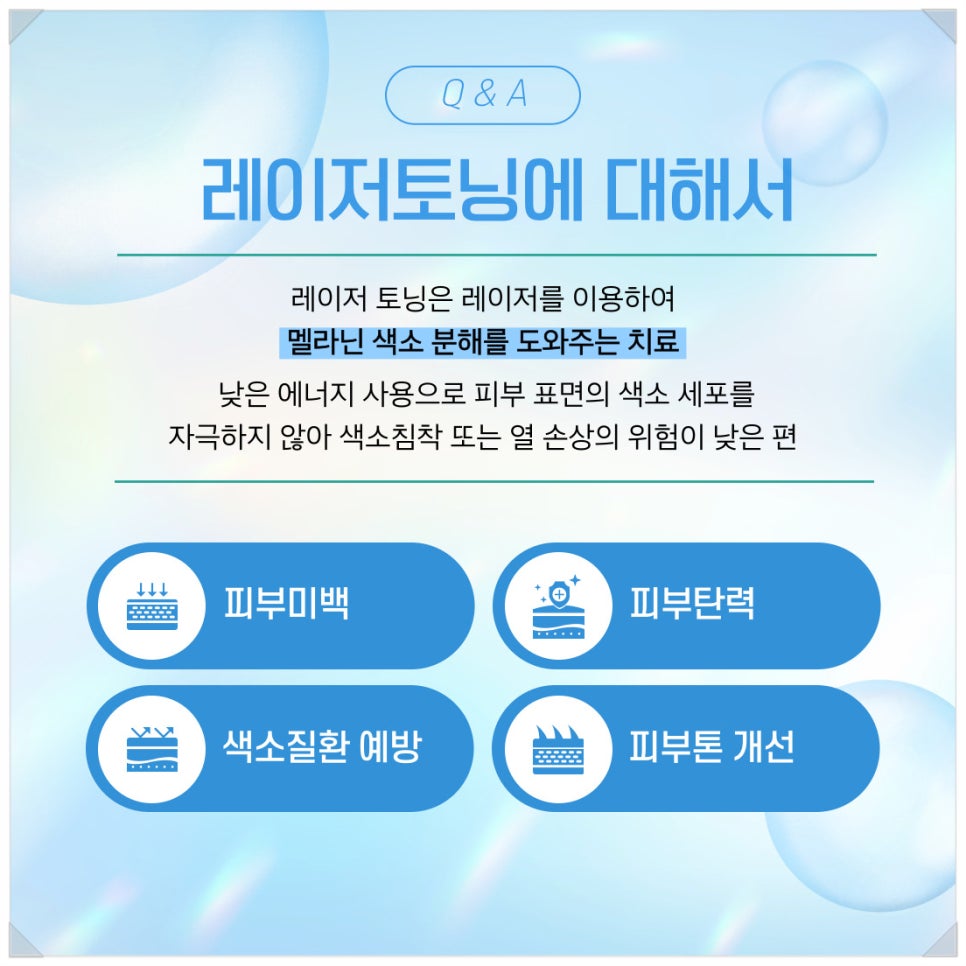
Laser toning, which may be used at this time, is a treatment that helps break down melanin pigment using lasers. Because it uses low energy, it relatively does not stimulate pigment cells on the skin surface, so the risk of hyperpigmentation or heat damage is lower.
If you combine laser toning with whitening care that uses AHA ingredients to help remove the stratum corneum and suppress pigment production, it may be more effective for treating melasma.
If you are concerned about pigmentation disorders such as melasma and spots, the A-TONE (A-tone) and laser toning treatments introduced today may help.
Because each person's skin condition and the causes of pigmentation disorders can differ, it is important to visit a medical facility, have a thorough consultation with medical staff, and fully understand your skin condition, the expected effects of the procedure, and precautions before proceeding for more satisfactory results.
Seocho Bangbae-dong Dermatology: Ask a Board-Certified Dermatologist How to Treat Melasma and Spots/Pigmentation Disorders
Seocho Bangbae-dong Dermatology: Ask a Board-Certified Dermatologist How to Treat Melasma and Spots/Pigmentation Disorders
Seocho Bangbae-dong Dermatology: Ask a Board-Certified Dermatologist How to Treat Melasma and Spots/Pigmentation Disorders