
Have you ever looked in the mirror and suddenly thought, "Why does my face look so dull?"
An uneven skin tone or a particular area that turns noticeably darker
may be due to pigmentation.
Today, let’s take a closer look at why pigmentation appears, the different types,
and the A-Tone laser that many people are interested in these days.
The causes of pigmentation are more varied than you might think.
The most representative one is sun exposure.
When exposed to sunlight, melanocytes in the skin become overactivated,
leading to increased melanin production.
In addition, after inflammation or skin damage occurs, excess pigment can accumulate in that area.
Hormonal changes, genetic factors, and taking certain medications can also have an effect.
In particular, keep in mind that when laser procedures use strong energy or are performed in an improper way,
they can actually cause pigmentation.
Areas of pigmentation located in deeper layers of the skin are also harder to improve.
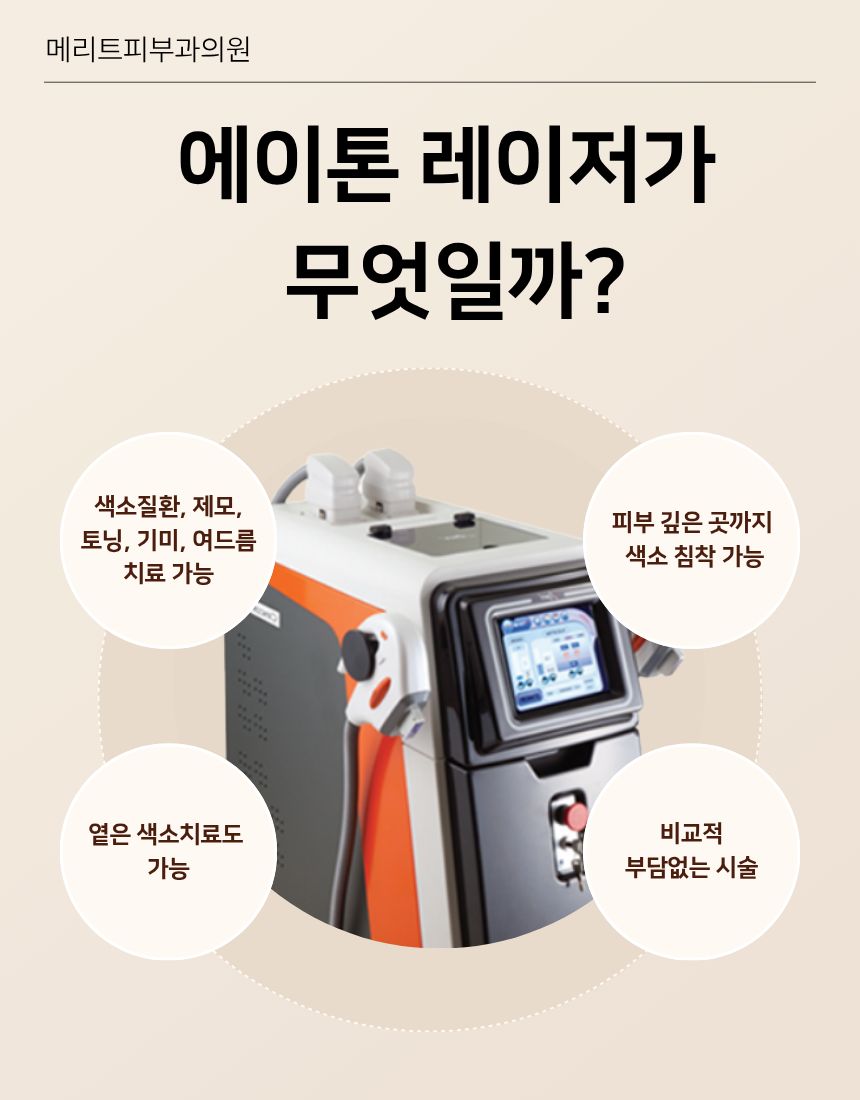
The A-Tone laser, which many people have been paying attention to lately, works on a principle similar to IPL,
but it can adjust wavelengths through special filters and a PIP system.
💡 Its biggest advantage is that it can help improve pigmentation while reducing surface skin damage and pain.
It can help improve epidermal pigmentation such as melasma, blemishes, and freckles,
and it can also create a more even skin tone for a brighter overall appearance.
Because it uses a variety of wavelengths, it can also help improve vascular lesions and red pigmentation.
Another appealing point is that skin damage and irritation are minimal, so downtime is short and you can return to daily life quickly. 😊
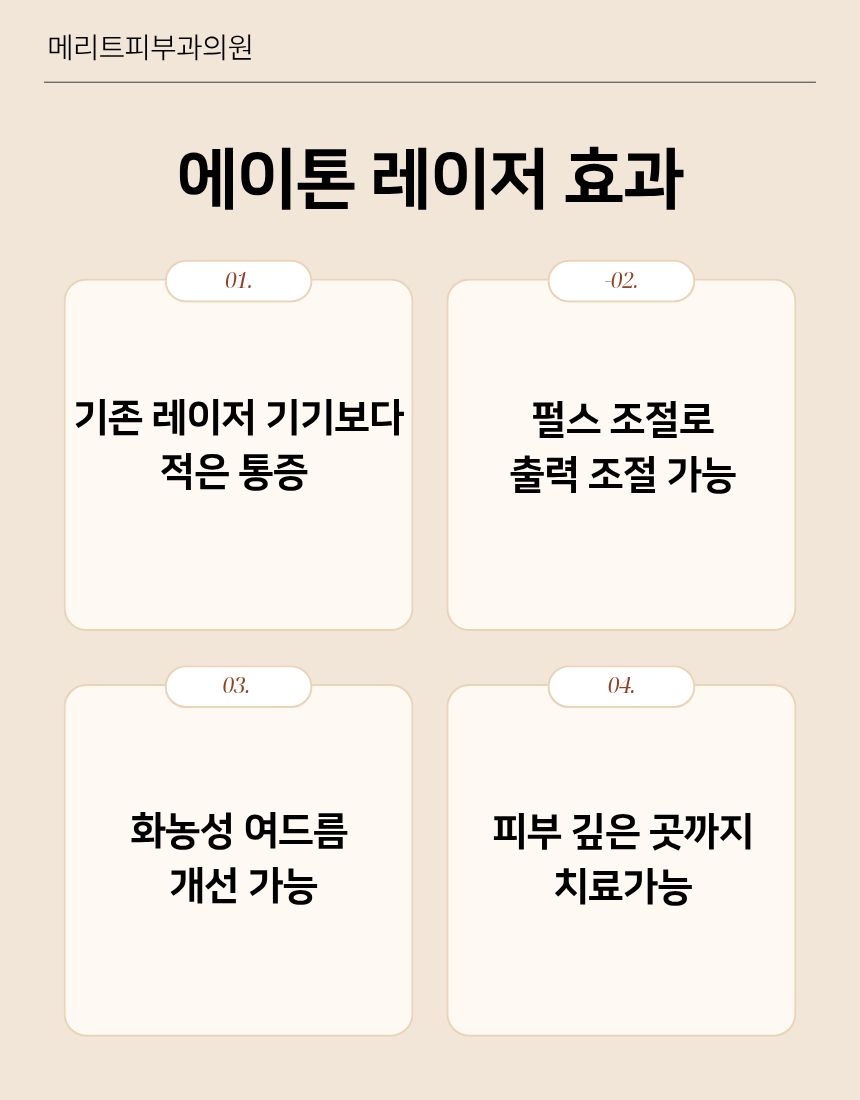
| Effects of the A-Tone laser | Areas improved as a result |
|---|
| Pigmented lesions | Improvement in melasma, blemishes, freckles |
| Vascular concerns | Redness, pigmentation control |
| Skin texture | Improved skin texture and elasticity |
| Overall tone | Even and radiant skin |
The effects of the A-Tone laser are not limited to improving pigmentation alone;
it can also support skin regeneration and improved elasticity.
However, personalized care tailored to each person’s skin condition is necessary,
and if you manage skin texture, redness, and elasticity together after the procedure,
you can achieve more satisfying results.
No matter how good a procedure is, if you neglect care, it is hard to achieve the results you expected. Shall we carefully go over the precautions when receiving A-Tone laser treatment? 🔍
After the procedure, temporary warmth, stinging, or itching may appear on the skin,
but this is a natural reaction, so there is no need to worry too much.
If a scab forms, never forcibly pick it off; it is important to let it fall off naturally.
Moisturizing and sun protection are essential!
To reduce skin irritation, avoid peeling or scrubs, and stay away from high-temperature saunas or jjimjilbangs.
It is also best to refrain from actions that irritate the skin, such as massage.
If you have sensitive skin, make sure to get enough consultation before the procedure to confirm whether it is suitable for you,
and receive treatment at the proper interval and intensity to help prevent recurrence.
If you want a more even and radiant skin tone,
it is first important to accurately understand your skin condition.
The approach may vary depending on the type of pigmentation.
The A-Tone laser is one method that can improve various pigmentation concerns while reducing the burden on the skin,
but above all, post-procedure care is truly important.
If you find the method that suits you and continue managing it consistently,
you will surely be able to experience satisfying changes, so this may be helpful to keep in mind.
This post was written for informational purposes in compliance with Article 56, Paragraph 1 of the Medical Service Act. All procedures and surgeries may leave side effects and aftereffects depending on the individual, so please make your decision after sufficient consultation with a medical professional.
#색소침착케어
#에이톤레이저색소침착