Banbae-dong Dermatology: How to Care for Acne, from Comedonal Acne to Pustular Acne?

Acne is a skin problem caused by the combined effects of sebum, dead skin cells, and inflammation, and it can progress from comedonal acne to inflammatory acne and then pustular acne, so early care is important.
Comedonal acne is the stage where comedones build up in the pores and appear as small bumps. If blocked sebum leads to inflammation, it can worsen into red acne and pustular acne.
"From comedonal acne to pustular acne, how should you care for each type?"
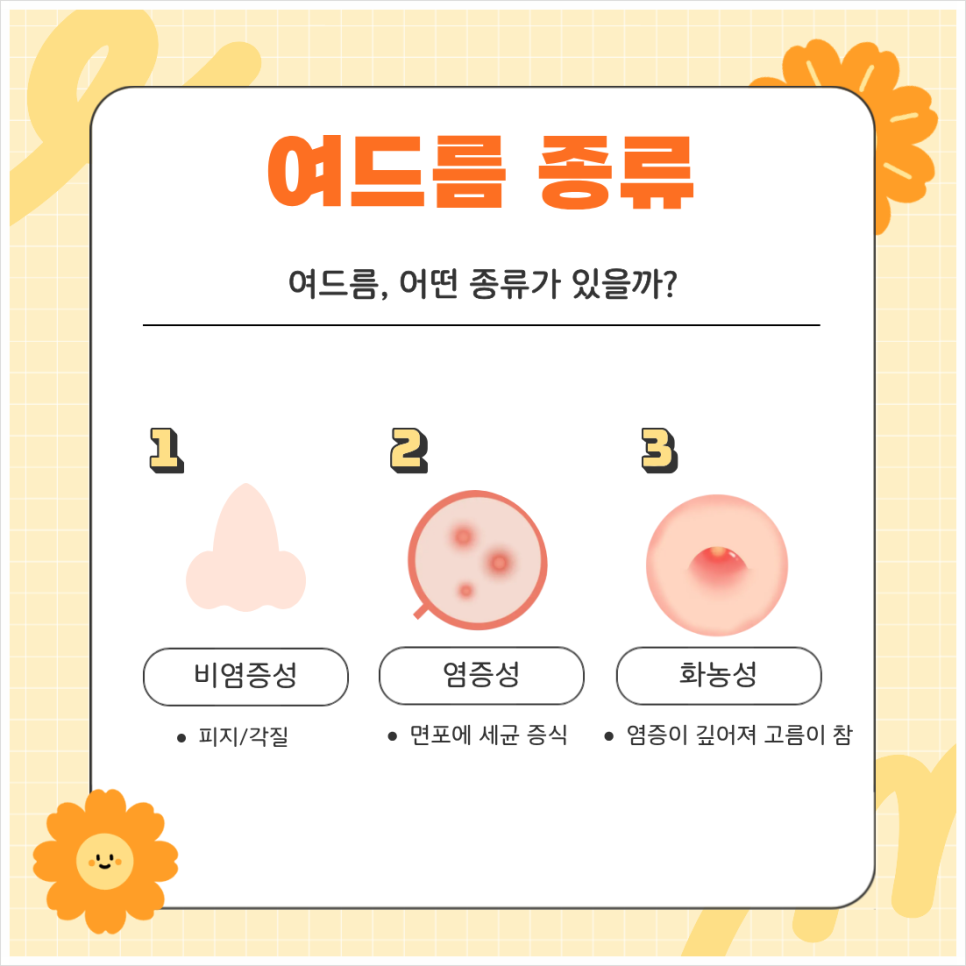
Acne begins when excess sebum is secreted and dead skin cells build up, blocking the pores. At first, it may look like small comedonal acne, but as comedones accumulate and bacteria multiply, it can quickly progress to inflammatory and pustular acne. That is why early management tailored to the type is very important.
✅ If it is an early stage? Sebum and dead skin cell care is key
Comedonal acne is a condition in which sebum and dead skin cells have hardened inside the pores. It is not very noticeable on the surface, but it feels bumpy to the touch. At this stage, care centered on pore cleaning and exfoliation is effective.
Procedures such as scaling and Aqua Peel, which gently remove waste from deep within the pores, can help prevent early acne from progressing.
✅ If inflammation has started? Target the sebaceous glands
Inflammatory and pustular acne require treatment that addresses both the sebaceous glands and acne-causing bacteria.
"What kinds of acne are there?"
Not all acne looks the same. Since care methods differ by type, knowing the basic kinds can help with management.
| Non-inflammatory acne (comedonal acne) | A condition where sebum and dead skin cells build up inside the pores, appearing white or slightly raised |
|---|
| Inflammatory acne | A stage in which bacteria multiply in the comedones, causing redness and swelling; it may be accompanied by pain and warmth |
| Pustular acne | A stage in which inflammation becomes deeper and pus accumulates; it can easily lead to scars and pigmentation, so active care is needed |
"What are effective care methods?"
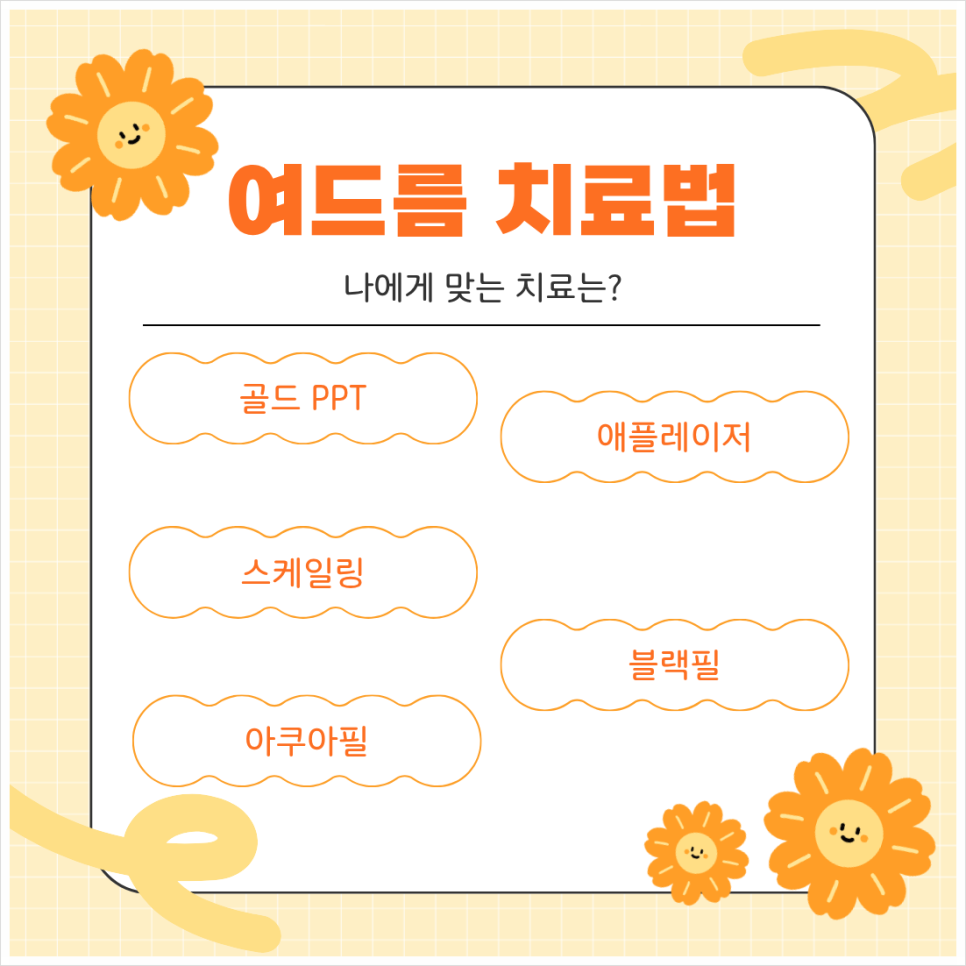
✔ Gold PTT
Special gold
This procedure works by allowing particles to penetrate deep into the pores and then reacting them with light energy, selectively destroying the sebaceous glands and acne-causing bacteria.
It has the advantage of a short treatment time and can be received with relatively little 부담 even by people who have difficulty taking medication or have sensitive skin.
✔ Apple Laser
The 1450 nm wavelength is absorbed by the sebaceous glands, helping control excessive sebum secretion and also aiding in the production of elastin and collagen, which can help improve pores and skin texture.
It is suitable for skin that is oily and frequently troubled by breakouts.
✔ Scaling
Scaling is a basic care step that cannot be left out of acne treatment.
It is a process that removes dead skin cells on the surface of the skin and opens the pores to discharge blocked sebum, and it is used in both comedonal and inflammatory acne stages. In particular, Coms Peeling is useful for dissolving dead skin cells, comedones, and sebum to help prevent acne from worsening.
✔ Black Peel
Natural fermented black vinegar ingredients help remove dead skin cells and even out skin tone, aiding in the improvement of acne marks and breakouts.
✔ Aqua Peel
A three-step care treatment that dissolves impurities inside the pores with AHA and BHA and then replenishes moisture, it is effective for removing blackheads and whiteheads.
"Tips for maintenance after the procedure"
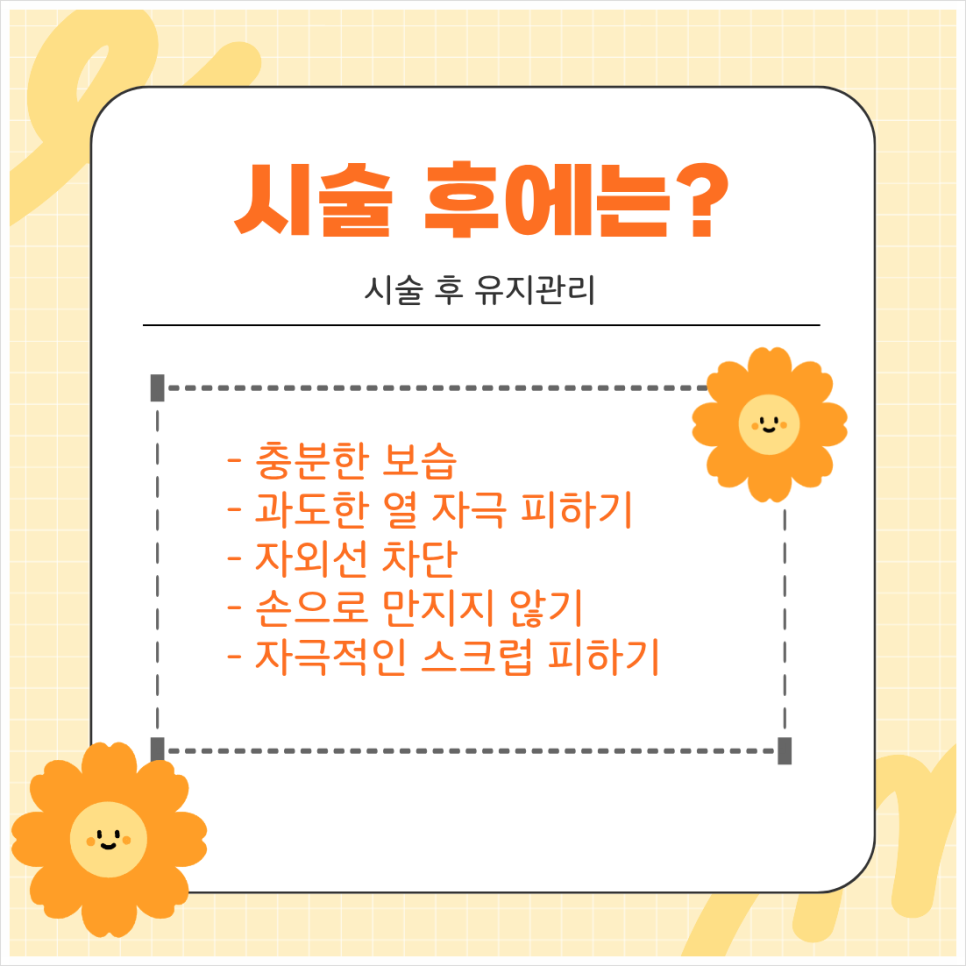
After acne care, post-procedure management is also very important.
Sufficient moisturizing, avoiding excessive heat stimulation, and sun protection are basic care elements that help the skin regenerate in a stable way. In addition, a regular lifestyle and stress management can also have a positive effect on skin recovery.
Squeezing or touching with your hands can deepen inflammation, and irritating scrubs or excessive exfoliation can also damage the protective barrier and worsen the condition. The stimulation your skin needs and the stimulation it should avoid differ depending on its condition, so it is important to observe your own skin’s reactions and adjust accordingly.
"A combined approach to acne is more effective"

Because acne has many causes, including sebum, dead skin cells, inflammation, pores, and scars, it may be difficult to manage with just one procedure.
A more balanced improvement can be expected when several methods such as Gold PTT, laser, scaling, and peeling are combined according to the skin condition.
If you are worried about your current skin condition, it may be helpful to consult a specialist and check the management method that is right for you.
We are providing the Banbae Station dermatology clinic schedule.
#Banbae-dongDermatology #BanbaeDermatology
#BanbaeAcneDermatology #BanbaeStationAcneTreatment