
Melasma and blemishes on the face are not simply problems on the skin’s surface. Over time, various factors such as ultraviolet exposure, hormonal changes, and inflammation interact to settle deep within the skin. To effectively improve these pigment disorders, an approach that considers both the epidermis and dermis is necessary. Today, let’s take a detailed look at dual toning, which can help improve pigment disorders.
What Is Laser Toning, the Start of Skin Tone Improvement?

Laser toning works by finely breaking down and removing pigment on the skin’s surface. Unlike conventional strong lasers, it places less burden on the skin while still being effective for removing blemishes, melasma, and pigmentation. In particular, because it targets the epidermis and dermis separately, it can improve the overall balance of the skin, which is why many people choose it.
The pain after the procedure is mild, or at most a slight tingling sensation, so it does not greatly interfere with daily life. It can also help improve skin texture, pores, elasticity, and redness. However, rather than expecting dramatic changes from a single treatment, more than 10 sessions at 1–2 week intervals, depending on skin condition, can provide gradual and cumulative effects.
A-TONING
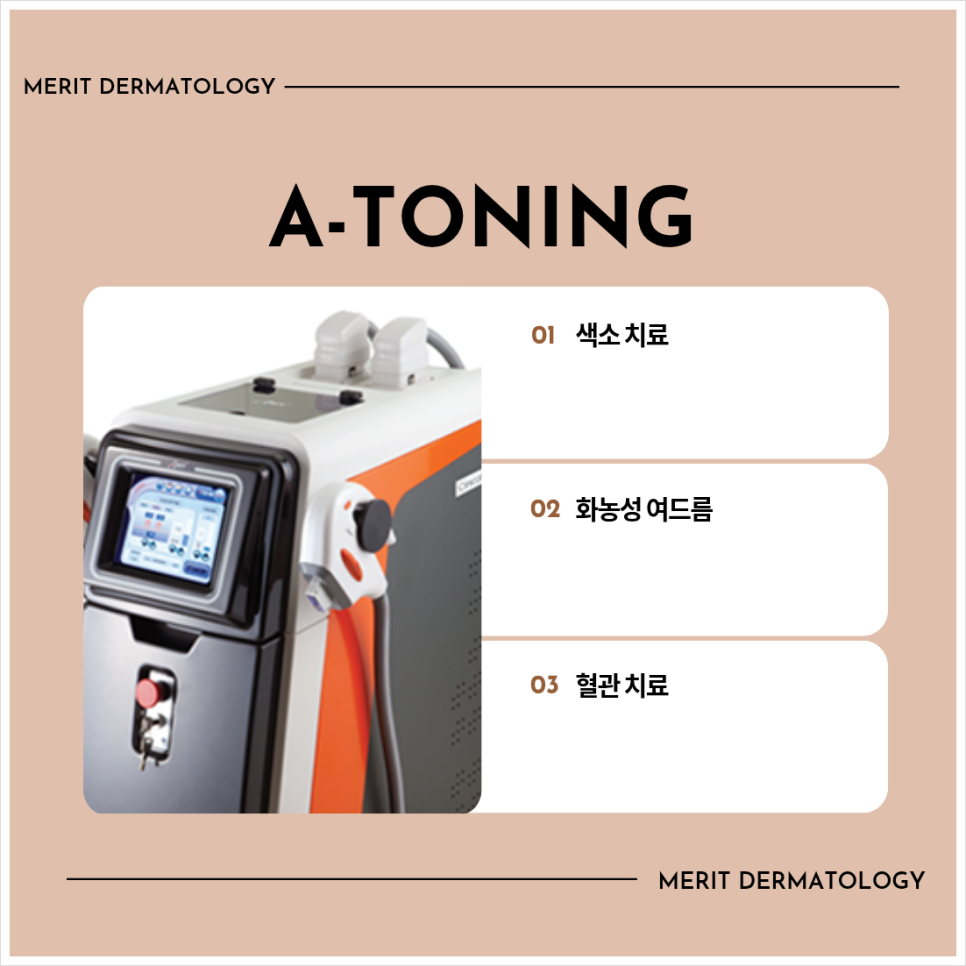
A-TONING is a method that does not simply remove pigment, but simultaneously induces melanin reduction and collagen regeneration, improving skin elasticity and texture at the same time. Through a combined approach that targets the epidermis and dermis separately, the skin tone can become more even and the skin can feel more refined.
Because it causes little skin irritation, repeated treatments are possible, and cumulative effects can be expected. However, after the procedure, skin protection and care such as sun protection and moisturizing are important. Strengthening the skin barrier and protecting it from external irritation are key factors that determine the outcome.
Pigment Disorders Like Melasma: Why Are They Difficult to Treat?

Director of Bangbae Station Dermatology Clinic
| Characteristics of pigment disorders | Causes | Management points |
|---|
| Exist in both the epidermis and dermis in a combined form | Ultraviolet exposure, hormones, inflammation, stress | Need customized treatment by depth |
| High chance of recurrence | Continuous external irritation | Improve the skin environment and provide ongoing care |
Melasma is located not only on the surface but also deep in the dermis, so simple surface removal has limited effectiveness. In addition, because it develops from multiple causes such as ultraviolet exposure, hormonal changes, inflammation, and stress, it is difficult to improve with just one method. For these reasons, pigment disorders like melasma often recur and are relatively difficult to manage.
Therefore, it is important to provide appropriate treatment according to the depth of the skin and improve the skin environment itself. In addition to removing pigment, you must create an environment in which the skin can recover healthily to reduce the risk of recurrence.
Why Dual Toning Is Suitable for Improving Melasma
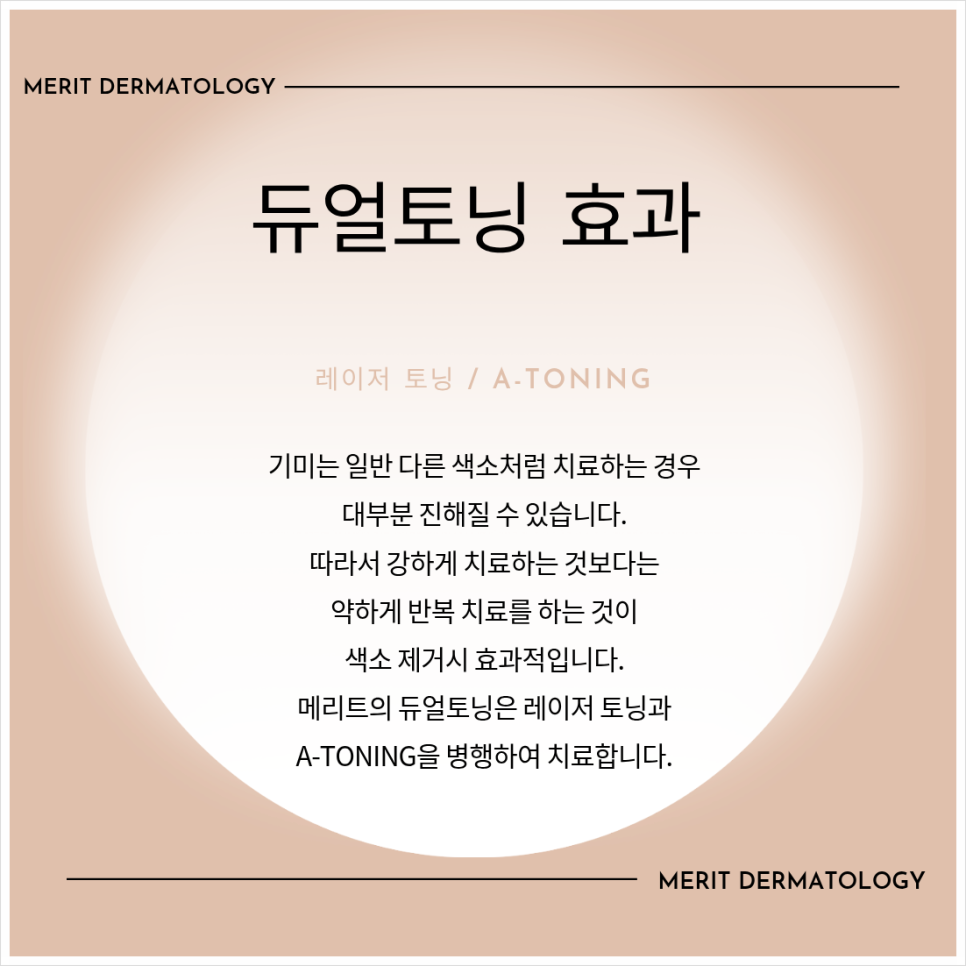
Dual toning is a method that combines two different laser wavelengths to target both surface pigment and deeper pigment at the same time. This is an approach that takes into account the fact that pigment disorders like melasma exist in both the epidermis and dermis. If only one wavelength is used, the effect may be limited because only pigment in one layer is removed, but using two wavelengths allows for a more three-dimensional improvement.
It may also contribute to collagen regeneration and help maintain blood vessel conditions more gently, which can support skin elasticity and a healthy environment. By targeting the epidermis and dermis separately with a laser toning approach, it can help prevent recurrence and sustain results, while enabling customized treatment that addresses multiple causes. The key to dual toning is to bring about gradual improvement through cumulative effects while minimizing skin irritation.
Post-Procedure Care, a Key Factor That Determines the Results
No matter how good the procedure is, if post-care is lacking, it is difficult to achieve the expected results. Sun protection is essential, and it is best to reapply a product with a high SPF frequently. In addition, to strengthen the skin barrier, it is important to use enough moisturizer and products with low irritation.
Pigment disorders are not usually completely resolved with a single procedure; the key is to lower the risk of recurrence and maintain a healthy skin environment through ongoing care. Lifestyle improvements, stress management, sufficient sleep, and adequate hydration also affect skin health, so it is good to pay attention to these as well.
Improving pigment disorders like melasma is not something that happens in a short time; it is a process that requires steady effort and care. If you combine dual toning, which approaches the skin by depth, with everyday care, you will be able to regain a clear and healthy skin tone.

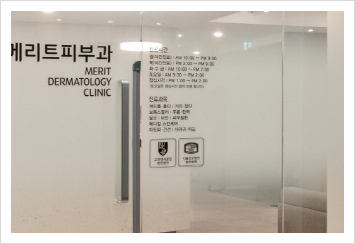
Here is the clinic hours information for Bangbae Station Dermatology Clinic.





Previous image
Next image






Previous image
Next image





Previous image
Next image




Previous image
Next image

#BangbaeStationDermatologyClinic #BangbaeStationMelasma #BangbaeStationMelasmaToning