When a red, swollen pustule appears on your face, your hand may reach for it first.
You may have experienced absentmindedly squeezing it in front of the mirror and regretting it later at least once.
However, pus-filled acne needs to be approached differently from ordinary acne.
Today, I’ll explain when extraction can help and when it may instead place additional stress on the skin.
Pus-filled acne is a condition in which inflammation begins deep in the dermis rather than on the skin’s surface. Pus accumulates, pain may occur, and the area often feels warm to the touch. If you forcefully attempt extraction in this state, the inflammation may spread to the surrounding tissue, potentially leaving marks such as depressions or hyperpigmentation.

Previous image
Next image
Its causes are different from those of a simple blackhead. It is a complex inflammatory response caused by several overlapping factors, including hormonal changes, excess sebum production, dead skin cells that block the pores, and the proliferation of acne-causing bacteria. Therefore, we often see the condition worsen when people approach it with the mindset that “squeezing it will solve everything.”
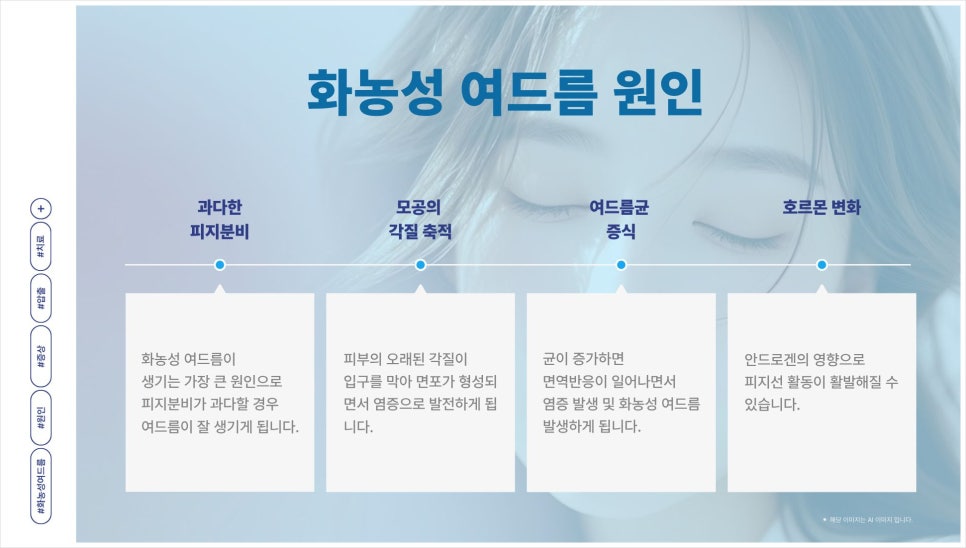
| Causes of Pus-Filled Acne |
There are several factors that work together to cause pus-filled acne. Here are some of the most common causes.
| 🧴 Excess sebum production Hormonal changes or stress can stimulate the sebaceous glands, making the pores more likely to become blocked and creating an environment where acne-causing bacteria can thrive. |
| 🦠 Proliferation of acne-causing bacteria Acne-causing bacteria use the sebum and dead skin cells accumulated inside the pores as nutrients, causing the inflammatory response to worsen rapidly. |
| ⚖️ Hormonal imbalance Hormonal changes caused by the menstrual cycle, polycystic ovary syndrome, and other factors are common causes of pus-filled acne around the chin and mouth. |
| 🍔 Diet and lifestyle A high-sugar, high-fat diet, lack of sleep, and frequent skin contact, such as touching the face with your hands, can also worsen inflammatory acne. |
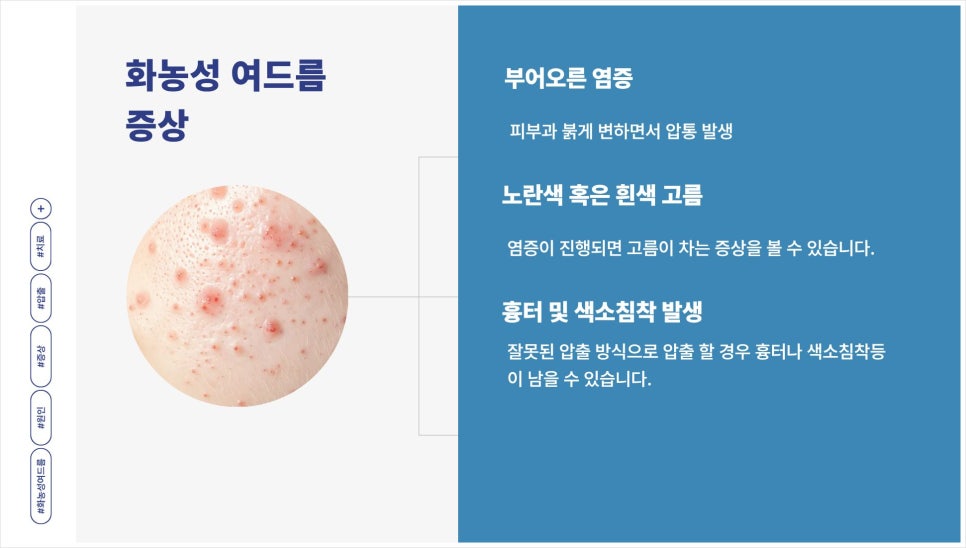
| Symptoms of Pus-Filled Acne |
The symptoms of pus-filled acne may vary somewhat depending on its stage of progression.
Early stage — The area around the pore becomes red and swollen, and slight pressure may cause pain.
Progression stage — Yellowish pus accumulates in the center, the lesion grows larger, and a feeling of heat may occur.
Worsening stage — Multiple lesions may merge and develop into nodules or cysts. After they rupture, the risk of scarring or hyperpigmentation increases.
| Why It Should Not Be Left Untreated |
| Be careful — If pus-filled acne is left untreated or squeezed by hand, the inflammation may spread deep into the dermis and leave depressed scars that are difficult to heal, including icepick scars. Repeated inflammation can also weaken the skin barrier and create a vicious cycle that makes recurrence more likely. |
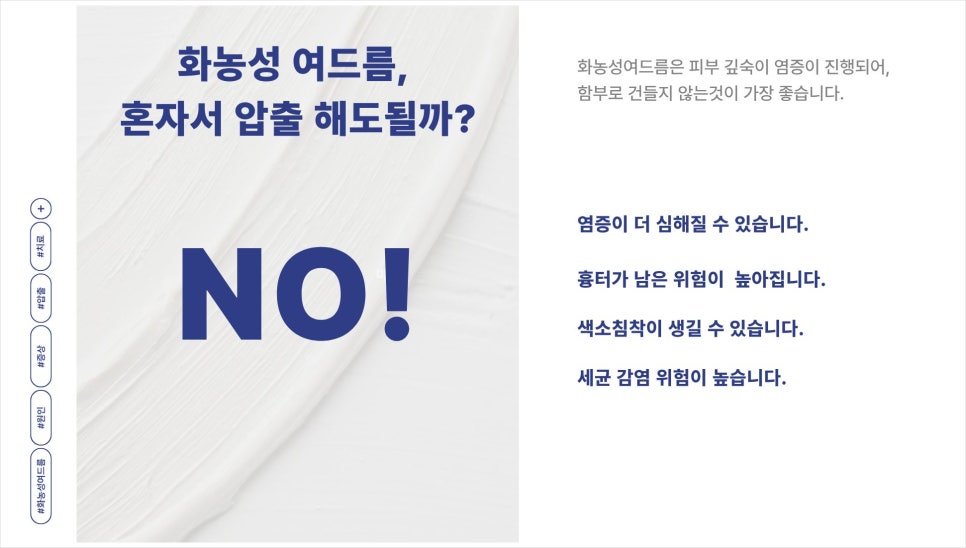
Not every type of acne requires avoiding extraction. If sebum is exposed on the surface, as with an open comedone (blackhead), and there is little to no inflammatory response, careful removal with hygienic tools and appropriate pressure may be possible. Even in this case, disinfection and proper aftercare are needed to reduce skin irritation.
✅ A white core is visible on the surface and there is little resistance when pressed
✅ There is little redness or pain
✅ Swelling subsides quickly after extraction
On the other hand, the situation is different when a pustule is firmly swollen and very painful. In such cases, self-extraction may push the inflammation into deeper layers. If there is significant resistance when pressing with your fingers or a tool, if the area hurts when touched, or if the redness has spread to the surrounding skin, reducing the inflammation should come before extraction.
💡 TIP: If you are unsure whether extraction is appropriate, do not force it. Waiting a few days and observing the condition is another option. Allowing the lesion to follow its natural course rather than squeezing it forcefully may reduce the risk of scarring.
| Treatment Options for Pus-Filled Acne |
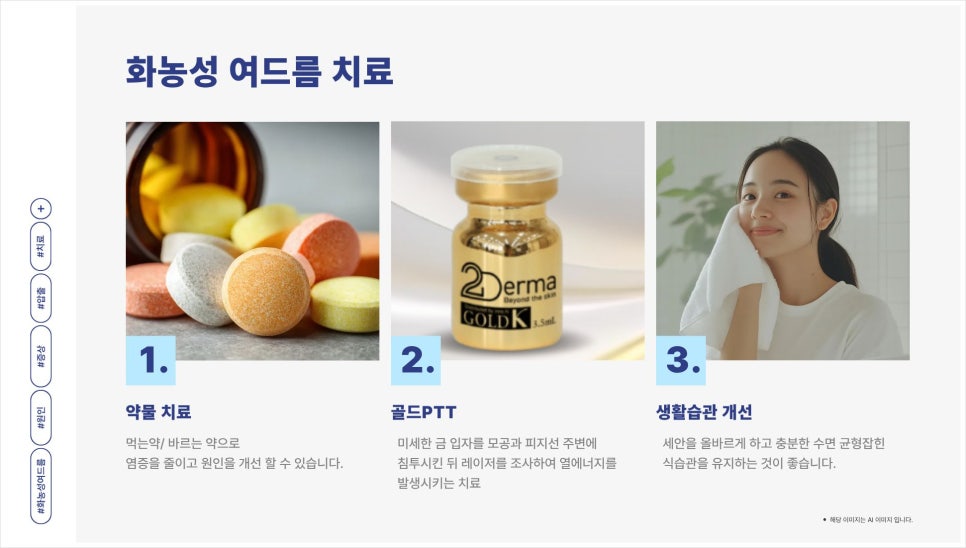
The treatment method may vary depending on the severity of the inflammation and the individual’s skin condition. The table below compares some common approaches.
| Treatment method | Features | Suitable for |
|---|
| Topical and oral medication | Controls inflammation and sebum production with antibiotics, retinoids, and other medications | Early to moderate inflammatory acne |
| Anti-inflammatory injection (intralesional injection) | Administered directly into the inflamed area to quickly reduce swelling | Firm, clustered nodular lesions |
| Laser and light therapy | Regulates sebaceous gland function and suppresses acne-causing bacteria | Inflammatory acne that frequently recurs |
| Peeling and extraction care | Professional, hygienic management of dead skin cells and sebum | Recurrent clogged pores |
| Important point — Treatment often combines medication and procedures according to the individual’s degree of inflammation and skin type rather than relying on a single method. It is important to consult a dermatologist about your skin condition before establishing a treatment plan. |
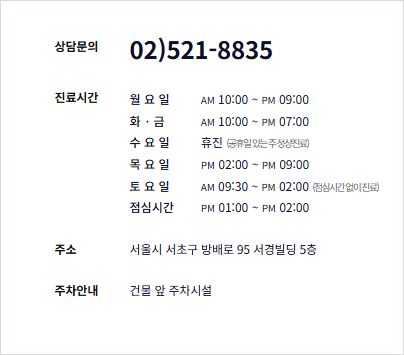
Here is information about the Bangbae Station Dermatology Clinic’s consultation schedule.
| Frequently Asked Questions |
Q. Can I simply squeeze pus-filled acne?
Self-extraction is not recommended because it can spread bacteria to the surrounding area and increase the risk of scarring. It is safer to receive treatment from a dermatologist in a hygienic environment.
Q. Can it recur even after treatment?
Yes, it may recur if hormonal or lifestyle factors remain. For this reason, consistent care should accompany treatment.
Q. What should I do if a scar has already formed?
After the inflammation has subsided, the scar can be evaluated and separate scar treatments, such as laser treatment, may be considered. During the inflammatory stage, controlling the inflammation takes priority over scar treatment.
Pus-filled acne is not simply a problem that will resolve on its own with time. Identifying the cause and combining appropriate care with treatment is the most effective way to recover while minimizing scarring. If pus-filled lesions repeatedly appear on your face, do not endure them on your own; we recommend visiting a dermatology clinic soon.









Previous image
Next image
Here is information about the interior of the Bangbae Station Dermatology Clinic.









Previous image
Next image
Here is information about the interior of the Bangbae Station Dermatology Clinic.
#BangbaeStationDermatologyClinic
#BangbaeDermatologyClinic
#BangbaeStationAcneDermatologyClinic
#BangbaeStationAcne