
📋 Table of Contents
-
What Is Shurink Lifting?
-
How It Works (HIFU Focused Ultrasound)
-
4-Step Treatment Process
-
Pain and Downtime
-
Comparison with Other Lifting Treatments
-
Pre-Treatment Checklist
-
Frequently Asked Questions (Q&

| What Is Shurink Lifting? |
Shurink lifting is probably one of the first treatments you search for when you feel that your skin no longer has the elasticity it used to.
Shurink lifting is a lifting treatment that uses HIFU (high-intensity focused ultrasound) to deliver thermal energy to the deep layers of the skin, reaching the SMAS fascia. Since it is expected to tighten sagging skin without surgery, it is often chosen as an alternative by people who feel burdened by surgical lifting.
However, rather than making a hasty decision based solely on the name of the treatment,
I thought it would be better to calmly examine the principles and recovery process first, so I have organized the information as plainly as possible today.
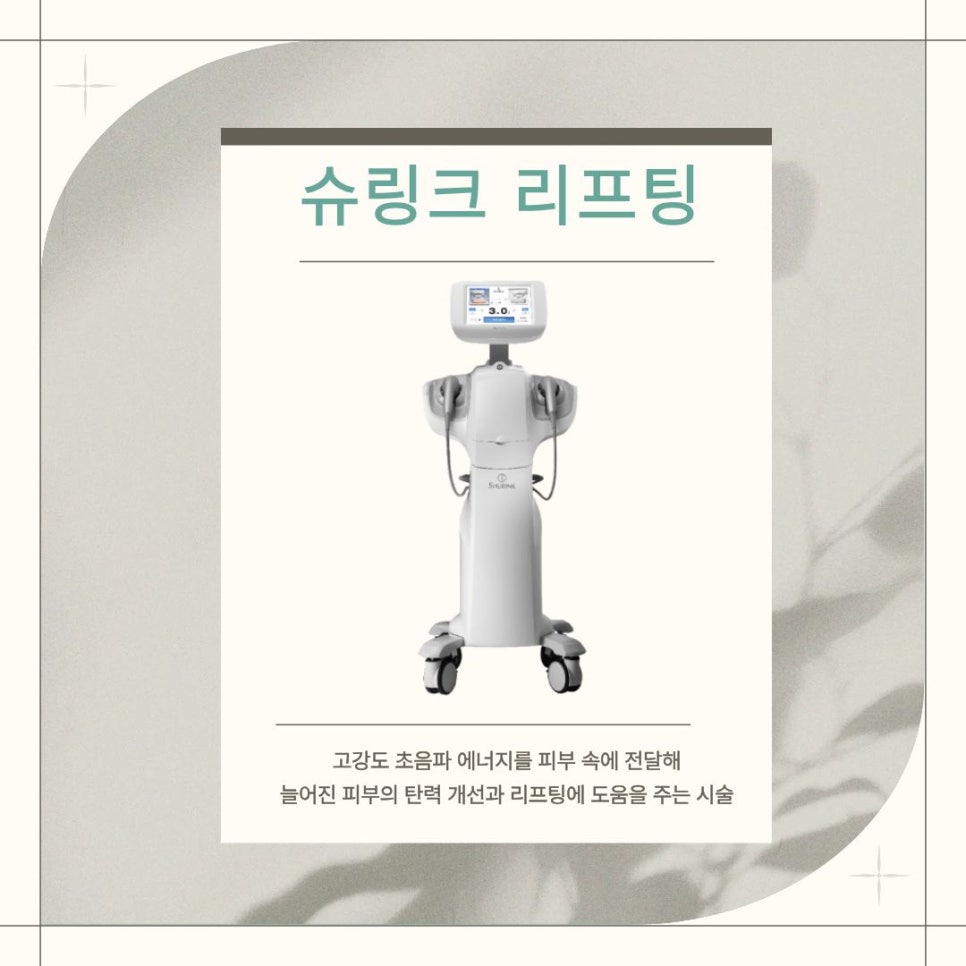
| How It Works (HIFU Focused Ultrasound) |
| STEP 01 Ultrasound energy passes through the skin's surface and reaches the dermis and SMAS fascia layer |
| STEP 02 Thermal coagulation points form at specific locations, initiating signals for collagen regeneration |
| STEP 03 Over the following weeks, collagen is gradually reorganized, improving elasticity |
If you know in advance that this treatment produces gradual results over time rather than an immediate tightening effect,
you may feel much more at ease when evaluating the results.
| 4-Step Treatment Process |
| ① Consultation and skin analysis — The degree of sagging and treatment areas are checked, and the type of tip is selected ② Application of numbing cream — The cream is applied for approximately 20–30 minutes to help relieve discomfort ③ Ultrasound application — Energy is delivered along designated lines for each area; this takes approximately 20–40 minutes ④ Soothing care — Cooling and soothing masks are used to calm warmth in the treated area |
| Pain and Downtime |
You may feel a prickling or tapping sensation when ultrasound is applied to the treatment area. The level of discomfort can vary considerably from person to person and depending on the intensity of the tip, so please keep in mind that both reviews saying “it did not hurt at all” and “it hurt a lot” may exist. Redness and slight swelling may occur immediately after the treatment, but they often subside within a day or two, so there is generally little interference with returning to daily activities.
| 💬 Please Note — The effects and perceived discomfort may vary depending on an individual's skin condition, degree of sagging, and the type of tip used (depth and energy). Before treatment, it is most important to have a thorough consultation with a board-certified dermatologist to determine the approach that is right for you. |
| Comparison with Other Lifting Treatments |
| Category | Shurink Lifting | Ulthera | Thermage |
|---|
| Energy method | HIFU (ultrasound) | HIFU (ultrasound) | Radiofrequency (RF) |
| Primary target layer | SMAS fascia layer | SMAS fascia layer | Dermis to subcutaneous fat layer |
| Perceived discomfort | Moderate | Moderate to high | Low to moderate |
| When effects are perceived | Gradually after approximately 4–8 weeks | Gradually after approximately 4–8 weeks | Immediately after treatment + gradual improvement |
| Features | Cost-effective Korean HIFU | Original HIFU, relatively expensive | Strong point in improving skin texture and volume |
- The comparison above is a straightforward summary of general characteristics, and actual effects and discomfort may vary from person to person.
| Pre-Treatment Checklist |
| ☑ It is best to avoid treatment if you are pregnant or planning to become pregnant ☑ If you have inflammatory acne or wounds on your skin, treatment is recommended after recovery ☑ If you have a facial nerve-related condition, you must inform the medical professional beforehand ☑ For 1–2 weeks after treatment, reduce exposure to strong sunlight and pay attention to moisturizing |
| Situations in Which It May Be Worth Considering |
As with any treatment, Shurink lifting is not the right answer for everyone.
However, I think the following situations are sufficient reasons to seek a consultation.
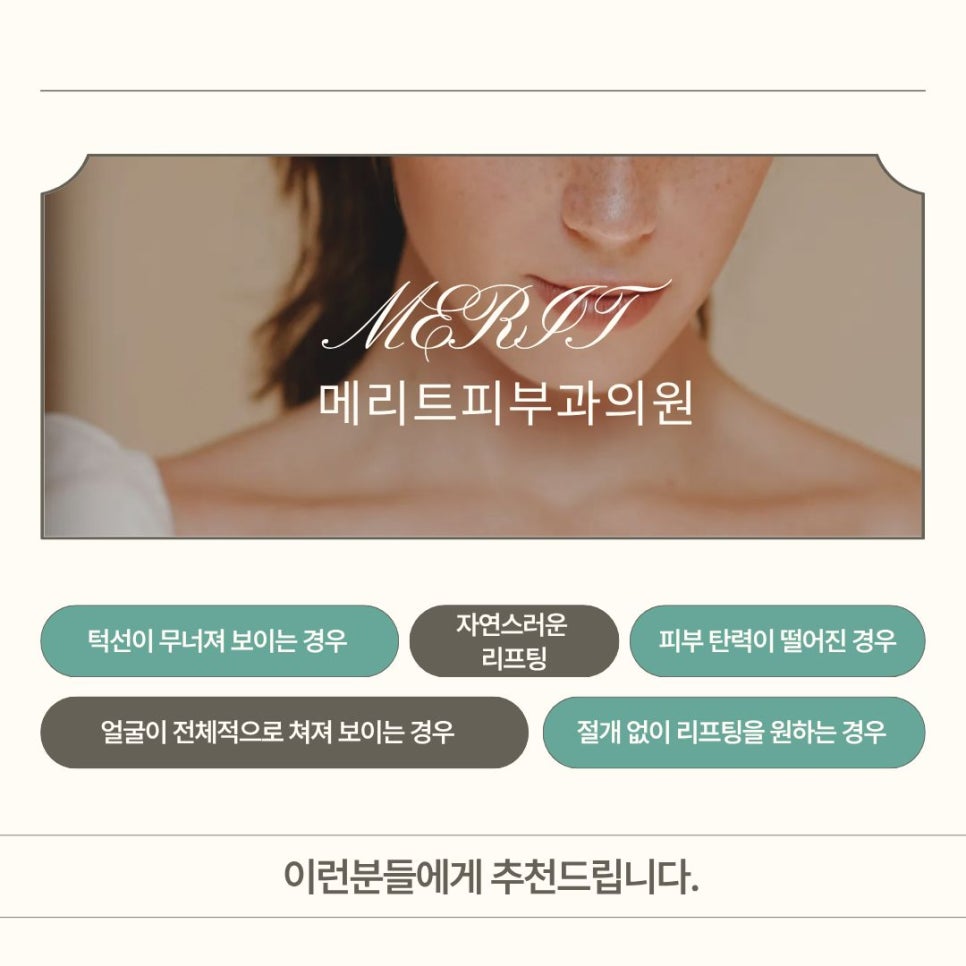
| · When you feel that your cheek fat or jawline looks more sagging than before · When you feel burdened by surgical lifting but want a change · When you want to continue care without interfering with daily life · When fillers or Botox alone have left you wanting more |
On the other hand, if your skin is significantly sagging or you want an immediate and dramatic change,
rather than having Shurink lifting alone, it may lead to a more realistic outcome to find a more suitable approach through combining it with other treatments or consulting a specialist.
I think organizing your own skin condition and desired results first, rather than doing it simply because “everyone else is,” is a way to reduce trial and error.
| Frequently Asked Questions |
Q. Do the effects continue after just one treatment?
A. The collagen-production effect varies from person to person, and natural aging resumes over time, so many people continue treatment approximately every 6 months to 1 year.
Q. Is it okay to combine it with other lifting treatments?
A. For safety, the decision should be made after consulting the treating medical professional, taking the interval between treatments and the treatment areas into account. Excessive simultaneous treatments may instead delay recovery.
Q. Can I wear makeup on the day of treatment?
A. Since the skin is sensitive immediately after treatment, it is recommended to minimize irritation for at least several hours and use only a light skincare routine.
This article was written for informational purposes in compliance with Article 56, Paragraph 1 of the Medical Service Act. All treatments and surgeries may cause side effects or aftereffects depending on the individual, so please make a decision only after thorough consultation with a medical professional.
#WeddingDayCare
#WeddingCeremonyCare
#ShurinkWeddingDayCare