
Hello.
I am Ahn Young-seok, Chief Director of Meike Dental Clinic.
After laminate treatment, many people worry when they feel their teeth are sensitive after drinking cold water or when exposed to wind, wondering, “Did something go wrong?”
However, there is no need to worry too much.
It is one of the relatively common reactions,
and in most cases, it is temporary.
You can understand it as a natural signal that appears while the teeth are adapting to a new state.
 Meike Dental Clinic’s laminate treatment is not about removing something,
but about adding beauty.
- Why does sensitivity occur after laminate treatment?
One of the biggest causes is that the tooth surface is very slightly reshaped during the procedure.
During this process, the outermost layer of the tooth,
enamel, may become thinner, or the layer beneath it,
dentin, may be temporarily exposed.
Inside the dentin are numerous microscopic tubules connected to the nerves,
so the tooth becomes more sensitive to external stimuli.
In addition, the slight pressure or chemical changes that occur during the bonding process when attaching the laminate to the tooth can also cause temporary nerve irritation.
These reactions are mostly part of the normal recovery process,
and they gradually decrease over time.

- How long should you wait?
Usually, it can last from a few days to as long as 2 to 4 weeks.
It is usually felt most sensitively right after the procedure,
then gradually weakens over time
and slowly disappears.
This should be understood as a natural phenomenon that appears while the tooth nerve adapts to and stabilizes in the new environment.
Just as other wounds in the body heal,
the teeth also need time to adapt.
During this period, avoiding cold or hot foods,
and foods with strong sour or sweet flavors,
can help relieve the symptoms.
 The confidence to transparently show photos even after tooth reduction,
that is Meike Dental Clinic’s honesty.
- Why does the sensitivity last longer sometimes?
For some people, the sensitivity lasts longer than expected.
This can vary depending on several individual factors.
First, there is the tooth’s sensitivity before treatment.
People whose teeth were already sensitive are more likely to react more sensitively after the procedure.
Second, the amount of tooth reshaping can differ.
Even if the procedure is performed with minimal reduction,
sensitivity can vary depending on the individual condition of the teeth.
Third, there are habits such as teeth grinding or clenching.
Grinding your teeth or clenching tightly at night can apply continuous pressure,
which can worsen sensitivity or make it last longer.
Lastly, in some cases, more time is needed for the laminate to harmonize with the surrounding gums.
- What kind of sensitivity is it?
The most common type of sensitivity is a momentary sharp pain when drinking cold beverages or eating ice cream, or when being exposed to cold wind.
On the other hand, some people are sensitive to hot stimuli as well, but this is relatively less common than sensitivity to cold stimuli.
You may also feel sensitivity when eating sweet foods,
which happens because, due to osmotic pressure,
the dentinal tubules react more sensitively.
In addition, when chewing food, a specific area may feel sensitive or uncomfortable.
In most cases, this naturally decreases over time,
but if it repeatedly occurs only with certain stimuli,
or if the pain is severe, it is best to observe it carefully.
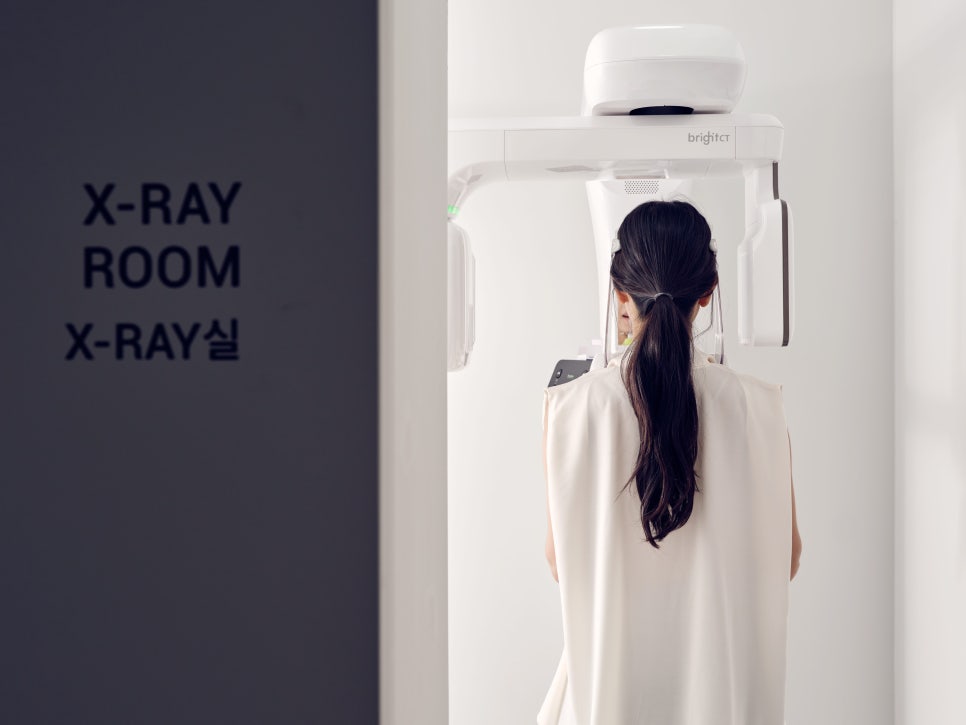 Meike Dental Clinic designs by showing you the result in advance
and fully reflecting the patient’s opinion.
- Sometimes it may be a sign that dental treatment is needed.
If the symptoms continue for several weeks
or the pain gradually gets worse,
it is best to seek help from a medical professional.
In particular, if you feel a throbbing or pulsing sensation in the tooth even without any stimulus,
and the pain is so severe that it disrupts your sleep at night,
it is necessary to check for other causes.
Also, if the gums swell or bleed along with the sensitivity,
there may be another oral problem such as gingival inflammation.
If there is visible damage to the laminate itself,
such as breakage or cracking,
you should visit the dental clinic immediately for diagnosis.
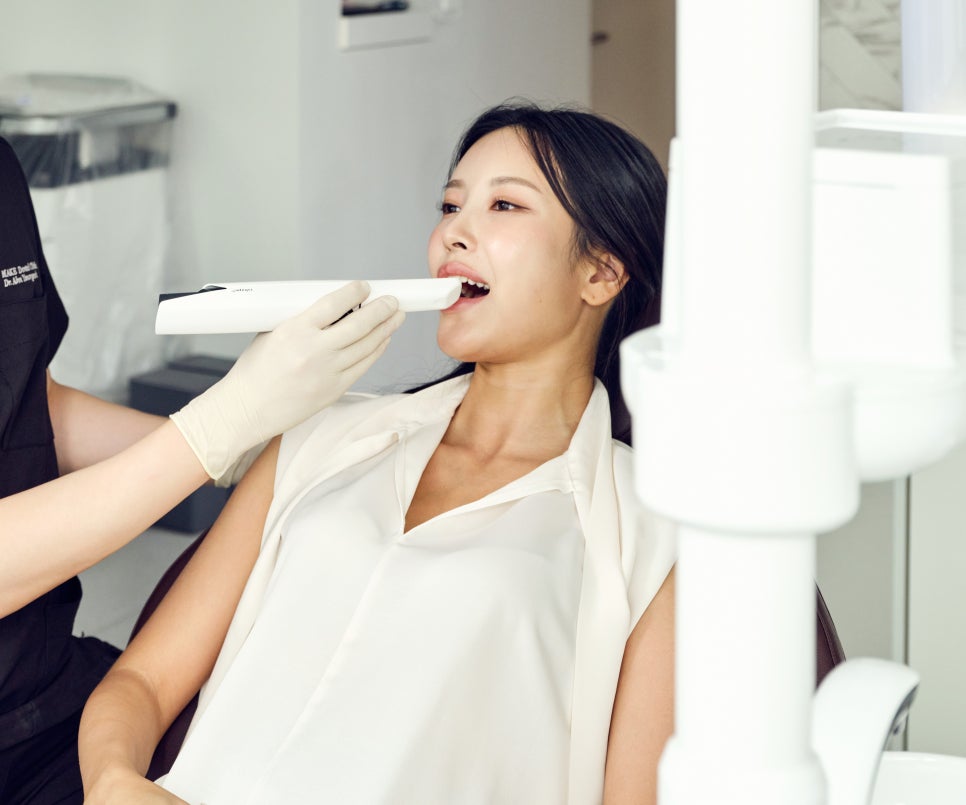
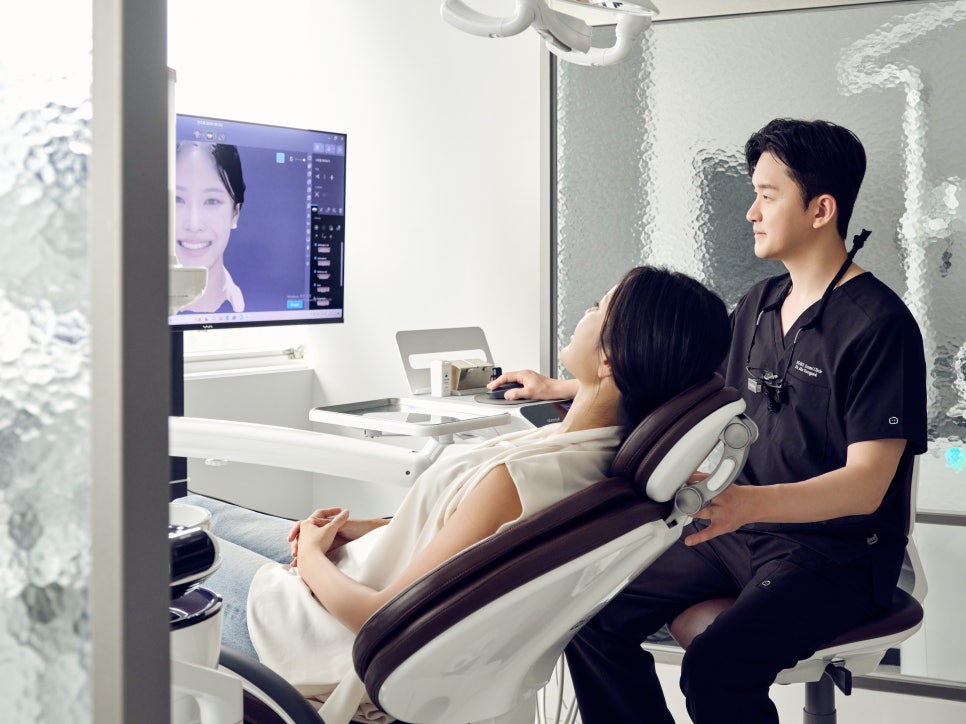 Check the result in advance through a 3D image
before treatment and receive care with peace of mind.
- What kind of care is needed at home?
First, using toothpaste for sensitive teeth can help.
Such toothpaste contains ingredients that block the dentinal tubules
and reduce nerve stimulation, making it effective in easing sensitivity.
Diet management is also important.
In the early stage after the procedure, it is better to avoid foods and drinks that are too cold or too hot, as well as foods that are strongly acidic or high in sugar.
When eating, be careful not to directly and strongly stimulate the laminate area,
and after meals, it helps to use a soft-bristled toothbrush
and brush gently.
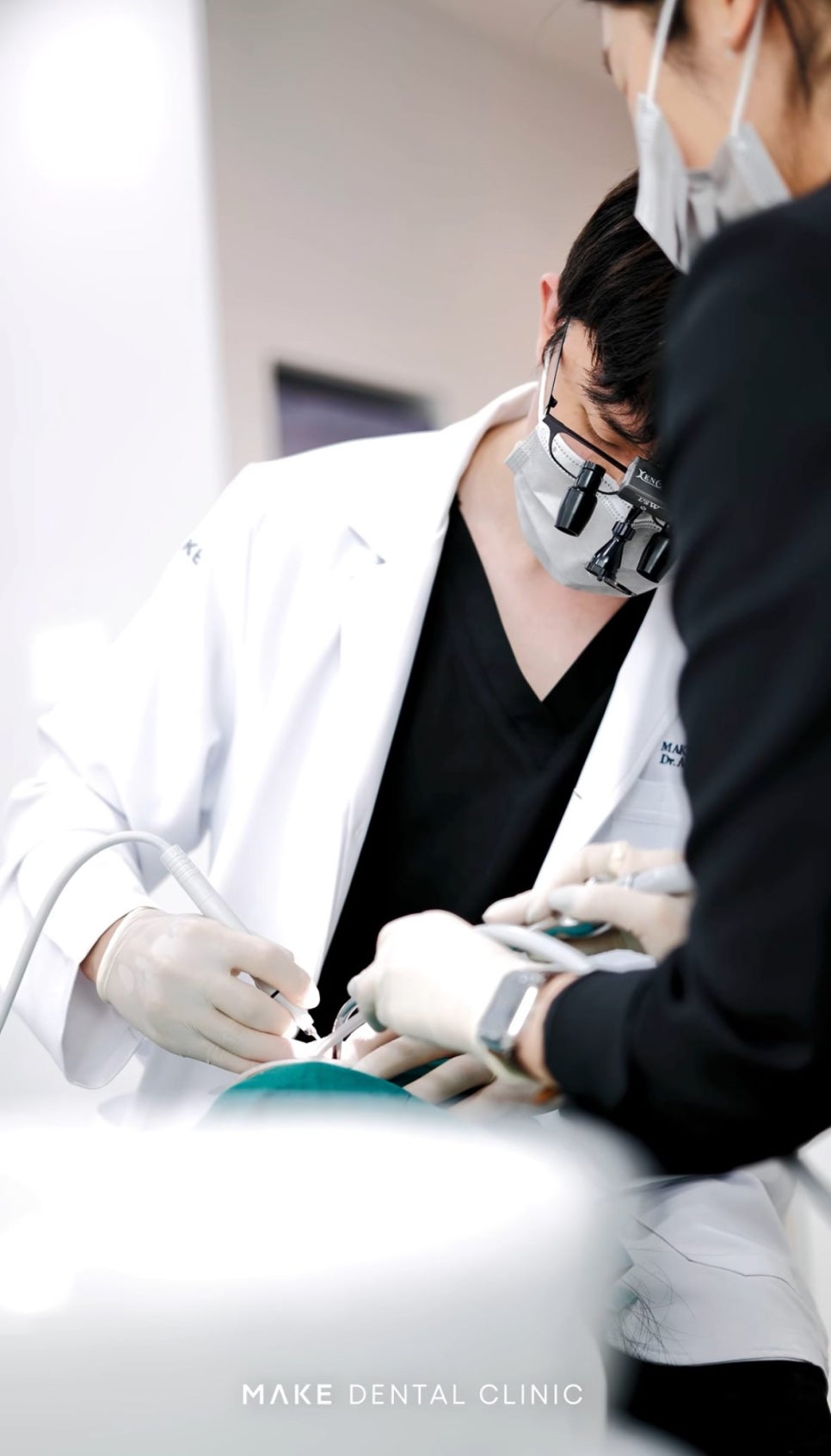
- Delicacy during the procedure is important.
To minimize sensitivity,
it is important to precisely diagnose the tooth condition before treatment,
and if necessary, proceed with the minimum amount of tooth reduction.
The less reduction there is, the less dentin is exposed,
and the lower the likelihood of sensitivity.
Also, when attaching the laminate to the tooth,
precise bonding technique and high-quality adhesive are necessary.
The gap between the laminate and the tooth should be minimized
and carefully sealed
so that the nerves can be protected from external stimuli.
 Tooth reduction is performed precisely, only as much as is truly necessary.
Above all, through consistent oral hygiene management and regular dental checkups,
it is important to protect not only the laminate but also your natural teeth,
keeping them healthy together.
Usually, visiting the dentist once every 6 months to 1 year
is a good way to check your overall oral health.
If this care and attention continue,
it will greatly help you maintain a beautiful and healthy smile for a long time.
Thank you.









 Previous image
Next image
Previous image
Next image
Jamwon-dong Dental Clinic: How to Deal with Tooth Sensitivity After Laminate Treatment
Jamwon-dong Dental Clinic: How to Deal with Tooth Sensitivity After Laminate Treatment
Jamwon-dong Dental Clinic: How to Deal with Tooth Sensitivity After Laminate Treatment
Jamwon-dong Dental Clinic: How to Deal with Tooth Sensitivity After Laminate Treatment
Jamwon-dong Dental Clinic: How to Deal with Tooth Sensitivity After Laminate Treatment