
Hello.
I’m Ahn Young-seok, the CEO dentist at Make Dental Clinic.
“Since the laminate veneers are firmly attached,
I don’t have to worry about cavities anymore, right?”
“Could a gap form between the laminate veneer
and my natural tooth,
and then cavities develop there?”
You may suddenly find yourself wondering about things like this.
These concerns are natural,
and they are by no means strange.
Because laminate veneers are artificial restorations,
it is easy to think cavities cannot form,
but in fact, more careful care may be needed.
 A young and trendy medical team
accurately understands your needs and reflects the latest trends.
A young and trendy medical team
accurately understands your needs and reflects the latest trends.
- Why do cavities form around laminate veneers?
To start with the conclusion,
cavities do not form on the laminate veneer itself.
This is because it is made of ceramic,
so it is not affected by cavity-causing bacteria.
However, cavities can still develop in the natural tooth
on which the laminate veneer is attached.
In particular, the area most prone to cavities is
the boundary between the laminate veneer and the natural tooth,
that is, the bonded area.
No matter how precisely it is attached,
there will inevitably be an extremely tiny gap
between the tooth and the restoration that cannot be seen with the naked eye.
If food debris or plaque gets caught in this gap
and is not removed by brushing,
a favorable environment for bacteria to grow is created.

- Lifestyle habits that increase the risk of cavities require caution.
The biggest cause is poor oral hygiene management.
If you neglect brushing,
or do not properly clean the boundary area that is hard for the toothbrush to reach,
you are essentially providing bacteria with good food.
In particular, people who are not used to using dental floss or interdental brushes
may have difficulty removing food debris from the boundary area.
Also, frequently eating sweet or sticky foods,
or drinking acidic beverages often,
can increase the risk.
These foods stay on the surface for a long time,
stimulate bacterial activity,
and cause bacteria to produce more acid that erodes teeth.
 Laminate veneers: the results can differ as much as day and night
depending on who does them and how they are done.
- Don’t miss the SOS signals your teeth are sending.
When cavities begin to form nearby,
teeth send signals in various ways.
The most common symptom is “tooth sensitivity.”
When drinking cold water, eating hot food,
or eating something sweet,
a sharp, aching pain may appear.
If sensitivity that you initially brushed off as mild
becomes more frequent and more intense,
it may be worth suspecting a problem.
In addition, tiny brown or black spots
that are difficult to see with the naked eye,
or discoloration, may be observed.
If brushing that area suddenly feels uncomfortable
or causes a swollen feeling,
or if bad breath becomes severe, that can also be a sign.
 Make Dental Clinic considers not only the results,
but also your satisfaction with the process.
Make Dental Clinic considers not only the results,
but also your satisfaction with the process.
- Above all,
proper oral hygiene management is important.
In particular, treated teeth require
even more careful care.
Brushing three times a day for more than three minutes after meals
is the basic rule, and it is important to use a soft-bristled toothbrush
and brush carefully without applying too much force
to the boundary area.
Brush by sweeping from the gums toward the teeth,
carefully removing food debris from between the teeth and gums
as well as from the boundary area.
Also, the spaces between teeth that are difficult to reach with a toothbrush alone
should be kept clean with dental floss or interdental brushes.

Using toothpaste that contains fluoride
is also very helpful for prevention.
Applying fluoride regularly can strengthen the surface,
and it can also help suppress bacteria from producing acid
that causes erosion.
Furthermore, rinsing the entire mouth after meals
and gently rubbing the tongue and the inside of the cheeks to remove leftover food and bacteria
is good for maintaining oral health.
Using mouthwash regularly to disinfect the entire mouth
can help prevent bacteria from growing
in tiny gaps or boundary areas.
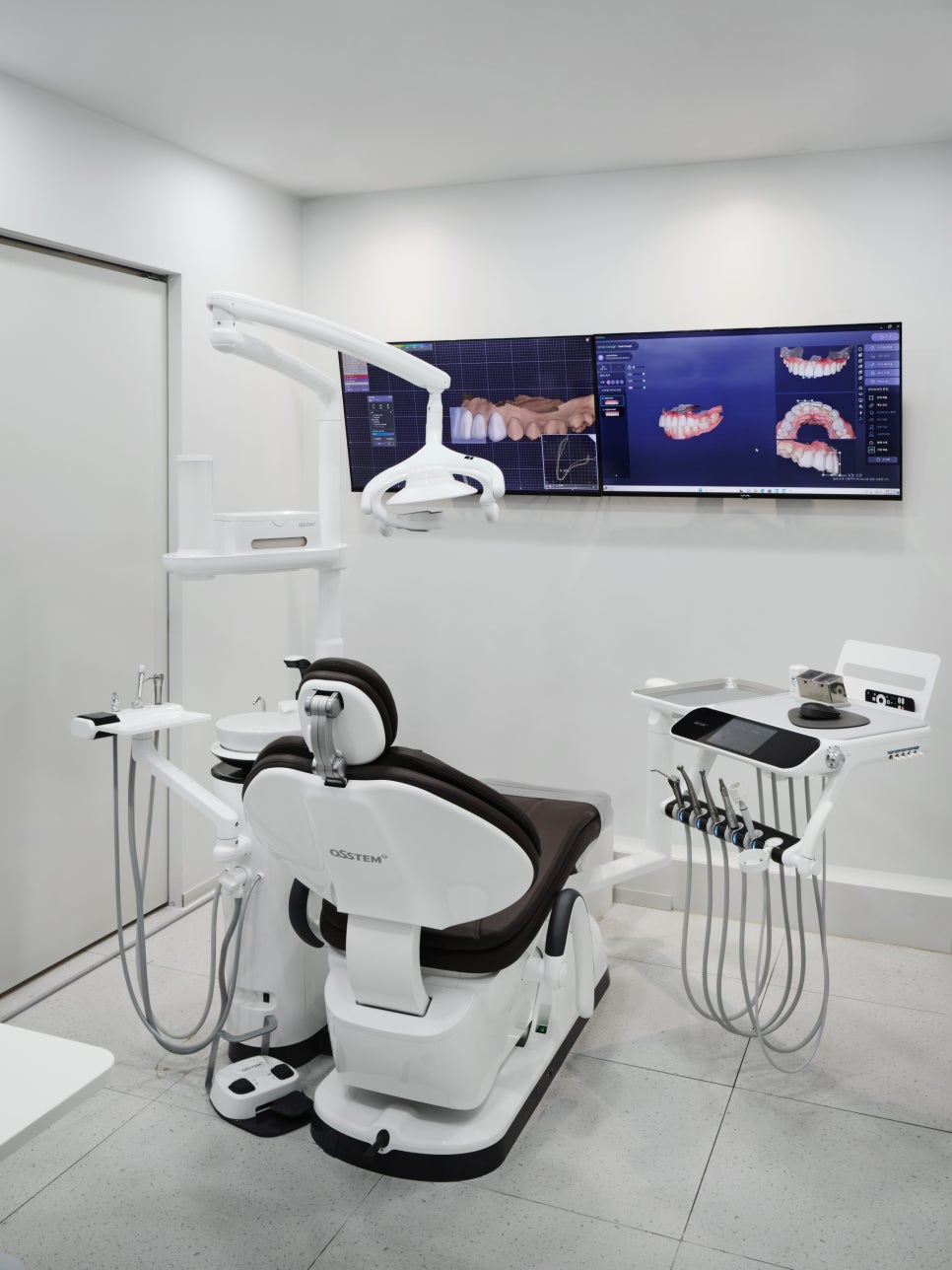 We understand and empathize with patients’ anxiety,
and promise comfortable treatment.
We understand and empathize with patients’ anxiety,
and promise comfortable treatment.
- Regular dental visits are also very important.
When you visit the dentist, tools can be used
to check the bonding condition and carefully inspect
tiny gaps or discolored areas that are difficult to see with the naked eye.
In addition, scaling can thoroughly remove tartar and plaque
that have built up at the boundary between the tooth and the laminate veneer,
and you can also receive preventive care such as fluoride application.
Above all, if a problem is found early and treated simply,
it can be prevented from developing into something more serious.
Therefore, we recommend visiting the dentist about once every 6 months to 1 year
and receiving help from the medical team.

- What should you do if a cavity does develop?
Cavity treatment is certainly possible,
and above all, restoring tooth health
is the most important thing.
At this time, depending on the location and extent,
the treatment method may vary.
If it is a very small cavity at the edge of the laminate veneer,
the veneer can be left in place while only the affected area is carefully removed,
then the treatment can be completed by filling it with a restorative material such as resin.
However, if it has spread widely
or penetrated into the inside of the tooth,
the existing laminate veneer may need to be carefully removed,
the tooth treated, and then a new laminate veneer made
and bonded again.
Because this requires delicate technique and experience,�d
it is important to consult thoroughly with the medical team
and establish an appropriate treatment plan.
 You can feel reassured while directly seeing the treatment process with your own eyes.
Laminate veneers provide a beautiful smile,
but they are also a treatment that requires steady and careful management.
Although they are resistant to cavities, the natural tooth underneath the bonded veneer
can still be exposed to risk, and that is something you should always remember.
Also, receiving treatment without delay and at the right time
is the wisest way to keep them healthy.
We sincerely hope you can protect your precious smile
for a long time in comfort and with peace of mind.
Thank you.










Previous image
Next image
The possibility of cavities after laminate veneers, explained by a Gangnam Sinsa Station dentist
The possibility of cavities after laminate veneers, explained by a Gangnam Sinsa Station dentist
The possibility of cavities after laminate veneers, explained by a Gangnam Sinsa Station dentist
The possibility of cavities after laminate veneers, explained by a Gangnam Sinsa Station dentist
The possibility of cavities after laminate veneers, explained by a Gangnam Sinsa Station dentist