
Hello.
I am An Young-seok, Chief Director of Make Dental Clinic.
As interest in the alignment and color of teeth
has increased, more and more people are considering
ways to improve shape and color.
In this process, treatment terms such as
'Sinsa Station laminate,'
'veneer,' and 'crown'
are often encountered.
Since each term has a different meaning,
many people find it difficult to choose
even though they may look similar.
These treatment methods are used to improve
shape and color, but they differ depending on
the area of tooth coverage and the purpose of application.
 At Make Dental Clinic, laminate is not about removing,
but about adding beauty.
At Make Dental Clinic, laminate is not about removing,
but about adding beauty.
- 'Laminate' that complements the front surface of the tooth
First, Sinsa Station laminate is a treatment method that improves appearance by lightly shaping the front surface, or in some cases by performing minimal reduction before attaching a thin ceramic material.
It is often applied to the front teeth, which are
visible when smiling.
First, it may be considered when discoloration is severe and difficult to improve with ordinary whitening, or when color changes have occurred due to medication, among other causes.
Second, it may also be used when the tooth shape is uneven or part of the tooth is damaged and needs aesthetic correction.
Third, even when there are gaps between teeth or the alignment of the front teeth is slightly uneven, the decision to apply it is made while considering aesthetic balance.

Is 'veneer' a different treatment from laminate?
The term veneer is often mentioned together with Sinsa Station laminate, so it can be easy to confuse the two.
However, veneer actually refers to a term for prosthetic restorations in the broad sense, meaning a thin covering that overlays the surface.
Simply put, it is easier to understand laminate as one type of ceramic veneer.
Veneers are mainly used to improve the appearance of the front surface and are divided into resin veneers and ceramic veneers depending on the material.
A resin veneer is a method in which dental resin material is directly shaped onto the tooth to improve its form, while a ceramic veneer is a method in which an impression is taken, a thin ceramic prosthesis is fabricated outside the mouth, and then bonded to the tooth.
In other words, laminate refers to a thinly made form among these ceramic veneers.
 Make Dental Clinic was founded with the hope that no more patients would suffer from indiscriminate tooth reduction.
- 'Crown' that covers the entire tooth
Unlike Sinsa Station laminate or veneer, which improve only the front surface, a crown is a prosthetic treatment that covers and protects the entire tooth.
It is mainly considered in situations where reinforcement of strength is needed, such as when damage is extensive due to cavities or trauma, or when the tooth has become weakened after root canal treatment.
When there is structural damage, such as a crack or a partial fracture, laminate alone may have limitations, so crown treatment may be discussed.
In addition, crowns help restore function while protecting the tooth from external stimulation, and depending on the material used, they are made of ceramic, metal, or a combination of these.
Recently, the 'all-ceramic crown,' which resembles a natural tooth, is widely preferred for aesthetic reasons.
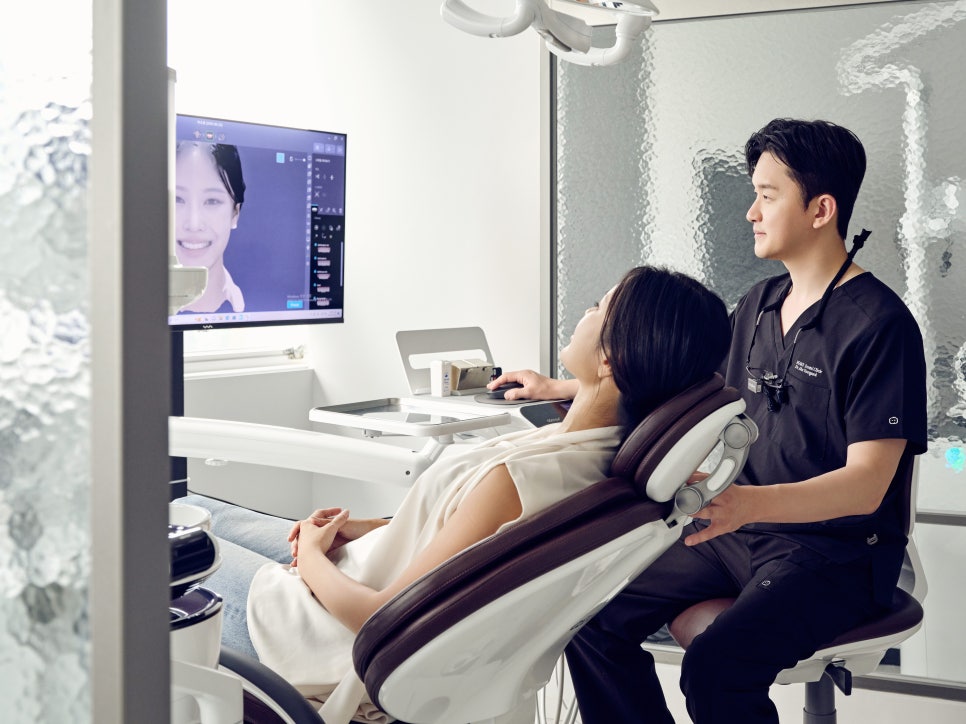
- The biggest difference is the amount of reduction
One of the key criteria that distinguishes laminate, veneer, and crown is the extent to which the tooth is shaped.
Because this process can affect the condition of the tooth afterward, it needs to be considered carefully.
Laminate removes only the front surface, very thinly by about 0.3 to 0.7 mm, or in some cases can be performed without reduction, making it a treatment method that places importance on preserving the natural tooth.
Veneers also deal only with the front surface, but resin veneers involve little to no reduction or, if necessary, only minimal shaping, while ceramic veneers involve minimal reduction within the enamel layer.
On the other hand, crowns require reduction of all surfaces by about 1 to 2 mm in order to cover the entire tooth.
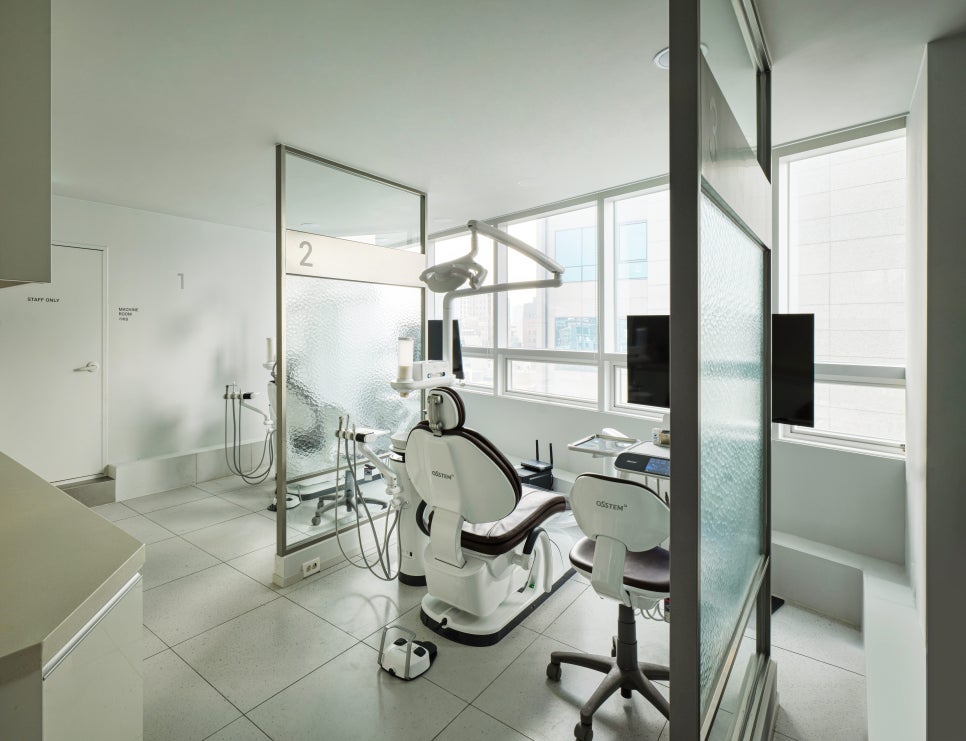
- There is also a difference in the 'purpose' of treatment.
These three treatment methods have the common goal of improving the tooth,
but they differ in their main purpose.
Laminate and veneer primarily focus on improving aesthetics.
The goal is to beautify the smile by adjusting fine details such as color, shape, size, and alignment, and these are treatments chosen when there are no major functional problems with the teeth themselves.
On the other hand, crowns place greater emphasis on restoring function and protection.
Their purpose is to restore strength that has been damaged or weakened, protect the tooth from external stimulation, and bring back the original chewing function, such as biting food.
Of course, natural smiles can also be achieved using aesthetic materials, but fundamentally, improving structural issues comes first.
 The confidence to openly disclose even photos after tooth reduction,
is the honesty of Make Dental Clinic
The confidence to openly disclose even photos after tooth reduction,
is the honesty of Make Dental Clinic
- There is also a difference in the 'thickness' and 'shape' of the prosthesis.
Depending on the extent to which the tooth is shaped,
the thickness and shape of the prosthesis can also vary.
Sinsa Station laminate and veneer cover the tooth mainly from the front surface and are relatively thinly made, so they are used to naturally improve the appearance of front teeth.
In general, they are made thin and are intended to improve the aesthetics of the front surface that is visible when smiling.
On the other hand, crowns are made in a form that wraps around the entire tooth and are relatively thicker than laminate or veneer.
This should be understood as a structural feature intended to protect damaged or weakened teeth and to help maintain chewing function.
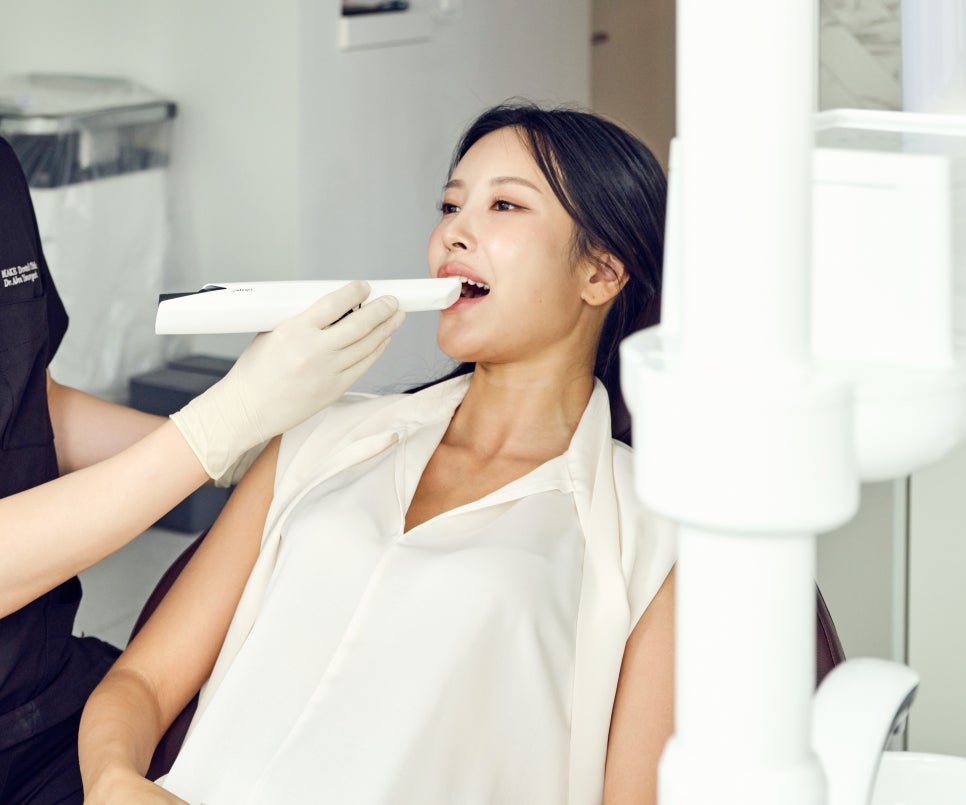
Ultimately, among Sinsa Station laminate, veneer, and crown,
which treatment is appropriate is decided by considering the individual's condition,
the direction expected through treatment,
and long-term oral care as well.
Rather than concluding that one is superior,
it is important to understand that each treatment method
is applied in different situations and has different characteristics.
Above all, the current condition must be accurately checked,
and the necessity and extent of treatment should be explained sufficiently first.
Based on this, I hope you will carefully decide the treatment direction that suits you best through consultation with the medical staff.
Thank you.










Previous image
Next image