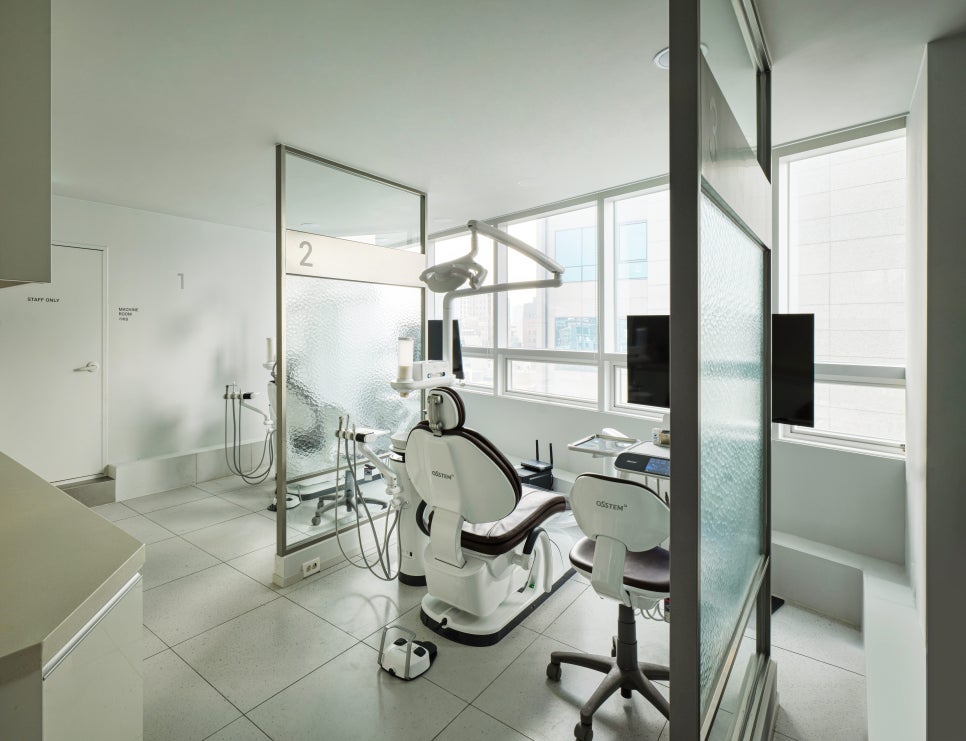
Hello.
I am Ahn Young-seok, the chief dentist at Make Dental Clinic.
When planning laminate treatment,
we take an intraoral scan with a 3D scanner
or make a dental impression using impression material,
and then
after a certain period of time,
we are guided to the next visit.
For patients, this is a short waiting period,
but from that point on, preparation for making the prosthesis
in the dental lab begins in earnest.
The materials delivered from the clinic include not only the shape of the teeth,
but also various details such as the occlusal condition and treatment plan.
Today, I would like to introduce
what process laminate prosthetics go through in the dental lab.
 Make Dental Clinic values the process.
Precision diagnosis and design create perfect results.
Make Dental Clinic values the process.
Precision diagnosis and design create perfect results.
- Modeling that three-dimensionally reproduces my oral data
The first step is to use the information taken at the clinic
to create a physical model or digital model.
In the past, models were mainly made using plaster,
but recently, with computer-based 3D modeling,
more and more cases are allowing for a more three-dimensional
view of the oral structure.
This process can be compared to laying the foundation of a building.
The more accurate the foundation is,
the more it can help the subsequent prosthesis settle more stably
in the oral cavity.
The technician refers to the materials provided along with the oral scan data
and gradually sets the size and position
while considering harmony with the entire dentition.
- Selecting ceramic materials with a balance of strength and translucency in mind
Once modeling is complete,
the process moves on to deciding which material
to use for making the laminate.
Laminate prosthetics
are mainly made with ceramic-based materials,
and their properties, such as strength and translucency,
vary depending on the type of material.
In the past, the higher the strength,
the more opaque the color could become,
or with materials that had high translucency,
there were concerns about fracture.
Recently, with the use of reinforced ceramic materials,
choices that allow these characteristics to be considered more balanced
have become broader.
When selecting materials, several factors are comprehensively considered,
such as the patient’s occlusal condition,
the pattern of bite force,
and the degree of discoloration.
- The layered fabrication process that expresses the tooth’s structure
Teeth are not made of a single color.
They have a layered structure with dentin inside and enamel on the outside,
and they are characterized by the complex interplay of light transmission and reflection.
Referring to this structure, dental labs often use
a layered porcelain fabrication technique called "build-up."
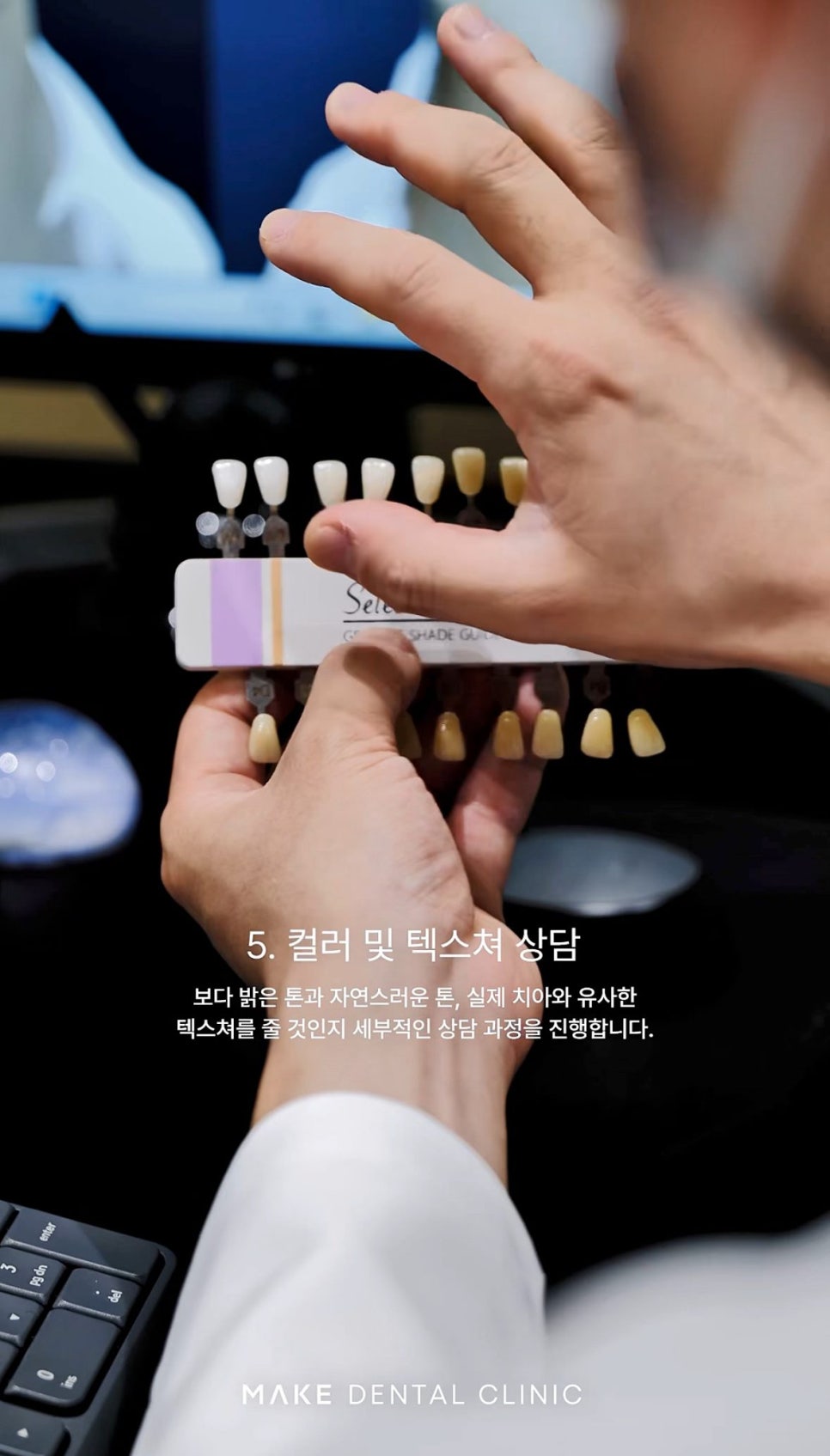
Porcelain materials with different levels of translucency and color
are gradually stacked,
and the work is carried out while considering the characteristics of each area.
The relative translucency of the incisal edge,
the shade near the gumline,
and the brightness of the central portion are separately expressed,
and then the piece goes through a high-temperature firing process.
 Beauty that does not change over time,
Make Dental Clinic is careful from material selection onward.
Beauty that does not change over time,
Make Dental Clinic is careful from material selection onward.
- The staining process that expresses the tooth’s color and texture
After the porcelain has been layered
and hardened at high temperature,
the next step is a color adjustment stage
called staining.
Teeth may show subtle horizontal lines,
or faint spots and color variations in certain areas,
depending on the person.
To achieve harmony with the surrounding teeth,
these detailed elements are also considered
when adjusting the color.
In addition, using special dental pigments,
the shade and brightness are adjusted so that,
when compared with the entire dentition,
they are not excessively bright or dark,
but instead match the individual’s tooth tone and overall impression.
- Glazing and polishing adjustments that complete a texture close to natural teeth
Once the color has been organized,
the prosthetic surface is coated with a thin protective layer
and fired once more in a process called glazing.
This makes the surface smoother,
helps with hygiene management,
and creates a subtle shine similar to natural teeth.
If the gloss is too strong, it can look artificial,
and if it is lacking, the teeth may appear lifeless,
so achieving balance is important.
After glazing, if needed,
the technician may additionally perform a polishing process by hand
to refine the surface.
By adjusting the way light spreads according to tiny curves and shapes,
the finishing is done so that it blends harmoniously with the surrounding teeth.
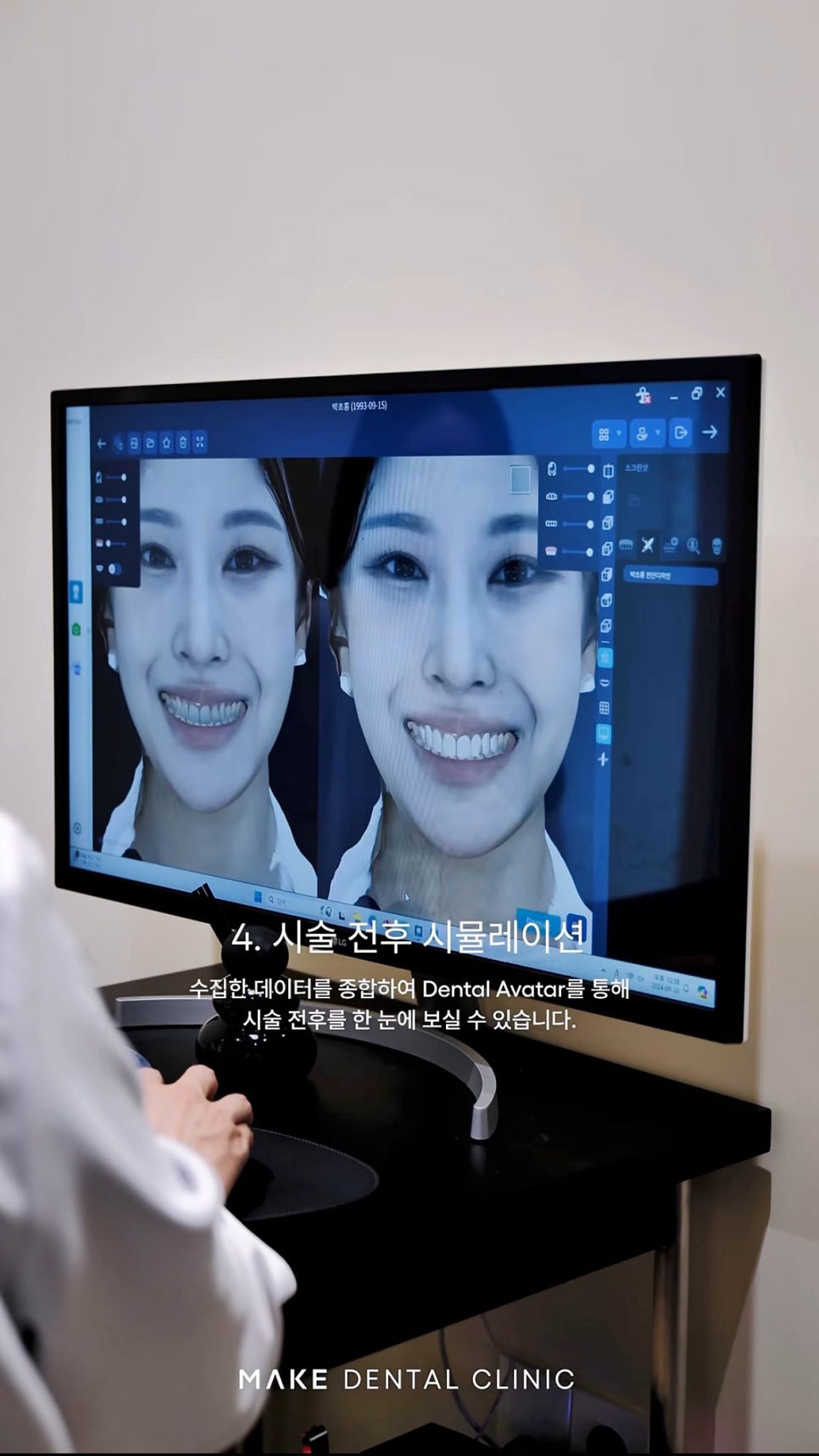
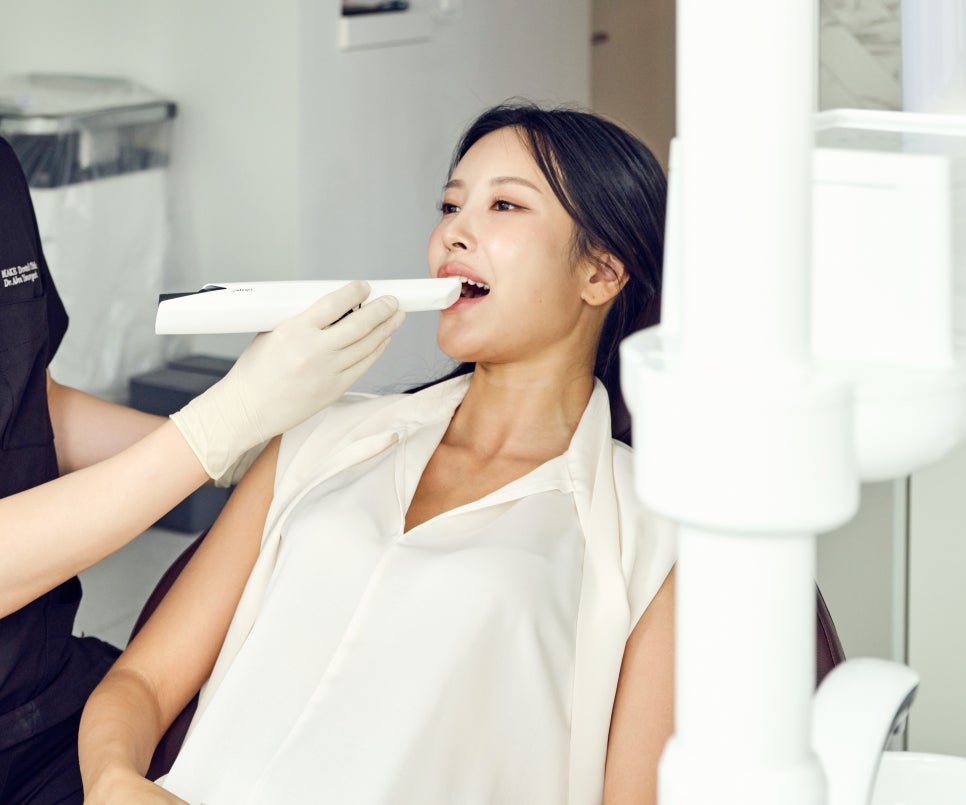 With the RAYFace 3D facial scanner and the Trios 5 intraoral scanner,
we analyze your smile in three dimensions.
With the RAYFace 3D facial scanner and the Trios 5 intraoral scanner,
we analyze your smile in three dimensions.
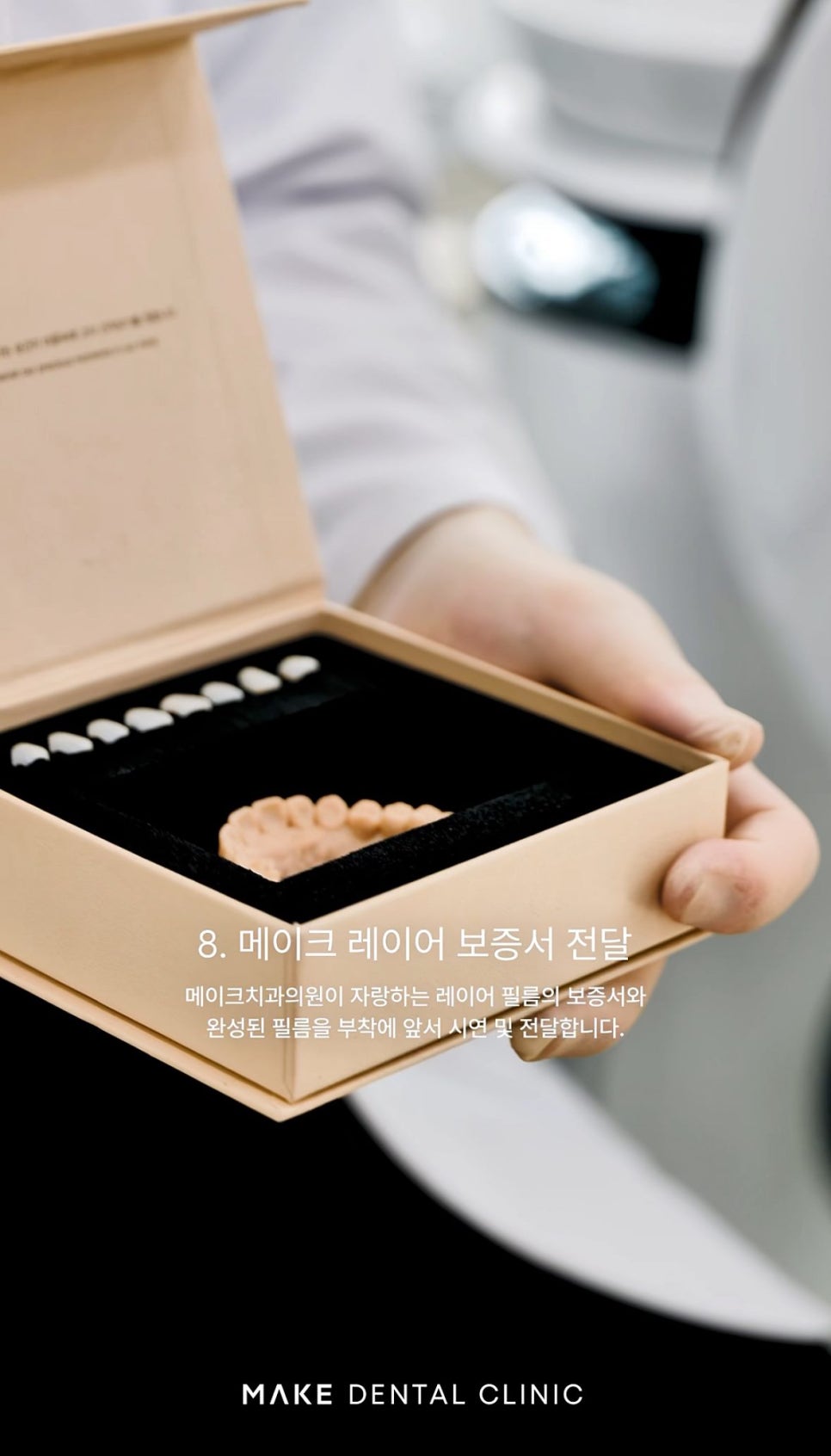
- The final inspection process that checks even the smallest differences
Once all aesthetic work is completed,
a final detailed inspection is performed.
The laminate is fitted back onto the original model,
and careful checks are made to see whether there are any issues
with movement up, down, left, or right,
or whether the spacing with adjacent teeth is too tight or too loose.
If even slight lifting or occlusal interference is found during this process,
remaking the piece may be considered
to achieve an appropriate result.
If the prosthesis does not fit sufficiently well,
food may easily get trapped
or the gums may be irritated,
so this inspection is very important.
 You can feel reassured by seeing the treatment process directly.
Until a single laminate piece is delivered to the patient,
countless steps and meticulous care continue in the dental lab.
Even a small ceramic piece contains careful material selection and dedication.
If the dentist diagnoses the patient’s oral condition and performs the procedure,
the technician’s role is to turn that diagnosis into the actual tooth shape.
By trusting the changes created by each small act of care,
understanding the process,
and waiting with peace of mind,
you can look forward to the result.
Thank you.









 Previous image
Next image
Previous image
Next image
Seoul laminate 3D scan to completion process, curious about it?
Seoul laminate 3D scan to completion process, curious about it?
Seoul laminate 3D scan to completion process, curious about it?
Seoul laminate 3D scan to completion process, curious about it?
Seoul laminate 3D scan to completion process, curious about it?