�
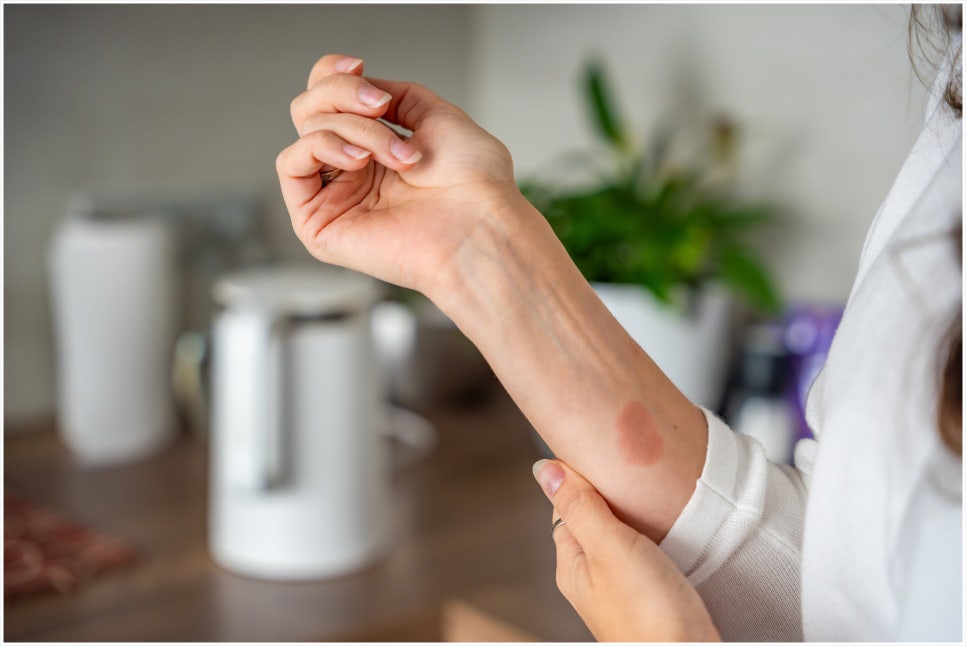
After getting burned,
the surprise and pain in the moment are significant,
but what is even more worrying is
the thought, “Will this leave a scar like this?”
Especially if it is on a visible area,
such as the face, arms, or legs,
it is only natural to be more concerned.
However, if you panic and treat it the wrong way,
or delay treatment because the pain has eased a little,
you may actually make the wound worse.
Because burns are difficult to assess
based only on what is visible,
an accurate diagnosis from the beginning and
setting the direction for Gangnam burn treatment
are more important than anything else.
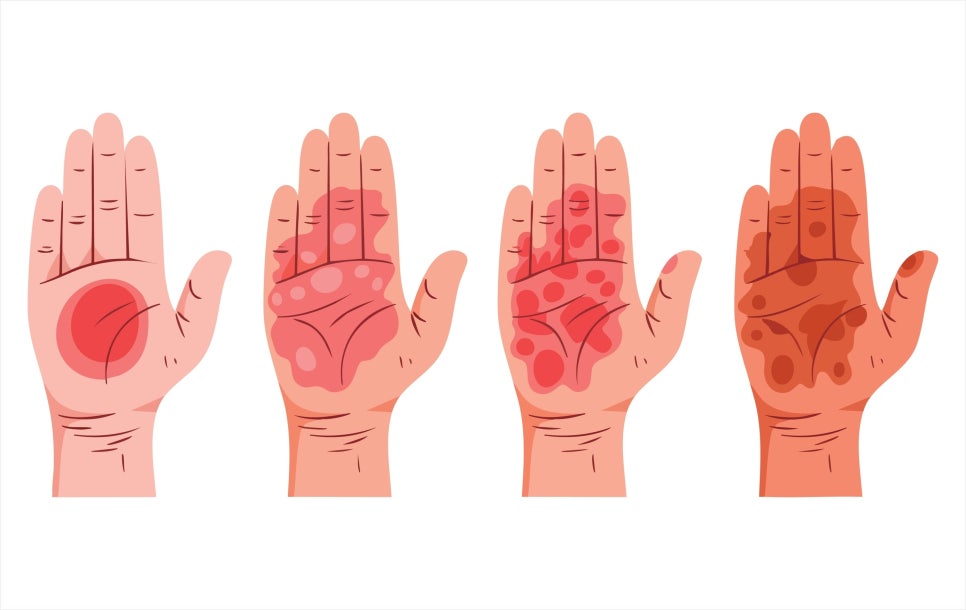
The treatment method for Gangnam burn treatment
depends on the depth of the burn.
In general, burns are classified as first-degree, second-degree, or third-degree,
and the treatment approach changes accordingly.
First-degree burns affect only the surface of the skin
and usually end with mild pain and redness,
but from second-degree burns onward, the situation changes somewhat.
In particular, if blisters form or fluid oozes out,
it may be a second-degree burn that has damaged the dermis layer,
and among these, if it is a “deep second-degree burn” or worse,
skin grafting may be necessary.
Even if it looks fine on the outside,
the actual depth may be more severe,
so rather than self-assessment,
medical evaluation is needed.
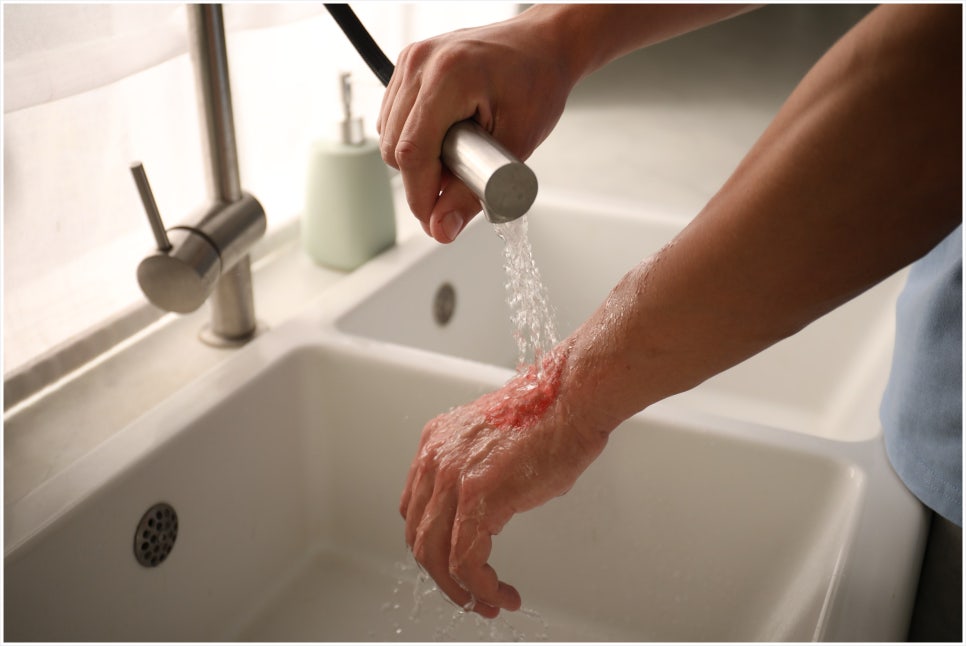
The most important thing when you get burned is
to cool the affected area quickly.
Cooling it with cool running water
for at least 10 minutes is the basic approach,
but many people skip this step
or apply a cold compress directly with ice,
which is the wrong way to do it.
If initial first aid is not done properly,
skin damage can become deeper
and the risk of infection may increase.
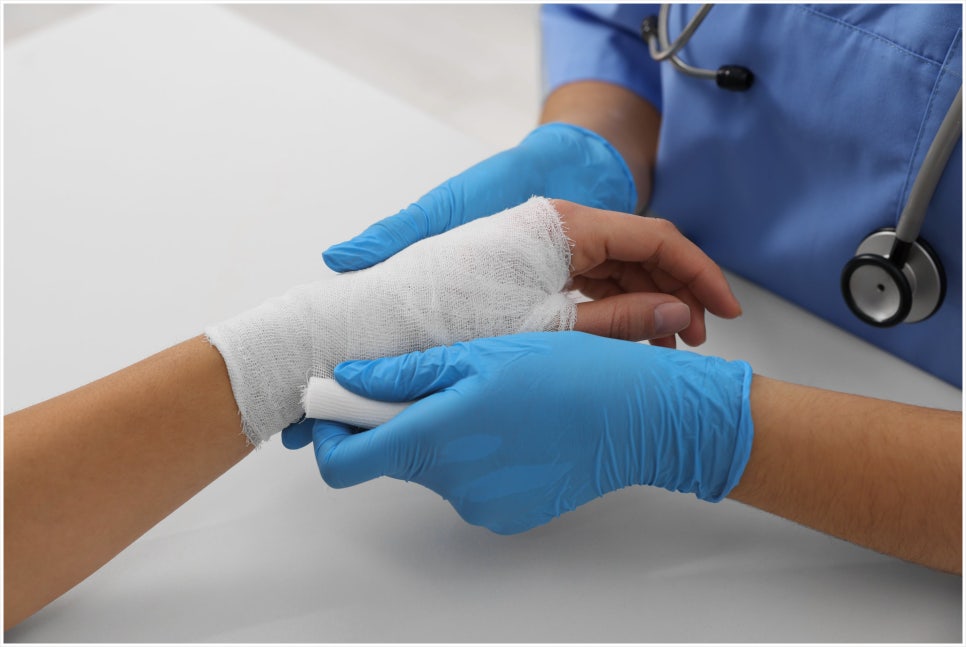
In particular, dressing and medication treatment
go beyond simply relieving pain;
they are important parts of treatment that help prevent secondary infection
and support wound healing,
so they should be carried out under the judgment of medical staff.
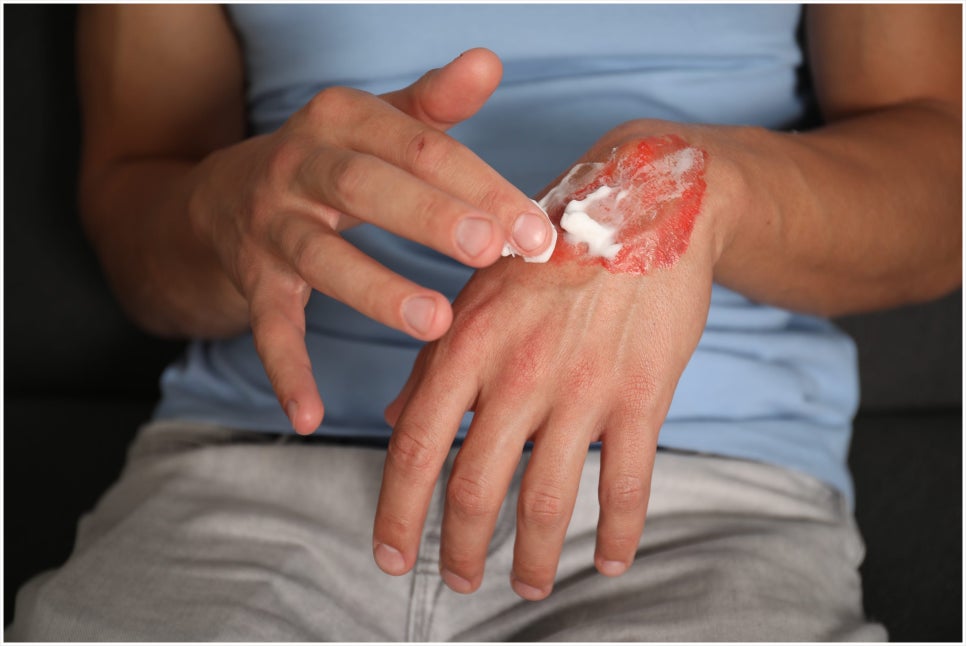
When people hear that medication is used in Gangnam burn treatment,
they often think only of ointments,
but in reality, the medications used vary depending on
the location and depth of the wound,
and the instructions for use are often complex.
If medication is used in the wrong way,
not only will the treatment effect decrease,
but the wound may actually worsen or leave marks.
Therefore, you should avoid changing or stopping medication on your own,
and must follow the medical staff’s instructions
carefully regarding dosage and frequency.
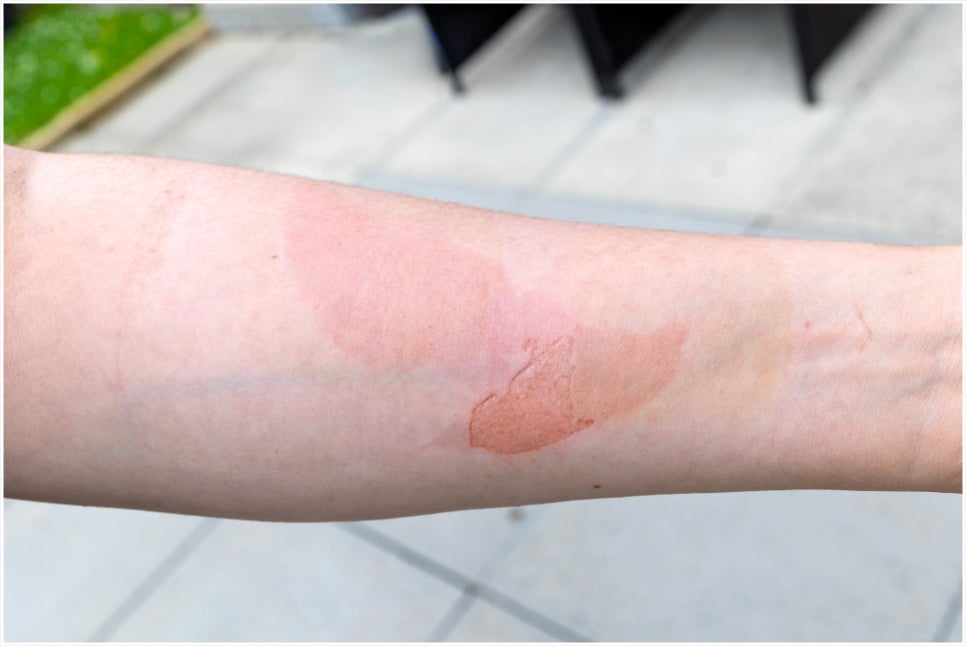
During the healing process of a burn area,
it is important to protect the wound through dressing
and help regeneration.
However, if this period is delayed too much,
or if infection occurs and the wound does not heal properly,
it can lead to pigmentation or scarring.
In particular, second-degree burns or worse
recover slowly because the tissue damage is deeper,
so it is most important to understand the condition early
and begin treatment at the right time.
If the recovery window is missed,
there may later be a greater burden,
as scar treatment may also need to be done at the same time.
Because a burn can be more than a simple wound
and may involve deep skin damage,
it requires an accurate diagnosis
and customized Gangnam burn treatment.
Transparent Dermatology,
based on the philosophy of being
“the place where the source of my skin begins,”
provides precise and stable treatment even for skin damage such as first- to third-degree burns
through subdivided care by dermatology medical staff.
In particular, it is equipped with appropriate devices and technology for Gangnam burn treatment,
which can easily lead to scars or pigmentation changes,
and uses various devices that can be applied depending on the skin condition,
such as high-output LED, to improve treatment outcomes.
Rather than indiscriminate treatment,
it follows the principle of providing only the treatment that is truly necessary,
and another reason it is trustworthy is that it takes a flexible approach
depending on each person’s skin characteristics.
In addition, through evening consultations available until 8 p.m. on weekdays,
it can respond quickly even to sudden burns,
and it takes care to reduce tension
through a pleasant space and warm consultations.
Burns are more about the care after the initial pain
than the pain itself.
Rather than assuming it will be fine after some time passes,
remember that visiting a hospital as early as possible
and having the current condition checked
is the first step in reducing scars.