
When people first get a tattoo,
they often want to give it their own meaning,
or they like the design
and think they can keep it
for a long time.
But as time passes,
preferences can change,
and in situations such as employment and interviews, marriage, and social life,
it can become a burden.
The problem is that it is not a mark
that can be erased as easily as people think.
Even if it looks like pigment
only lightly left on the surface,
ink particles are actually located deep within the skin,
so they are difficult to fade
with simple care alone.
Because of this, among those looking into Gangnam Yeoksam tattoo removal,
some think,
“Won’t it disappear right away
after just a few laser sessions?”
However, the removal method is a treatment in which the response varies greatly depending on the color, depth, ink used, procedure technique, and type.
So from the start, it is important to proceed in a planned way at a place that can look at both the skin condition and the characteristics of the pigment.
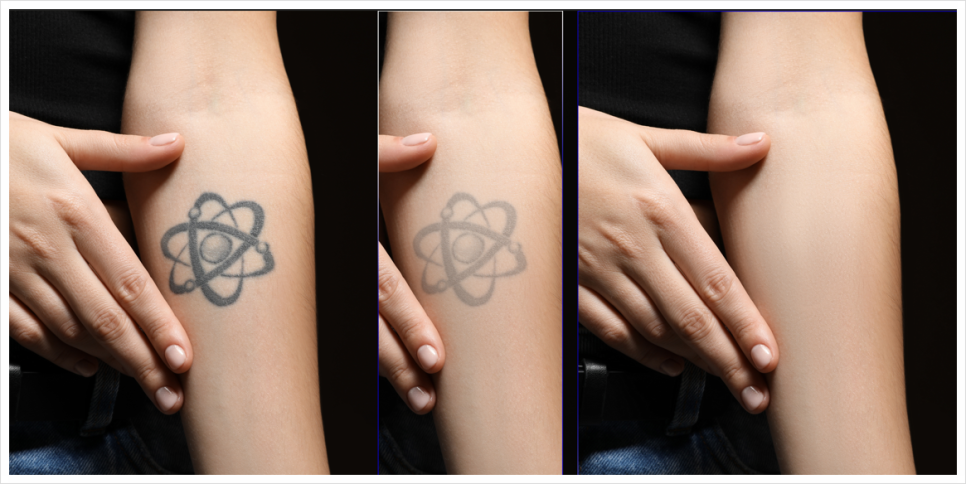
A tattoo is made by injecting pigment particles into the skin
so that they remain for a long time.
When the skin is exposed to external刺激, it has a tendency to recover on its own,
but the ink remains in a relatively deep layer
so that it does not easily disappear during that process.
Removal lasers work by delivering energy to these ink particles
and breaking them into smaller pieces.
The fragmented pigment particles are then gradually eliminated over time through the body’s metabolic processes.
This process is difficult to complete in a single treatment.
If there is a large amount of ink or the color is dark,
or if the pigment has spread widely into deeper areas,
multiple treatments may be needed.
In particular, black pigment can relatively be expected to respond well,
but red, blue, green, and yellow tones require more careful laser selection
because each color responds to different wavelengths.
Therefore, when planning Gangnam Yeoksam tattoo removal,
it is better to understand it not just as a procedure to erase the tattoo,
but as a treatment process that gradually reduces the pigment step by step.
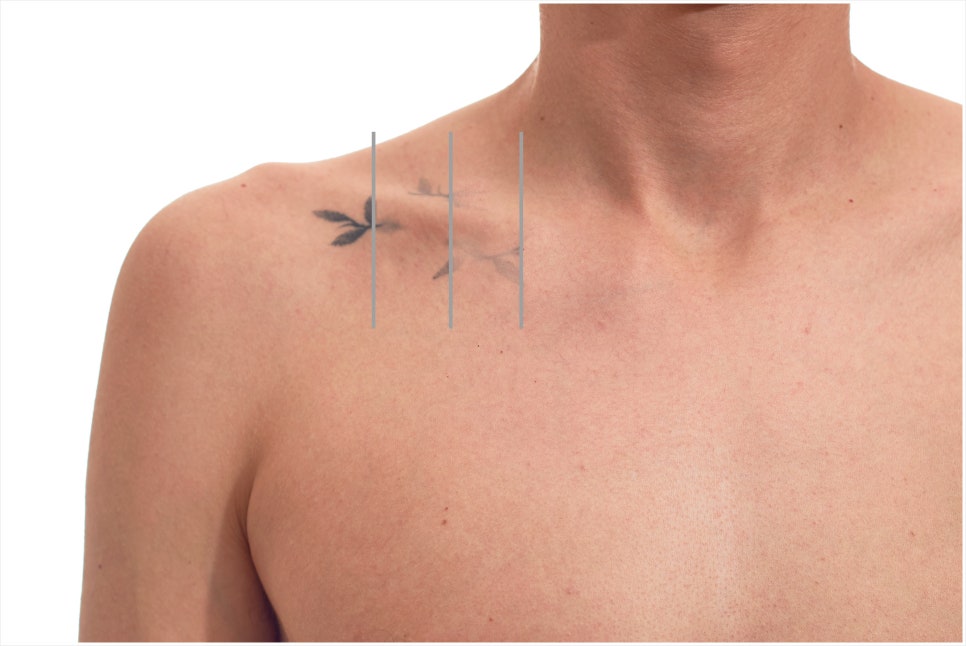
Sometimes, even after removal treatment, color remains faintly,
certain colors do not fade well,
or the lines appear blurred.
These differences usually occur when the tattoo’s own conditions and the treatment method are not well matched.
For example, even with the same black color,
the laser response can differ depending on whether it was done by machine or by hand,
and how densely the ink was placed.
Also, older tattoos and relatively recent tattoos can have different pigment distributions,
so the treatment plan may differ.
When multiple colors are mixed,
a more detailed approach is needed.
That is because simply repeating one type of laser
may not be enough to elicit a sufficient response from some pigments.
Using only stronger energy without restraint
does not necessarily bring you closer to the desired result.
On the contrary, it can increase the burden on the skin
or cause unexpected changes such as hyperpigmentation, hypopigmentation, and scarring,
so caution is needed.
That is why, when removing a tattoo,
it is necessary to judge not only the size of the tattoo,
but also its color, depth, density, location, and recovery ability.
At Transparent Dermatology Clinic,
we help provide more efficient removal
through our own ignition tattoo removal procedure.
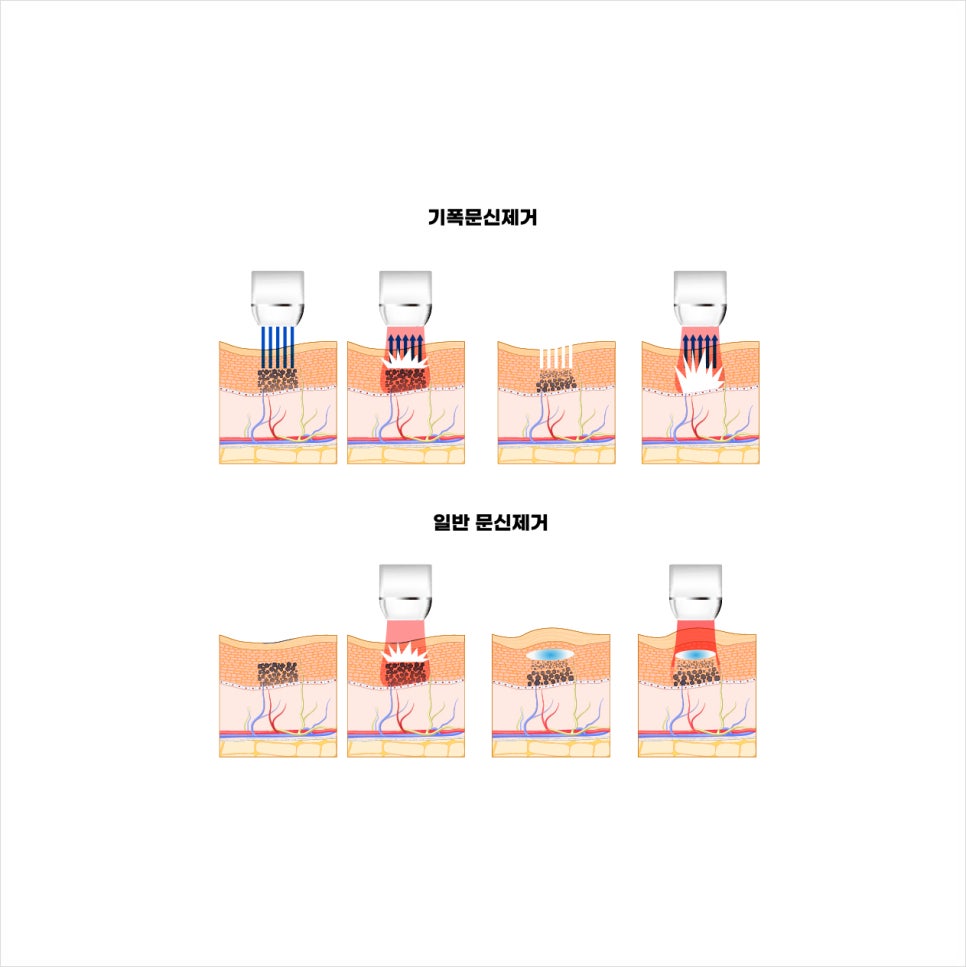
Ignition tattoo removal is a method that applies a variety of lasers as a pre-treatment,
which act as a catalyst in the initial stage to induce a stronger reaction between pigment particles and the laser,
and to increase the response throughout the full thickness of the skin.
Simply put,
it is a concept in which the conditions that allow the pigment to respond to the laser are created first,
and then the main treatment response is drawn out.
Tattoo particles are often large and tightly clumped together.
In such cases, if the approach relies on only one method,
even if the visible color becomes lighter,
the pigment in the deeper layer may not respond sufficiently.
Through initial pre-treatment, ignition tattoo removal increases the reactivity between pigment particles and laser energy,
and designs the treatment flow so that the laser applied afterward can produce a more explosive response.
Through this, it may help reduce the burden of unnecessarily repeated procedures,
and it can also be carried out while considering the stimulation applied to the surface.
However, the same method does not apply in every case.
After checking the color, size, depth,
treatment area, and condition,
the medical staff decide whether pre-treatment is needed
and which laser combination is appropriate.
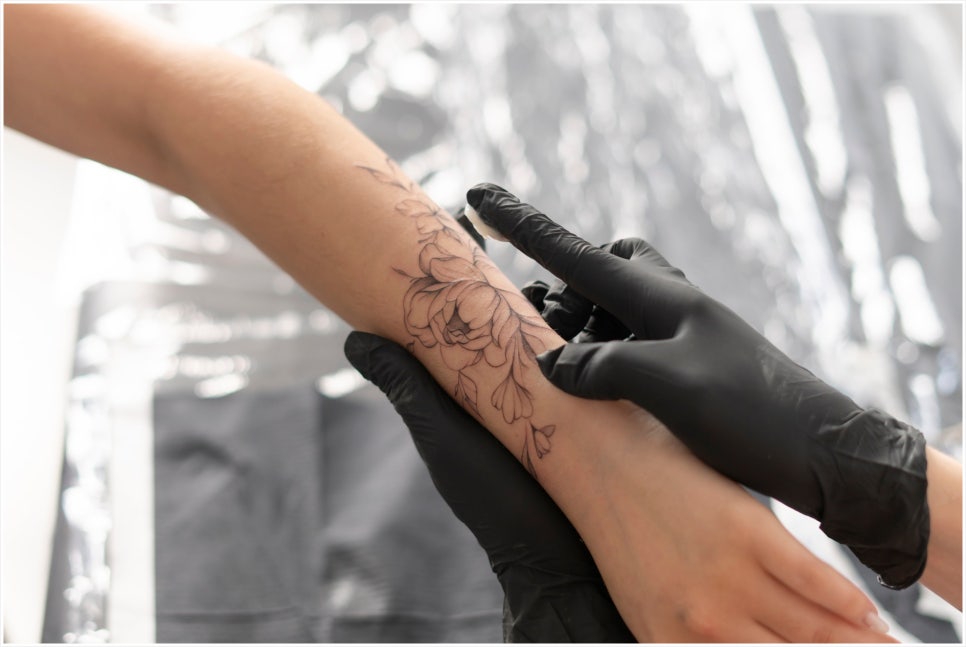
Removal requires as much post-procedure care as the moment you receive the laser.
Before the procedure,
it is best to avoid excessive stimulation of the area,
tanning, strong friction, and actions that could cause inflammation.
This is because if the skin is already sensitive when the laser is performed,
redness or pigment changes may last longer.
After the procedure,
temporary redness, stinging, swelling,
small scabs, or blisters
may appear.
These are changes that can be seen during the recovery process as the laser reacts with the pigment.
At this time, rubbing with your hands
or forcibly removing scabs
can increase the possibility of hyperpigmentation or scarring.
Reducing UV exposure for a certain period
and combining moisturizing and protective care
can help recovery.
Also, setting the treatment interval too short may not be desirable.
This is because fragmented pigment needs time to be gradually processed by the body,
and the skin also needs time to recover.
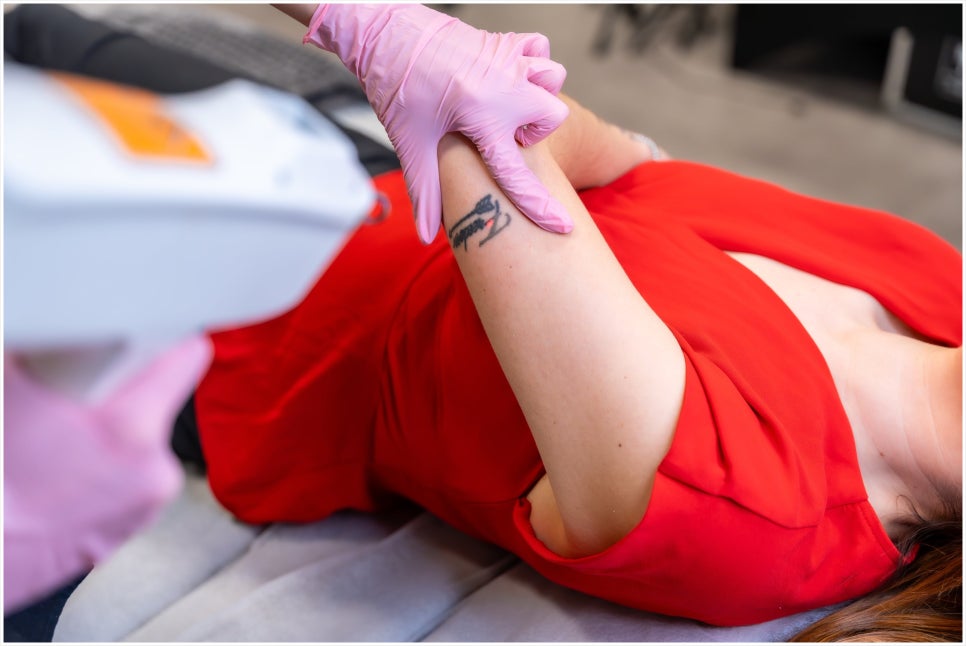
More often than not,
tattoo removal requires more thought than getting the tattoo in the first place.
Even if it looks like a small tattoo on the surface,
pigment may remain deeper and wider within the skin than expected,
and the difficulty of treatment can also vary depending on the color and technique.
If you are considering Gangnam Yeoksam tattoo removal,
rather than simply aiming for fast removal,
it is important to check whether the skin condition is also being reviewed
and whether a laser suited to the characteristics can be selected.
Transparent Dermatology Clinic
conducts an overall assessment of color, depth, technique, and type
based on consultation with dermatology medical staff
and establishes a removal plan tailored to the individual.
In addition, through the ignition tattoo removal procedure,
we increase the response between pigment particles and the laser,
and we approach treatment in a way that considers the full-thickness response,
reducing the burden of the number of procedures and the possibility of side effects.
Tattoo removal is
not a procedure that ends with a single choice,
but a treatment in which care must continue through the skin’s recovery process.
If the tattoo remaining now feels burdensome in your daily life,
checking the current condition and circumstances first,
and gradually removing it in a direction that suits you,
can be a good start.