
When researching lifting lasers,
you are likely to come across
the name Ultherapy at least once.
If people around you say they had
good results, or if before-and-after
photos catch your attention,
you may often find yourself thinking,
“Wouldn’t it be good for me to try it too?”
However, lifting lasers involve
many factors that need to be examined
before making an immediate decision
simply because they worked well for someone else.
In particular, Ultherapy does not
merely treat the surface of the skin.
It delivers ultrasound energy
to deeper layers.
Therefore, if you proceed unconditionally
without examining your skin thickness,
the degree of sagging, the distribution
of facial fat, and the cause of reduced elasticity,
you may experience results
that differ from what you expected.
If you are considering Gangnam Ultherapy,
rather than focusing only on whether
it is a widely performed treatment,
you need to calmly determine first
whether it is appropriate for your skin
and whether it suits your current facial condition.
What kind of treatment is Ultherapy?
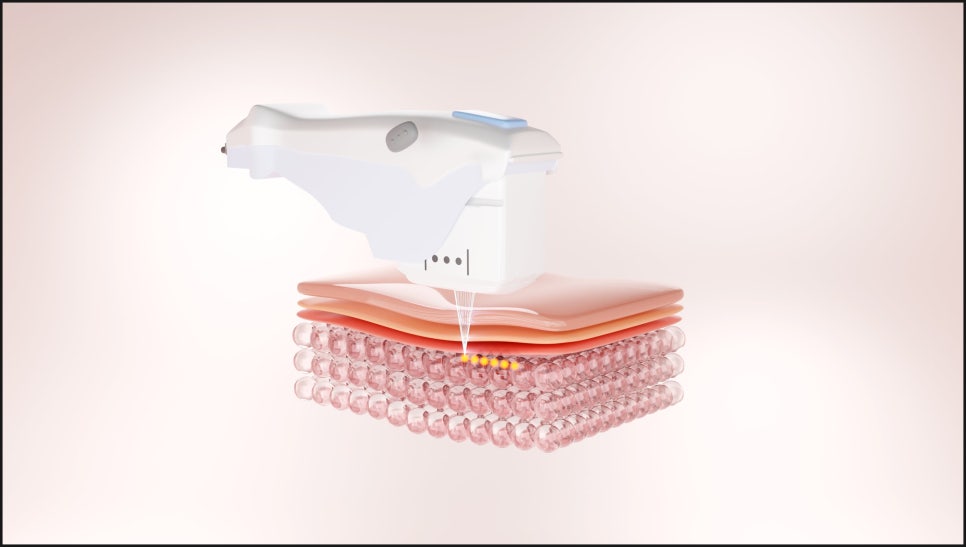
Ultherapy is one of the lifting treatments
that delivers high-intensity focused ultrasound
to deeper layers to promote improved elasticity.
While general skin care treatments
often act mainly on the surface
or shallow layers,
Ultherapy differs in that it targets
deeper structures inside the skin.
When ultrasound energy is concentrated
at a specific depth,
thermal stimulation is delivered to that area.
During the subsequent self-recovery process,
collagen production and remodeling may occur.
This process is different
from a surgical method that immediately
changes the contours of the face.
It is closer to a nonsurgical lifting treatment
that aims for elasticity to gradually change
over time.
However, hearing only this explanation
may make it seem as though everyone
will experience the same positive results.
In reality, the changes people perceive
can vary depending on their skin condition,
and satisfaction may also differ
according to the treatment intensity,
the areas treated, and each person’s facial structure.
Therefore, when deciding on Gangnam Ultherapy,
it is important not to look only at the name
of the device, but first to understand
the condition of your own skin.
Problems that may occur if you undergo treatment without knowing your skin type
Ultherapy is a lifting laser sought by many people,
but it is difficult to apply it in the same way
to everyone.
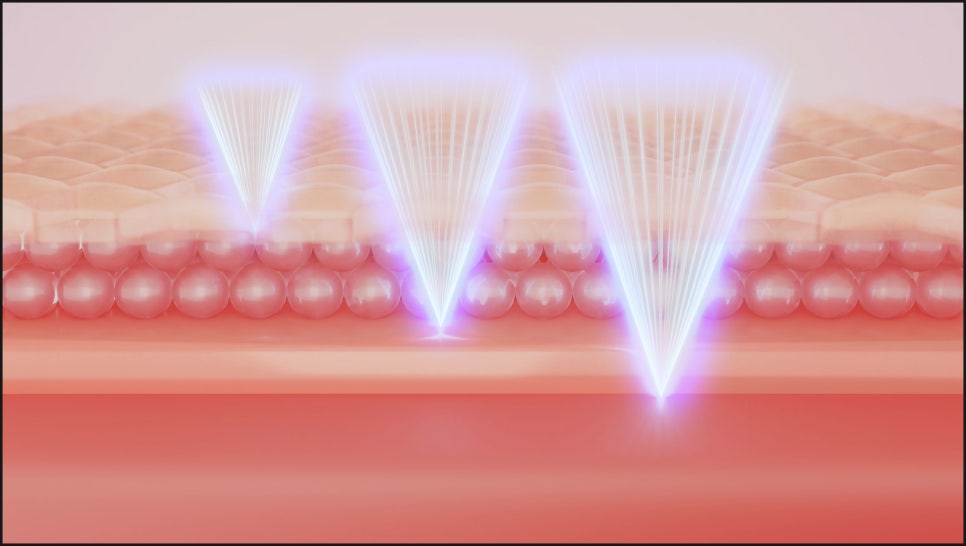
If your skin is thin and you have little facial fat,
strong energy may make your cheeks
appear hollow or give you a thinner-looking appearance.
Conversely, if your skin is thick
and sagging is pronounced,
you may have difficulty noticing
the changes you expected
if the stimulation is too mild.
In addition, people with sensitive skin
may experience redness, warmth, tenderness,
or swelling that lasts relatively longer afterward.
Therefore, rather than deciding on treatment
based only on the intensity or number of shots,
it is important to examine your skin thickness,
the distribution of fat, the location of sagging,
and your history of previous treatments,
then create a plan suited to your individual condition.
What to keep in mind after treatment
After Gangnam Ultherapy,
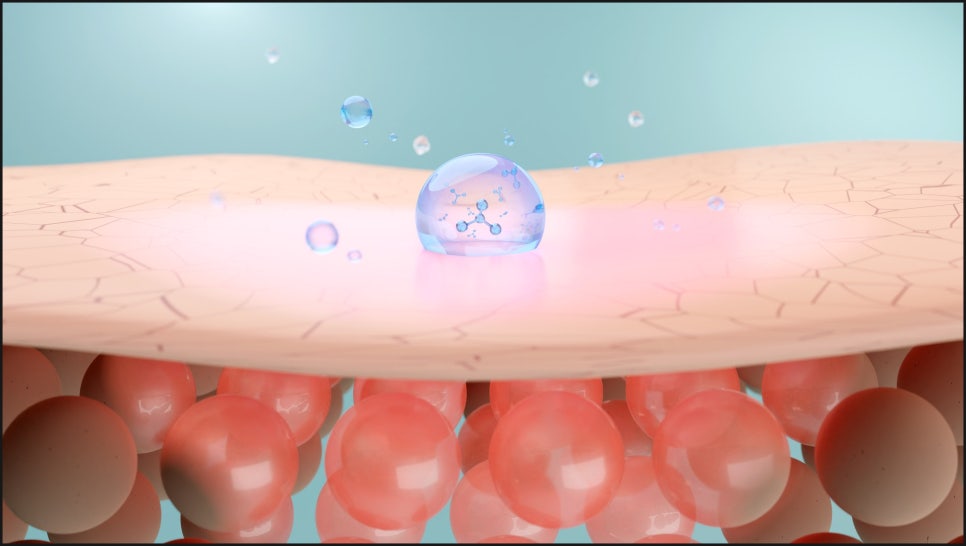
the treated area may temporarily become red,
or you may experience a feeling of swelling,
stiffness, tingling, or mild tenderness.
In many cases, these symptoms ease over time,
but if the discomfort is severe
or abnormal sensations persist for a long time,
it is advisable to have your condition checked.
Immediately after treatment,
it is generally better to avoid for a certain period
activities that may increase feelings of heat and swelling,
such as hot saunas, jjimjilbangs, drinking alcohol,
and strenuous exercise.
You should also avoid rubbing your face harshly
or getting a vigorous massage,
and take care with gentle cleansing,
moisturizing, and sun protection.
Because changes from Ultherapy may appear gradually,
it is important not to rush into repeat treatment
right away, but to allow time for your skin to respond
and observe its progress.
Gangnam Ultherapy: Your skin should come before trends
Ultherapy is a treatment that may be considered
for managing sagging skin
and less defined facial contours,
but caution is necessary before deciding
without first assessing your own condition.
At 투명피부과,
we examine skin thickness and elasticity,
the distribution of facial fat,
the direction in which sagging appears,
and your history of previous treatments
through consultation.
We then provide guidance on a plan
suited to your individual condition.
Rather than automatically basing the treatment
on stronger energy or a higher number of shots,
we focus on adjusting the treatment approach
to the areas that need it,
taking the current balance of your face
and your skin condition into consideration.
After treatment, we also explain in advance
the temporary reactions and precautions
that may occur,
and review care methods together
so that you do not feel caught off guard
during the recovery process.
If you are considering Gangnam Ultherapy,
it is important not simply to ask
whether it is a famous treatment,
but to determine why it is needed for your skin
and what level of treatment is appropriate
for each area.
When undergoing a lifting treatment,
rather than automatically choosing
the strongest option,
please plan carefully in accordance
with your current facial balance and condition.