Reasons for tooth extraction in orthodontics
Extraction orthodontics
Extraction-focused orthodontics
The reason you should absolutely avoid orthodontic treatment,
is often said to be due to the serious side effects caused by extraction orthodontics.
Of course, because of extraction orthodontics,
it is not true that teeth all fall out as you get older,
the gums become so weak that you cannot chew properly,
or that unwanted facial changes become severe, and so on.
However, this means that preserving natural teeth should be prioritized,
and when extraction is unavoidable,
a more careful treatment plan by the medical team
is needed.
Reasons why extraction is needed in orthodontics
Cases where extraction is unavoidable during orthodontic treatment include
lack of space for tooth rearrangement
and securing space for posterior movement of the front teeth.
Crowded teeth or impacted canines mean
there was not enough space when the teeth erupted,
and protruding teeth mean
the jawbone is small.
Therefore, to correct this,
space and distance are secured through extraction orthodontics.
The relationship between teeth and the skeleton
The difference between tooth length and arch width
Existing available tooth movement space
Harmony with facial features
If treatment is performed through
this kind of overall examination and diagnosis,
the side effects of extraction orthodontics can also be minimized.
Teeth extracted in orthodontics
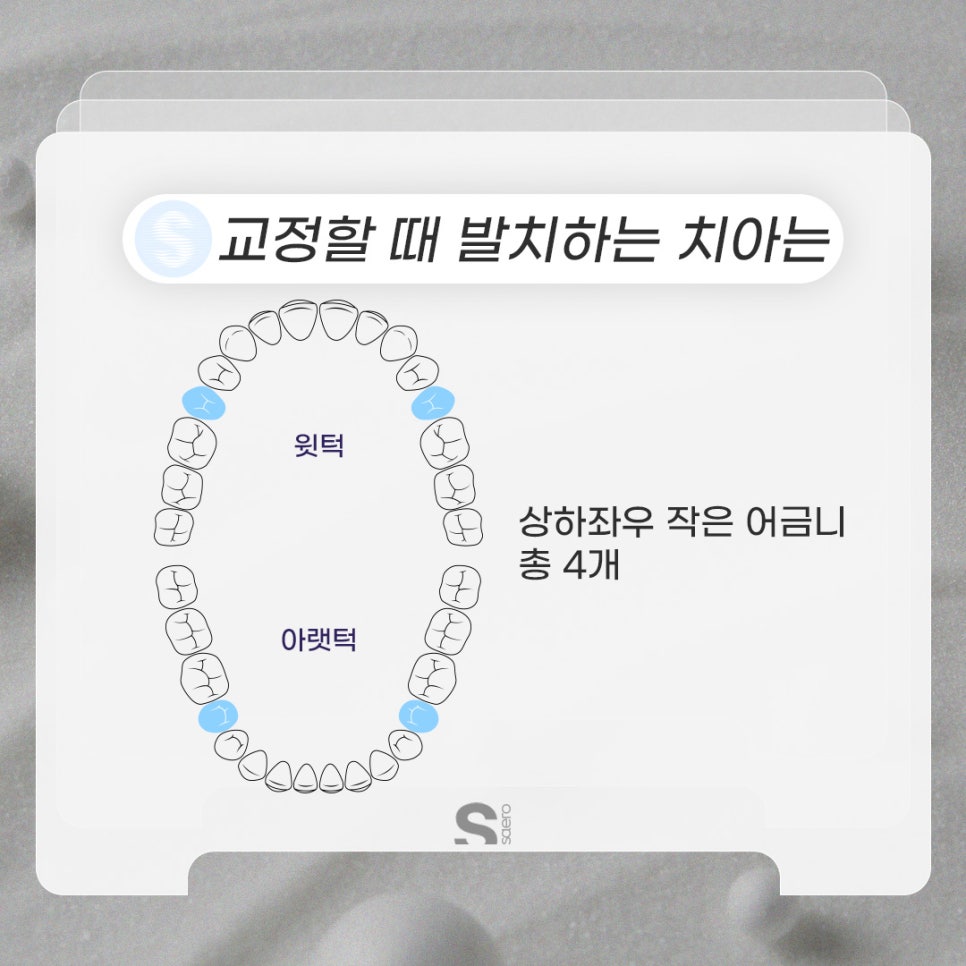
The teeth that are unavoidably extracted during orthodontic treatment
are the four premolars in the upper, lower, left, and right sides.
The reason premolars are selected is that
the front teeth play an important outward appearance role,
the canines connect the front teeth and molars,
and the molars are essential for chewing.
If there is a tooth whose life cycle has ended, it is extracted as a replacement.
If wisdom teeth are present,
space may be measured by extracting the wisdom teeth,
and only the wisdom teeth may be removed.
Palatal expansion and non-extraction orthodontics
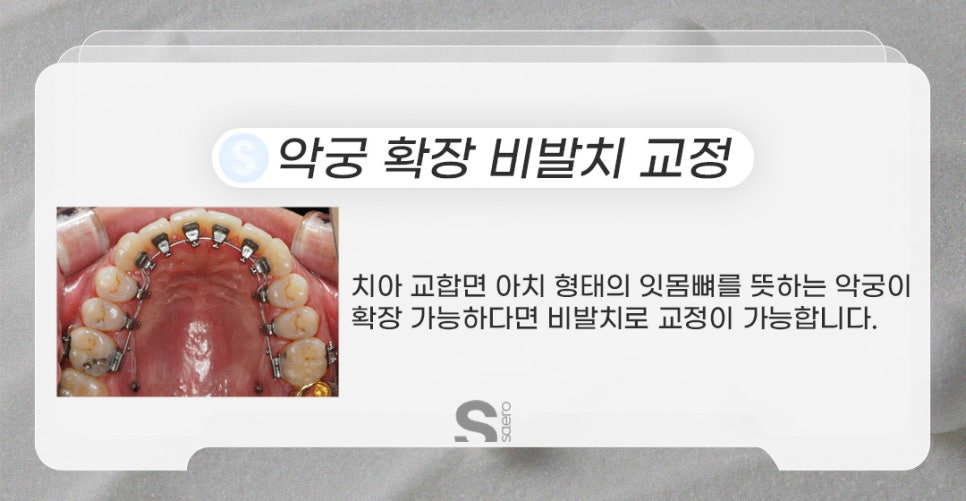
Cases where non-extraction is possible during orthodontic treatment are
cases where palatal expansion is possible.
The arch is the gum bone in the shape of the occlusal arch.
It is divided into dental expansion, which adjusts the angle of the teeth,
and skeletal expansion, which widens the basal bone to the left and right,
and during growth, an arch expansion appliance is used,
while adults use mini screws.
Interproximal reduction and non-extraction orthodontics
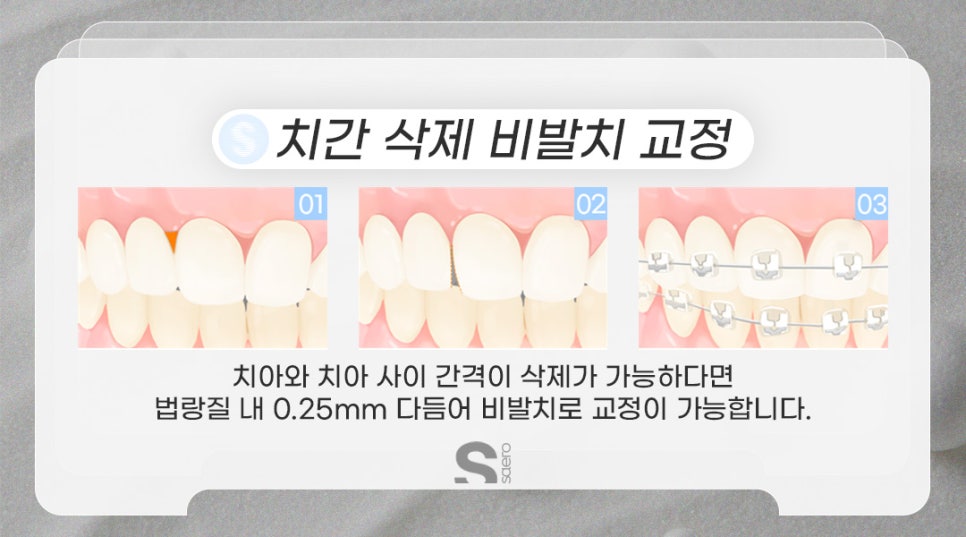
Cases where non-extraction is possible during orthodontic treatment are
cases where interproximal reduction is possible.
Removing the gap between teeth
is interproximal reduction.
If the space shortage is not severe,
the teeth are large,
and the arch is somewhat narrow,
then 0.25 mm within the enamel is trimmed
to create space for tooth rearrangement.
Posterior retraction and non-extraction orthodontics
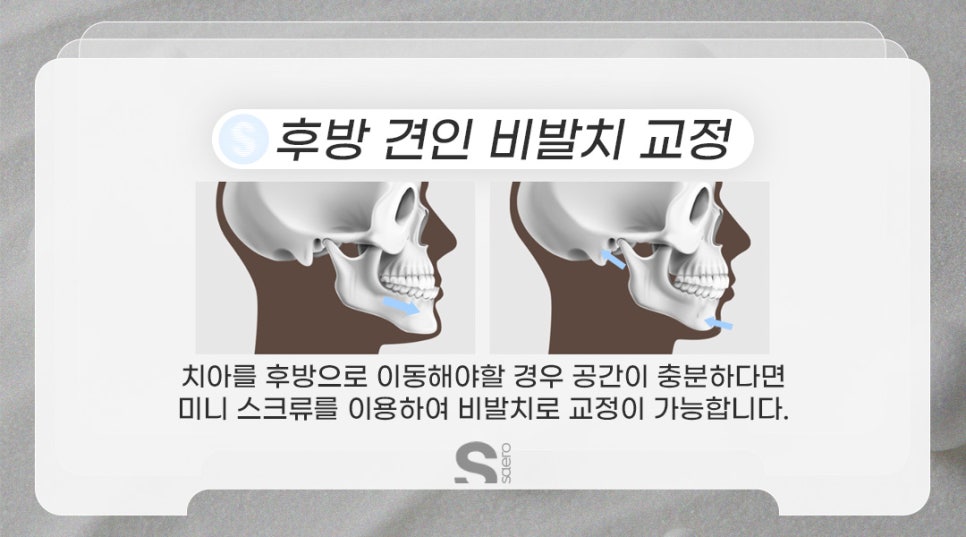
Cases where non-extraction is possible during orthodontic treatment are
cases where posterior retraction is possible.
Posterior retraction is mainly performed using mini screws
for protrusion correction.
There is a two-step method in which the canines are retracted alone first and then the four front teeth are retracted,
and a one-step method in which all six front teeth are retracted.
Extraction-focused orthodontics
Earlier, it was said that when extraction is unavoidable,
a careful treatment plan by the medical team is necessary.
Conversely, non-extraction orthodontics
also requires an experienced treatment plan by the medical team.
If extraction orthodontics is pushed too far,
various side effects that were mentioned as misunderstandings may appear,
and conversely, if non-extraction orthodontics is pushed too far,
the desired orthodontic effect cannot be achieved.
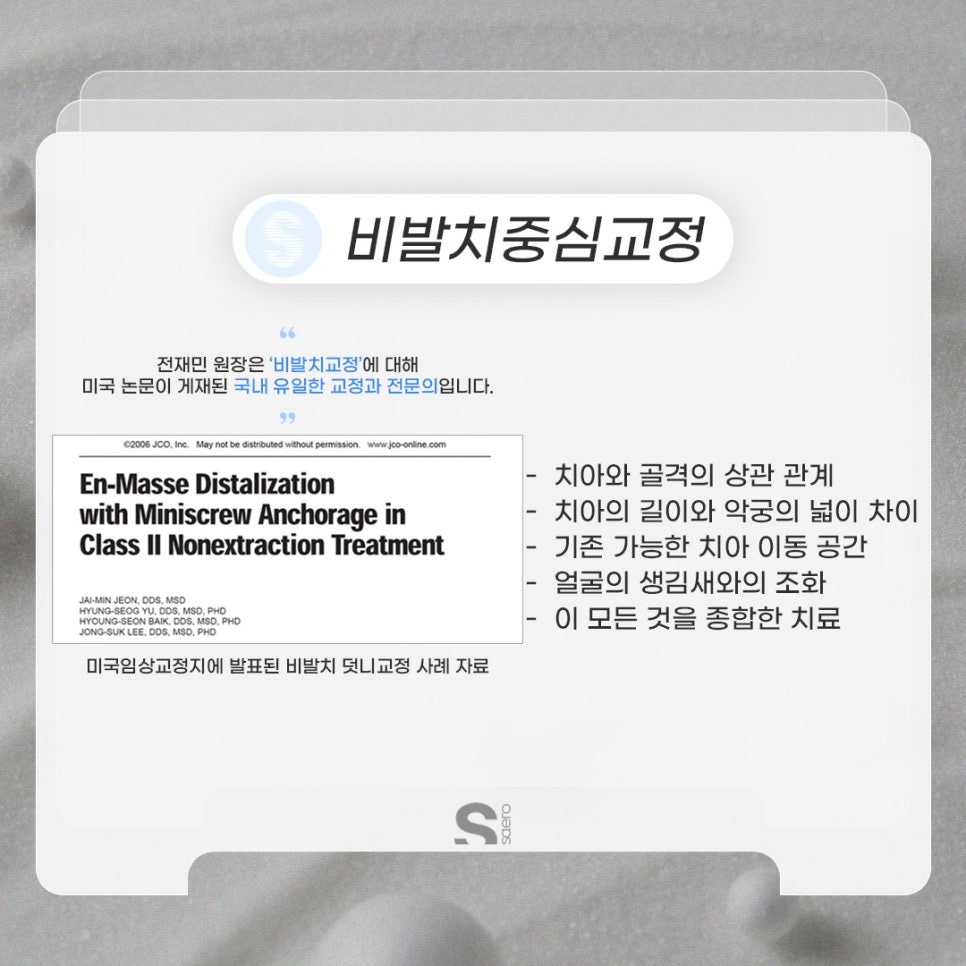
The relationship between teeth and the skeleton
The difference between tooth length and arch width
Existing available tooth movement space
Harmony with facial features
All of these must be considered comprehensively when deciding between extraction and non-extraction,
and for that reason, a patient's choice of medical team is truly important.
A U.S. paper on Korea's only non-extraction-focused orthodontics publication
Director Jeon Jae-min's
proven skills as the doctor in charge of famous celebrities
can be consulted at Gangnam Saero Dental Clinic.