Adult prognathism treatment
Even if it is late, it can still be treated without surgery
Adult non-surgical prognathism
What is commonly called prognathism is
a condition where the lower jaw protrudes slightly more than the upper jaw,
and it is best treated early during childhood growth,
but if you have already become an adult
and are considering treatment,
surgery is in fact the clearest method,
but in certain cases, orthodontic treatment alone is enough
for non-surgical prognathism.
Adult prognathism
As mentioned when explaining non-surgical prognathism correction methods for children,
prognathism treatment varies depending on the cause and type.
The same applies to
adult non-surgical prognathism correction methods.
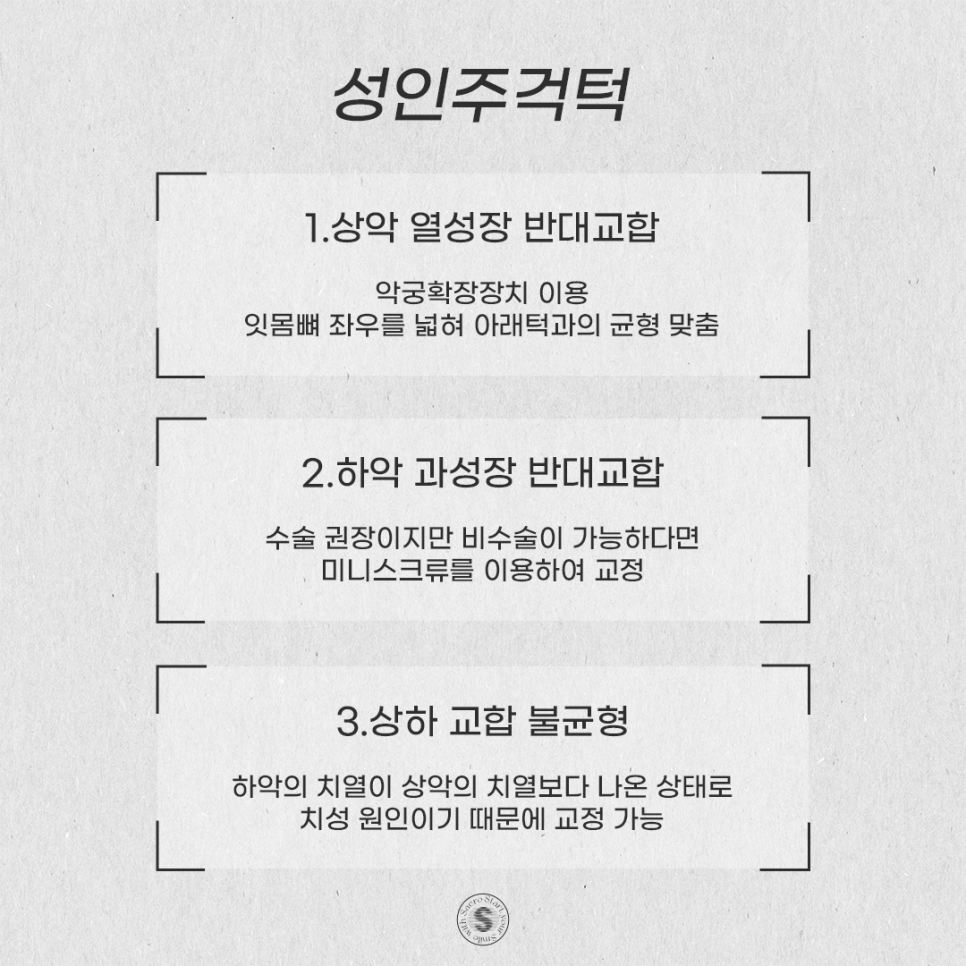
Maxillary undergrowth with anterior crossbite
An anterior crossbite caused by undergrowth of the upper jaw,
using an arch expansion device
to widen the left and right sides of the alveolar bone and balance it with the lower jaw
Mandibular overgrowth with anterior crossbite
An anterior crossbite caused by overgrowth of the lower jaw,
surgery is recommended because it has a skeletal cause
Possible non-surgical cases use mini screws
Upper and lower bite imbalance
An anterior crossbite in which the lower dental arch
protrudes forward more than the upper dental arch,
and because the cause is dental,
non-surgical treatment is possible
Adult prognathism correction method
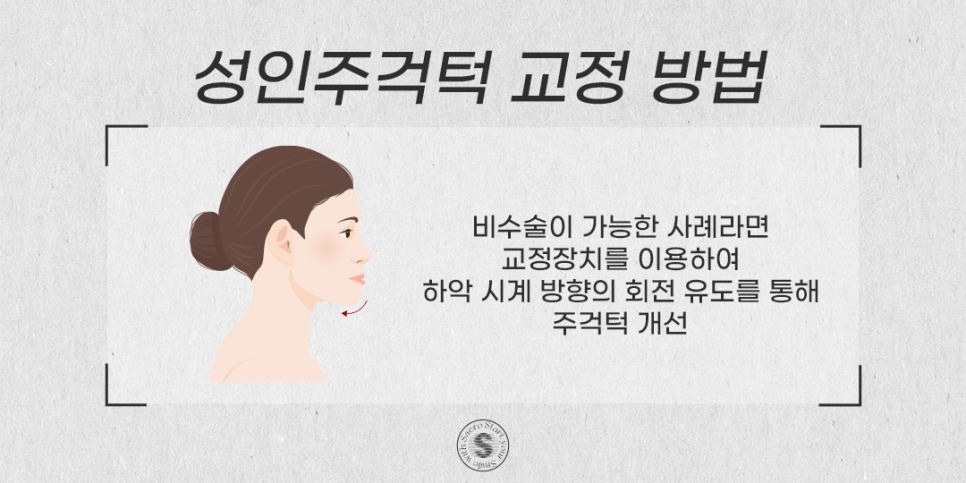
Under the dentist’s judgment,
if it is diagnosed as a non-surgical prognathism case that can be sufficiently corrected with orthodontic treatment,
orthodontic appliances can be used
to improve prognathism by inducing clockwise rotation of the lower jaw.
In this case, the actual length of the jawbone does not become shorter;
rather, changes in the position of the jawbone are induced.
Therefore, when the jawbone is long and the anterior crossbite is skeletal in nature,
surgery is needed
to clearly restore function and esthetics,
while anterior crossbites that are not of that type can
restore proper function and esthetics
through orthodontic treatment.
Adult prognathism treatment process
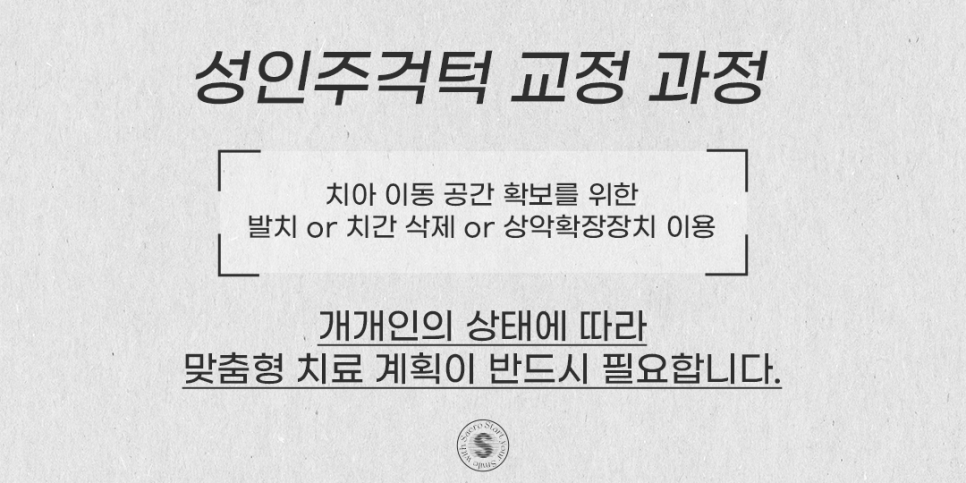
If non-surgical prognathism is possible,
an individualized treatment plan will be established according to each person’s condition.
Because anterior crossbite is mostly a form in which
the lower jaw protrudes forward,
to move the lower jaw backward,
extraction is performed to secure space for tooth movement.
If the teeth are large
and the lack of space is not severe,
tooth separation within 0.25 mm of enamel is performed
for non-extraction orthodontics,
and if the transverse width of the maxilla is narrow,
space for movement is secured through a maxillary expansion device.
Before and after adult prognathism correction
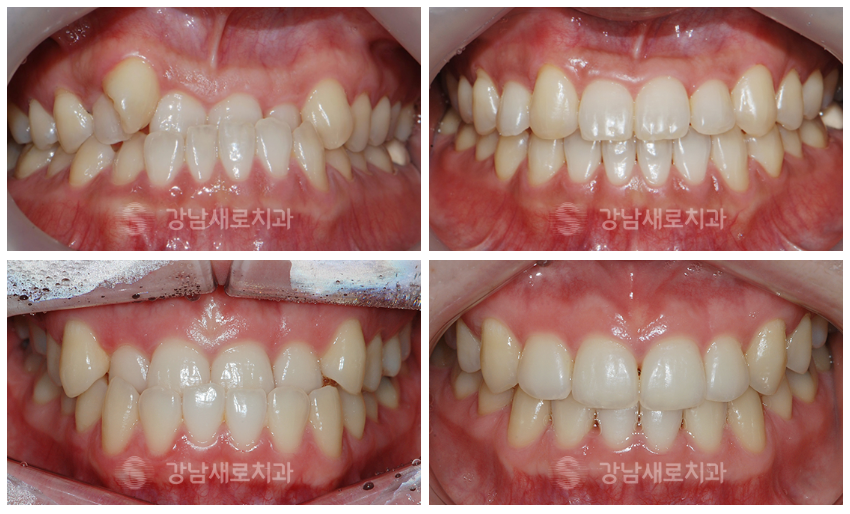
Above 2017.8 > 2020.3 Below 2019.2 > 2021.11
Even if it is late, if you visit for a diagnosis now
and proceed with non-surgical prognathism orthodontic treatment,
adults can also have the lower jaw guided to the correct position,
allowing you to see before-and-after results for adult prognathism.
(Eligibility varies by individual, so consultation with a medical professional is essential.)
Adult prognathism dental clinic
A choice for the years ahead,
if you want to receive non-surgical prognathism orthodontic treatment,
it is most important to get a consultation from medical professionals with strong expertise.
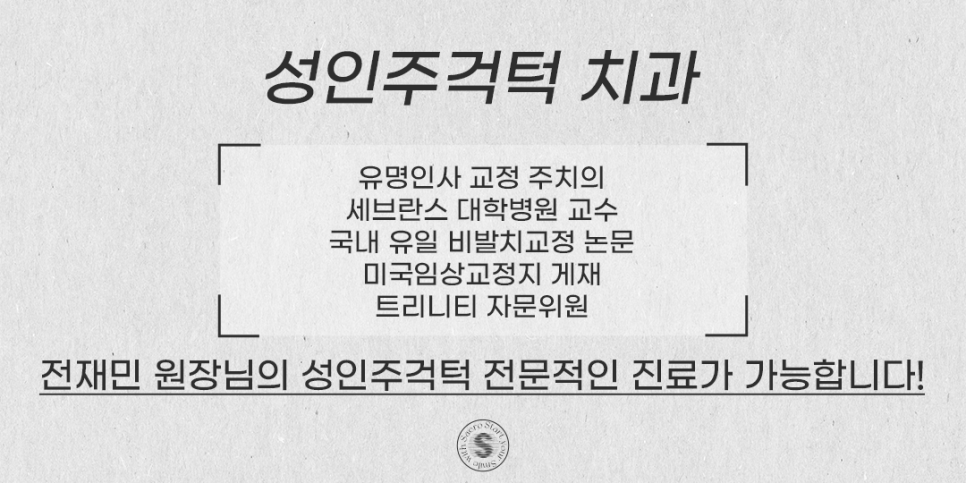
Celebrity orthodontic attending physician
Professor at Severance Hospital, Yonsei University
The only domestic non-extraction orthodontics thesis
Published in the American Journal of Orthodontics
Trinity advisory committee member
Gangnam Sero Dental Clinic is able to provide treatment with a high level of orthodontic expertise.
Adult prognathism
Non-surgical prognathism
All
New smile
New beginning
This is Gangnam Sero Dental Clinic.