Symptoms of osteoporosis
Causes of osteoporosis
Osteoporosis implants PRF implants
Menopause usually occurs in women between the ages of 45 and 55.
Osteoporosis occurs more often in women than in men,
and among women going through menopause,
about 40% experience it,
so osteoporosis is one of the common diseases.
Because osteoporosis can cause various problems,
such as pain from fractures,
a decrease in lung capacity due to thoracic spine fractures,
and the need for hospitalization and surgery due to hip fractures,
extra caution is needed in implant treatment as well.
Osteoporosis
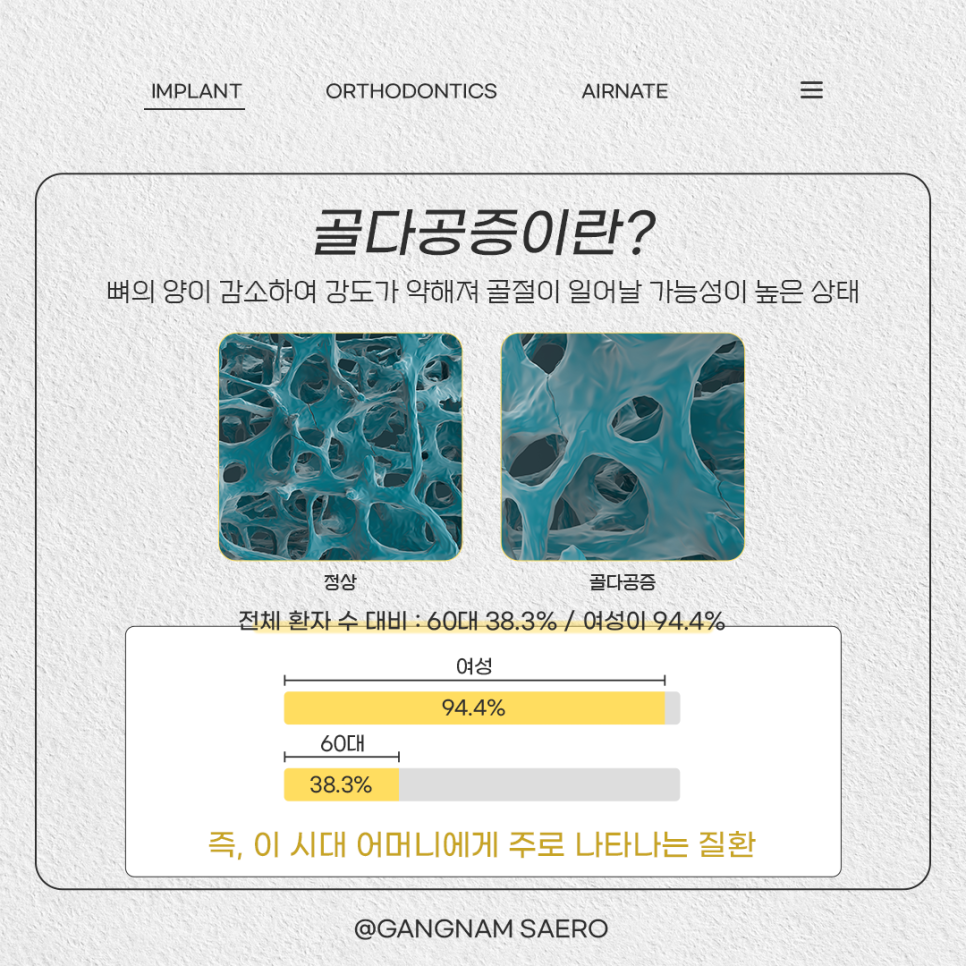
Osteoporosis is a condition in which the likelihood of fracture is high,
with reduced bone mass
and weakened strength.
According to the Health Insurance Review and Assessment Service as of 2022,
the age group with the highest proportion of total patients
is people in their 60s,
and among osteoporosis patients, women account for 94.4%,
showing an overwhelmingly high rate.
Causes include genetic factors, menopause, steroid medication use,
and insufficient calcium intake, impaired calcium absorption, and vitamin D deficiency.
Symptoms of osteoporosis
Since osteoporosis is a disease in which bone mass decreases and strength weakens,
the symptom is that fractures occur frequently.
In patients in their 50s to 70s, fractures mainly occur in the wrist,
and in patients over 70, fractures mainly occur in the hip and spine.
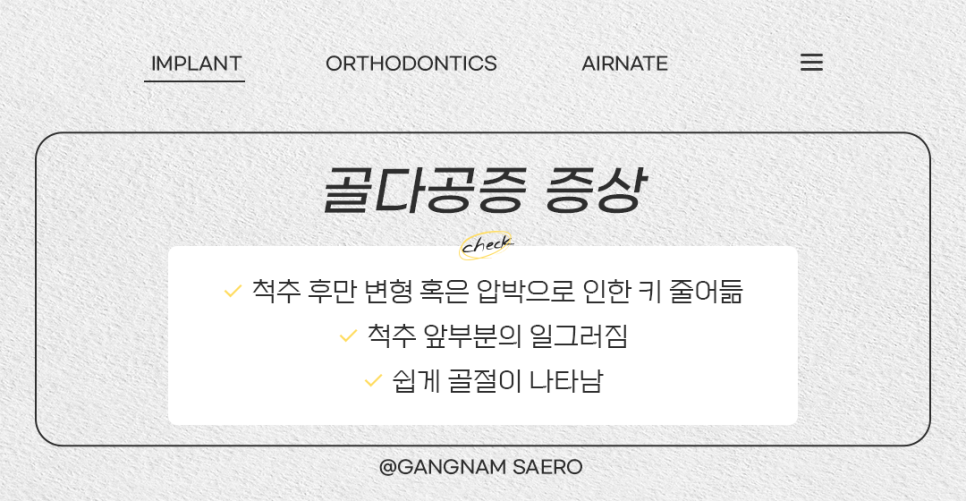
When the symptoms of osteoporosis become severe,
the spine may develop kyphotic deformity or compression, causing a decrease in height,
the front part of the spine may become distorted,
the risk of fracture increases,
and even simple bending of the waist or coughing can easily break bones.
The effect of osteoporosis on implants
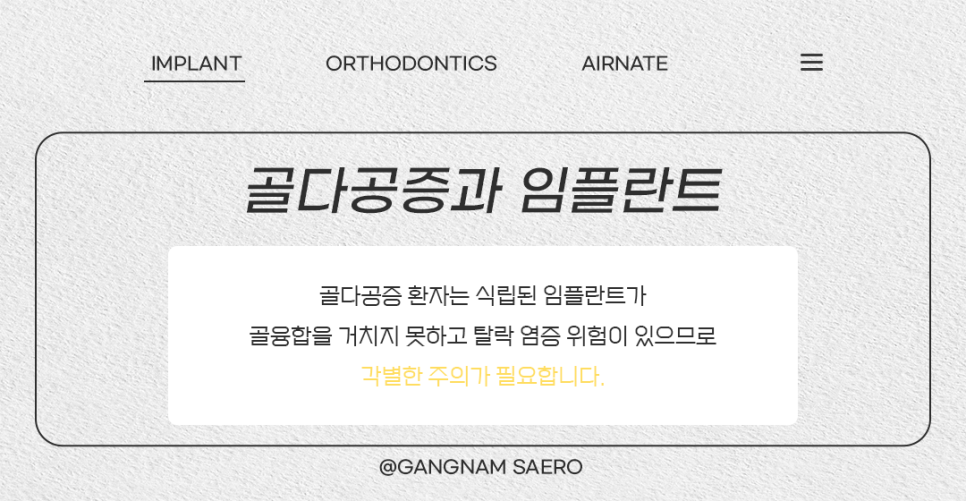
The ingredient in medications used to treat osteoporosis
is bisphosphonate,
which has the effect of inhibiting the activity of osteoclasts.
Implants achieve osseointegration with the inserted screw
through osteoclasts,
so osteoporosis implants are considered a high-difficulty surgery.
If osteoporosis implant surgery is performed by inexperienced medical staff,
proper osseointegration may not occur,
which can lead to implant failure,
and inflammation may occur.
Osteoporosis implants PRF implants
For such osteoporosis patients,
as a method of implant surgery,
osteoporosis implants PRF implants are recommended.
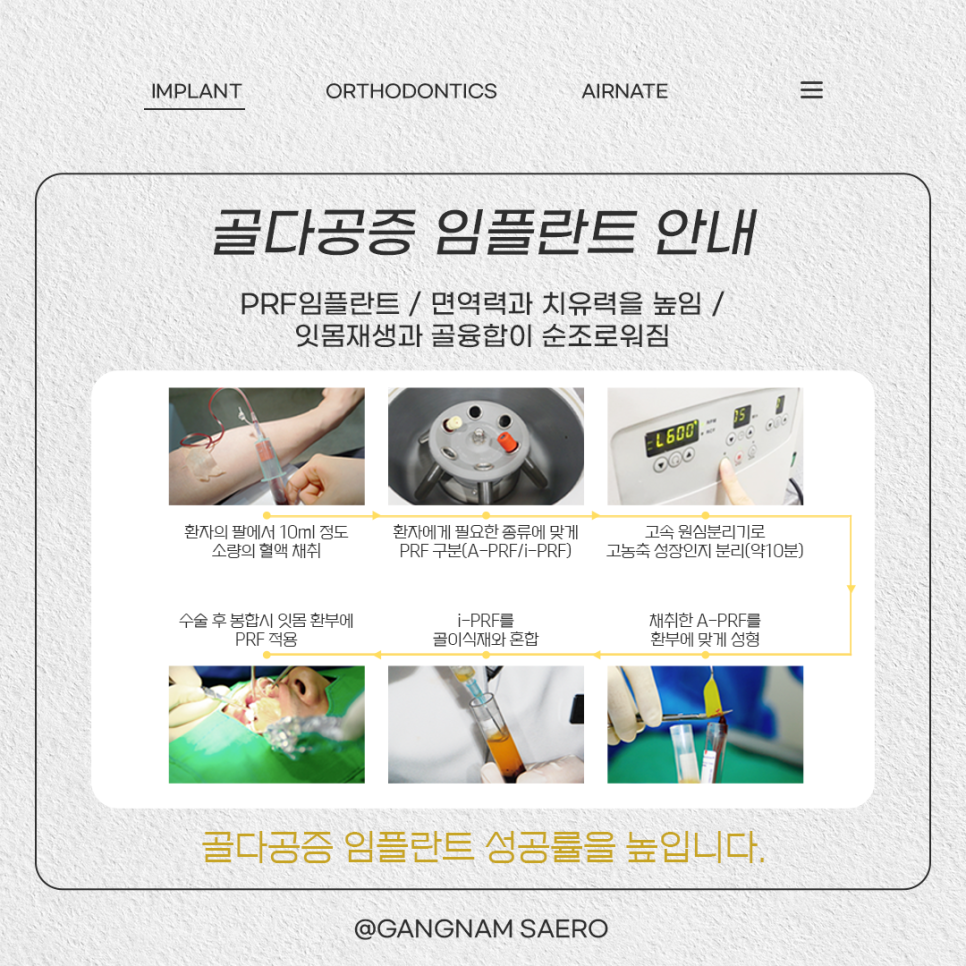
Osteoporosis implants PRF implants continuously release the proteins needed for gum and jawbone regeneration and recovery.
They extract white blood cells and platelets from the patient's own blood,
separate them using a dental centrifuge,
concentrate only the growth factors,
and apply them to the surgical area during the procedure.
Osteoporosis implants PRF implants
promote immune function and have anti-infective effects,
helping recovery happen more quickly.
Precautions
Implants for patients with osteoporosis
therefore require a careful process and postoperative management.
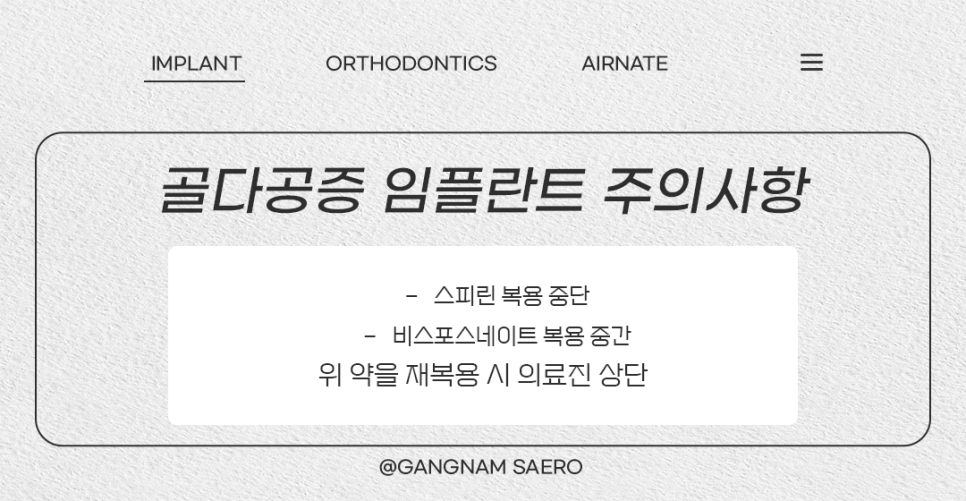
• Temporarily stop taking aspirin
• Stop taking bisphosphonate at least 3 months before surgery
• Resume medication only after consulting with medical staff
If the above precautions are followed,
the side effects of osteoporosis implants PRF implants
can be minimized.
Implant clinic for patients with osteoporosis

Implant surgery for patients with osteoporosis
as shown above requires the skill of experienced medical staff.
Only then is it possible to perform implant surgery with a high success rate
through detailed diagnosis and treatment planning.
Gangnam Saero Dental Clinic
not only has extensive experience built through full-mouth implants,
but also demonstrates high-level expertise in diabetes, hypertension, and osteoporosis,
receiving an award in the implant-specialized hospital category,
and provides safe results through
university-hospital-level advanced equipment
(RAY FACE, oral scanner, 3D-CT)
used by medical staff from university hospitals.
A new beginning
A new smile