How to Increase the Stability of Upper Jaw Implants
About the sinus lift procedure
If you went to the dentist for an upper jaw implant thinking it would not be a big deal, and the doctor said that a sinus lift is needed, you might feel taken aback. Implant surgery was something you thought would simply involve placing an artificial tooth root into the gum, but now there is a lift procedure... That also means implant surgery is not something that can be taken lightly.
For an artificial tooth to perform the role of a natural tooth, it must be given the same structural environment as a natural tooth.
I will explain why a sinus lift is needed for upper jaw implants and how to receive treatment safely.
About the sinus
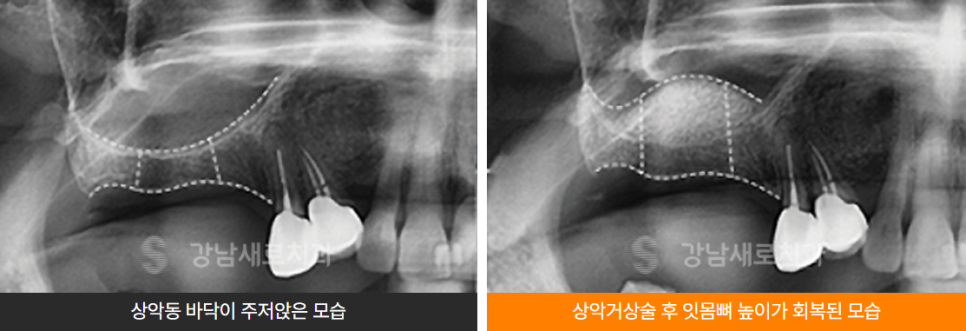
Some of you may know what a lift procedure is, but may be hearing the term “sinus” for the first time. The sinus is a hollow space in the facial bones that connects from the upper jaw bone to the nose, and it has a cave-like shape. This space is filled with air, which reduces the load carried by the upper jaw bone. If an upper tooth is extracted and left untreated for a long time, the sinus gradually drops and the alveolar bone is resorbed.
If the sinus has dropped and the alveolar bone has been resorbed, and implant surgery is performed without a sinus lift, the implant artificial root may pierce into the sinus. This can cause conditions such as inflammation, rhinitis, and sinusitis. In addition, the artificial root may not be properly secured and could even come loose.
About the sinus lift procedure
Therefore, the dropped sinus must be raised with a lift procedure that pulls the sagging area upward. Depending on how much it has dropped, the procedure is divided into two methods.
Sinus lift procedure - Crestal approach
-
Remaining bone thickness is 3 mm or more
-
The amount of jawbone supplementation needed is small
-
A method with less burden from swelling and pain
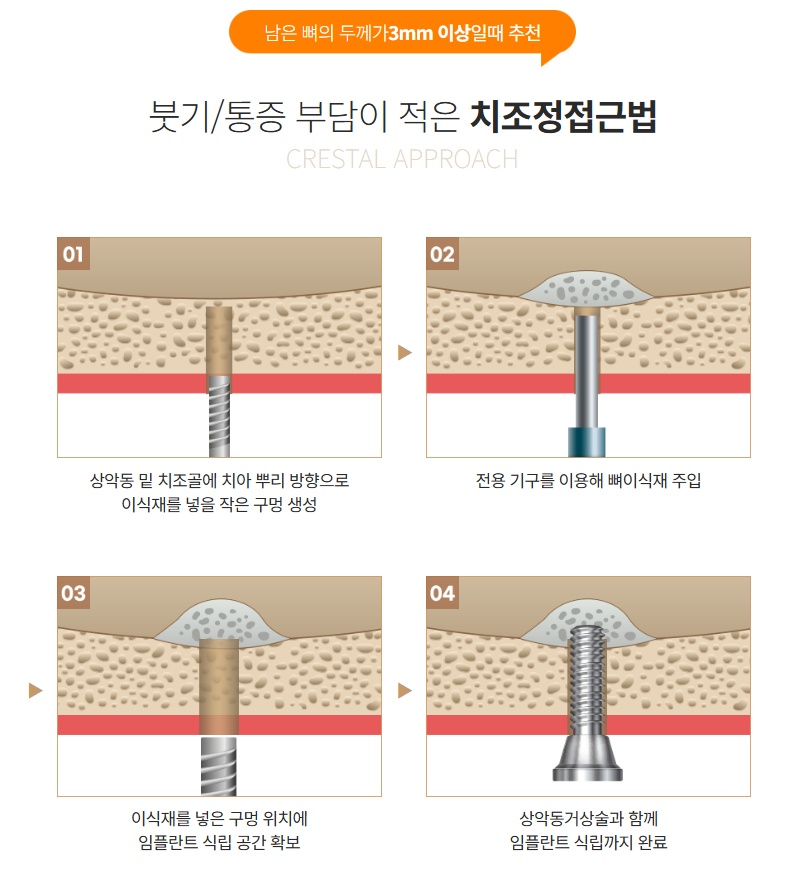
The crestal approach lifts the sinus upward, injects bone graft material, and places the implant artificial root at the same time. Because the surgery time and recovery period are shorter, and the upper jaw implant waiting period is brief, it is recommended when the degree of sinus drop is not severe.
Sinus lift procedure - Lateral approach
-
Remaining bone thickness is 2 mm or less
-
A large amount of jawbone supplementation is needed
-
A method with a greater burden from swelling and pain
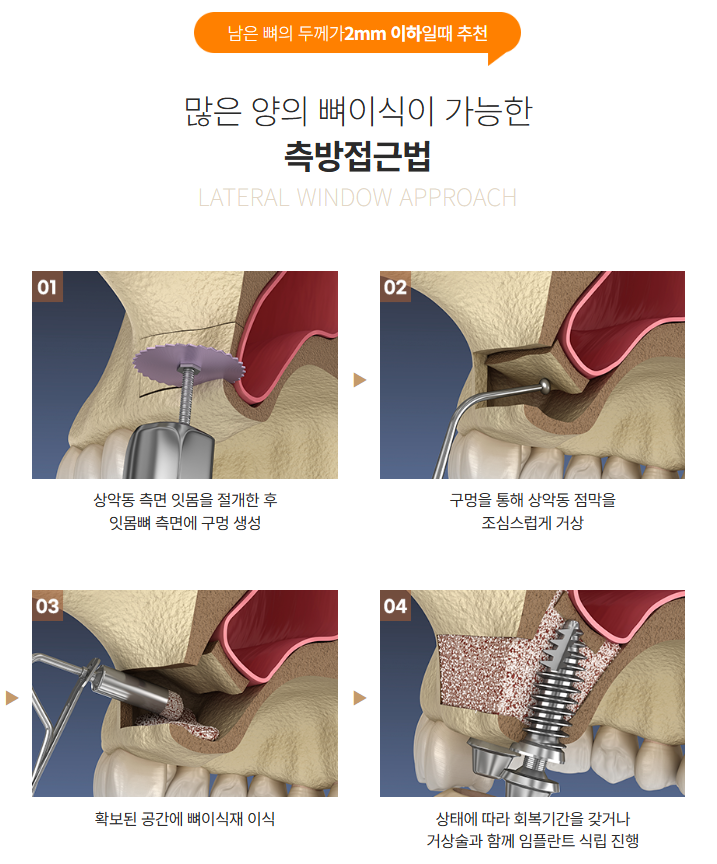
The lateral approach involves making an incision on the side of the gum next to the sinus, directly lifting the thin membrane beneath the sinus, injecting bone graft material, and then placing the implant artificial root after a recovery period. Because the surgery time and recovery period are longer, it is recommended when the upper jaw implant waiting period has been long and the degree of sinus drop is severe.
About the advantages of the sinus lift procedure
-
Restores the height of the upper jaw alveolar bone.
-
Improves the success rate of upper jaw implants.
-
Makes implant surgery possible even when the upper jaw alveolar bone is thin, soft, or weak.
About the sinus lift clinic
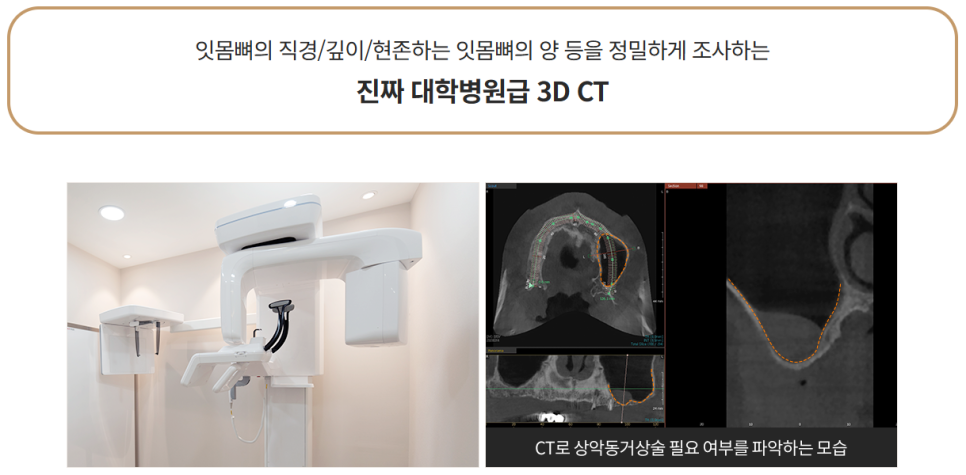

In this way, because a sinus lift becomes a high-difficulty surgery that requires cutting bone as the condition becomes more severe, an accurate diagnosis of the diameter, depth, and amount of the alveolar bone is necessary, and a clear treatment method must be applied according to the patient information obtained from that diagnosis. Gangnam Saero Dental Clinic is staffed by medical professionals from university hospitals, uses university-hospital-level equipment, and provides university-hospital-style care, while still being a dental clinic, so implant surgery is performed at a reasonable cost. A new smile, that is Gangnam Saero Dental Clinic.