Before implant surgery
Saving a natural tooth
Apicoectomy
No matter how much medical technology advances,
procedures and surgeries that replace a part of our body
can never be better than what is natural.
That is why it is important to pay attention to routine health care,
and even when a problem arises in the body,
it is best to try to solve it in a way that preserves
as much of the body as possible in its natural state.
This is the primary goal that any medical team would prioritize.
This works the same in dentistry.
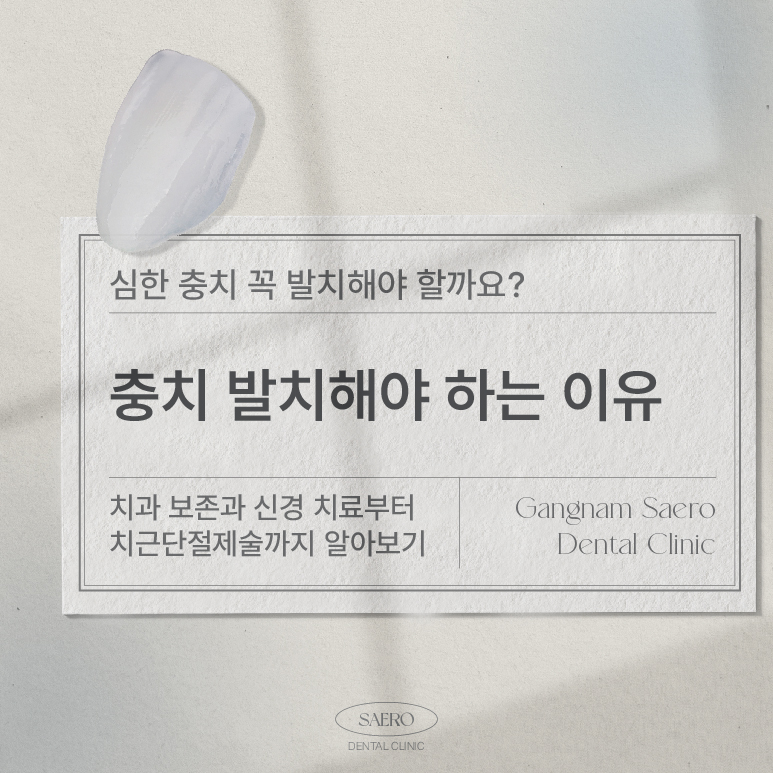
Saving a Natural Tooth: Preventing Cavities
Before learning about apicoectomy,
the first step in saving a natural tooth is
preventing cavities.
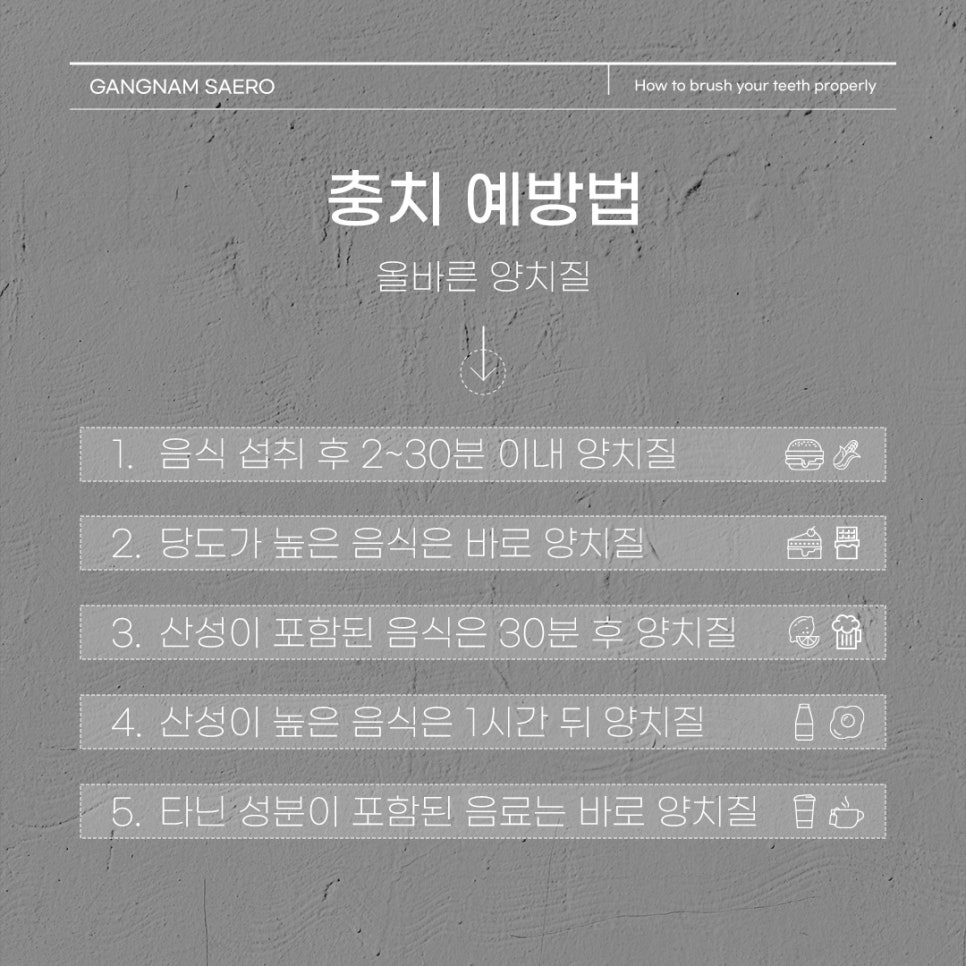
Brush your teeth within 30 minutes after eating or drinking
(after 30 minutes for acidic foods).
Not only brushing,
but now you should also use interdental brushes, dental floss, tongue cleaners, and more
to manage oral hygiene.
By the time you feel pain from a cavity,
it has already progressed to the point where root canal treatment is necessary,
and a lot of the natural tooth must be removed.
So to prevent cavities in daily life,
it is best to use various oral hygiene products
and receive regular dental checkups.
Saving a Natural Tooth: Treating Cavities
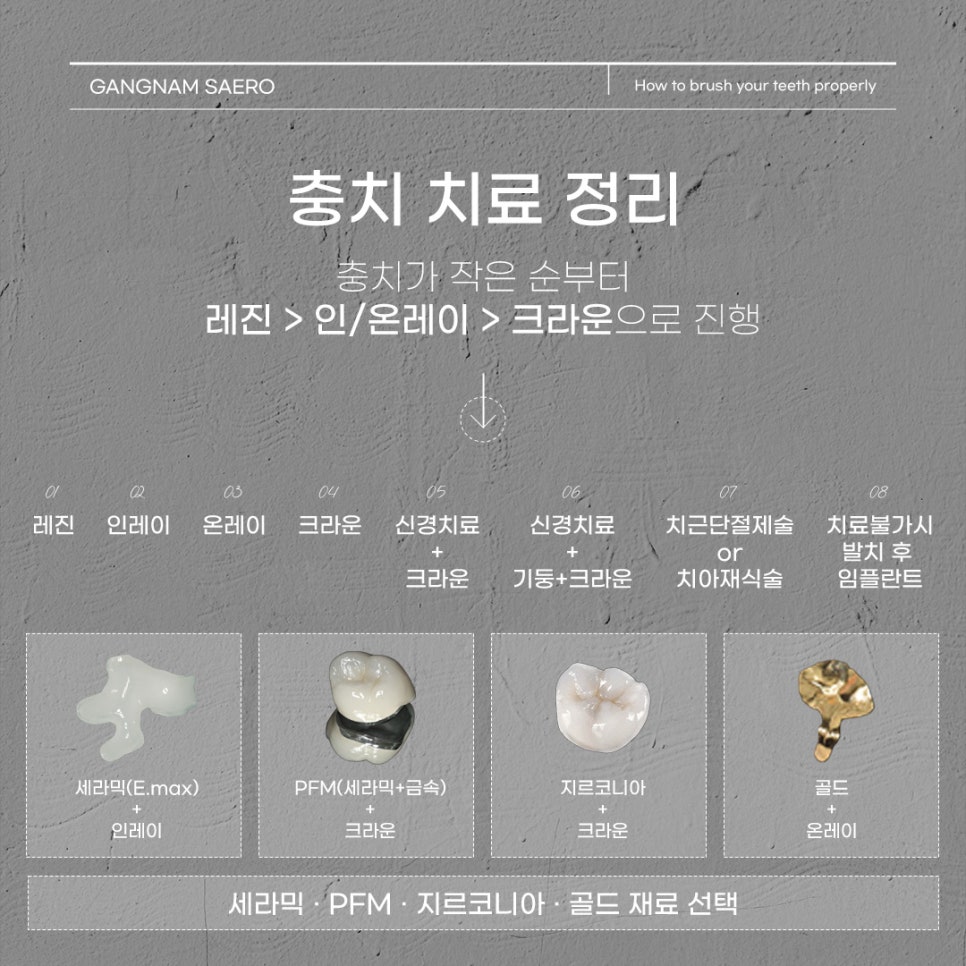
Before learning about apicoectomy,
the next step in saving a natural tooth is
cavity treatment.
If the cavity is in the early stage,
resin
If the cavity is in the middle stage,
inlay/onlay
choose between ceramic or gold
If the cavity is in the late stage,
crown
choose between PRM, zirconia, or gold
If cavity prevention fails and a cavity develops,
you should receive cavity treatment
as soon as possible
so that as much of the natural tooth as possible can be preserved.
Saving a Natural Tooth: Root Canal Treatment
Before learning about apicoectomy,
the next step in saving a natural tooth is
root canal treatment.
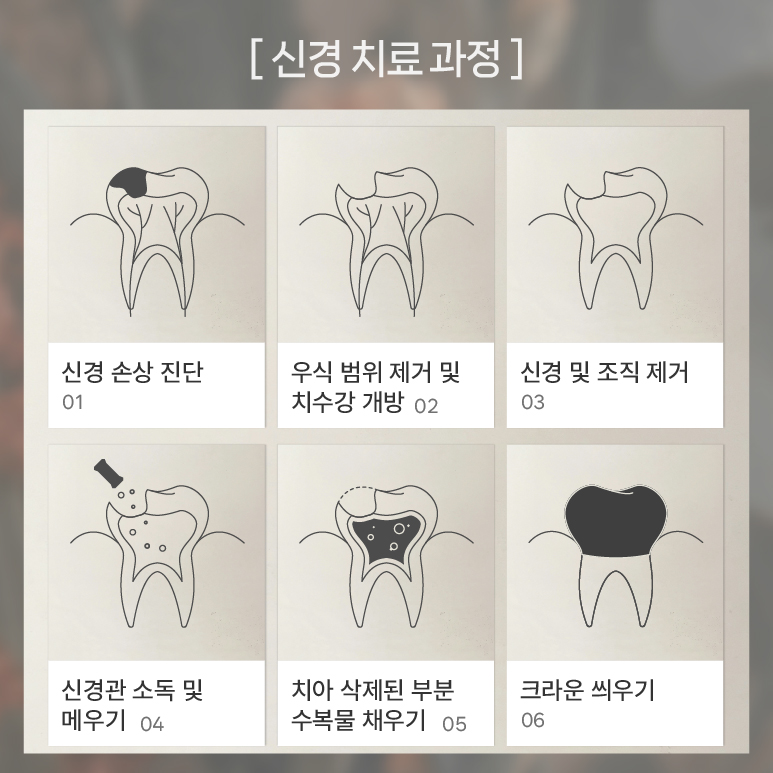
If decay reaches the nerve,
the nerve is damaged and pain continues,
after removing the decay, the pulp chamber is opened,
nerve and tissue are removed,
the root canal is disinfected and filled,
the tooth is shaped,
and the restoration is placed,
followed by crown treatment.
At this time, if you do not receive crown treatment after root canal treatment
and leave the tooth with only the restoration,
the restoration will gradually fall away,
and the natural tooth will be worn down more and more.
Saving a Natural Tooth: Apicoectomy
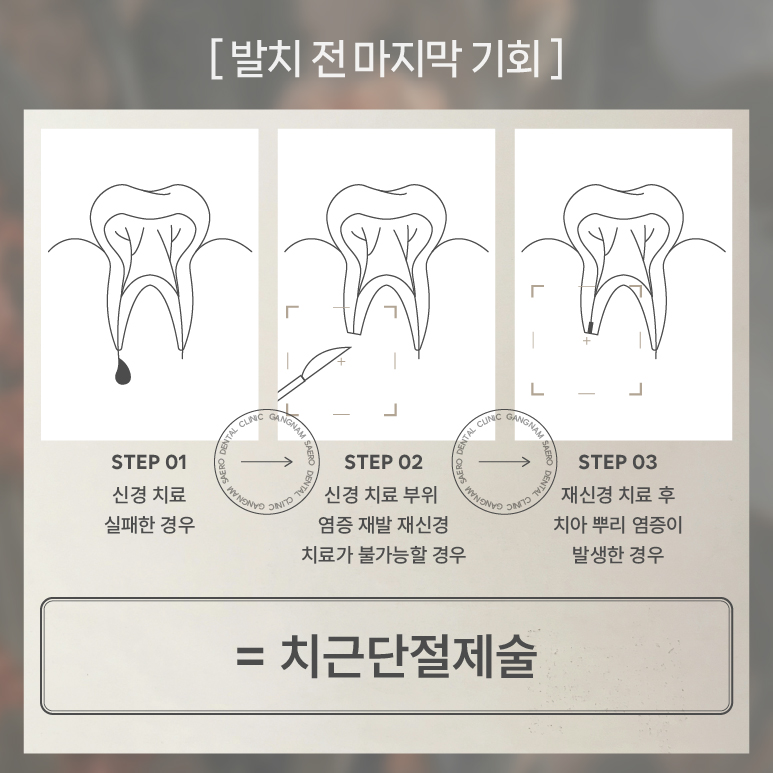
The final step in saving a natural tooth
Apicoectomy
The gum at the root of the tooth is incised,
then the tip of the tooth root is cut off
to remove infected tissue inside the root canal.
This is a tooth-preserving surgery
and is applied in the following cases.
• When root canal treatment has failed
• When inflammation at the root canal treatment site recurs,
but retreatment is not possible
• When root inflammation occurs
after retreatment has been performed
Natural Tooth Preservation Dentistry
Professor-background
Award recipient in the implant-specialized hospital category
Selected as an excellent implant institution
Jung Jae-wook, the CEO chief doctor of Gangnam Saero Dental Clinic,
along with a specialist in tooth preservation,
do their best until the end to see whether there is any way
to save a natural tooth one last time before implant surgery.
A new smile
A new beginning
This is Gangnam Saero Dental Clinic.