Causes of bad breath
What if it doesn’t go away even after brushing?
Solving bad breath at the dentist
Among the five senses, sight has the earliest influence,
but the next sense to have an effect is
smell.
No matter how delicious food looks in front of you,
if the smell makes you frown,
it’s hard to reach for it easily.
The same goes when dealing with people.
No matter how much you take care of your appearance,
if you have bad breath, your first impression will not be a good one.
Bad breath, what if it doesn’t go away even after brushing?
Be sure to learn the exact causes of bad breath!
Causes of bad breath
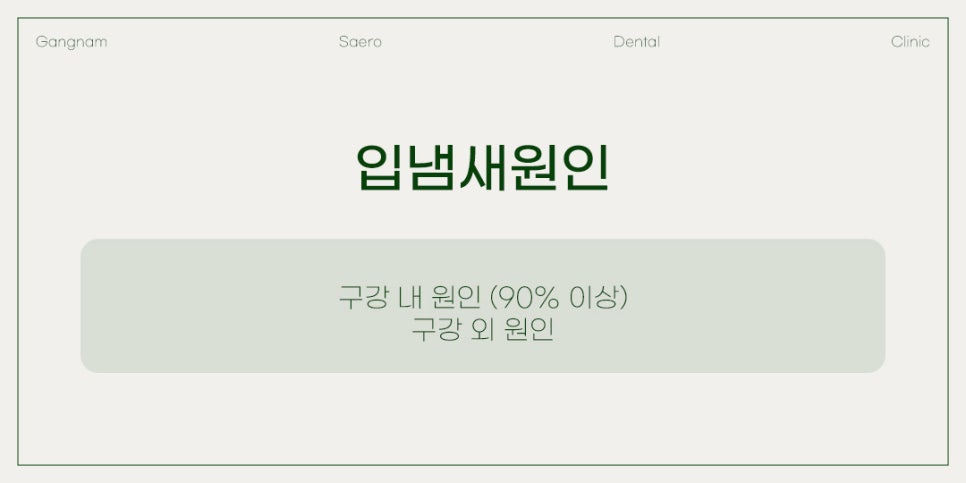
Bad breath has oral causes and non-oral causes.
More than 90% are oral causes,
and if the conditions are right for bacteria to thrive,
it can be said to be a condition that easily causes bad breath.
I’ll go through the main causes of bad breath one by one,
and explain them clearly.
When you do not brush properly
This is something we all know from childhood,
but if you do not brush properly,
it creates conditions in which bacteria can thrive,
becoming a cause of bad breath.
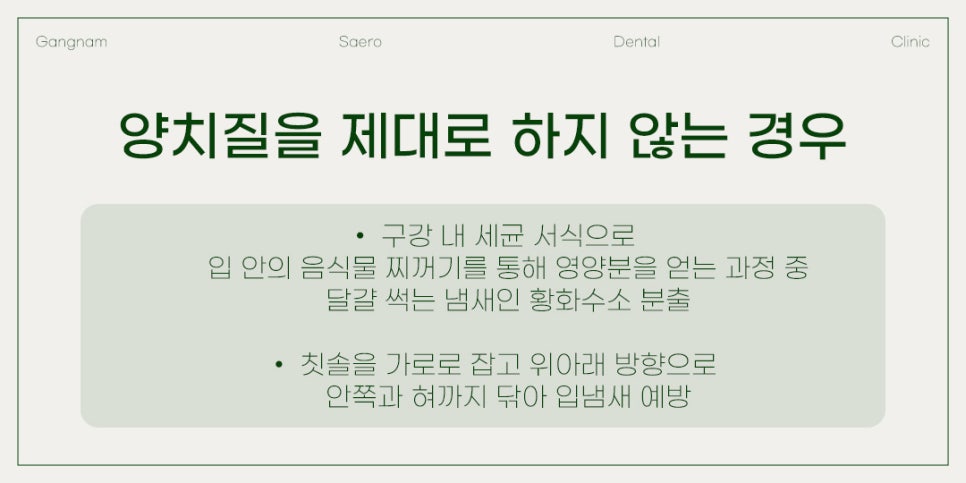
Bacteria live in the mouth
and get nutrients from food debris left inside the mouth.
What they release during this process is hydrogen sulfide,
and hydrogen sulfide is a compound that smells like rotten eggs.
With the correct brushing method, hold the toothbrush horizontally rather than vertically,
and brush the inside and your tongue
with gentle pressure in an up-and-down motion
to help prevent bad breath.
When you do not remove tongue coating
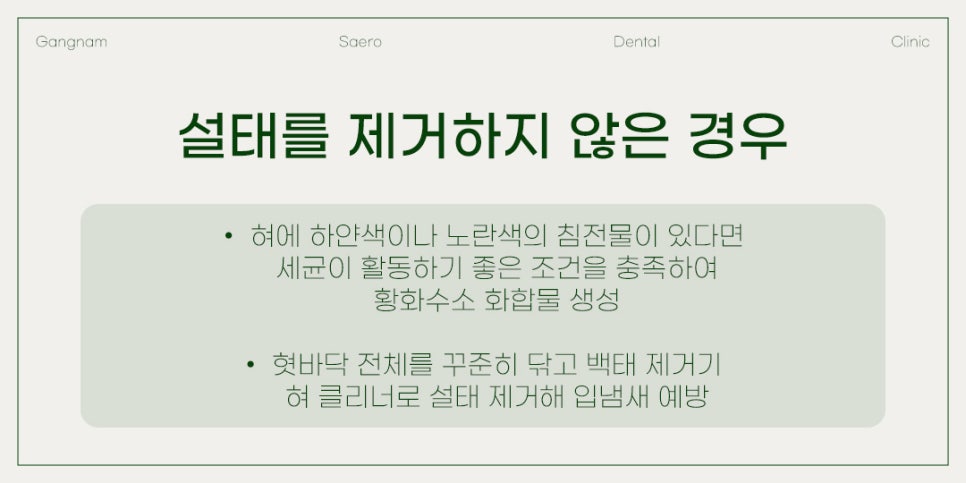
If there is a white or yellow deposit on the tongue,
this also creates conditions in which bacteria can thrive,
becoming a cause of bad breath.
White or yellow deposits formed by bacterial growth and buildup
on the tiny bumps of the tongue are called white coating, or tongue coating.
Even during the bacterial growth and buildup process,
hydrogen sulfide compounds are produced.
With the correct brushing method, steadily clean the entire surface of the tongue,
and remove it with a tongue cleaner, a white coating remover,
to help prevent bad breath.
When tonsil stones form
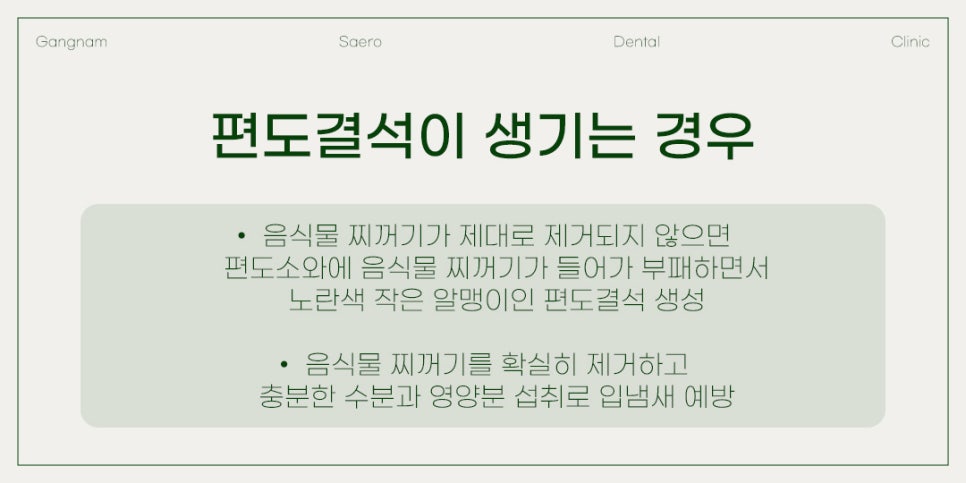
Tonsil stones coming out of the throat,
and the fact that tonsil stones form means
that food debris has not been properly removed,
creating conditions in which bacteria can thrive,
becoming a cause of bad breath.
Tonsil stones are small yellow pellets formed when food debris enters the tiny holes in the tonsils,
called tonsillar crypts, and decays,
causing bacteria to combine with saliva and clump together.
In daily life, use the correct brushing method
to thoroughly remove food debris,
take in enough water and nutrients,
and if tonsil stones have formed,
they can be removed with vinegar, salt water, cotton swabs, or coughing.
When periodontal disease is present
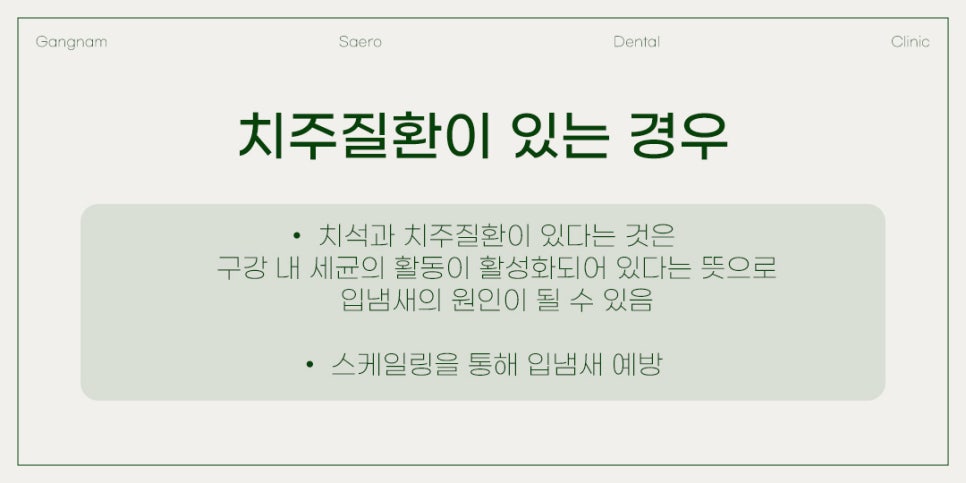
No matter how well you brush,
tartar that hardens on the teeth,
also creates conditions in which bacteria can thrive,
becoming a cause of bad breath.
Tartar forms from a bacterial film called plaque,
and not removing tartar means
that bacteria continue to be active in the mouth,
and it can also cause periodontal disease,
making it even harder to eliminate bacteria.
If left untreated for a long time,
problems such as loss of the jawbone supporting the gums and tooth loss may occur.
Tartar is difficult for individuals to remove on their own,
and you need to visit a dental clinic and have it removed by a dental hygienist
through scaling.
Scaling
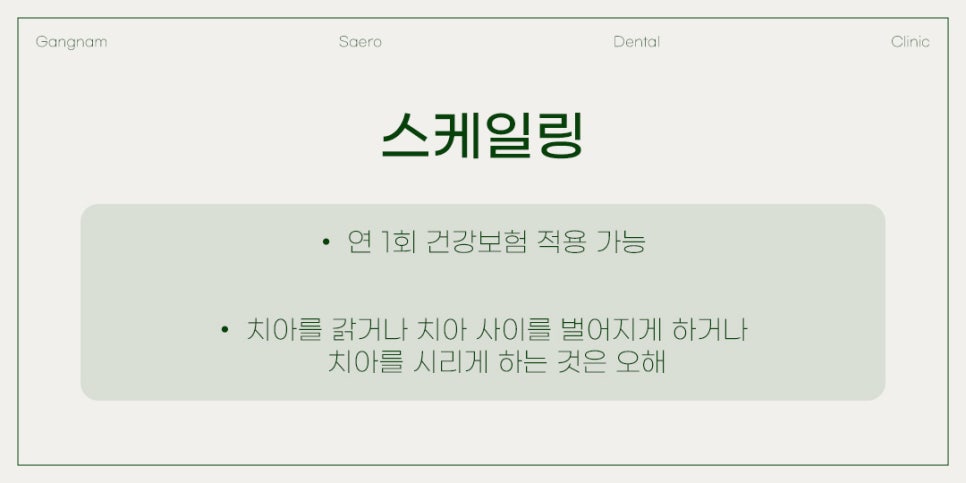
Scaling
is covered by national health insurance once a year
for those aged 19 and older
(among January 1 to December 31 of each year),
so the procedure can be received at a cost of around 10,000 won.
If you have never had scaling before,
it may be possible to remove the cause of bad breath through scaling,
and it can also help prevent periodontal disease.
Claims that scaling grinds down teeth,
creates gaps between teeth,
or makes teeth sensitive
are false,
so you do not need to worry.
When malocclusion is not corrected
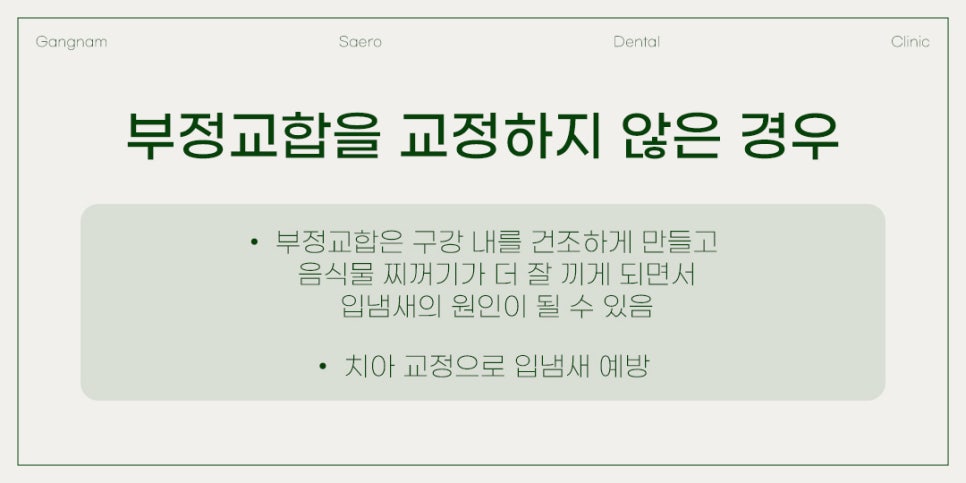
If the above does not apply
and you still cannot remove the cause of bad breath,
then if you have malocclusion,
you can suspect malocclusion as the cause.
Protruding mouth, underbite, and prognathism due to Class 1 to 3 malocclusion,
a deep bite where the mouth does not close properly, open bite, and so on
make the mouth dry
and allow food debris to get caught between the teeth more easily,
creating conditions that are favorable for bacteria.
Malocclusion is not only a cause of bad breath,
but also leads to various problems such as reduced chewing function, jaw joint pain, and breathing difficulties,
so it is best to receive orthodontic treatment.
Types of orthodontic treatment
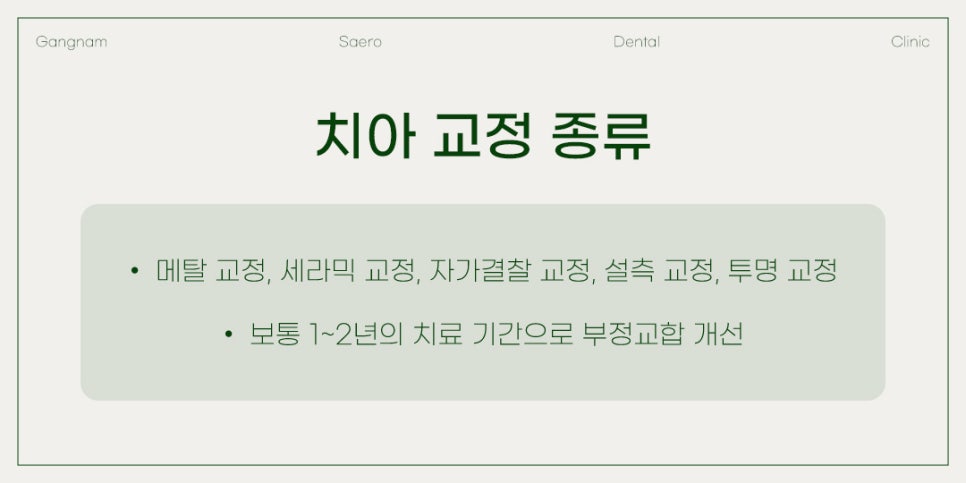
Orthodontic appliances include
regular bracket braces
(metal braces, ceramic braces, self-ligating braces),
lingual braces,
and clear aligners.
Usually, through a treatment period of 1 to 2 years,
malocclusion can be improved.
If you want strong force at a low cost,
you can choose regular bracket braces.
If you want aesthetics with a comfortable fit,
you can choose clear aligners.
Clear aligner systems include
Invisalign, Nanoliner,
MagicAlign, Serafin, and Ddiheim.
Clear aligners, like regular bracket braces,
can correct malocclusion,
and they are also effective for correcting crooked teeth,
so you do not need to worry about the effectiveness of clear aligners.
Dentist near Gangnam Station
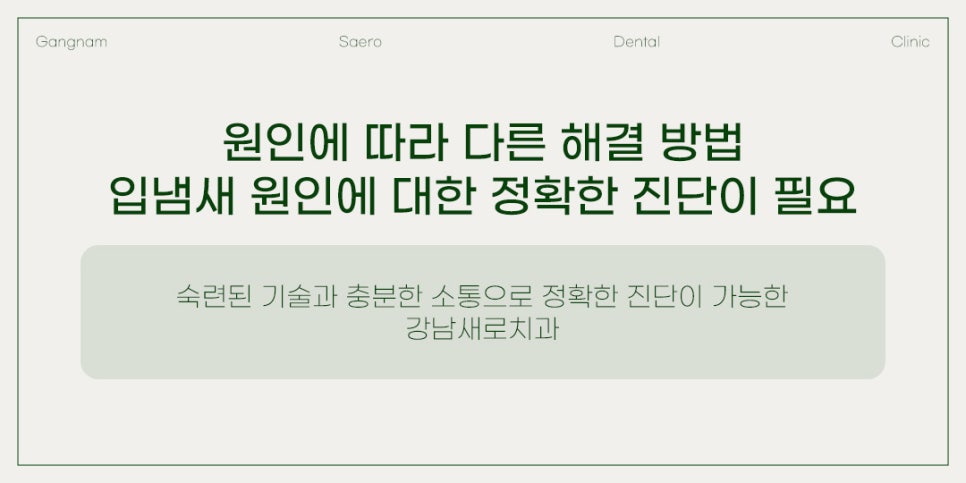
As you can see, depending on the cause,
the solution for bad breath is different.
Although more than 90% of cases are due to oral causes,
there are also non-oral causes.
That is why an accurate diagnosis of the cause is necessary.
With skilled techniques,
Gangnam Sero Dental Clinic, which can provide scaling, periodontal disease treatment, and orthodontic treatment,
listens 충분ly to the patient’s concerns
and makes an accurate diagnosis tailored to them.
Dentist near Gangnam Station
3-minute walk from Exit 11 of Gangnam Station
5-minute walk from Exit 6 of Sinnonhyeon Station
Evening care on Mondays/Thursdays/Fridays
Evening care on Tuesdays/Wednesdays
Saturday afternoon care
A new smile
A new beginning
This is Gangnam Sero Dental Clinic.