Can be shortened by up to 6 months
One-Step Implant for the MZ generation
Implants for people in their 20s and 30s
It is easy to think that people in their 20s and 30s would have little reason to get dental implants,
but unexpectedly, tooth loss can happen for a variety of reasons.
Poor oral care from an early age,
tooth damage from a sudden accident,
or stopping treatment after extraction during orthodontic treatment,
In cases like these, implants may become necessary.
However, many people hesitate to begin treatment because the treatment period takes more than 6 months.
But most people in their 20s and 30s with healthy jawbone conditions are highly likely to be candidates for
'the One-Step Implant,' which can finish treatment much faster than before,
so be sure to keep this in mind!
Problems that occur if you leave it after extraction
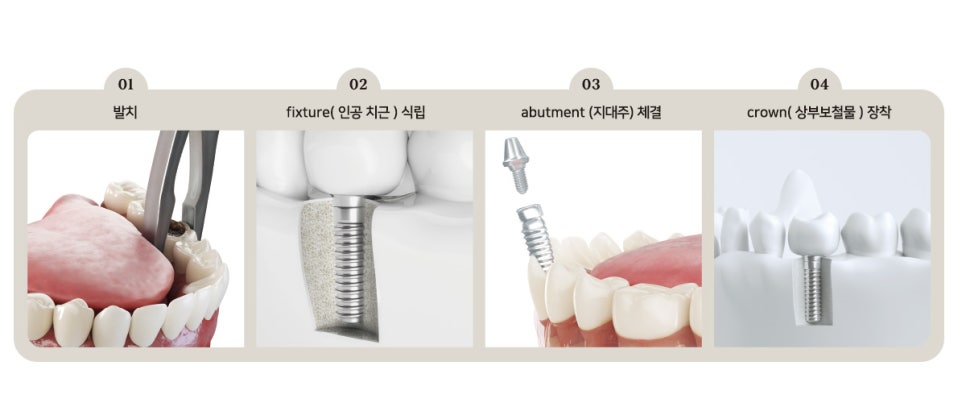
If a natural tooth is extracted and left untreated,
over time, the following
various problems can arise.
-
Changes in facial shape may occur
-
Reduced chewing force
-
Nearby teeth or opposing teeth move
-
The jawbone gradually resorbs
-
Becomes more vulnerable to gum disease
-
If it is the upper jaw, the maxillary sinus may sink
Especially within 3 to 6 months after a natural tooth is extracted,
the jawbone or gums begin to shrink,
so if you pass this period,
the One-Step Implant may no longer be possible.
Difference between the One-Step Implant and conventional implants
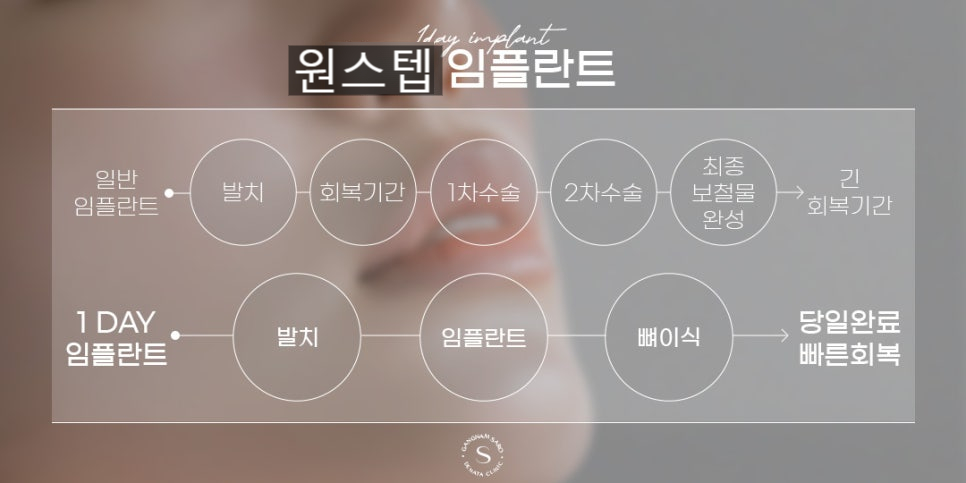
Conventional implants are
Extraction →
Implant placement after 3–4 months (1st surgery) →
Abutment connection after a few months (2nd surgery) →
Prosthetic restoration
This takes at least about 6 months.
But with the One-Step Implant,
because the implant is placed immediately in the extracted site,
the first and second surgical steps can be reduced,
which ultimately shortens the treatment period.
If you are in your 20s or 30s and your gum condition is good,
this method is certainly worth considering,
and it must be performed by experienced medical staff
to achieve a One-Step Implant result without regret.
Combined with orthodontic treatment
One reason some people hesitate to get an implant
is because of orthodontic treatment,
and there are probably quite a few people who are currently undergoing or planning treatment,
given how many different types of orthodontic appliances there are
and how many rapid orthodontic systems exist.
If you have already finished orthodontic treatment,
it is better to wait a little until the jawbone where the teeth moved has stabilized.
But if you need an implant before orthodontic treatment,
even though the conditions are unfavorable, it is not impossible,
so it is best to decide after consulting an experienced medical professional.
If possible, orthodontic treatment first,
and then the implant is the ideal choice.
Whether implants can be used for life
One reason people hesitate to get implants
may be the thought,
"If I get it now, won't it break down too early?"
Usually, implant lifespan is known to be around 10 to 30 years,
but there are cases of early implants being used for more than 40 years,
and in Korea, since it has only been commercialized for about 20 years,
the data is simply insufficient,
so with proper care, it can be used for life.
Maintaining good oral hygiene in daily life
and receiving regular checkups carefully are, of course, important.
A dental clinic for people in their 20s and 30s
If you need treatment
but keep putting it off because you do not have time,
or if there is no clinic nearby that can perform a One-Step Implant,
'Gangnam Saero Dental Clinic'
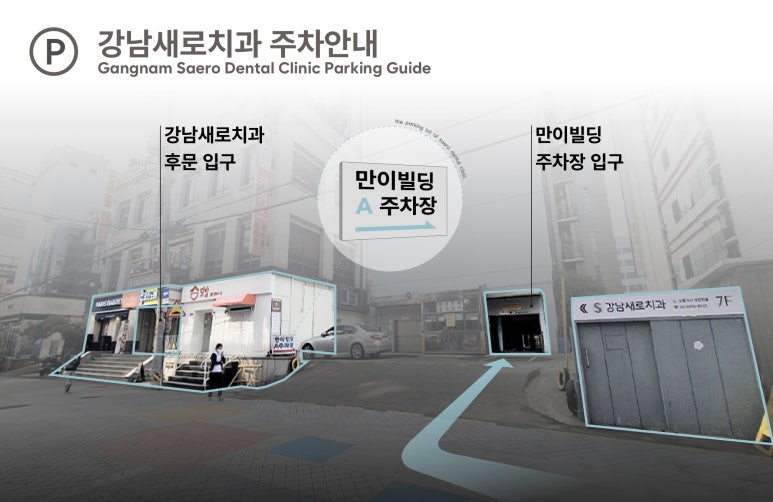
is located in a center frequented by college students and office workers, so it is easily accessible,
and since evening treatment is available,
it can be a good option for people in their 20s and 30s who do not have much time.
Recover quickly with a One-Step Implant,
regain confidence with a new tooth,
Implants for people in their 20s
Implants for people in their 30s
One-Step Implant
all can be consulted at Gangnam Saero Dental Clinic, so please do not put it off anymore!
- This post is an article provided by a medical institution due to a contractual relationship with a third party, including medical information.