Maximum efficiency with minimal implant placement
Full implants for the older generation
Implants for people in their 60s and 70s
Tooth loss in older adults is very common.
Among the natural changes that occur with age are
tooth wear, jawbone recession, gum disease, and
systemic health issues such as diabetes and osteoporosis.
For these reasons, many people consider implants,
but they often delay making a decision because of
whether treatment is possible and the overall burden involved.
However, recently, a variety of safer and more efficient implant treatment methods
for the older generation have been proposed,
and as a result, the treatment burden has been eased considerably.
In this article, we will walk through the key factors of
full-arch implant treatment for people in their 70s and those 65 and older,
as well as the methods that can be applied.
The need for sinus lift surgery
As time passes after tooth loss,
the maxillary sinus may descend.
This can change the shape of the face,
and more importantly, it leaves insufficient space for implant placement.
If the maxillary sinus has descended too far,
placing an implant may encroach on the sinus,
increasing the risk of complications such as inflammation.
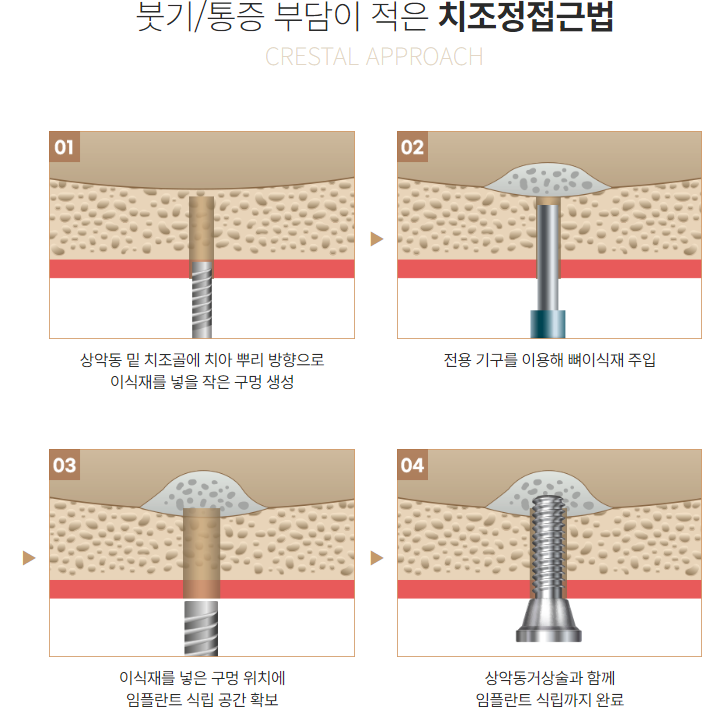
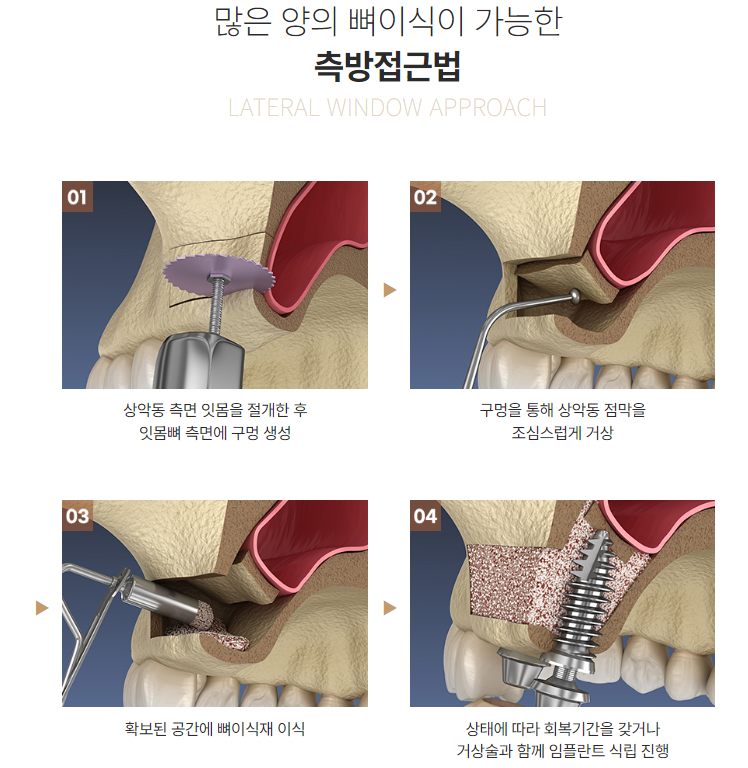
In this case, sinus lift surgery must be performed first.
This procedure is divided into two methods depending on
the thickness of the remaining jawbone.
If the bone is 3 mm or more → crestal approach
If the bone is 2 mm or less → lateral approach
Using enough bone graft material,
the conditions for implant placement are first created,
and then the implant is placed.
The use of PRF implants
Chronic conditions such as high blood pressure, diabetes, and osteoporosis
are common in people in their 50s, 60s, and 70s.
These conditions reduce wound healing and resistance to infection,
which can ultimately make the implant procedure itself more difficult.
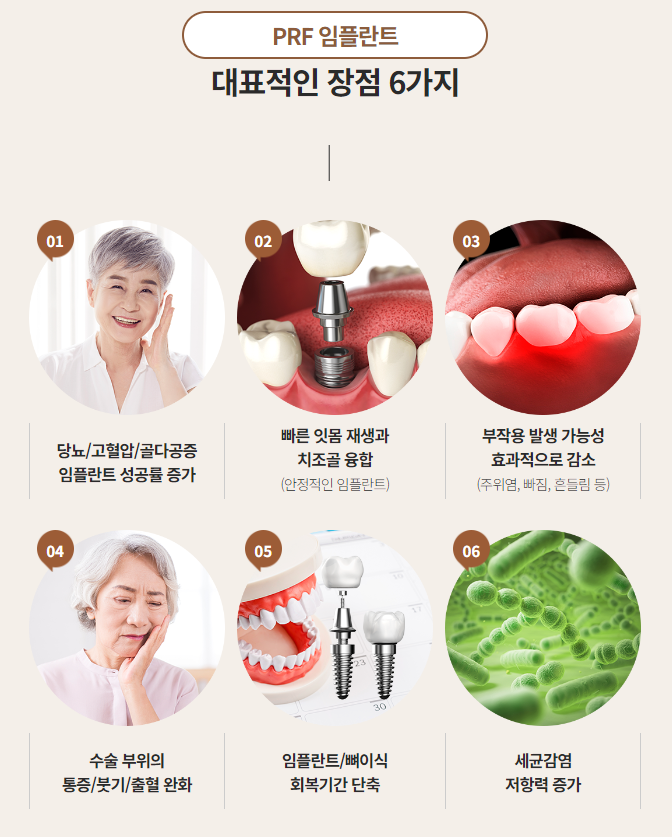
One method that can be applied in such cases is PRF implants.
This method uses platelet-rich fibrin (PRF),
in which platelets and white blood cells are separated and concentrated from the patient’s own blood,
to help regenerate the alveolar bone and gum tissue.
It is a way to create a more stable implant environment
for older adults and patients with chronic conditions,
and it is also an important means of increasing treatment possibilities
for implants in people in their 60s and 70s.
Full implants with minimal placement and maximum efficiency
In the older generation, there are many cases where
very few teeth remain, or there are no teeth at all.
In such cases, the options are
full implants, implant-supported dentures, or conventional dentures.
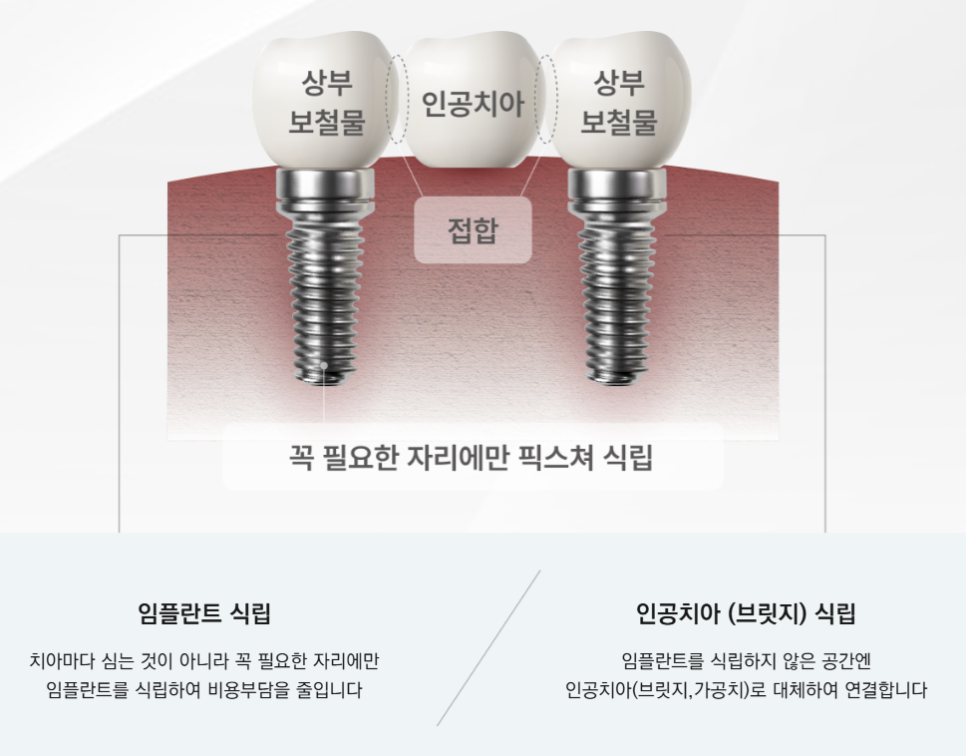
However, replacing every tooth with an implant can be burdensome not only financially but also physically.
Therefore, a bridge-type full-arch implant, in which only a minimal number of implants are placed
and multiple prosthetic teeth are connected around them, becomes an alternative.
This offers better function and retention than simple fixed dentures,
and it can reduce unnecessary procedures.
However, this process requires an accurate diagnosis
and the planning ability of an experienced medical team.
National health insurance coverage for implants for those 65 and older

If you are 65 or older
and are a national health insurance subscriber or dependent,
you may receive health insurance benefits when getting implant treatment.
If you are not fully edentulous,
up to two implants per person for life
can be treated with only a 30% out-of-pocket payment,
which can greatly reduce the financial burden,
with the cost per implant at around 360,000 to 420,000 KRW.
A clinic for implants for people 65 and older
A full implant is not simply a procedure that replaces teeth.
It is an important treatment that restores quality of life,
helps with eating and speech,
and even affects psychological stability.
If you are having difficulty making a decision,
it is important to choose a clinic
with extensive treatment experience
and a system specialized for older adults.
Gangnam Saero Dental Clinic
provides reliable results based on
a system and experience specialized in
full implants and treatment for older adults.
For consultations regarding implants for those 65 and older,
implants for people in their 70s, and full implants,
please contact Gangnam Saero Dental Clinic.
- This post is an article presented by a medical institution due to a contractual relationship with a third party, including medical information.