Criteria for deciding whether extraction is needed during orthodontic treatment
Extraction orthodontics vs. non-extraction orthodontics: criteria
Extraction orthodontics, non-extraction orthodontics
Orthodontic treatment is more than simply aligning the teeth.
It is a treatment that must also take into account the structure of the jaws and the balance of the entire face.
That is why, when planning orthodontic treatment,
whether or not to extract teeth becomes an important decision criterion,
and the treatment direction and outcome can change significantly depending on whether extraction is performed.
If you try to force non-extraction orthodontic treatment simply because you want to avoid extraction,
or if you undergo orthodontic treatment with unnecessary extractions,
the expected results may be difficult to achieve.
For extraction orthodontics and non-extraction orthodontics,
let’s look at what criteria apply in each case
and how the treatment is carried out.
Why extraction orthodontics is needed
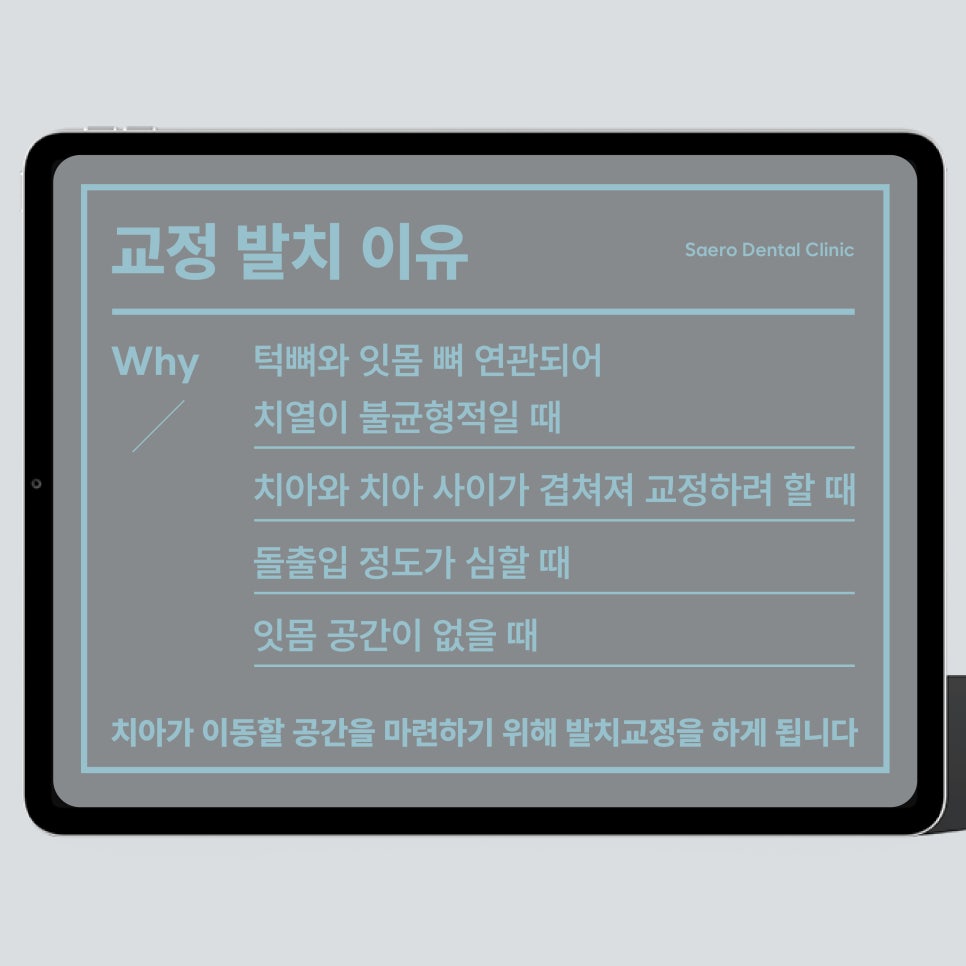
The representative cases in which extraction is considered in orthodontic treatment are
two types.
When there is not enough space for the teeth to be aligned
When protruding front teeth need to be moved backward
If the alignment is uneven or crowded teeth have developed,
it means there was not enough space for the teeth to grow.
And when the front teeth are protruded,
it is often because the upper and lower jaws are narrow relative to the size of the teeth.
In such situations,
small premolars are extracted
to secure space and properly align the teeth.
However, the decision on whether to extract should be made
after a comprehensive diagnosis of the relationship between the teeth and jawbone,
the difference between tooth size and arch width,
the distance the teeth can be moved,
and harmony with the facial shape,
and if this process is fully carried out,
the side effects of extraction orthodontics can also be greatly reduced.
Teeth commonly extracted
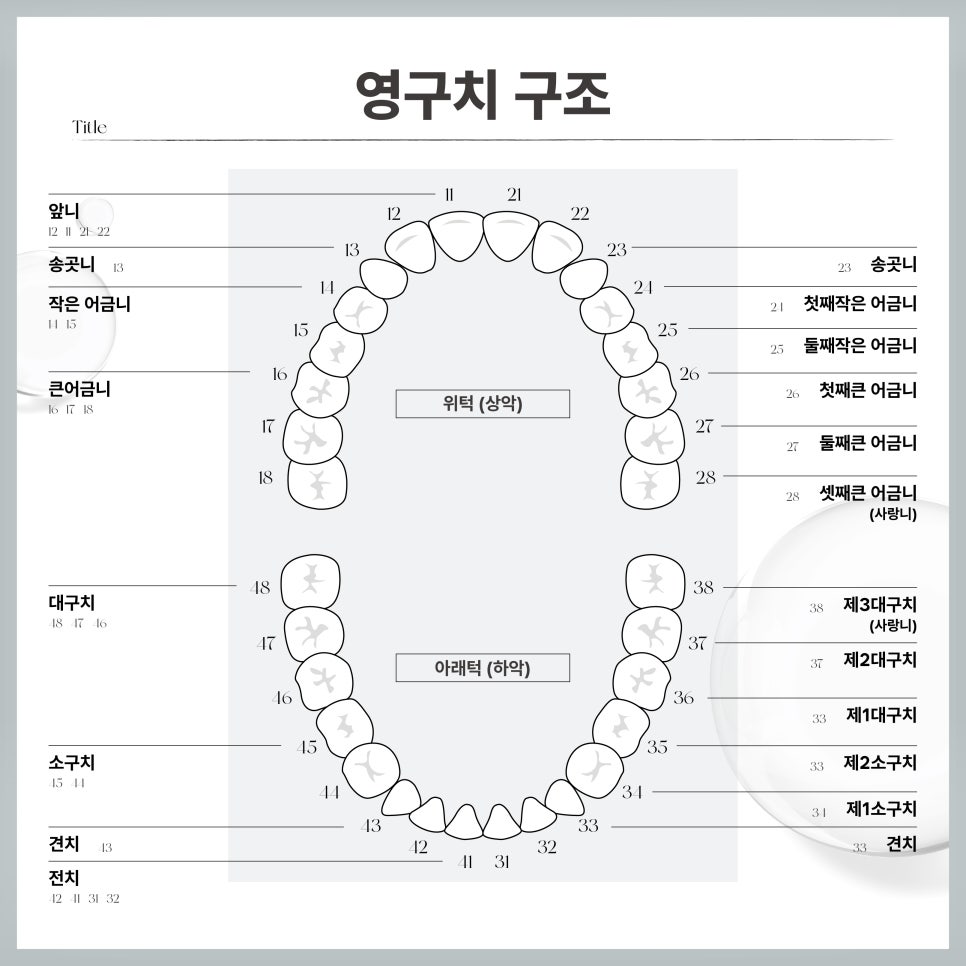
Usually, when extraction is necessary during orthodontic treatment,
the standard is the four first premolars in the upper, lower, left, and right sides.
The reason is simple.
The front teeth are important aesthetically,
the canines play a central role in occlusion,
and the molars are essential for chewing function.
However, if there are already problematic teeth,
those teeth are prioritized for extraction.
Also, if wisdom teeth are present,
space may be secured by extracting only the wisdom teeth,
so this may be considered first.
Non-extraction orthodontics through arch expansion
A representative case in which non-extraction orthodontics is possible is
when arch expansion is possible.
The arch refers to the curved shape of the bone where the teeth are positioned,
and this method secures space for tooth alignment
by widening the arch.
There are two main methods:
Dental expansion, which adjusts tooth angulation
Skeletal expansion, which widens the bone itself
In growing patients, expansion devices are used,
and in adults, mini screws are used
to widen the basal bone.
Non-extraction orthodontics using interproximal reduction

Another case in which non-extraction orthodontics is possible is
when the space between teeth can be adjusted.
Interproximal reduction refers to
creating room for alignment by finely reshaping the enamel by about 0.25 mm
to secure space between teeth.
When the space shortage is not severe
and the teeth themselves are large,
or when the arch is somewhat narrow,
orthodontic treatment may be possible through this method.
Non-extraction orthodontics using posterior retraction
The final condition under which non-extraction orthodontics is possible is
when posterior retraction can be performed.
In cases where the front teeth are excessively protruded, such as with protrusive mouth shape,
a method using mini screws
is applied to move the teeth backward.
Representative approaches include
a two-stage method in which the canines are pulled first and then the front teeth are moved back,
a one-stage method in which the six front teeth are moved backward at once.
This method has the advantage of improving the lip profile
without securing extra space.
Extraction orthodontics, non-extraction orthodontics
Whether it is extraction orthodontics or non-extraction orthodontics,
all treatment should not be a simple choice,
but should be determined according to precise diagnosis and planning.
Forced extraction orthodontics can ultimately
cause problems such as facial asymmetry or reduced tooth function,
and on the other hand, forced non-extraction orthodontics
may not produce sufficient orthodontic effects
or may increase the risk of relapse.
After accurately identifying
the ratio of teeth to bone, the shape of the face,
the possible distance and direction of movement,
it is necessary to choose the most appropriate treatment direction,
and this design ultimately depends on the expertise of the medical team.
Non-extraction-centered orthodontics is by no means a simple choice.
To avoid unnecessary extraction while
creating effective results,
deep understanding and experience in treatment planning are required.
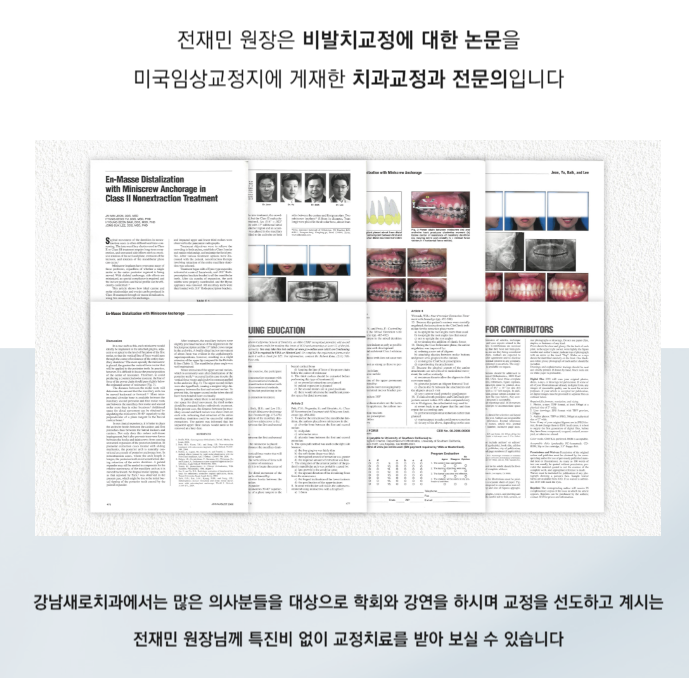
Please receive a direct consultation at Gangnam Saero Dental Clinic for the treatment by Director Jeon Jae-min,
who has published a paper on non-extraction orthodontics in a U.S. academic journal.
A new smile
A new beginning
This is Gangnam Saero Dental Clinic.
- This post is an article provided by a medical institution due to a third-party contractual relationship.