Dental care by age group
A collection of alternative dental treatments
Implant dentures summary
Even if your appearance stays younger than before,
aging shows up throughout our bodies.
In particular, gum aging is not just a cosmetic issue
but can lead to tooth loss,
which is closely related not only to eating habits but also to dementia prevention.
As we get older, teeth and gums
cannot avoid recession and weakening,
but they can be kept healthy through consistent care.
Today, along with dental care methods by age group,
I’ll summarize treatments that replace missing teeth
(implants, bridges, and dentures).
When does tooth aging begin?
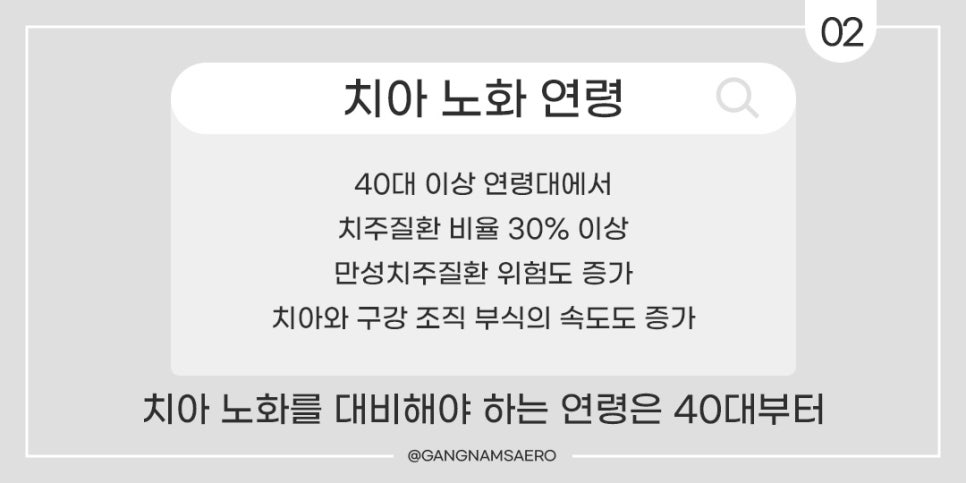
According to statistics, among people in their 40s and older,
the rate of periodontal disease exceeds 30%.
From this stage onward, the risk of chronic periodontal disease rises,
and the rate of wear and deterioration in teeth and oral tissues also accelerates.
Therefore, from your 40s onward, regular checkups and proper care are essential.
How to care for your teeth in your 40s
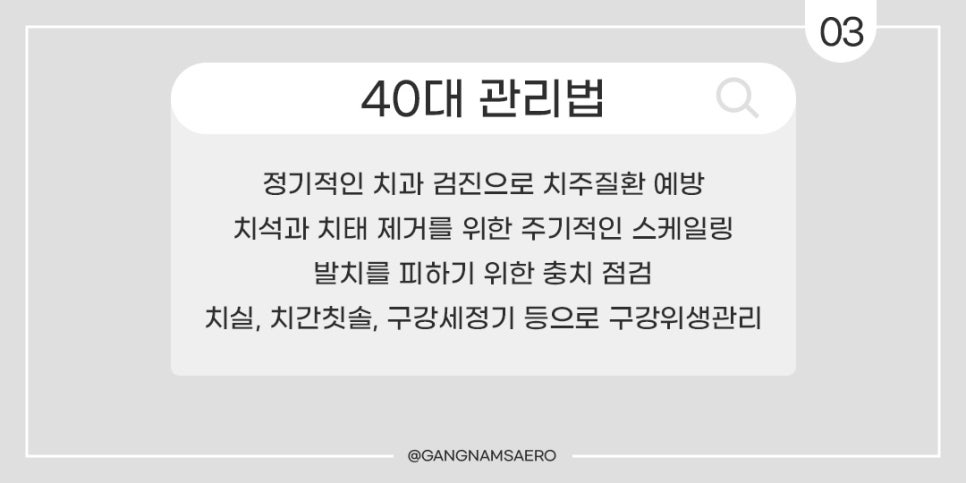
In your 40s, tooth loss is still not very common,
but preventive care is an important time.
Regular scaling to remove tartar and plaque
Prevent tooth extraction through early cavity checks
Use floss, interdental brushes, and oral irrigators in addition to brushing
At this stage, the key is to focus on preventive care
so that implants are not needed.
How to care for your teeth in your 50s and 60s
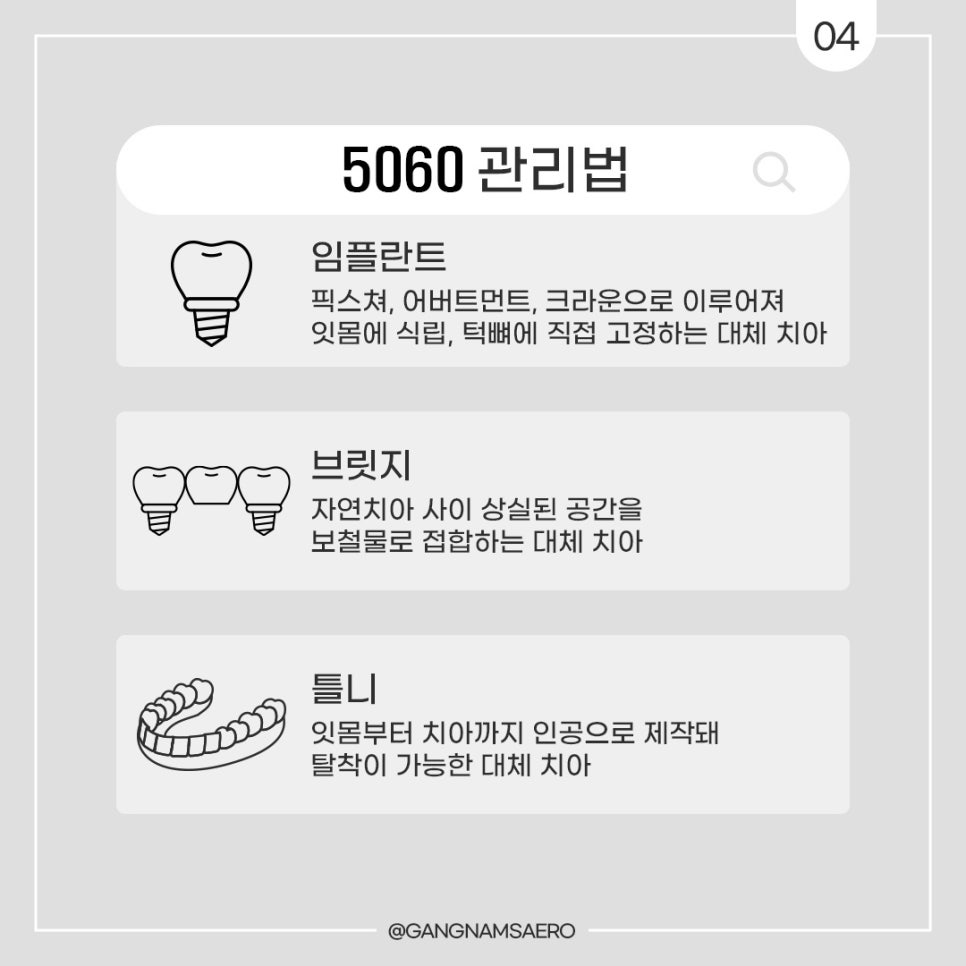
In your 50s and 60s, gum recession and bone loss in the gums
begin in earnest.
At this point, implants may be recommended,
and depending on the situation, bridges or dentures are also considered.
Implant
Composed of a fixture (artificial root), abutment, and crown
Fixed directly to the jawbone and functions like a natural tooth
Bridge
Replaces the missing tooth space with a prosthetic by connecting to the teeth on both sides
Dentures
Artificially made from the gums to the teeth and removable
A customized treatment should be chosen by considering the condition of the natural teeth, the health of the jawbone, and cost.
How to care for your teeth in your 70s
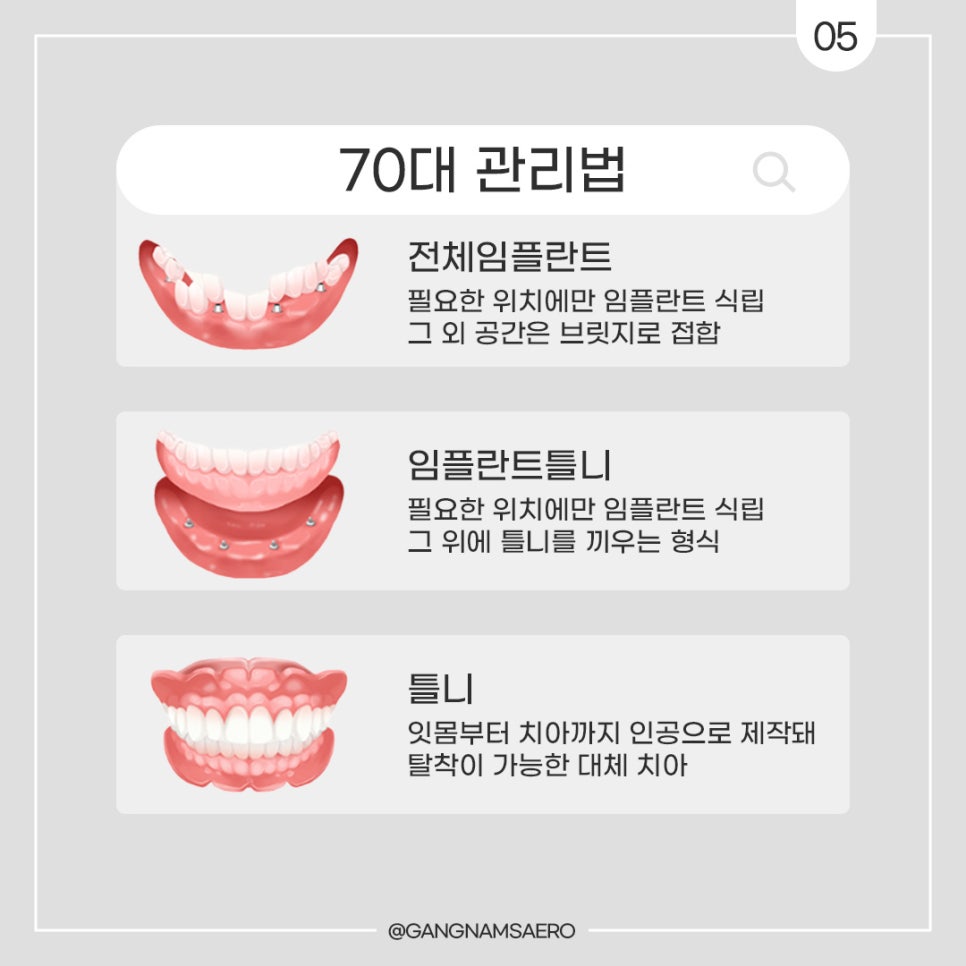
In your 70s, the number of missing teeth increases,
so more active replacement treatment is needed.
Full-arch implants
Rebuild the entire set of teeth by placing implants where needed
Provide fixed and functional results most similar to natural teeth
Implant dentures
A method of attaching removable dentures onto implant fixtures
Improves denture stability and reduces burden
Dentures
Artificially made gums and teeth that are removable
Chosen when implants are not possible because gum and bone conditions are poor
If the condition of the jawbone allows, full-arch implants are the most stable option, but depending on the situation, dentures or implant dentures can be chosen.
The relationship between dental care and overall health
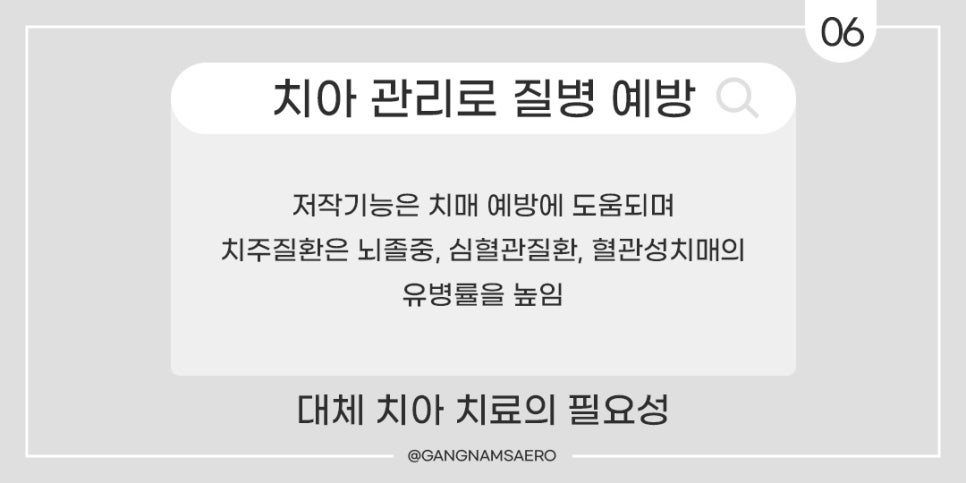
Dental health goes beyond simply chewing function
and is directly linked to overall health.
Dementia prevention: Chewing function continuously stimulates brain cells and slows cognitive decline.
Reduced disease risk: If you have periodontal disease,
stroke risk increases 2.8 times
cardiovascular disease risk increases 2.2 times
vascular dementia risk increases 1.7 times
It is important not to leave missing teeth untreated, but to receive replacement treatments such as implants, bridges, or dentures.
Key summary of care by age group
40s: Focus on preventive care / regular checkups, scaling, cavity management
50s to 60s: Gum recession begins in earnest / Consider implants, bridges, and dentures
70s and older: Many missing teeth / Choose full-arch implants, implant dentures, or dentures
Health insurance coverage
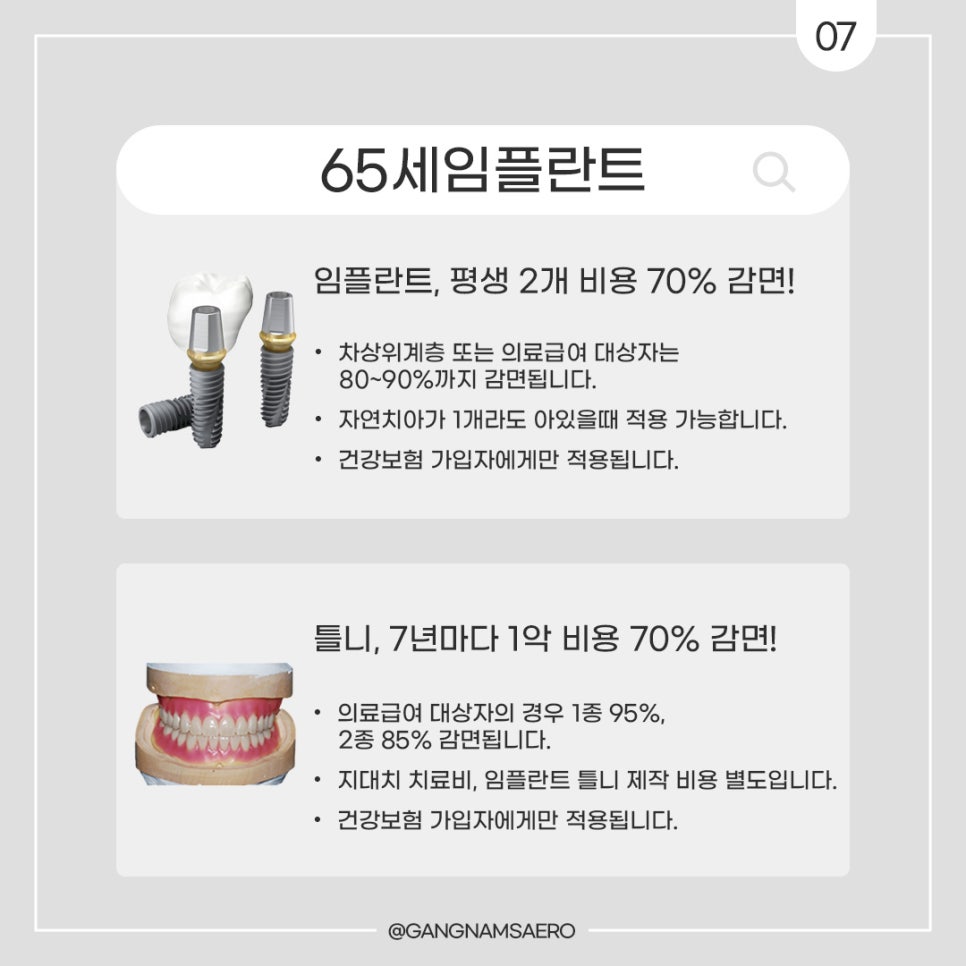
If you are 65 or older,
health insurance coverage may apply to implants and dentures.
Therefore, do not leave tooth loss untreated,
and we recommend receiving active treatment
so that prevention of systemic diseases such as dementia and cerebrovascular and cardiovascular disease
can continue as well.
Gangnam Saero Dental Clinic, based on extensive experience with full-arch implant treatment,
specializes in a variety of cases such as
full-arch implants
implant dentures
implant reoperation
In addition, it is located a 5-minute walk from the station,
so accessibility is good,
and consultations about health insurance coverage for those 65 and older are also available.
A dental clinic known for implants in your 40s
A dental clinic known for implants in your 50s
A dental clinic known for implants in your 60s
A dental clinic known for full-arch implants in your 70s
Check out the best treatment method for your age and condition at Gangnam Saero Dental Clinic.
A new start, a new smile
- This post is a medical information post presented by a medical institution due to a third-party contractual relationship.