Hypertension and Implants
Causes and Symptoms of Hypertension
Hypertension Implant PRF Implant
Once you start to enter your 60s,
as many as 50.6% of men and 45.5% of women experience hypertension,
so hypertension is one of the common diseases in older age.
These days, even among people in their 30s, 17.3% of men and 2% of women
have hypertension,
so it is not a disease that is safe for younger age groups either.
Because hypertension makes blood circulation difficult,
special care is needed during implant surgery.
What is hypertension?
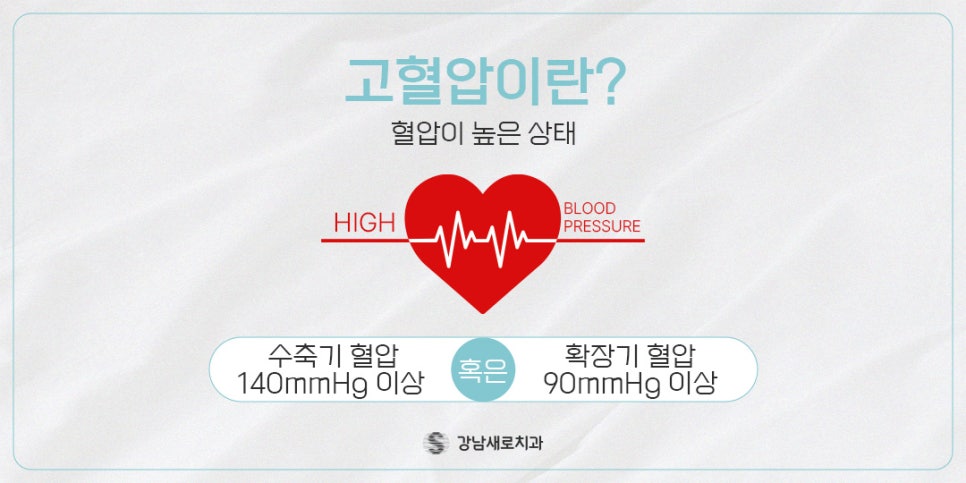
Hypertension is more than simply having a high blood pressure reading;
it refers to a condition in which blood vessels are continuously under high pressure,
placing a burden on the entire body.
Hypertension is diagnosed when systolic blood pressure is 140 mmHg or higher,
or when diastolic blood pressure is 90 mmHg or higher.
As of 2021, among adults aged 19 and older,
the prevalence of hypertension was
25.2% for men and 17.1% for women,
showing a considerably high rate.
In particular, among people aged 60 and older,
50.6% of men and 45.5% of women
experience hypertension, making it a common condition,
and in recent years it has also been steadily increasing among people in their 30s.
Causes of hypertension
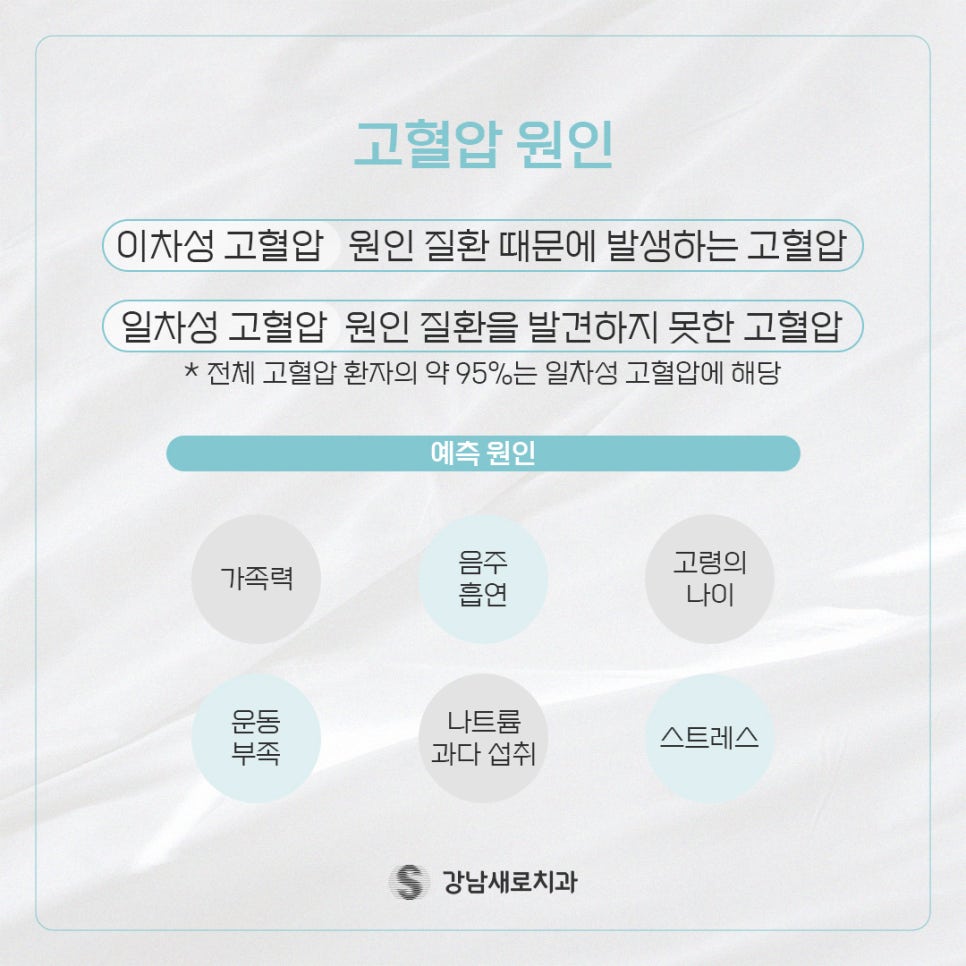
Hypertension is broadly divided into secondary hypertension (when there is a clear underlying disease)
and primary hypertension (when it is difficult to identify a specific cause).
Secondary hypertension
accounts for about 5% of all patients,
and the remaining 95% are primary hypertension,
which is characterized by the difficulty of finding a clear cause.
The main predictable causes are as follows:
Family history and genetic factors
Hormonal changes after menopause
Excessive drinking and smoking
Lack of exercise and older age
Excess sodium intake
Chronic stress
Metabolic abnormalities such as obesity and hyperlipidemia
In other words, hypertension can be seen as occurring through a complex interaction of lifestyle habits and overall health.
Symptoms of hypertension

Hypertension is nicknamed the “silent killer” because
it has very few obvious symptoms.
For that reason, early detection is difficult, and it often leads to complications.
Symptoms that may occasionally appear include
headaches, dizziness, and fatigue
nosebleeds or blood in the urine
reduced vision
However, even these can be easily confused with other diseases,
so regular blood pressure measurement is more important than anything else.
If treatment is delayed, blood vessel damage worsens
and can lead to cardiovascular and cerebrovascular diseases such as myocardial infarction, stroke, angina, and heart failure.
Conversely, hypertension can also develop due to existing conditions such as stroke, hyperlipidemia, and diabetes.

How hypertension affects implants

Implants
are surgeries that require gum incision and suturing, as well as the osseointegration process between bone and the artificial root.
Therefore, when blood vessel health is poor or
blood pressure control is unstable,
it may be difficult to stop bleeding, causing bleeding to last longer,
and recovery may also be slower.
Because blood pressure fluctuations on the day of surgery are directly related to patient safety,
thorough preoperative testing and strict blood pressure management are essential.
In particular, the medical team must be fully informed about medication use, lifestyle habits, and even the patient’s preoperative stress level in order to ensure a safe surgery.
Hypertension implant PRF implant
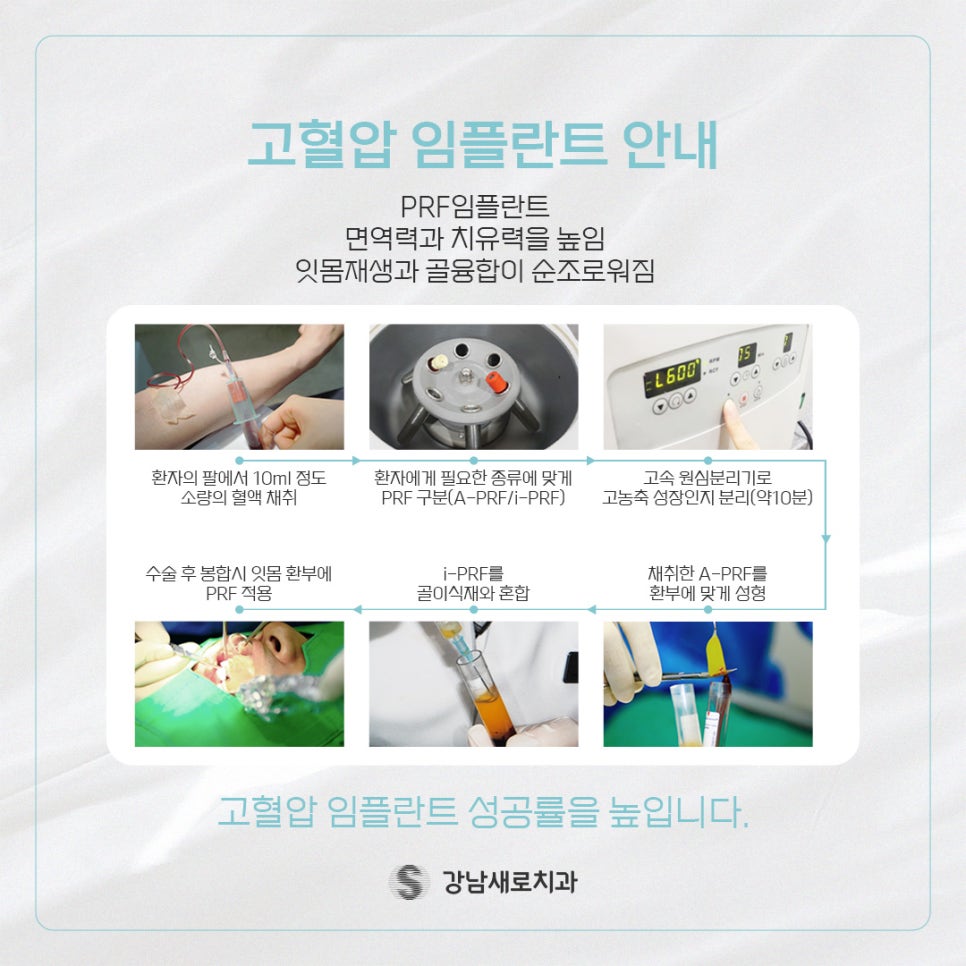
One of the methods recommended for patients with hypertension is
PRF implants.
PRF (Platelet Rich Fibrin) is a method in which,
from the patient’s own blood,
white blood cells and platelets are separated,
growth factors are concentrated,
and then applied to the surgical site.
Promotes regeneration of the gums and jawbone
Sustained healing effect through protein components
Enhances immunity and provides anti-infective effects
Shortens recovery time
Thanks to these advantages, patients with hypertension can also increase the success rate of hypertension implants.
Precautions for implant patients with hypertension

For a safe implant surgery,
patients themselves also need to manage their lifestyle.
Stop taking aspirin for a certain period of time
Maintain regular exercise and healthy eating habits
Quit smoking and drinking
Be sure to check blood pressure and pulse before and after surgery
Relieve tension to prevent a sudden rise in blood pressure
Be sure to discuss medication use with the medical team
Following these basic rules is necessary for smooth recovery after surgery and to reduce the risk of complications.
Implant clinic for patients with hypertension
Implants for patients with hypertension are
not simply a procedure to place teeth,
but a highly specialized surgery that also takes overall health into account.
Therefore, it is important to choose a clinic with medical staff who have experience with a wide range of cases
and systematic expertise.
Gangnam Saro Dental Clinic has extensive experience with implants for patients with systemic diseases such as diabetes and osteoporosis,
as well as hypertension.
Based on many years of clinical experience,
it develops customized surgical plans tailored to each patient’s situation
and provides stable results by minimizing the risk of complications.
Hypertension is a common condition that can happen to anyone,
but if not managed, it can lead to serious complications.
Especially when preparing for surgery such as implants,
blood pressure control and attentive care from specialized medical staff are essential.
PRF implants and other advanced treatments
open up new possibilities even for patients with hypertension,
helping them expect safe and faster recovery.
The path to regaining a healthy smile starts not just with placing teeth, but with managing overall health together. Meeting a trustworthy dental clinic will be the safest choice.
A new smile
A new beginning
- This post is a medical information article presented by a medical institution due to a third-party contractual relationship.