When your teeth suddenly feel sensitive
Reasons for tooth sensitivity
Accurate causes and proper solutions
When your teeth tingle painfully even after a sip of cold water,
we instinctively think, 'Is it a cavity?'
But not all tooth sensitivity is caused by cavities.
The reasons for tooth sensitivity vary,
and if treatment is received without identifying the cause accurately,
it can lead to unnecessary procedures instead.
Today, we will organize the reasons teeth become sensitive,
as well as solutions for each cause.
Reasons for tooth sensitivity: Problems with the teeth
If sudden tooth sensitivity appears,
the first thing to check is the condition of the teeth themselves.
Typical causes of tooth sensitivity include the following.
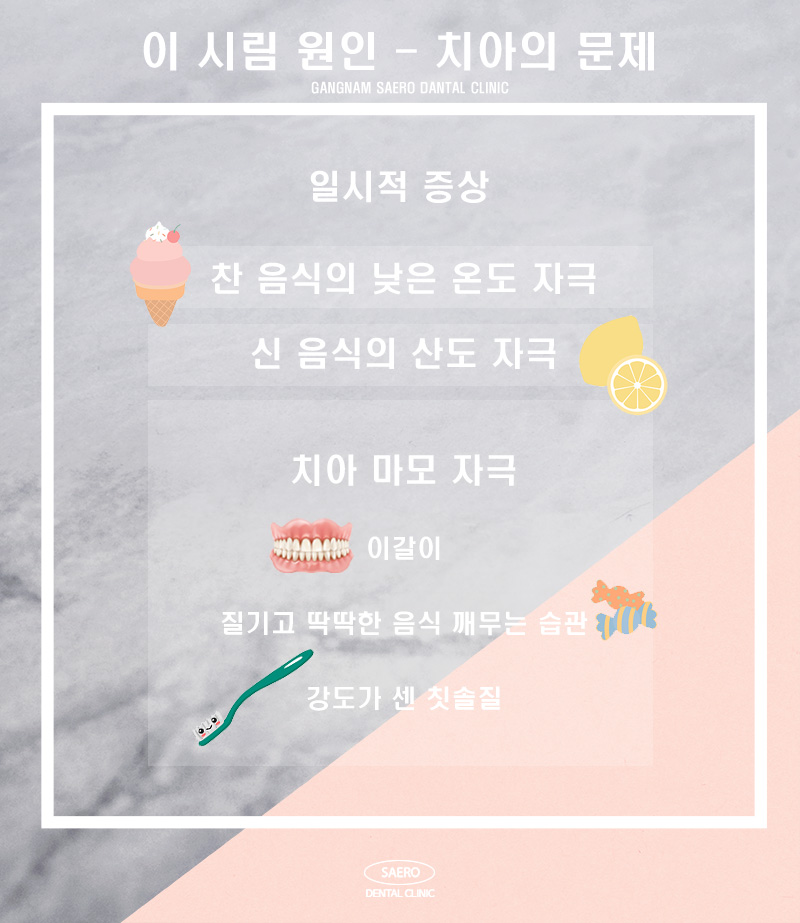
- Eating irritating foods
Cold water, ice, and sour fruit juice
are foods with strong temperature or acidity,
and they can directly stimulate the nerves inside the teeth,
causing temporary tooth sensitivity.
- Everyday habits
Teeth grinding, eating hard foods, and brushing too aggressively
wear down the tooth surface and cause sensitivity.
In particular, when enamel becomes thinner due to tooth wear,
external stimulation is transmitted directly to the nerves,
and the sensitivity can become more severe.
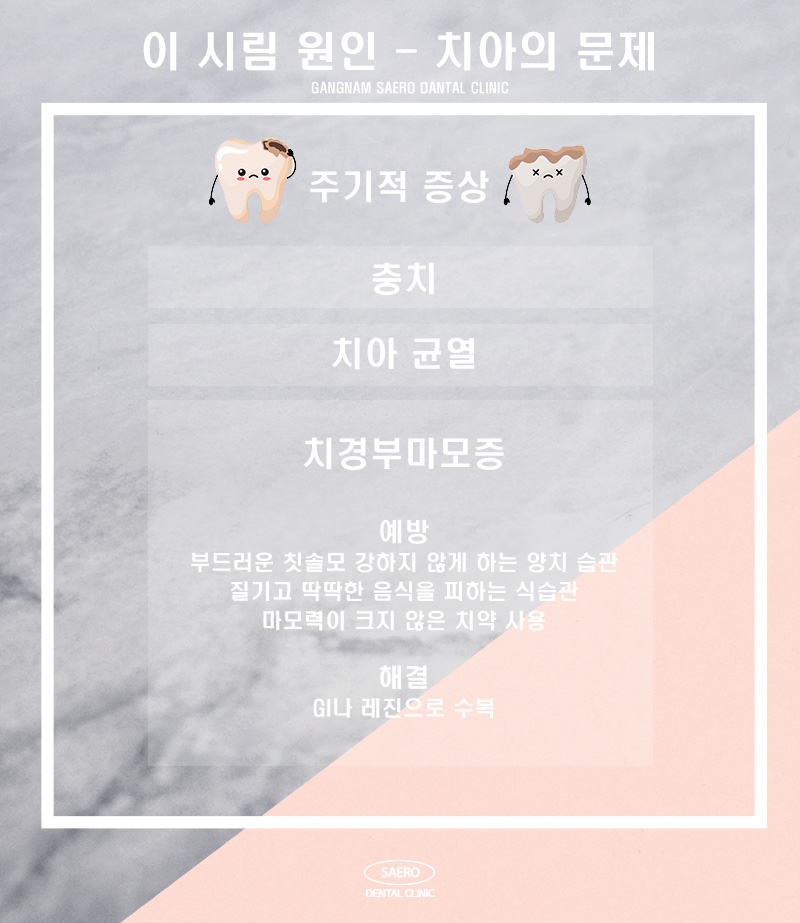
- Damage to the teeth
Cavities, cervical abrasion, and tooth cracks
are among the causes of tooth sensitivity that require treatment.
In these cases, as the tooth and nerve become closer,
the tooth reacts more sensitively to temperature or stimulation.
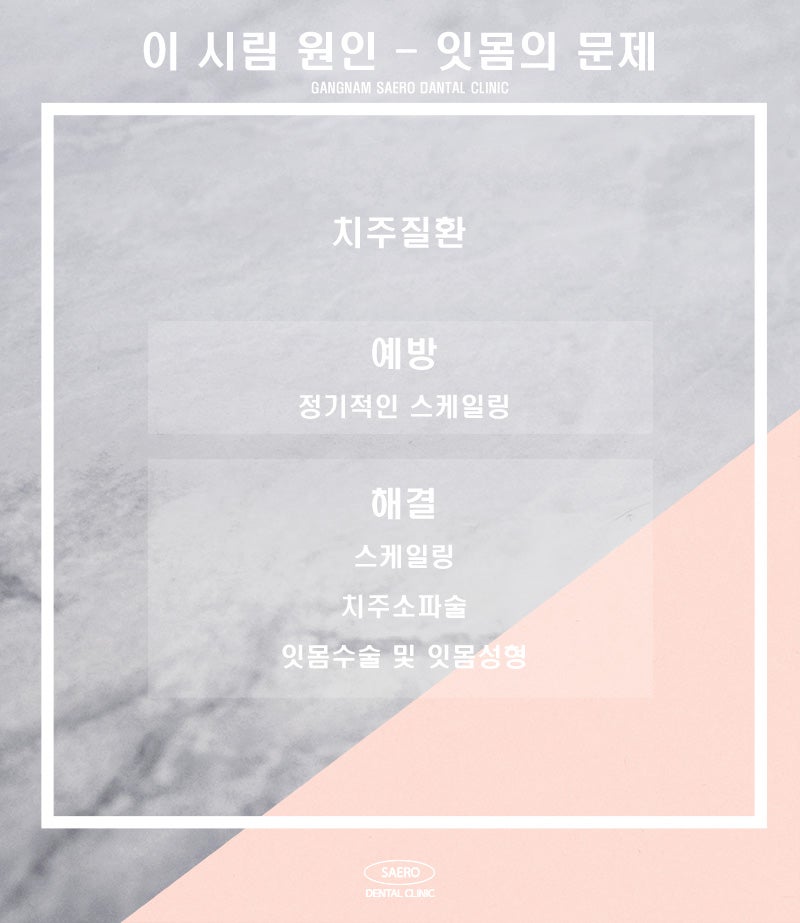
Reasons for tooth sensitivity: Problems with the gums
If the tooth problem has been addressed but
you still have tooth sensitivity,
you should suspect gum disease.
The most common gum-related cause of tooth sensitivity is periodontal disease.
When tartar is left untreated for a long time and inflammation develops in the gums,
the jawbone gradually dissolves and the roots of the teeth become exposed.
During this process, sensitivity becomes more severe,
and the gums may swell or bleed.
Because periodontal disease worsens the longer it is left untreated,
early diagnosis and treatment are very important.
How to address the causes of tooth sensitivity
Solutions for tooth sensitivity caused by tooth problems
Avoid irritating foods
Correct teeth grinding
Reduce chewy and hard foods
Develop gentle brushing habits
Treat cavities and reinforce with resin/inlay
Treat cracks with resin or G.I. treatment
Solutions for tooth sensitivity caused by gum problems
Regular scaling
Treatment for deep gum inflammation (periodontal curettage)
If necessary, combine gum contouring and gum regeneration procedures
As such, the reasons for tooth sensitivity are not simple,
so the cause must be accurately identified and treated accordingly.
The importance of proper diagnosis for the cause of tooth sensitivity

There are cases where tooth sensitivity is misdiagnosed as a cavity,
leading to unnecessary root canal treatment or crown procedures.
Conversely, there are also cases where a condition that truly requires treatment
is judged to be simple sensitivity and left untreated.
In both cases, the patient ends up with unnecessary suffering.
Gangnam Saero Dental Clinic helps address tooth sensitivity
with accurate diagnosis centered on the cause,
without overtreatment.
The medical team, with extensive clinical experience,
carefully checks the teeth, gums, and bite,
so that even simple sensitivity is not overlooked,
and excessive treatment can be avoided.
Sudden sensitivity that appears several times a day
is never a signal to take lightly.
Understand the reasons for tooth sensitivity right away,
and manage both the teeth and gums in a balanced way
to regain a comfortable smile.
A moment of sensitivity that was once overlooked
can become the first step in protecting healthy teeth.
If you are uncomfortable now,
find the proper solution for tooth sensitivity
through an accurate diagnosis and conscientious treatment.
- This post is a medical-information post provided by a medical institution due to a contractual relationship with a third party.