When your gums suddenly swell
Reasons for gum swelling
The exact cause and the right solution
When your gums suddenly swell and ache overnight,
we often think we were just tired or did not brush enough.
However, if gum swelling continues for more than a few days,
it may not be a simple temporary symptom.
The cause is usually
gum disease caused by tartar, that is, periodontal disease.
Today, we will look at the reasons for gum swelling, the causes of gum swelling,
and the fundamental ways to resolve gum swelling.
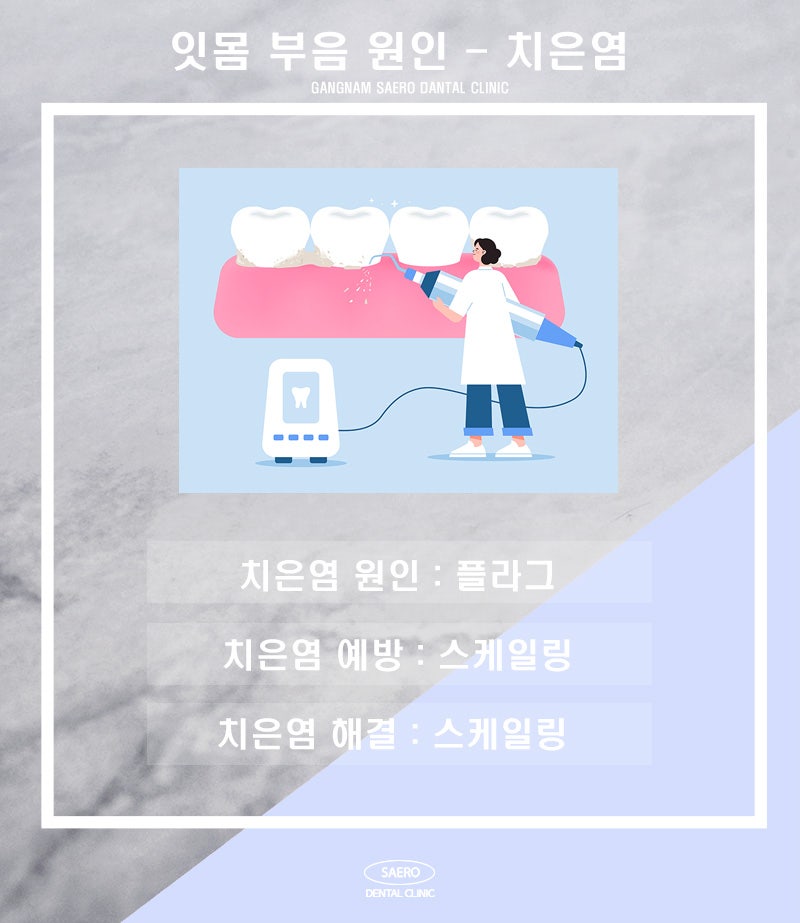
Reasons for gum swelling: gingivitis
If symptoms of sudden gum swelling appear,
the first thing to consider is gingivitis.
Gingivitis is caused by bacteria invading the area between the gums and teeth
and triggering inflammation.
It is a very common condition, experienced by more than half of adults over 20,
and by 80% to 90% of people in their 40s and older.
Causes of gum swelling can include
unremoved plaque,
gum blood vessel dilation due to excessive secretion of female hormones,
and an oral environment that is favorable for bacterial growth.
Plaque is a sticky film formed when bacteria combine with proteins in saliva,
and over time it turns into hard tartar.
When this tartar penetrates deep into the gums,
it causes gum swelling, bleeding, and pain.
Gingivitis in its early stage can be treated sufficiently with scaling,
and the gums can become firmer and the swelling can subside.
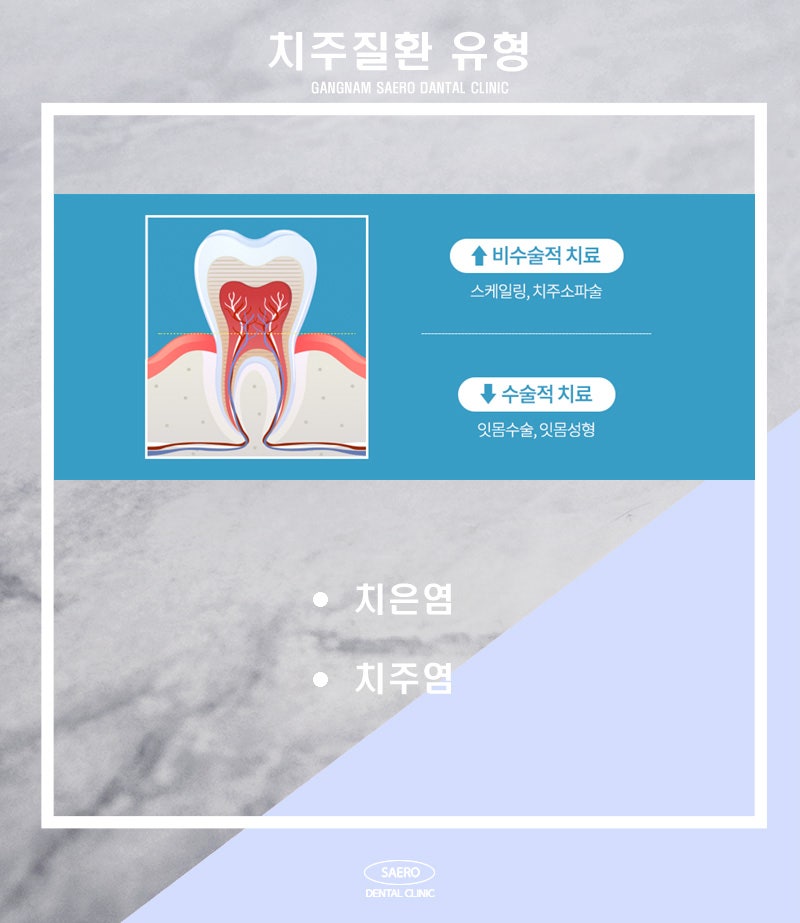
Reasons for gum swelling: periodontitis
If gingivitis is left untreated,
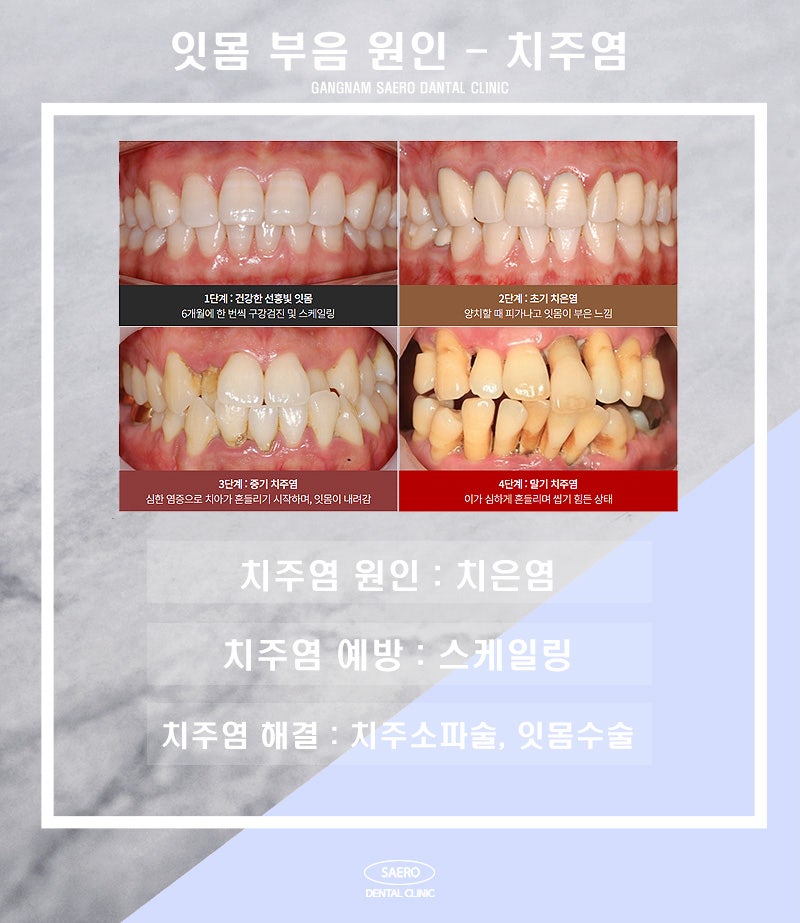
the inflammation spreads to the jawbone and worsens into periodontitis.
The cause of gum swelling due to periodontitis is the same as gingivitis,
but the problem is that the inflammation becomes deeper
and affects even the bone that supports the teeth.
As periodontitis progresses,
symptoms such as the following may appear:
gums swell and bleed
bad breath worsens
teeth begin to loosen
gums recede and the roots of the teeth become exposed
At this stage, simple scaling alone is not enough,
and periodontal curettage (removal of inflammation using a curette) or
gum surgery, bone grafting, or gum regeneration treatment may be necessary.
Gum swelling treatment and prevention
It is important to receive treatment after the gums begin to swell,
but even more important is
to know the reasons for gum swelling in advance and prevent them.
Preventive habits in daily life
Brush your teeth properly at least twice a day
Use dental floss and interdental brushes to suppress tartar formation
Get regular scaling (covered by health insurance once a year)
Reduce irritating foods, smoking, and drinking
Manage stress and lack of sleep
Scaling is not a procedure that grinds down the teeth,
but a basic treatment that protects the gums by removing tartar.
If you are worried about pain during the procedure, you can also receive comfortable care
through painless scaling.
The importance of proper treatment for gum swelling causes
Swollen gums may not simply be due to fatigue or stress.
If you correctly understand the reasons for gum swelling and the causes of gum swelling,
and receive treatment early to resolve gum swelling,
you can protect not only the swelling in your gums
but also the bone that supports your teeth.
Because gums are not easily visible,
once they deteriorate, they are not easy to recover.
If you are feeling discomfort now,
we hope you receive an early diagnosis and careful treatment
and regain a healthy smile.
- This post was provided by a medical institution as medical information due to a contractual relationship with a third party.