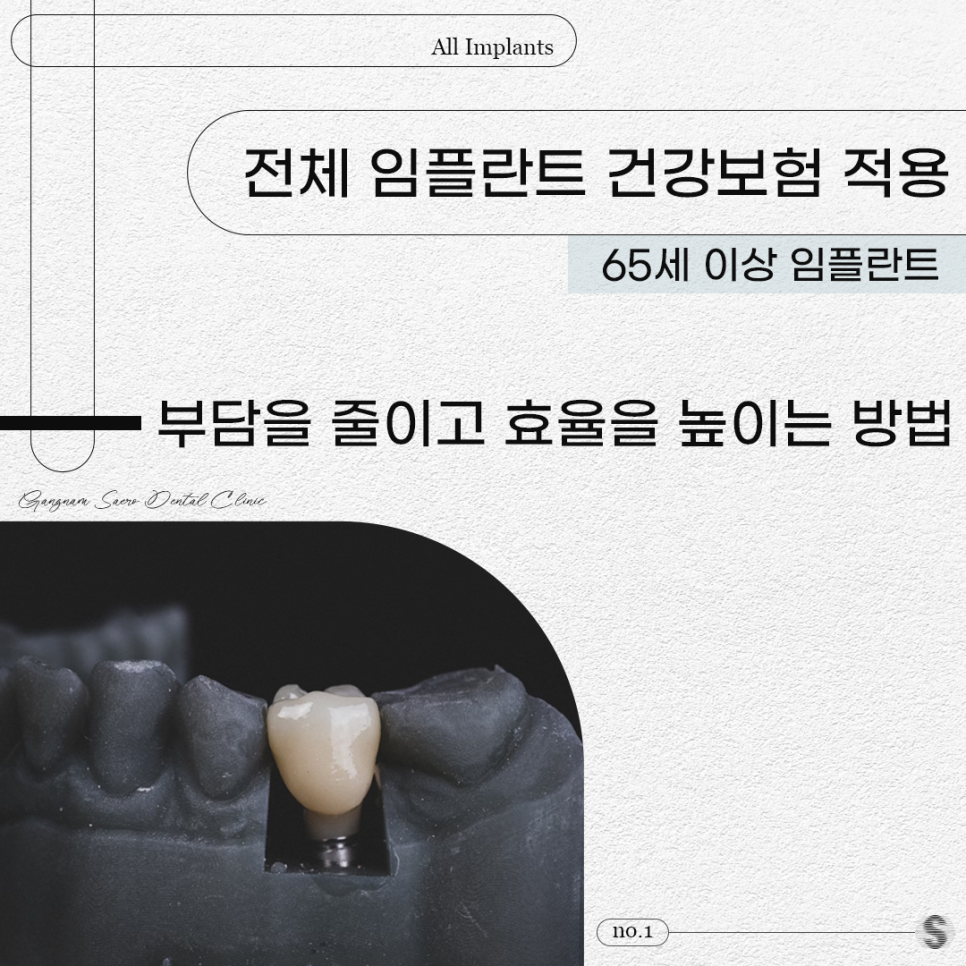
Full-Mouth Implant Coverage by National Health Insurance
Implants for Ages 65 and Older
A way to reduce the burden and increase efficiency
As we age, bodily functions naturally change,
and among them, tooth loss is an important issue directly tied to quality of life.
Discomfort when chewing food or speaking
is more than just an inconvenience;
it can also lead to reduced food intake, diminished digestive function, and withdrawal from social interactions.
Therefore, when tooth loss has progressed significantly,
full-mouth implants are considered,
but concerns naturally arise:
“Won’t the cost be too high?”
“Do I need to place implants for all of them?”
However, implants for ages 65 and older can reduce cost and burden significantly through National Health Insurance coverage and a minimal placement method.
Why full-mouth implants feel burdensome
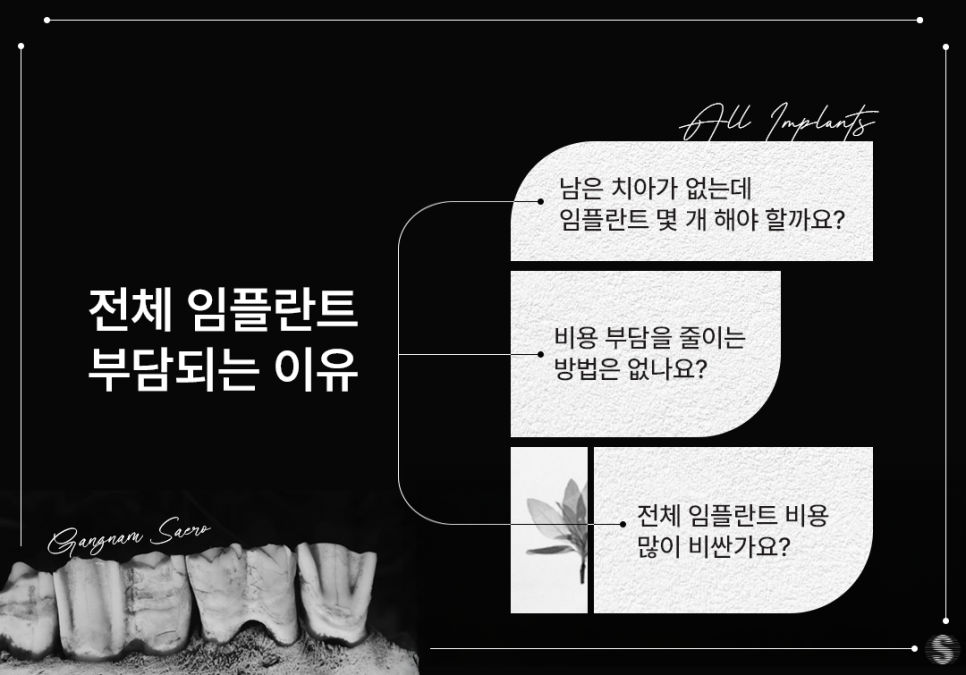
The more teeth are lost,
it is easy to think that more implants are needed as well.
However, this is an older approach.
At Gangnam Saero Dental Clinic,
rather than placing implants for every tooth,
the clinic applies a “minimal-placement full-mouth implant” method.
What is a minimal-placement full-mouth implant?
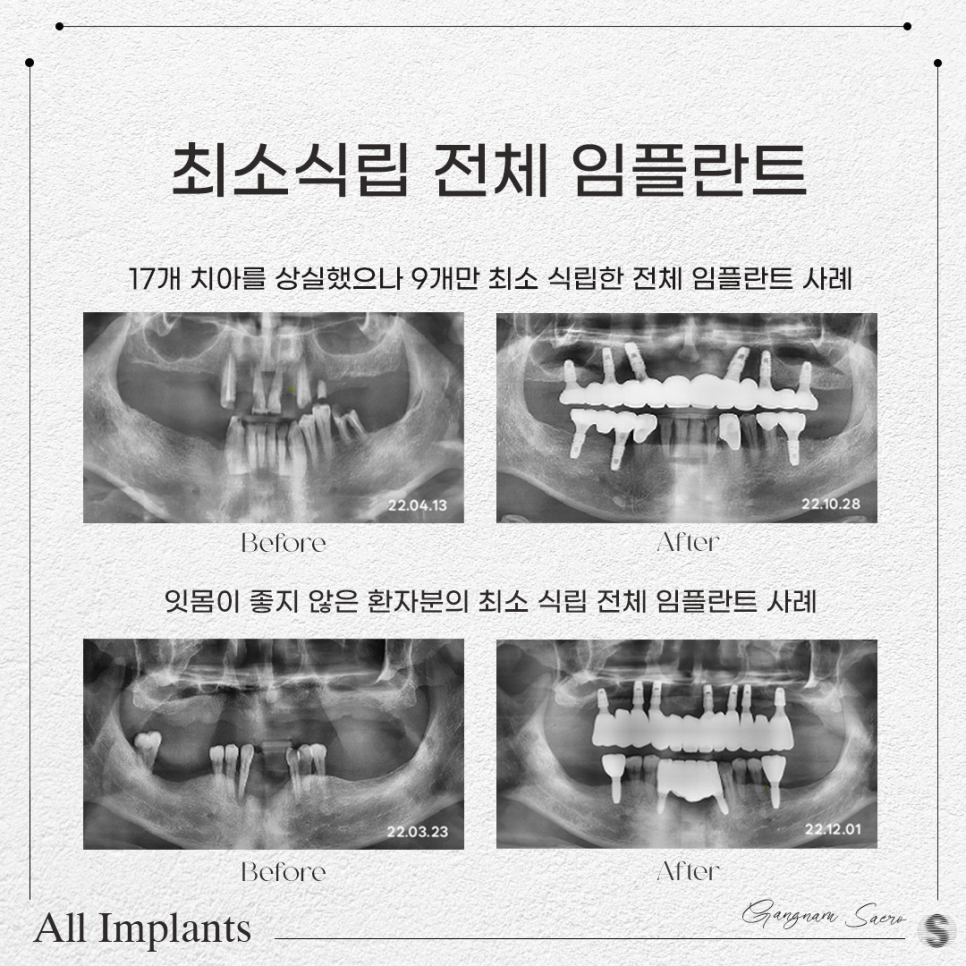
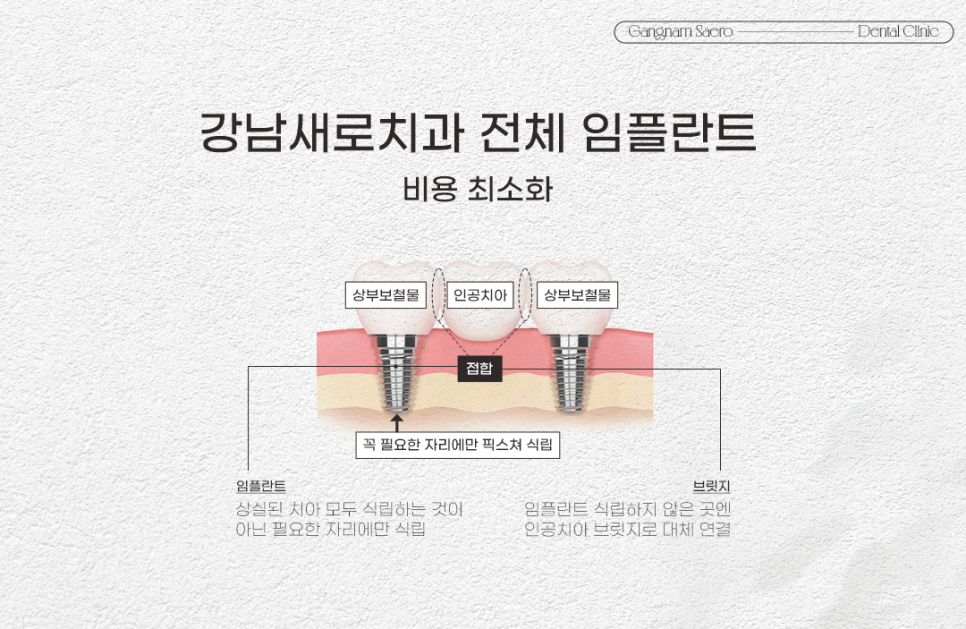
This is a treatment that restores full dental function and esthetics by placing only the minimum number of implants in the necessary locations,
then connecting the remaining spaces with a bridge method.
For example,
when 17 teeth are missing, the full dental arch can be restored with only 9 implants.
In other words,
cost reduction
reduced burden on the gums (alveolar bone)
restoration of chewing function
esthetic improvement
are all achieved at once.
In addition,
patients with systemic conditions such as diabetes, high blood pressure, cardiovascular disease, and osteoporosis
can also undergo treatment under the care of a specialist through a systematic diagnosis.
Conditions for National Health Insurance coverage for full-mouth implants
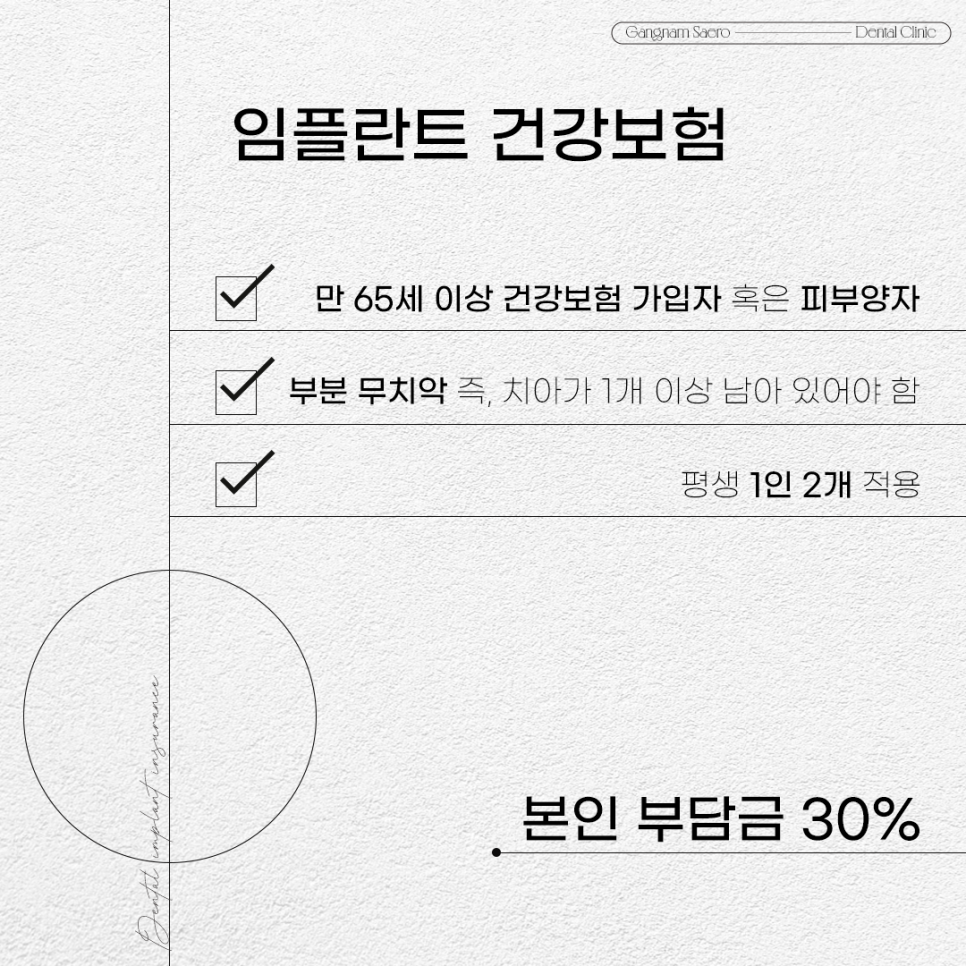
If you are 65 or older,
and you still have at least one natural tooth,
implants are covered by National Health Insurance for up to two implants.
Out-of-pocket cost: about 30%
Approximately KRW 360,000 to KRW 420,000 per implant
In other words,
even if you receive full-mouth implants,
the cost of the two eligible implants can be reduced significantly.
That is why it is important to decide on full-mouth implants while
at least one natural tooth still remains.
Once all natural teeth have been completely lost,
insurance coverage may become difficult to obtain.
Why minimizing complications is important in full-mouth implants
Full-mouth implants are a more difficult treatment than single implants.
Therefore, choosing the right clinic and treatment plan is even more important.
If treatment is inadequate,
it can lead to side effects such as
metal exposure
implant loosening and loss
gum lifting
alveolar bone recession
chronic inflammation
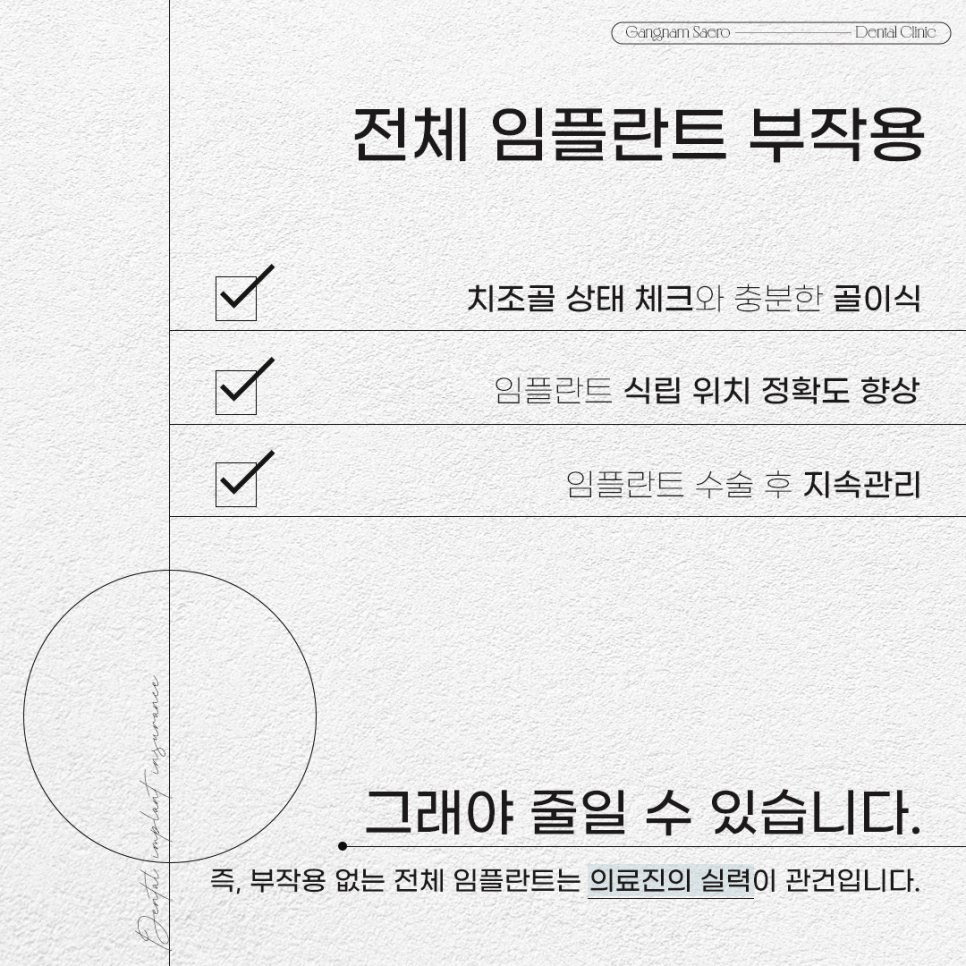
To reduce all of these risks,
the clinic must professionally perform
periodontal tissue evaluation
alveolar bone status analysis
occlusion design
postoperative follow-up care
Full-mouth implants at Gangnam Saero Dental Clinic
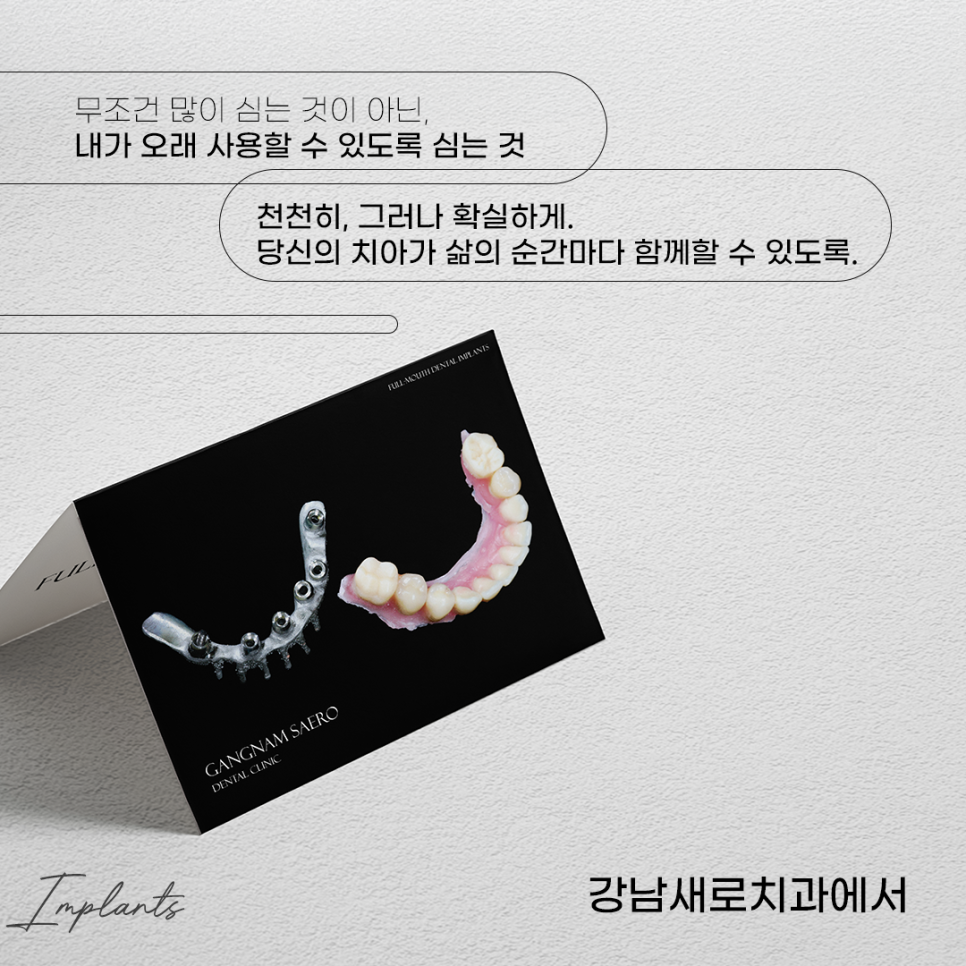
Full-mouth implants are
not simply about rebuilding lost teeth,
but about redesigning the quality of life ahead.
Three meals a day, conversations with others, and a comfortable smile.
Teeth are more deeply embedded in our daily lives than we may realize.
Therefore, full-mouth implants are a treatment that requires
enduring strength,
a thorough understanding of the gums and bone,
and a plan that reflects each patient’s individual lifestyle habits.
The important thing is not placing as many as possible,
but placing them so they can be used well for a long time.
This is the most important standard when deciding on full-mouth implants.
Treatment is important at the start,
but the time after that is even longer.
Slowly, but surely.
So your teeth can be with you in every moment of life.
A new smile, a new beginning, a new start
Until the day you can smile comfortably again,
we will be with you.
- This post was written based on medical information provided by a medical institution due to a third-party contractual relationship.